Photo credit: The Avid Outdoorsman
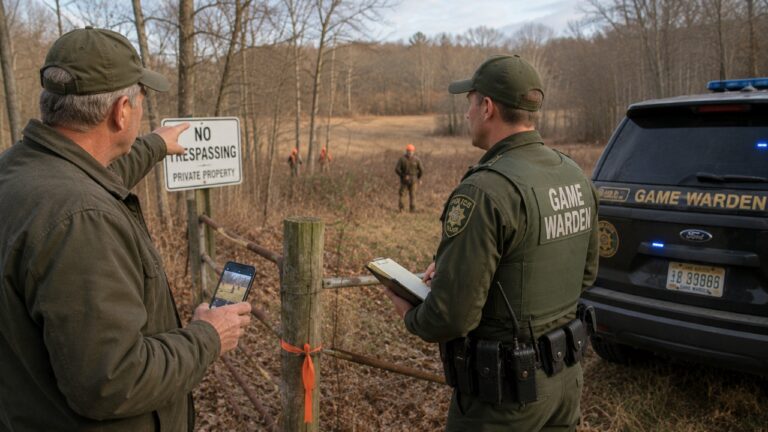
A bowhunter in Arkansas said he found a neighbor’s stand sitting right on the north property line, angled in a way that made him worry the man was set up to shoot deer crossing on his side.
The hunter shared the situation in a post on r/bowhunting titled “Neighbor is set up to poach”. He said he hunts 280 acres in Arkansas, while the neighbor to the north owns about 20 acres of hunting land. The neighbor’s smaller property did not bother him by itself. What bothered him was the stand placement.
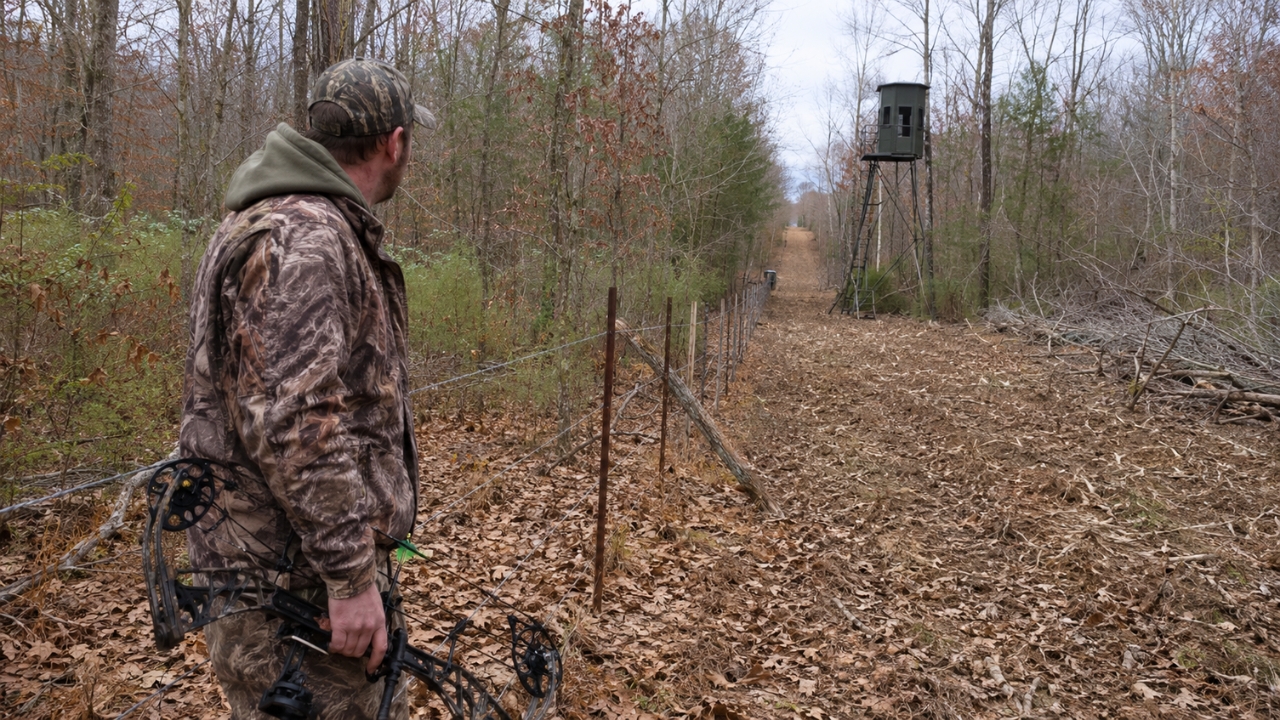
According to the post, the stand was facing down the poster’s side of the property line. He attached photos showing the stand and another image of himself standing underneath it facing the same direction the hunter would appear to be looking. From his perspective, the setup looked suspicious.
He had already contacted the game warden before bringing the question online. The warden told him there was not much they could do unless the neighbor actually crossed onto his property or shot onto his side. That left the hunter in a frustrating spot: he believed the setup looked wrong, but nobody could act on what might happen.
He already had a camera set up to watch the stand in case the neighbor shot across the line. What he wanted to know was whether there was anything else he should do before the season turned that suspicion into a real fight.
The Stand Was Legal Until the Neighbor Crossed the Line
The first major point commenters made was one the hunter had already heard from the game warden: a stand on the neighbor’s property is not poaching by itself.
One commenter put it clearly. If the stand is on the property line, hunting the line may be frowned upon, but it does not become poaching until the hunter shoots across the line or trespasses.
That was the hard part for the poster. He could dislike the setup. He could think it looked shady. He could watch it with a camera. But as long as the neighbor stayed on his own side and only shot deer after they crossed onto his property, he was legally hunting his own land.
A lot of hunters do not love stands right on the boundary. It feels like someone is trying to take advantage of deer moving from the larger parcel. It can create tension, especially when one side has far more land and the other side is set up tight against the fence. But property rights cut both ways. The poster owns 280 acres. The neighbor owns his 20. If the neighbor wants to hunt every legal inch of it, he has that right.
Several commenters reminded the poster that deer do not know where the line is. If deer are moving through that edge, it makes sense that a small-land hunter would set up where the deer are most likely to enter his property.
That did not make the poster feel better, but it did shape the advice. Watch it, document it, but do not treat legal hunting as a violation before one happens.
Some Commenters Thought the Stand Might Not Be Aimed the Way It Looked
Several bowhunters pushed back on the assumption that the stand’s direction meant the neighbor planned to shoot across the line.
One commenter explained that during archery season, some hunters set stands at an angle that does not directly match the intended shot direction. Depending on handedness, tree position, and shooting lanes, a stand may appear to face one way while the hunter actually plans to shoot to the side.
Another commenter said there appeared to be a clean shooting lane to the left of the stand and suggested that if the neighbor was right-handed, the chair may have been situated for him to shoot on his own side of the line. Others made similar observations, saying the setup could be meant for deer after they crossed onto the neighbor’s property.
That was a useful reality check. A stand that looks bad from the ground may make more sense once a hunter is sitting in it. Bowhunters often think about body angle, draw movement, tree cover, and the direction deer are likely to travel. What looks like “facing my property” may actually be “set up to shoot parallel to the line.”
That does not mean the neighbor’s setup was automatically courteous. Several commenters still thought hanging a stand right on a boundary without talking to the neighbor was poor form. But poor form is not the same as poaching.
The poster seemed to understand that distinction. He had already accepted that nothing could happen unless the neighbor actually crossed the line. His camera was there to catch that if it happened.
Cameras Became the Safest Form of Pressure
The most practical advice was to use a cellular camera trained on the stand.
One commenter said a cell camera would give the poster photos straight to his phone if the neighbor poached, trespassed, sat in the stand, or tried to take the camera down. Another suggested using two cameras: one obvious cheaper camera and another cellular camera placed high in a tree to watch the first one.
That advice came from experience. One commenter said that kind of setup helped catch a neighbor tearing down no-trespassing signs and stealing a camera.
For the poster, a camera was the cleanest answer because it did not interfere with the neighbor’s legal hunting. It simply documented what happened on his own property. If the neighbor stayed legal, the camera would show that. If he shot across the line or stepped onto the poster’s land, the camera might give the game warden something useful.
That matters because accusations without proof can sour neighbor relationships fast. The poster may be convinced the stand is set up wrong, but the warden needs more than suspicion. A timestamped photo or video of an actual violation is a different story.
Cameras also keep the poster from doing something that could be considered hunter harassment. Several commenters warned him not to mess with the neighbor’s legal setup. Watching from his side is one thing. Interfering with a hunter on his own land is another.
Some Advice Got Petty Fast
As usual, the comment section also produced plenty of spiteful ideas.
Some users suggested building a screen, placing a big blind on the poster’s side, dropping brush, building a hay-bale wall, or otherwise blocking the neighbor’s view. Others tossed out jokes about noise, scent, or making the area less attractive to hunt.
A few of those ideas might sound tempting when a neighbor’s stand feels pointed at your property. But several commenters also warned that intentionally interfering with someone’s lawful hunt can create its own legal problem. In many places, hunter harassment laws can apply if someone purposely tries to ruin another person’s hunt.
That is why the pettier suggestions are risky. A landowner has the right to manage his own side of the property. He can plant a privacy screen, mark boundaries, post signs, or move deer movement with normal habitat work. But if the purpose is clearly to harass the neighbor’s legal hunt, things can get messy.
The better long-term suggestions were more grounded: talk to the neighbor if possible, make sure the property line is clearly marked, keep cameras up, and call the warden only if there is evidence of a violation.
That is not as satisfying as building a giant wall in front of the stand, but it is much less likely to backfire.
The Best Answer May Have Been a Conversation
Several commenters said the poster should talk to the neighbor before assuming the worst.
That advice was not universal. Some people felt the neighbor should have come over first if he planned to hang a stand that close to the line. But others pointed out that a simple conversation could clear up the entire issue.
A neighbor might say, “I know I’m close to the line, but I’m only shooting after deer cross onto my side.” He might agree to call if a deer runs onto the poster’s property. He might even be willing to move the stand slightly if the placement was creating unnecessary tension.
Or he might confirm the poster’s concern by acting evasive or hostile.
Either way, a calm conversation gives more information than staring at the stand from a distance and assuming the worst.
One commenter described having a property-line hunting agreement with a neighbor. Both hunted near the line, but they gave each other permission for recovery and respected each other’s side. That kind of relationship does not happen by accident. It starts with people talking before there is a dead deer or an accusation.
For the Arkansas hunter, that may have been the only step left besides documentation.
What Commenters Said
Commenters were split between sympathy for the poster and reminders that the neighbor had rights too.
Many agreed that setting a stand right on a property line is poor etiquette, especially without talking to the adjacent landowner. They understood why the poster felt like the neighbor was trying to take advantage of deer moving through his larger property.
But several were firm that the neighbor had not poached unless he shot across the line or entered the poster’s land. Hunting near a boundary may look bad, but it is legal if the hunter stays on his side.
A lot of users recommended cameras, especially cellular cameras. The poster already had one watching the stand, and commenters said that was probably the smartest move. Proof matters more than suspicion if the game warden ever needs to act.
Others suggested talking to the neighbor, marking the property line clearly, and avoiding anything that could be considered hunter harassment. A few joked about blocking the stand or making the area unpleasant, but the more careful commenters warned that intentionally ruining a legal hunt could create trouble for the poster instead.
For the bowhunter, the stand looked like a setup waiting to become a violation. But until the neighbor actually crossed the line, the answer was patience, cameras, and maybe a direct conversation. Property-line hunting can feel disrespectful, but the law usually cares about what someone does — not what the stand placement makes you think he might do.