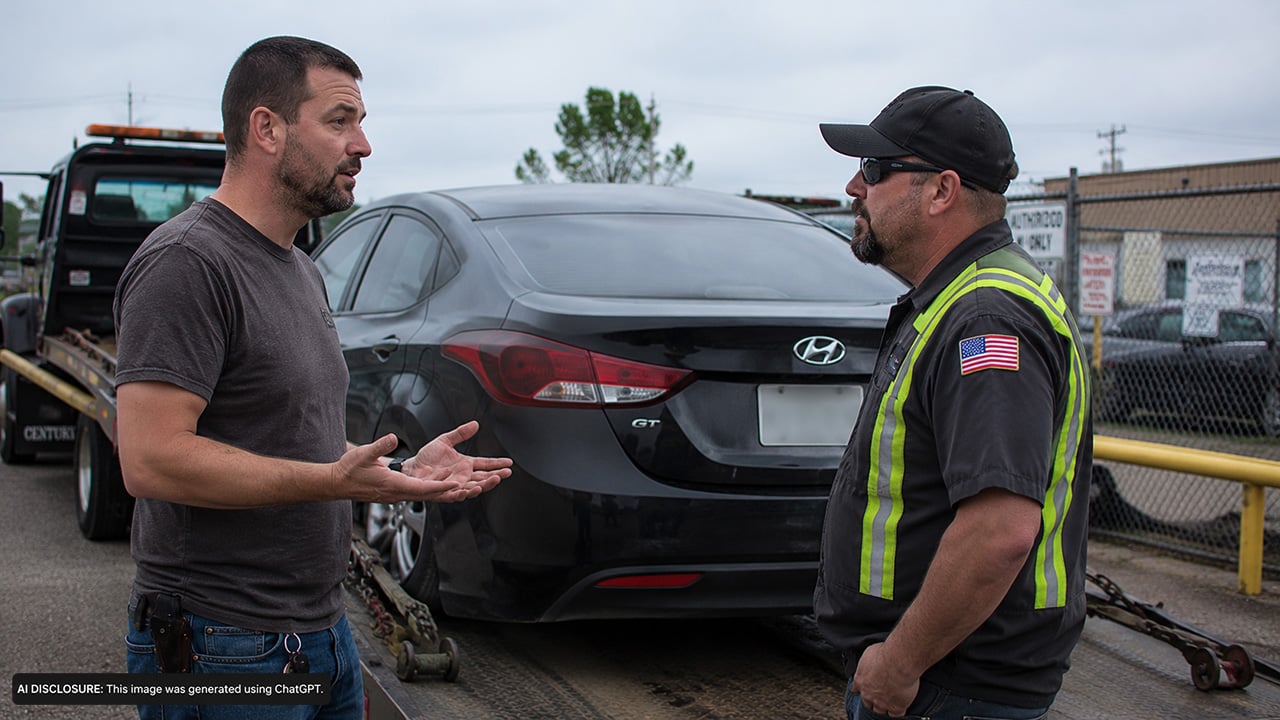
Photo credit: AI-generated image created using ChatGPT. Illustrative only
Getting a car towed is aggravating enough when it’s just a vehicle. It gets a whole lot more serious when there are federally regulated firearms locked in the trunk and the towing outfit decides they’re not letting anyone near it.
That’s the situation laid out in the original post involving a Texas family dealing with a repossession and a tow yard that, according to the trustee, refused to release a vehicle if it had any firearms inside. The trustee said the items were lawfully owned NFA firearms and suppressors held in a trust—tax-stamped Title II gear—left behind after a range trip.
A payoff surprise turned into a repo
The story starts with a dad trying to do right by his son. As a birthday present, he paid off the remainder of his son’s car note—about $624—after calling the finance company and getting confirmation he was allowed to speak on his son’s behalf.
Then Thursday night, the calls came in: the car had been towed. When they contacted the finance company, they were told the tow was tied to roughly $1,200 in late fees that hadn’t been paid. The trustee said they weren’t informed about those late fees at any point during the payoff process, and while they planned to deal with the lender, the more immediate problem was what was sitting in the trunk.
The trunk wasn’t full of junk—it was full of NFA items
On Friday, the son remembered what he’d forgotten during the stress: locked cases in the trunk containing NFA items. The trustee listed an AR suppressor, a shotgun suppressor, a short-barreled shotgun (SBS), and a short-barreled rifle (SBR), all held in a gun trust with multiple trustees—family and friends.
The explanation was simple and painfully relatable: the son had gone to the range with friends the weekend prior and left the gear in the car all week. Not smart, the trustee admitted, but it’s the kind of mistake people make when life gets busy and “I’ll unload it tomorrow” turns into five more tomorrows.
The tow yard didn’t just say no—they mocked the claim
From there, things went sideways fast. The trustees tried to get the repo/tow company to let them retrieve the items, but said the company wouldn’t cooperate. At one point, the trustee said someone on the phone made a snarky remark about “buying them back,” which the trustee took as a joke made in poor taste.
When the trustee pushed back and explained the legal status of the items—saying the tow company was now in illegal possession of NFA items and shouldn’t even joke about selling regulated firearms—the reaction he described wasn’t concern. He said the person put him on speakerphone, and he could hear people snickering in the office.
Even worse, the tow company allegedly didn’t believe the guns were there at all. The trustee said they told him he “certainly did not have ‘illegal silencers and SBRs’” in the car, and they even complimented him for “making up” a story they hadn’t heard before. That kind of response is how a bad day becomes a real problem—because now you’ve got legal property, potential public-safety concerns, and a business treating it like it’s entertainment.
Why this is a big deal for gun owners—even when you’re in the right
Even in gun-friendly states, most tow yards and repo outfits aren’t eager to get tangled up with firearms. Some have blanket policies: no firearms on the property, no firearms released, no exceptions. The trouble is, a blanket policy doesn’t magically change ownership or responsibility, especially when the firearms are regulated items that can bring serious consequences if mishandled.
The trustee believed the tow company was unlawfully possessing the NFA items. Whether or not the company intended to “possess” them, they had physical control over a vehicle containing them, and the trustees were trying to regain custody. That’s not just about property rights—it’s about keeping controlled items secured, accounted for, and out of the wrong hands.
There’s also the plain old theft-and-liability angle. Tow yards get broken into. Cars get rifled through. If a suppressor or SBR walks off because someone in the chain didn’t take the situation seriously, the lawful owner is the one who ends up living in the nightmare that follows.
The paperwork problem: loan contracts and “rights to items in the car”
The trustee added a detail that matters: the loan agreement reportedly said the lender held rights to items in the vehicle, with “some exceptions.” It didn’t clearly spell out what those exceptions were, and the trustee said it was up to whoever reviewed the case.
He also described what sounded like a high-risk loan setup: poor credit history, a required tracking device that could disable the vehicle, a 20% interest rate, and mandatory automatic withdrawals. In other words, the lender built the arrangement to reduce its risk—and when things went off track, the repo moved quickly.
That contract language might be aimed at discouraging borrowers from stripping valuable accessories before repossession. But firearms—especially NFA firearms—are a different animal than floor mats or a subwoofer box. A line in a contract doesn’t turn a suppressor into collateral that can be casually held, transferred, or joked about selling back.
The move most people want to make—calling police—and the worry that comes with it
The trustee’s big question was what many gun owners would ask in that moment: how do you bring law enforcement into it without turning yourself into the target? He specifically asked if there was a way to inform police that wouldn’t lead to “an interview with the ATF,” and whether it would be better to wait until Monday to handle things through the bank.
That hesitation is understandable. Nobody wants extra heat, especially when they believe they’ve done everything legally—tax stamps, trust, locked cases. But the flip side is that letting time pass can be the enemy when controlled items are sitting in a place you don’t control, around people who are already acting immature about it.
The safest, most common-sense priority in a situation like this is getting the items secured and documented—without escalating into threats or a parking-lot showdown. Phone calls get emotional fast. In-person encounters at tow yards can get even worse. If the people in control are already dismissive, you want calm, clear communication and a record of everything said and done.
In the post, the trustee was trying to find that narrow path: recover the property, keep everyone safe, and avoid turning a lawful situation into a circus.
For outdoorsmen and gun owners, the hard lesson is simple: cars get towed, repos happen, and “I’ll unload it later” can put your most regulated gear in the hands of strangers who don’t respect it. Locked cases are good. Not leaving NFA items in a vehicle for a week is better. And if you ever do get stuck in this kind of mess, keep it professional—because the only thing worse than being ignored by a tow yard is giving someone a reason to claim you were the problem.