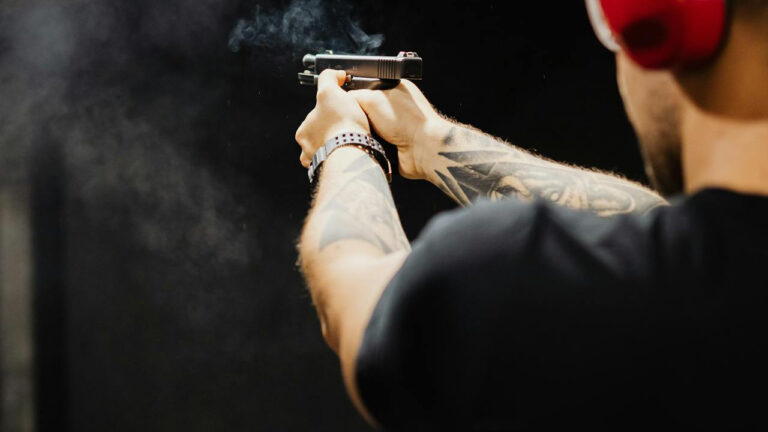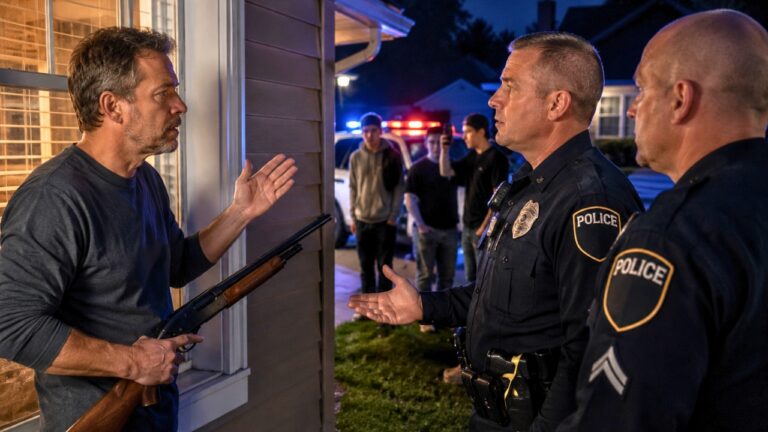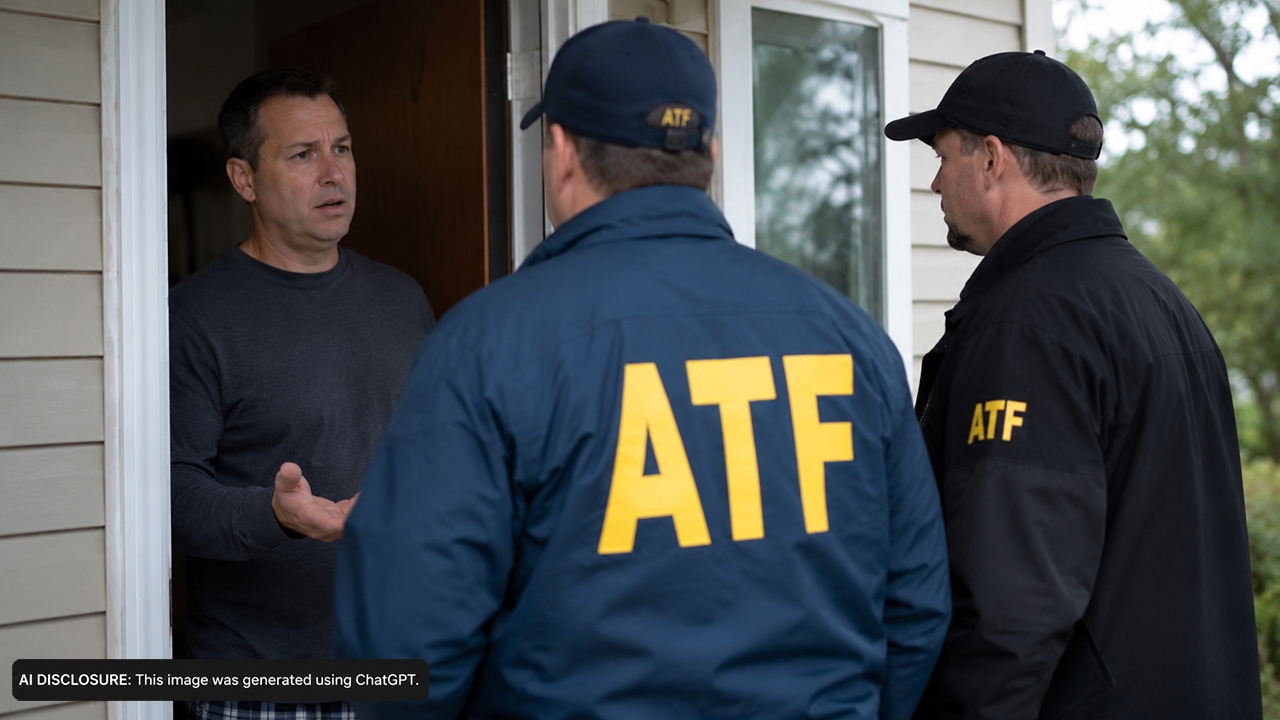
Photo credit: AI-generated image created using ChatGPT. Illustrative only
Most folks assume the biggest risk at a public range is a loose muzzle or a hot case down the collar. But sometimes the bigger problem is the paperwork trail you didn’t know you were leaving behind—and the people watching you leave it.
A Northern Virginia shooter recently learned that lesson the hard way after federal agents showed up at his door following range time with an experimental firearm part. And the tip, according to a gun-rights attorney familiar with the charging documents, appears to have started inside the very range where the testing happened.
What happened at the Sterling-area range
The account comes from a gun-rights lawyer who says he has significant experience in “legal 3D2A” work, including being the first person to legally 3D-print firearms in the District of Columbia. In a warning posted publicly, he described being contacted by a person in the D.C./Maryland/Virginia area who was “swatted, arrested, and charged” for machine gun possession tied to a 3D-printed forced-reset trigger (FRT).
In the description, the individual was testing a drop-in FRT at a range in Northern Virginia. The range is described as being in Sterling, and the attorney says a Range Safety Officer made an anonymous tip that ultimately brought law enforcement to the shooter’s doorstep.
Those details—particularly the claim that the reporting started at the range—are what have many gun owners rethinking what “private” really means when you’re paying a membership fee and running drills under someone else’s roof.
Why forced-reset triggers are drawing attention
Forced-reset triggers sit right in the crosshairs of federal enforcement and legal interpretation. The attorney’s message is blunt: ATF (sometimes with local law enforcement) “appears to be actively enforcing against people who design, print, or test forced-reset triggers,” and the agency’s posture “does not care about intent, good faith, or theoretical design specs.”
From a practical standpoint, that means even tinkering that’s done as a design exercise—or done with the belief it’s lawful—can get treated like a much more serious offense if the device is viewed as functioning like a machine gun conversion part.
This isn’t internet rumor-mill stuff in the post. The attorney says his information is coming from charging documents, and he describes a real-world outcome: a raid and felony charges brought by the U.S. Attorney for the District of Columbia.
The escalation: tip, warrant, then a raid
The most sobering part of the story isn’t the range drama. It’s the speed at which things can move once someone puts a target on you.
In the attorney’s telling, once a report is made that you’ve got a “machine gun,” agents can “go get a warrant as easy as blinking.” That’s the key point for regular shooters: you may think you’re just testing a part or troubleshooting a malfunction, but a third party can frame it in the worst possible way—and you may not even know the report happened until you’re looking at badges.
Here, the described response was heavy: the individual was raided by MPD and ATF, then faced charges in federal court in D.C. That’s a long way from “Hey, pack that up and don’t bring it back.” It’s handcuffs, evidence bags, and your guns potentially becoming exhibits.
For anyone who hunts and shoots in the region—where crossing into D.C. can happen in one wrong turn—this is the kind of situation that can turn a range trip into a life-altering legal fight.
The legal stakes the attorney laid out
The post doesn’t get into the exact counts or statutes, but it does lay out the kind of sentencing exposure the attorney believes is on the table. He says his client is facing five years in federal prison “thanks to the lack of aggravating factors,” but warns it could be “30 to life” if additional factors are added.
That range tells you what matters in these cases: not just what you had, but what the government says you intended, how it was used, and what else they can connect to it. Even if you’re the world’s most careful reloader or the guy who reads every ATF letter twice, once a case is filed you’re fighting a narrative—not just a part.
The attorney also notes he’s trying to help the individual get representation and possibly pursue a challenge under Cargill v. Garland. He calls it an “uphill battle.” That’s about as realistic as it gets: even if you think the law is on your side, you still have to survive the process.
What other gun owners took from it: keep your mouth shut and your experiments private
The message wasn’t “never go to a range.” It was more like a cold-weather checklist: don’t give problems a place to start.
The attorney’s practical warnings were simple and repetitive for a reason. Don’t talk about FRTs in public. Don’t test experimental builds in public. Don’t volunteer information to strangers. And don’t assume every Range Safety Officer is going to treat your business like your business—he notes most are great, but you never know when one decides to report what they saw.
That last point is what will ring familiar to experienced outdoorsmen. It’s the same mindset as handling property disputes or game-law gray areas: if you wouldn’t want it repeated in court, don’t say it to a guy you just met on the firing line.
If you want the full context and the attorney’s exact warnings, you can read the original post that laid out the details he says come from the charging documents.
The one “range rule” that matters when the stakes are federal
The post ends with the kind of advice many of us heard from older hunters and former cops alike, but plenty of people still ignore when they’re stressed: don’t talk to law enforcement without counsel.
The attorney’s wording is emphatic—“DON’T EVER TALK TO COPS”—and while that’s sharper than most folks speak at deer camp, the principle is easy to understand. In his view, you can’t outsmart an interview, especially a recorded one, and you can talk yourself into a charge—or make a bad situation worse—trying to “clear things up.”
For gun owners, the practical takeaway isn’t paranoia. It’s discipline. If you’re experimenting with anything that could be mischaracterized, keep it off public firing lines, keep conversations to yourself, and if the day ever comes when agents want to chat, make your first call to a lawyer—not your buddy.
Because once the system decides you’re the test case, it’s not a quick misunderstanding anymore. It’s your freedom, your rights, and your future getting measured in years.
Like The Avid Outdoorsman’s content? Subscribe to our newsletter so you never miss an article.
Here’s more from us: