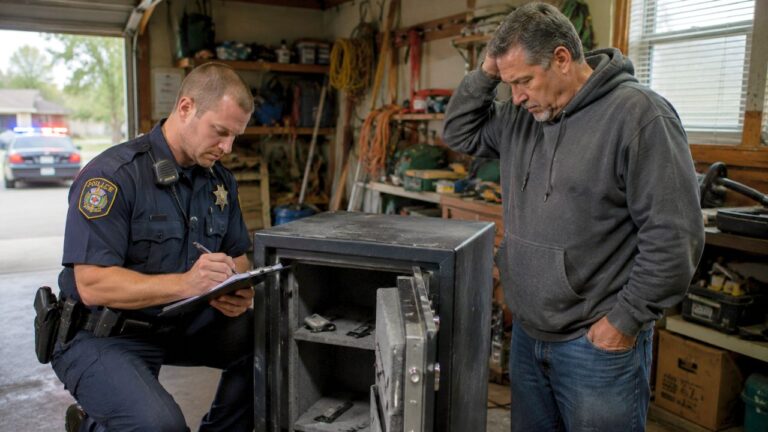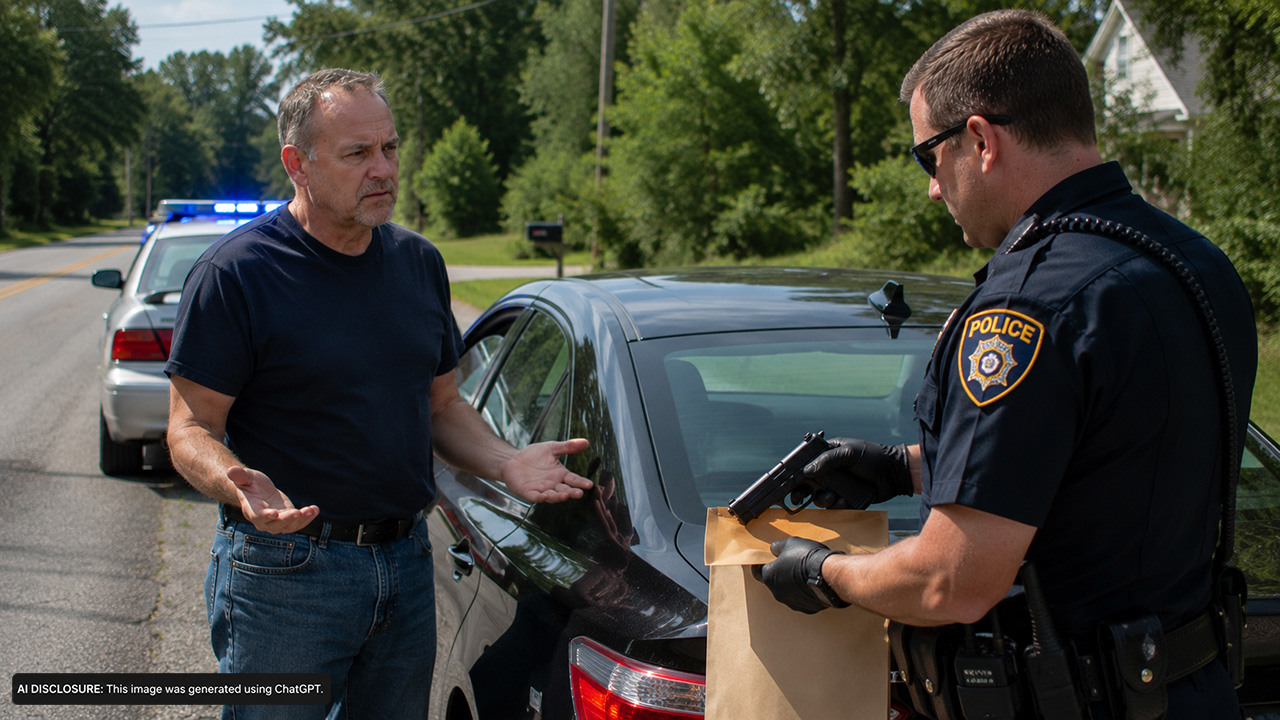
Photo credit: AI-generated image created using ChatGPT. Illustrative only
Most of us who carry have rehearsed the “traffic stop script” in our heads: hands visible, calm voice, no sudden movements, and a clean, lawful setup. But the moment an officer says they want to “hold” your firearm for their safety, the stop can shift from routine to tense—especially if you’re worried that a simple yes could open the door to a full vehicle search.
That exact concern is what one concealed carrier laid out in the original post. The question was straightforward and practical: if you have a legal firearm in the vehicle and the officer asks to secure it, does telling the officer to retrieve it themselves amount to consent to search the vehicle? And if you’re trying to be safe without giving up your rights, what’s the cleanest way to draw that line?
The “for officer safety” request can quickly turn into a property problem
When a cop asks to temporarily secure a gun during a stop, most gun owners understand the safety angle. Nobody wants a muzzle crossing a lap in a cramped cab, and nobody wants a startled or inexperienced person handling a loaded handgun under stress. That’s why many carriers prefer not to hand the firearm over themselves in the first place.
But there’s a second issue that nags at people who’ve spent time around firearms and rules: once your gun leaves your control, you’re trusting a stranger to handle it safely and to give it back promptly. If it turns into “we’ll return it later” or “pick it up at the station,” you’re suddenly in a situation where your lawful property is gone and you may not even get a clear reason why.
Consent isn’t just “yes” or “no”—it’s what you allow and what you don’t
The heart of the question is consent. A lot of folks assume consent is a single on/off switch: either you consent to a search or you don’t. Real life is messier. People say things like, “Go ahead,” “Sure,” or “It’s right there,” and later those words get treated like permission for more than the driver intended.
The poster’s wording shows a common worry: if you tell an officer to retrieve the firearm from inside the vehicle, are you effectively giving them permission to poke around beyond the gun? That’s the line outdoorsmen care about because we often have other lawful gear in a truck—knives, spent brass, a deer rifle case, or a cooler—and we don’t want a fishing expedition that turns a five-minute stop into a long roadside ordeal.
How to cooperate without giving a blank check
The practical instinct in the post is a good one: be clear and be limited. If you’re going to allow the officer to secure the firearm, you want your words to match your intent. The poster even suggested the kind of phrasing many trainers recommend in principle: “You can take it out of my vehicle, but that is it.”
That doesn’t mean arguing on the shoulder or trying to “lawyer up” in a way that escalates the moment. It means using plain language that a normal person would understand as limited permission—permission to retrieve the firearm, not permission to rummage. If you’ve ever granted a buddy permission to borrow one tool out of your toolbox, you know the difference between “grab my 10mm” and “go through my whole box.” Same idea, higher stakes.
Why carriers prefer the officer retrieve it (and the safety tradeoffs)
The post also hits another real-world point: many of us have heard it’s not recommended to hand the gun directly to the officer. That advice isn’t about being difficult. It’s about preventing the worst possible misunderstanding—an officer seeing a gun suddenly moving in your hands during a stop.
At the same time, letting the officer reach into your vehicle has its own risks. Vehicles are tight. Holsters snag. Seatbelts and center consoles create awkward angles. A safe gun handoff in a classroom can turn clumsy fast when it’s in a dark cab on the side of the highway. The safety priority should be slow movements, clear communication, and keeping hands visible—whichever method is used.
The concealed carry permit factor doesn’t automatically simplify the stop
The poster specifically framed this as a legal firearm with a valid carry license. A lot of outdoorsmen assume that should settle things: lawful gun, lawful carrier, end of story. But anyone who’s traveled across counties—or across state lines—knows that different departments and different officers handle “guns in cars” very differently.
Having a permit may help demonstrate you’re a vetted, law-abiding person, but it doesn’t guarantee the interaction stays simple. Some officers may be comfortable leaving the firearm where it is once they know it’s holstered and you’re not reaching for it. Others will insist on securing it. And once it’s secured, the big concern becomes whether it comes back immediately when the stop ends, in the same condition it left.
What gun owners should take from this before the next stop
The value in this question is that it forces you to think through your plan before the lights come on behind you. If you carry in the vehicle, you should already know where your permit and registration are, and you should avoid storing them in the same place you store the gun. Don’t create a moment where you have to reach near a firearm to produce paperwork.
And when the topic of the firearm comes up, the goal is to be cooperative while staying precise. If you’re comfortable allowing the officer to secure the gun, make it clear your permission is limited to that specific action. If you’re not comfortable with it—or if it’s not required where you are—stay calm and state your preference respectfully. Either way, don’t let nervous small talk turn into accidental consent for “anything you need to do.”
Out on the road, most of us just want to get back to hunting camp, the boat ramp, or home after work. Thinking through the words you’ll use—and keeping the focus on safety and clarity—can be the difference between a routine stop and a long, frustrating mess where your lawful gun becomes someone else’s “property to sort out.”
Like The Avid Outdoorsman’s content? Subscribe to our newsletter so you never miss an article.
Here’s more from us: