Photo credit: Andrew A/Unsplash.com
There are some people who can step into a new piece of ground and seem to get their bearings almost without trying. They notice landmarks, remember how the trail bent, keep track of where the light is falling, and never seem too rattled when the route gets less obvious than it looked ten minutes earlier. That doesn’t mean they’re born with some magic woods sense. Most of it comes from repetition, paying attention, and learning the hard way that getting turned around outdoors can happen a whole lot faster than people like to admit.
Then there’s the other kind of guy. He’s not in the backcountry, not miles from help, not crossing some giant wilderness nobody’s ever seen. He’s just moving around perfectly manageable ground and still acting like direction is a rumor. He misses the obvious, forgets where things are, and carries himself like orientation is somebody else’s job. These are the habits that make me think a man could get lost walking to the truck if the daylight changed a little and nobody was there to point.
He Never Looks Back Once He Walks In

One of the oldest tricks for not getting turned around is embarrassingly simple: every now and then, turn around and look at what things will look like coming back out. A trail, fence line, gap in the brush, creek crossing, or weird little tree cluster can look totally different in reverse. Guys who spend time outdoors learn that early because they’ve all had some version of the moment where the return route suddenly doesn’t look like the route they thought they came in on. A quick look back fixes a lot of confusion before it gets a chance to grow teeth.
The man who never does that usually walks into a place like every path is going to stay obvious forever. He notices the direction he’s headed and completely ignores what the exit will look like later. Then when it’s time to come out, he slows down, gets quiet, and starts scanning around like the woods changed on him personally. They didn’t. He just never bothered to study the route in both directions. That’s one of the clearest signs a man hasn’t had enough “where in the world is the truck” moments yet.
He Depends on Other People’s Awareness Instead of His Own

Some men move through the outdoors like there’s always going to be somebody nearby who knows where camp is, where the truck is, where the trail bends, or where the turnoff was supposed to happen. They don’t track much themselves because, in their mind, somebody else has the mental map covered. That works right up until the group spreads out, the light changes, or the one person who actually knew the route isn’t standing there anymore. Suddenly a man who looked relaxed starts looking like he’s trying not to ask the same question for the third time.
Real outdoorsmen learn to keep their own bearings even in a group. That doesn’t mean distrusting everyone else. It just means not outsourcing basic awareness. If you always rely on another man to know where you are, then the second he’s gone, you’ve got nothing underneath you. A fellow who never builds his own picture of the ground is one wrong turn away from becoming the guy everybody has to go find before supper.
He Can Walk Past a Landmark and Not Notice It

A useful landmark doesn’t have to be dramatic. It might be a busted gate, a cedar leaning over a wash, a big white rock, a dead snag with lightning scars, a torn-up crossing, or a weird bend in the creek. Men who move well outdoors are constantly picking up those little anchors without making a show of it. They don’t need every tree marked with flagging tape. They just notice the character of a place as they go. That gives them a string of clues to work with when they need to retrace their route.
The guy who gets turned around easily often walks past all of that like he’s in a hallway. He sees “woods” or “pasture” or “brush” in one big blur and doesn’t really register the small details that separate one stretch from the next. That makes coming back a lot harder because his brain never stored any useful handles to grab onto. If every part of the place looks the same to him, it usually means he never really looked in the first place.
He Thinks Paying Attention Is the Same Thing as Glancing Around

You can always tell when a man believes he’s being observant because his head is up and his eyes are moving, but nothing is really sticking. He’s glancing around without taking inventory. He sees motion, shape, color, and terrain in the broadest possible sense, but he’s not forming a map in his mind. That’s a common difference between looking and noticing. One is visual. The other is useful.
The outdoors punishes that difference fast. A man who’s only half paying attention tends to feel confident until the moment the route gets less obvious. Then he discovers he has no real memory of what he passed, how far he came, which side of the draw he favored, or where the trail actually split. A lot of folks think awareness means “I looked around plenty.” Real awareness means you can describe what matters after you stop looking at it.
He Has No Feel for Direction Unless a Screen Gives It to Him

Phones and apps are fine tools. GPS has saved plenty of people from stretching a small mistake into a bigger one. But there’s a difference between using modern tools and letting them replace every bit of natural awareness you ought to be building along the way. If a man can’t tell you where the truck roughly sits in relation to the sun, the ridge, the road, the creek, or the wind without pulling out a screen, that tells me he’s been letting electronics do all the thinking for him.
The problem with that isn’t technology. The problem is dependency. Batteries die, service drops, screens crack, and simple confusion sets in when people haven’t been keeping any backup sense of place in their own heads. Men who really know their way around a piece of ground may still use maps and apps, but they’re also quietly tracking the lay of things as they move. The man who acts blind the second he can’t zoom in with two fingers is usually a lot less grounded than he thinks.
He Wanders Off Without Telling Anybody

One of the dumbest little habits a man can have outdoors is drifting off without saying where he’s headed. He’s “just going to check something,” “just stepping over there,” or “just making a quick loop,” and for some reason he treats basic communication like an optional courtesy. That might work when everything goes right. But if he gets turned around, takes longer than expected, tweaks a knee, or simply loses the route back in failing light, now everybody else has to waste time untangling a problem that started with one sentence he didn’t bother to say.
This habit especially stands out because experienced men almost always do the opposite. They keep people informed without making it dramatic. “I’m heading that direction.” “I’ll swing back along the fence.” “I’m checking the creek and coming in from the south side.” Simple stuff. A man who never does that is usually moving through the outdoors with more confidence than structure, and that’s a combination that has stranded a lot of people in some very unimpressive places.
He Walks Without Ever Building a Route in His Head

Every decent outdoorsman is doing a little quiet route-building as he moves, even if he doesn’t realize it in those exact words. He’s connecting where he started to where he is now. He remembers the crossing, the left bend, the open patch, the rocky rise, the fence corner, the muddy track, the old stand site. It’s not formal. It’s just a running internal thread that keeps the route from becoming a disconnected pile of moments.
A man who’s likely to get lost near the truck usually doesn’t do any of that. He moves from point to point without stitching them together into a path that makes sense as a whole. So when it’s time to reverse the process, there’s nothing solid to work from. He remembers one or two fragments and tries to build the rest out of optimism. That’s why these men always seem more confident on the way in than on the way out. Going in only requires forward motion. Coming out requires a memory.
He Changes Direction Casually and Repeatedly

There are times outdoors when you have to adjust, loop around, follow sign, skirt bad ground, or detour around something that wasn’t obvious at first. That’s normal. But a man who keeps changing direction casually, without really marking those shifts in his mind, is slowly building his own confusion. He angles off here, drifts there, circles a little, cuts across, doubles back a bit, then assumes the route still makes obvious sense because he remembers the general idea of what he meant to do.
That sort of lazy zig-zagging gets people turned around faster than dramatic mistakes do. Men who stay oriented know that every turn costs clarity if you don’t mentally pin it down. They keep their route cleaner or at least keep better track of how messy it’s getting. The guy who changes direction like he’s just following a thought instead of a route usually doesn’t realize how scrambled things have become until he starts seeing ground that feels familiar in all the wrong ways.
He Has No Sense of Time or Distance on Foot

Another thing that gives a man away is the way he talks about distance and time like they’re decorative details. He’ll say, “We weren’t far,” or “The truck’s basically right there,” while still having no realistic sense of how long the walk actually took, how many turns were involved, or what the terrain did along the way. Men who spend real time outdoors may not count every yard, but they usually have a decent feel for how long they’ve been moving, what pace they were keeping, and how much ground they’ve actually covered.
That internal timing matters more than people think. If you know it took twenty minutes at a steady walk with one creek crossing and a gradual climb, that narrows a lot down when the return starts feeling wrong. The man with no time sense gets surprised by everything. He’s shocked the truck isn’t closer, confused by how long the walk back feels, and convinced the ground somehow changed shape while he wasn’t looking. More often than not, the problem is that he never measured the trip in his head to begin with.
He Ignores the Shape of the Ground

A route isn’t just trees and trails. It’s the lay of the land. Rises, dips, drainages, draws, slopes, benches, creek bottoms, roadbeds, ridgelines, open pockets, and rough patches all create a structure that can guide a man even when specific details start blurring together. Experienced outdoorsmen use terrain almost without thinking. They know they came in along the sidehill, dropped into the wash, crossed the flat, then climbed back toward the truck. That framework keeps them oriented when the little details get fuzzy.
The man who gets lost walking to the truck often seems weirdly blind to terrain. He notices what’s directly in front of his boots but not the shape of the place as a whole. So once the obvious markers stop helping, he has no larger map to lean on. If you can’t tell whether you’ve been trending uphill, drifting left, working around a ridge, or dropping toward water, then you’re not really navigating. You’re just moving and hoping the truck appears before your confidence runs out.
He Stops Thinking the Second Somebody Says “It’s This Way”

A man who’s too easy to lead usually turns into a man who’s too easy to lose. The moment somebody else says, “Nah, it’s over here,” he shuts off his own judgment and just follows along. That can be fine when the other person knows the ground. But if they’re mistaken, unsure, or just as half-aware as he is, now two men are walking confidently in the wrong direction because neither one was keeping enough track to challenge the moment.
Men who stay oriented tend to compare what they’re hearing with what they’ve already noticed. They don’t have to be argumentative about it, but they do keep their own bearings alive. The guy who drops all independent awareness the second somebody sounds sure is usually not actually grounded in the route himself. He’s just drafting behind confidence, and that works right up until he drafts behind the wrong one.
He Panics Quietly Instead of Slowing Down Clearly

One of the more revealing moments is when a man realizes he’s not as sure as he should be. The steady ones slow down, think, look around, and start rebuilding the route with some discipline. The shaky ones do something else. They keep moving, but the movement changes. You can see they’re uncertain, yet they don’t want to admit it. So they speed up their searching, talk less clearly, and start making decisions with a little extra tension behind them, like motion itself might cover for confusion.
That quiet panic is a bad sign because it turns small uncertainty into larger mistakes. Once a man is embarrassed about not knowing where he is, he becomes more likely to keep walking when he ought to stop and think. Outdoors punishes that kind of pride all the time. The fellow who can’t calmly acknowledge he’s unsure is the same fellow who can turn a short wrong turn into a much dumber story than it ever needed to be.
He Never Prepares for Darkness Changing Everything

Ground you know in full daylight can start looking like borrowed land once the light falls off. Shadows flatten things, landmarks lose shape, and trails that felt obvious two hours earlier suddenly look a lot less committed to helping you. Men who have enough time outdoors know that evening changes the whole game. They keep that in mind before wandering farther, splitting off casually, or waiting too long to head back.
The man who gets lost near the truck often acts like visibility is a constant. He uses daylight carelessly and assumes the route home will stay as readable as the route out. Then twilight hits, details blur, and now he’s trying to recognize a place that no longer looks like the version he stored in his head. A lot of dumb little orientation mistakes happen because men forget that darkness doesn’t just make things harder to see. It changes the feel of the whole place.
He Treats Getting Turned Around Like Something That Happens to Other People
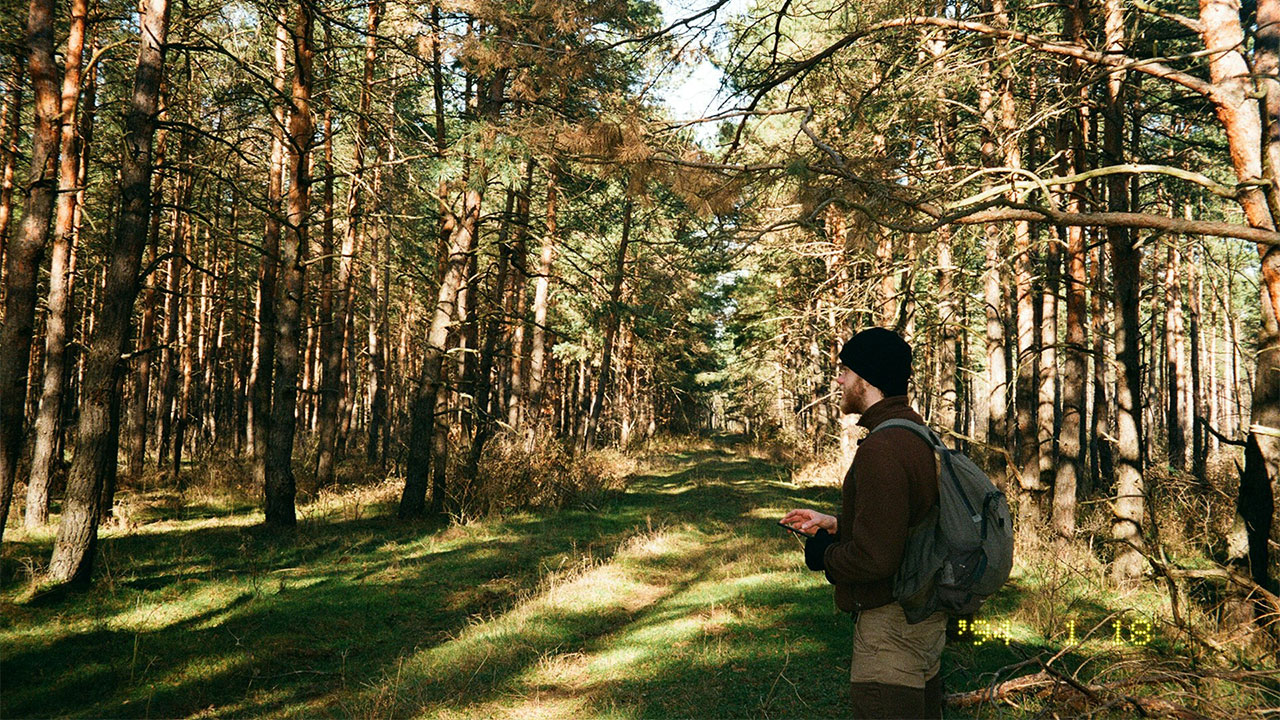
This may be the biggest tell of all. The man most likely to get lost walking to the truck is usually the man least willing to imagine it happening to him. He treats basic navigation as too simple to respect. He assumes the route is obvious, the ground is easy, and his general confidence is enough to carry him through. That attitude sounds harmless until you realize it usually leads to weak habits everywhere else—less observation, less communication, less route-building, less caution once light or weather starts changing.
The outdoors has humbled a lot of men who thought getting turned around was something only rookies did in dramatic places. Truth is, people get confused in perfectly ordinary spots all the time. The difference is that experienced men build habits that keep small confusion from becoming a real problem. The overconfident man doesn’t. He bets on things staying easy. And that’s exactly why he’s the one I’d least like to trust with directions back to the truck.
Like The Avid Outdoorsman’s content? Subscribe to our newsletter so you never miss an article.
Here’s more from us: