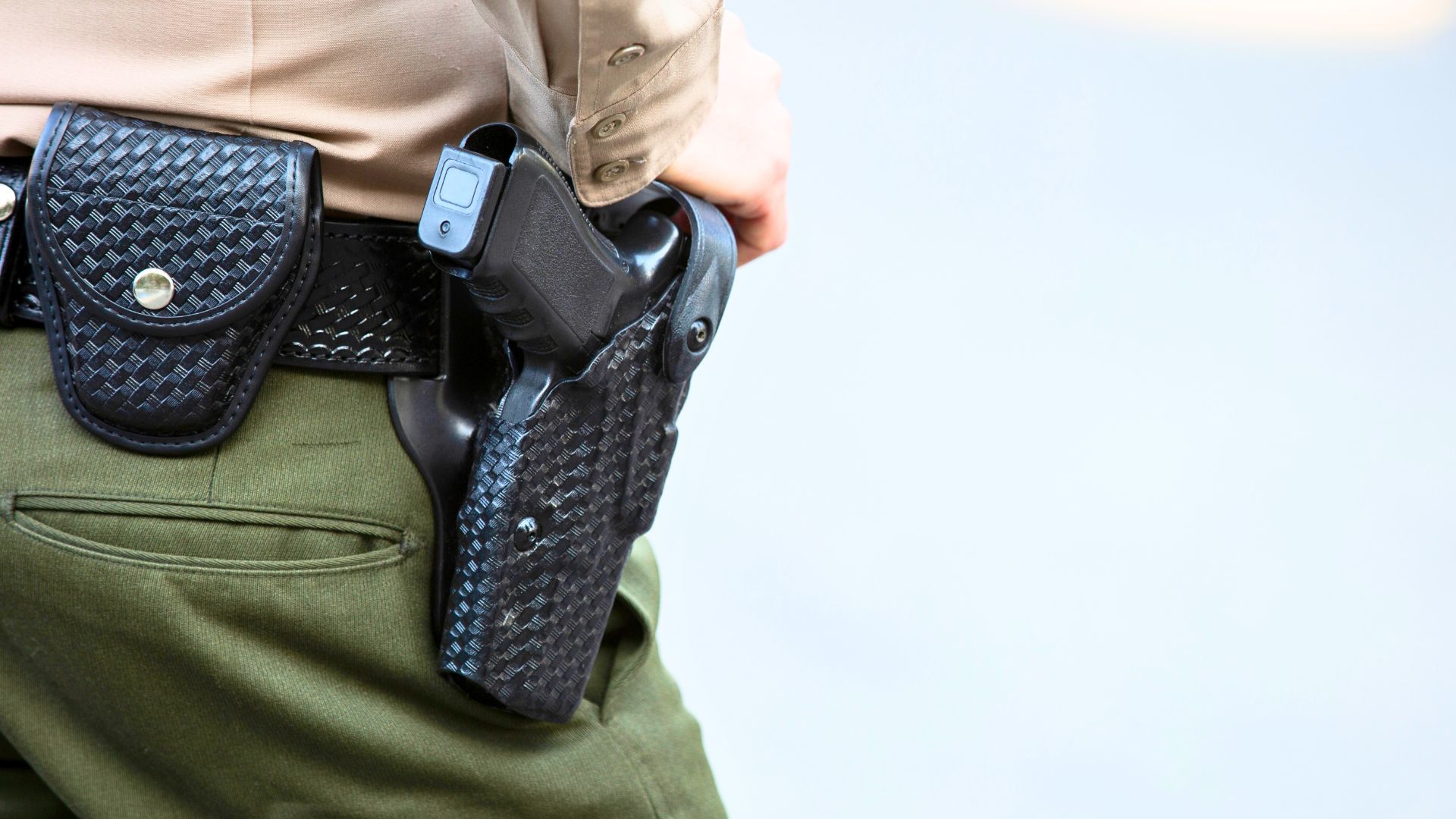
Photo credit: Matt Gush/Shutterstock.com
Duty pistols live a harder life than most guns ever will. They spend long days in holsters, get exposed to weather, dust, sweat, and impacts, and still need to run without hesitation when called upon. Only a handful of sidearms have earned enough trust to ride on duty belts across thousands of agencies. These aren’t trend pieces—they’re pistols that proved themselves through durability tests, high round counts, and consistent field performance.
When you look at what professionals carry today, you’re seeing the result of decades of evaluation and refinement. These pistols earned their place in duty holsters through performance, not advertising.
Glock 17

The Glock 17 became a duty standard because of its reliability, capacity, and straightforward design. Agencies adopted it widely after seeing how well it handled high round counts with minimal maintenance. The polymer frame reduced weight without sacrificing durability, and the consistent trigger made training easier across large departments.
Outdoors or in harsh environments, the 17 keeps cycling even when exposed to grit, moisture, or long use cycles. Its simplicity also means fewer parts to break or tune. If you’ve ever seen a duty belt in the last twenty years, odds are you’ve seen a Glock 17 riding on it.
Sig Sauer P226

The P226 earned a long-standing reputation in duty holsters because of its accuracy, metal-frame stability, and track record in military trials. Its double-action first shot requires training, but once mastered, the pistol offers excellent control and precision.
The P226 handles adverse conditions extremely well, which made it a favorite among federal units and maritime teams. It cycles reliably with different loads and performs consistently whether clean or dirty. Its durability and predictable handling kept it in service long after newer designs emerged.
Beretta M9 / 92FS

For decades, the M9 and 92FS series were the standard sidearms for the U.S. military, proving their durability under some of the toughest conditions a handgun can face. The open-slide design improves feeding consistency, and the metal frame absorbs recoil smoothly.
In duty environments, the 92-series pistols have shown impressive longevity. They can withstand extreme round counts with routine maintenance. Despite its size, the platform remains respected for its accuracy and field reliability, earning a permanent place in the duty history books.
HK USP
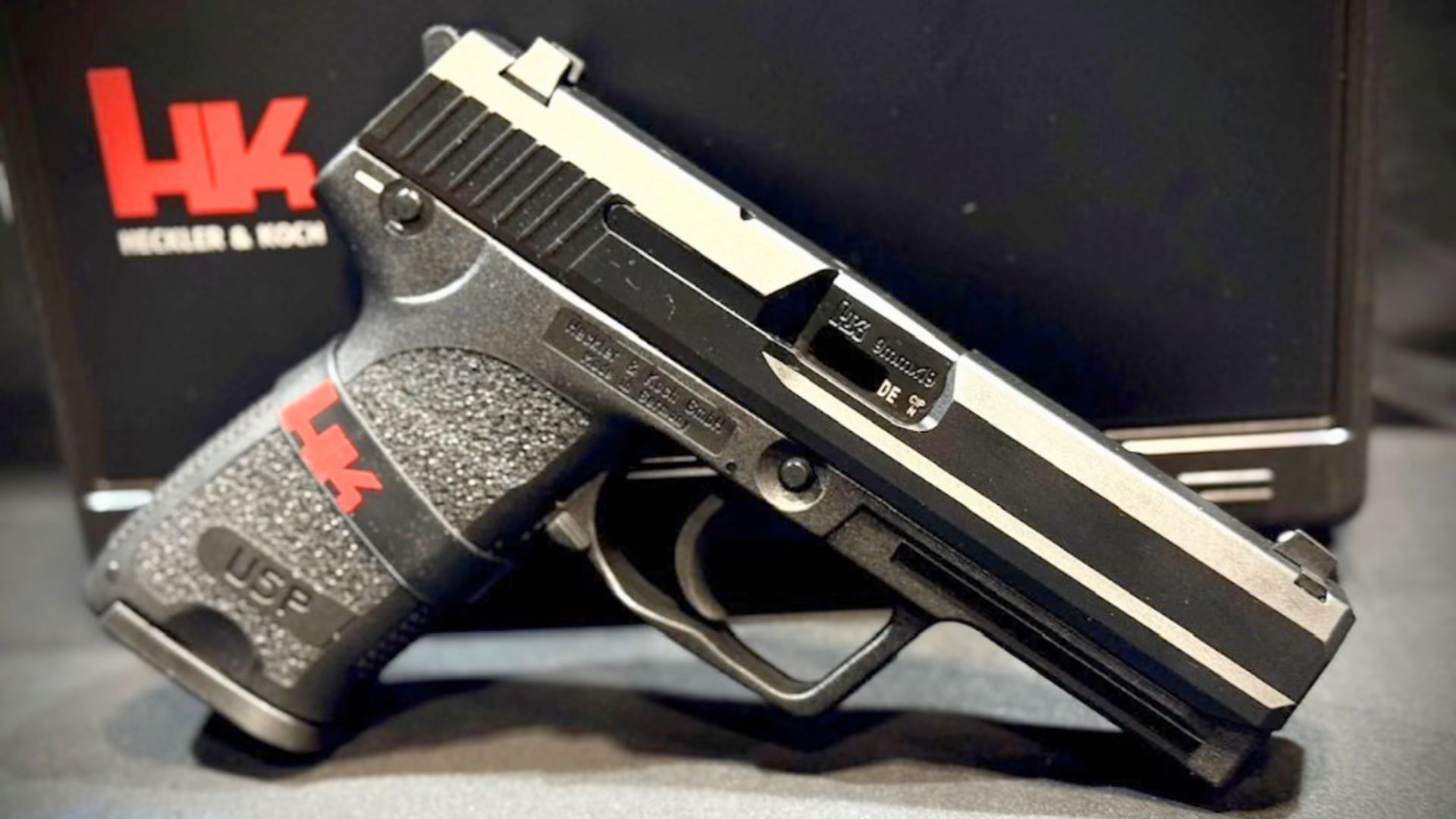
The HK USP built its reputation on ruggedness. Designed to endure testing far beyond normal service conditions, it became known as a pistol that could take abuse and stay functional. Its recoil reduction system helped shooters maintain control during rapid fire, which mattered during extended training days.
Agencies appreciated its reliability with NATO-spec ammunition and its ability to run smoothly even when dirty. The USP’s durability and modular safety options made it a natural fit for duty holsters where conditions were unpredictable.
Glock 22

The Glock 22 dominated law enforcement holsters for years when .40 S&W was the preferred duty caliber. It offered higher capacity than most metal-frame pistols and lighter weight compared to older .40-caliber designs.
Agencies valued how consistently it ran, even as the higher-pressure round accelerated wear in other platforms. Departments that carried the 22 appreciated the familiar controls shared with the Glock 17, which streamlined training and qualification. It helped define duty pistols during the height of the .40 era.
Smith & Wesson M&P9
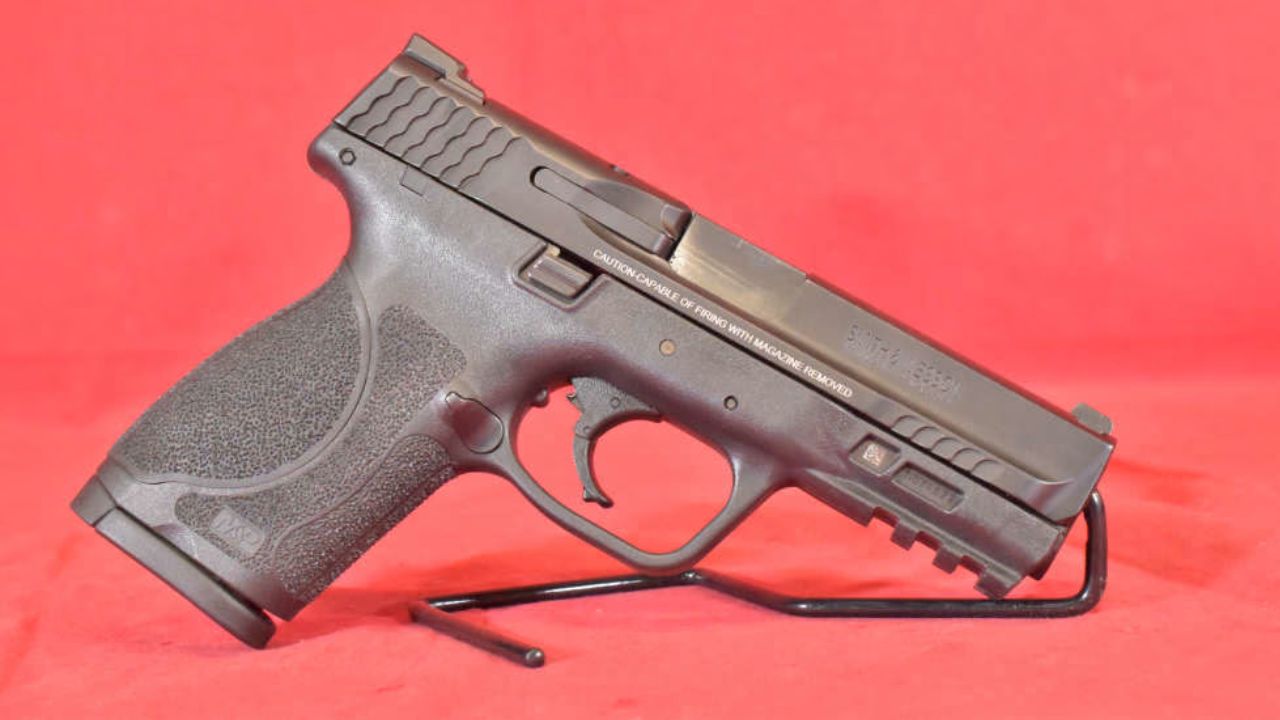
The first-generation M&P9 gave agencies an ergonomic alternative to Glock while maintaining excellent reliability. Its interchangeable backstraps made it easier to fit to a wide range of officers, improving performance on the range.
The pistol handled high-volume training without major failures, and the steel chassis inside the frame increased rigidity. Many departments adopted it because it balanced comfort with durability, and the M2.0 improvements only reinforced that reputation.
HK P2000

The HK P2000 found a home in both law enforcement and federal service because of its reliability and adaptable controls. With variants offering different trigger systems, agencies could tailor the pistol to their needs.
Its compact yet duty-capable size made it a favorite among plainclothes officers and specialized units. The P2000 runs well in adverse environments, and its robust construction minimizes the type of wear that causes issues in lighter designs.
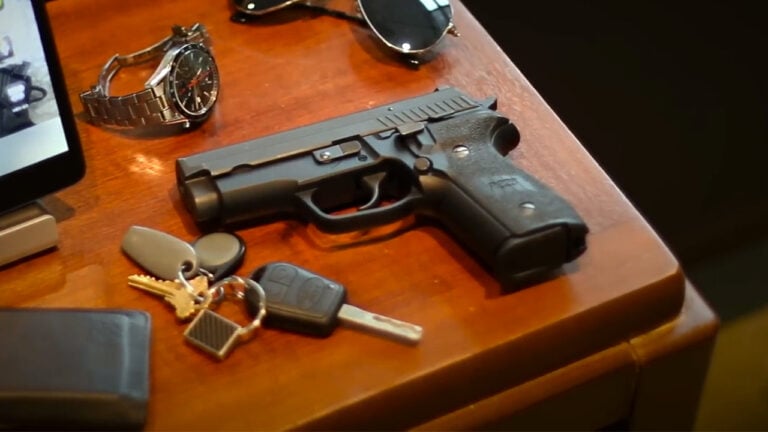
Sig Sauer P229

The P229 earned its place through proven performance with higher-pressure calibers like .40 S&W and .357 SIG. Many federal agencies carried it because it handled those loads better than most pistols of its time.
Its sturdy slide and metal frame gave shooters confidence during extended training cycles. The P229’s accuracy and reliability under pressure made it a long-term duty staple. Even as departments moved to 9mm, the P229 remained respected for its durability.
FN FNX-45 Tactical

While large, the FNX-45 Tactical earned duty respect among units needing a .45-caliber platform with high capacity and extreme durability. The pistol handles recoil better than many .45s and offers reliability with both suppressed and unsuppressed configurations.
Its ambidextrous controls and strong build quality made it well-suited for specialized teams. When you need a gun that can endure rough handling, the FNX-45 stands out as one of the more dependable heavy-caliber duty pistols.
Glock 19

Many agencies and military units adopted the Glock 19 because it offered duty-level reliability in a slightly smaller package. It still provides excellent capacity and performance while being easier to carry for long hours.
The 19 has proven itself in countless field environments, from urban duty work to harsh desert climates. Its familiar controls, durability, and compatibility with larger Glock magazines made it a natural fit for both uniformed and plainclothes roles.
Walther PPQ

The PPQ earned duty consideration thanks to its excellent trigger and strong reliability record. Agencies that issued it valued how easy it was to shoot well, especially for officers with less experience.
Its ergonomics helped improve qualification scores, and the pistol maintained accuracy through long training cycles. The PPQ may not have reached the same adoption numbers as Glock or Sig, but it earned a reputation as one of the best-handling duty pistols available.
HK VP9

The VP9 made its way into duty holsters because of its consistent striker-fired performance and excellent ergonomics. The interchangeable panels allow officers to tailor the grip, improving control under stress.
Its reliability across environmental extremes and high round counts established it as a serious duty contender. Many officers appreciate how natural the pistol feels during long training days, making it one of HK’s most widely adopted modern designs.
Sig Sauer P320

The P320 changed the duty market with its modular fire control unit and widespread adoption by major military forces. Its easy configurability lets agencies adapt the gun to different roles without retraining on a new platform.
The trigger, ergonomics, and reliability under intense testing earned it official service contracts around the world. Whether in full-size or compact duty form, the P320 has proven itself capable of sustained field use.
Beretta PX4 Storm

The PX4 Storm earned respect from agencies that valued its rotating-barrel system and low felt recoil. While not as common as other duty guns, it has a strong record of reliability and performs well with high round counts.
Its modular backstraps and smooth double-action trigger made it approachable for a variety of shooters. In challenging environments, the PX4 has shown it can keep running while maintaining excellent control.
Glock 21

For departments committed to .45 ACP, the Glock 21 became the preferred duty pistol because it carried more rounds than traditional .45s while maintaining Glock’s proven reliability. Its thick frame handles recoil well, and the pistol remains consistent under heavy use.
Agencies valued how simple it was to maintain and how few parts it required. In units that wanted a powerful sidearm without giving up modern duty expectations, the 21 stood out as the dependable choice.
Like The Avid Outdoorsman’s content? Subscribe to our newsletter so you never miss an article.
Here’s more from us: