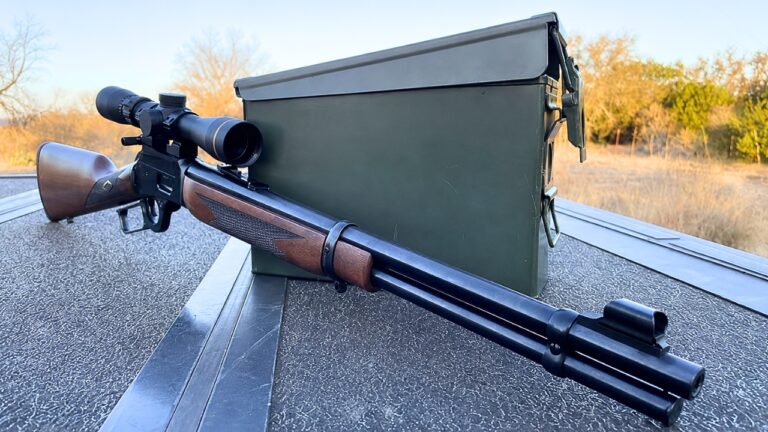
Photo credit: Homestead Tactical/GunBroker
If you handload, you know that not every batch comes out perfect. Sometimes brass is uneven, primers sit a hair proud, or a charge varies a touch. Some rifles are picky and will punish even small mistakes; others shrug, cycle, and get the job done anyway. The rifles below have reputations — from hunting fields to military service — for being forgiving when your reloads aren’t bench-perfect. That doesn’t mean you should be sloppy; safe reloading practices matter. It does mean these guns give you a wider margin for error, and that’s useful whether you’re testing new loads, using mixed brass, or simply running economical practice rounds. These are practical tools: they keep firing and get you back to shooting instead of clearing malfunctions.
Winchester Model 1894

The Winchester 1894 is one of the most famous lever-actions out there, and its simple, open design helps it tolerate handloads that aren’t factory-clean. Lever actions generally have generous chamber clearances and feed systems that aren’t as finicky as tight-tolerance bolt guns. That means if a case is a little off on neck tension or the bullet isn’t seated to perfection, the 1894 will usually still chamber and fire.
When you’re in the field, that’s a big advantage. Lever rifles are designed to feed from a tube magazine and to function with a variety of bullet shapes and seating depths. While you always want to keep pressure within safe limits, the 1894’s forgiving nature makes it a good choice if you occasionally shoot mixed or experimental reloads. It’s not a license to ignore proper reloading technique, but it will keep you shooting when minor imperfections would make other rifles balk.
Marlin 336

The Marlin 336 is another lever-action that earns forgiveness points. It’s a straightforward, proven design built to run in less-than-ideal conditions, and that robustness extends to reloads. Because of its feeding geometry and chamber design, it tends to be lenient with rounds that aren’t finished to match-grade standards. For hunters using low-cost practice loads or experimenting with different bullets, the 336 keeps feeding reliably.
One thing to keep in mind: lever guns like the 336 work best with stable, consistent handloads rather than wildly varying charges. Still, you’ll find that a Marlin 336 will often accept brass that a tighter bolt or AR platform would reject. That practical reliability is exactly why lever-actions have remained popular for real-world hunting — they’ll keep you in the stand even when your reloads aren’t perfect.
Henry Big Boy

Henry lever rifles get overlooked in some circles, but they share the same practical advantages as other classic lever guns. The Big Boy’s modern manufacturing brings good tolerances, but it still retains the forgiving feeding that defines lever actions. If you’re feeding handloads that vary a little in overall length or neck tension, the Henry usually swallows them and keeps running.
What makes Henrys particularly handy is their smooth action and reliable extraction. They’re built to be used, not babied, and that user-focused design means reloads that would frustrate a picky bolt gun often pass through without drama. Again, safe pressures are nonnegotiable, but for routine practice and hunting, a Henry is one of those rifles that won’t punish you for small reloading slip-ups.
Browning BLR

The Browning BLR blends modern design with the forgiving traits of lever actions. Its rotary magazine handles pointed bullets without the issues tube-fed rifles can see, and the action is built to feed reliably across a range of cartridge lengths and seating depths. Many hunters use BLRs with handloads tailored to local game, and the rifle’s tolerance for slight variations makes that practical.
Because the BLR is often chambered in more powerful rounds than classic lever guns, you still want to be careful with your charges. But in day-to-day use it proves to be tolerant: bullets that are seated a hair deeper than usual or brass that’s been through a cycle tend not to cause malfunctions. If you handload for hunting and want a carry rifle that won’t make you pay for minor mistakes, a well-set-up BLR is a solid, forgiving option.
Browning BAR (Semi-Auto Hunting)

The semi-auto Browning BAR has a long history as a dependable field rifle, and its gas system is forgiving of a range of ammo conditions. Unlike some finely tuned semiautos that demand exact pressures and clean brass, the BAR’s design can handle handloads that vary within reasonable, safe limits. That makes it a practical rifle for shooters who handload for performance but also want reliability in the field.
You’ll still want to avoid low-pressure charges that won’t cycle the action, but within safe parameters the BAR won’t punish a slightly off brass prep or an odd bullet profile. Hunters appreciate that it gives them the flexibility to tune loads for performance without needing to baby the gun. In short, the BAR strikes a good balance between being a performance rifle and being forgiving enough for real-world use.
Steyr AUG (Service Carbine)

The Steyr AUG’s bullpup layout is distinctive, and its long service history shows it’s a practical design in the hands of soldiers and police. Military carbines tend to be built to accept a wide variety of ammunition conditions, and the AUG is no exception. Its robust feeding system and chamber clearance mean it’ll usually cycle handloads that aren’t factory-perfect — again, so long as pressures are safe.
Part of the AUG’s strength is that it was designed to operate with varied ammo in austere conditions. That real-world origin translates for reloaders: the rifle isn’t hyper-sensitive to slight variances in seating depth or primer seating. For people who experiment with loads on a duty-style platform, the AUG demonstrates how a well-engineered service gun can be forgiving without sacrificing reliability.
FN SCAR 17S

The FN SCAR 17S is a modern, piston-driven rifle that’s known for reliable operation across a broad range of conditions. Piston systems generally tolerate dirty or imperfect ammo better than some direct-impingement designs, and the SCAR’s engineering lets it run handloads that vary a bit in power or case condition without immediate failures. That makes it useful for range work where reloads aren’t always perfect.
You won’t want to feed it dangerously overpressure rounds, but within safe reloading practices the SCAR handles real-world ammo variance well. The reputation comes from both military usage and civilian experience: shooters appreciate a rifle that gives them margin for error. If you reload and want a modern platform that won’t be overly punitive to your experimentation, the SCAR is a dependable option.
SIG MCX / MCX Virtus

The SIG MCX family — including the MCX Virtus — was designed for adaptability and reliability. Its short-stroke gas system and generous feed geometry make it tolerant of a variety of ammunition types, which in practice includes well-constructed handloads that may differ slightly from factory specs. That doesn’t mean you can be careless with pressures, but many shooters find the MCX forgiving when brass is uneven or bullets sit a hair off.
The modular design also helps; swapping buffers and gas settings can often tune the rifle to handle a wider range of loads without fuss. For reloaders who like to try different charges or components, the MCX’s user-adjustable features and reliable cycling give you practical flexibility without constant malfunctions.
Mauser 98 / K98 Pattern

The Mauser 98 is a classic bolt action built to withstand rough service, and that durability translates into tolerance for handloads that wouldn’t please more delicate bolt guns. Its controlled-feed extractor and roomy action geometry allow it to accept brass that’s been fired multiple times or loaded to slightly varying lengths. While many Mauser rifles are old, their basic mechanical robustness still shines when you feed them handloads.
For hunters using mixed brass or experimenting with old stock, the K98 pattern often won’t complain like a modern, tight-chambered match bolt might. Accuracy can still be excellent with good ammunition, but function is what stands out here: the Mauser wants to keep working even if your reloads are a little rough. It’s a tried-and-true example of engineering that tolerates real-world practice.
Swiss K31

The Swiss K31 is a well-made straight-pull rifle with strong, reliable mechanics. Swiss service rifles were designed for conscripts and long-term field use, so they’re built to accept a range of ammo conditions. That translates into a forgiving attitude toward handloaded rounds that vary a bit in case condition or seating length. The K31’s action and chamber are workmanlike and practical.
If you’re running reloads with mixed brass or seating depths that don’t meet benchrest tolerances, the K31 will typically still function without complaint. It won’t forgive unsafe pressures, but for routine reloading work where the goal is a solid hunting or training round, the Swiss action gives you a safe margin. It’s another example of military heritage producing rifles that tolerate the imperfections of field use.
Henry Long Ranger / Modern Lever Alternatives

Modern lever rifles like the Henry Long Ranger or other contemporary designs combine the old lever-action tolerance with up-to-date manufacturing quality. They benefit from generous feeding geometry and reliable extraction, so handloads that skirt strict dimensions often still feed, fire, and extract cleanly. These rifles are built for practical hunting, and their tolerance for real-world ammo conditions is part of that purpose.
What sets modern levers apart is consistent machining and materials, which reduce the chance that a slightly imperfect reload will cause a hiccup. You still respect safe pressures and good reloading protocol, but these rifles give you the comfort of knowing small variances usually won’t ground your shooting session. For reloaders who want to mix experimentation with field reliability, modern lever rifles are a smart, forgiving choice.
*This article was developed with AI-powered tools and has been carefully reviewed by our editors.