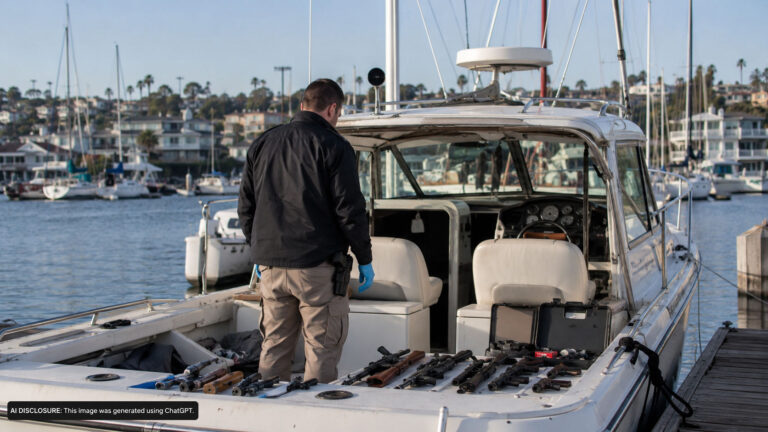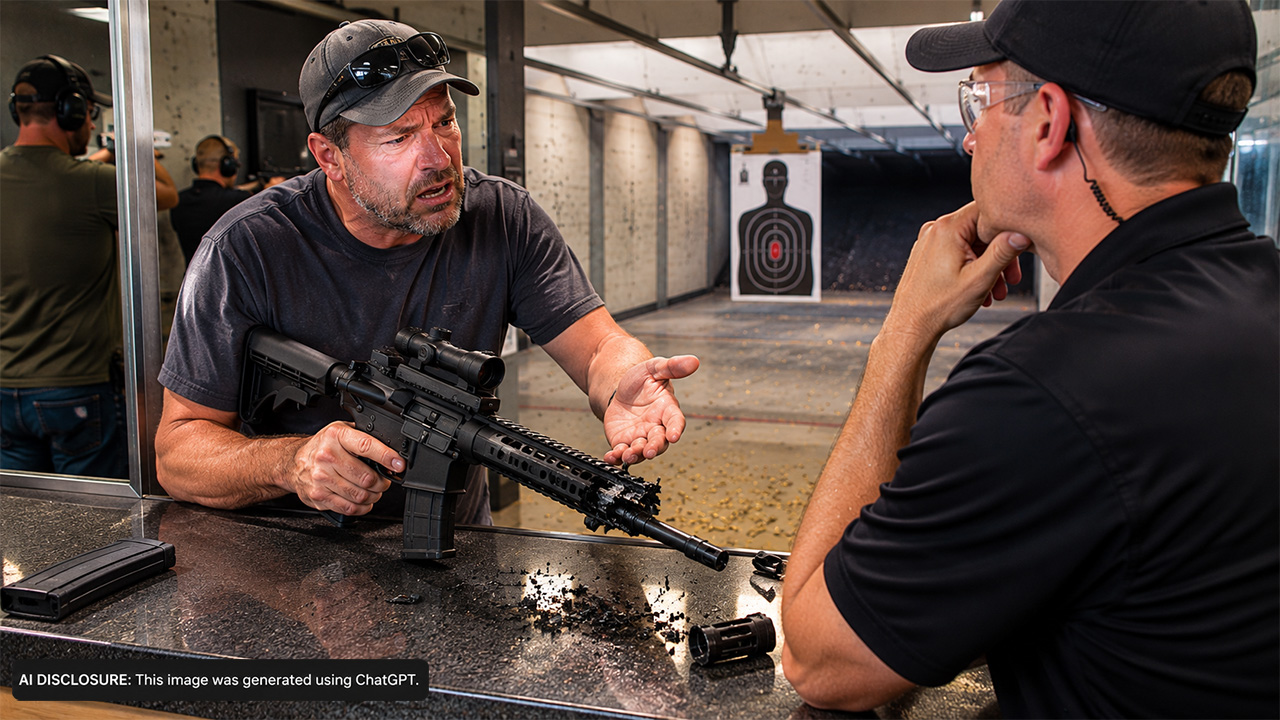
Photo credit: AI-generated image created using ChatGPT. Illustrative only
A jammed rifle on a busy range is stressful enough when you’re new to the platform. But one customer’s day at Scottsdale Gun Club reportedly turned into a hard lesson about safety, handling, and what can happen when a business decides the problem is “not theirs” once something expensive breaks.
The account comes from the original post written by a shooter describing what happened to his brother and a recently purchased used AR-15 during a range session.
A basic AR-15, a new shooter, and a malfunction that wouldn’t clear
According to the post, the rifle was an Olympic Arms AR-15 from the post-ban era—nothing rare or flashy, but described as solid and previously looked over with no obvious issues. The shooter was also new, which matters, because malfunctions tend to snowball when someone doesn’t have the reps yet.
During shooting, the rifle reportedly jammed hard enough that the bolt wouldn’t come back. A range master attempted to get it to cycle but couldn’t, and that’s where the situation started drifting away from “routine range problem” into something with bigger consequences.
The first safety decision that set the tone
The post claims the range master instructed the shooter to take the rifle—still stuck with a round in the chamber—off the range and into the showroom area to have the “AR-15 person” handle it. The writer calls that the first major mistake: a firearm with an unknown chamber condition being moved through a retail space with the action closed.
Every range has its own procedures, but most experienced shooters would agree on the general principle: if there’s a suspected live round and the action is locked up, you keep the muzzle in a safe direction and keep the gun in a controlled area until someone competent and designated can deal with it. Walking a bagged rifle through a store is the kind of thing that gets everyone’s blood pressure up—customers, staff, and anybody responsible for safety.
The showroom confrontation and a destructive “fix”
Once the shooter reached the other side of the store, he reportedly presented the bagged rifle and explained he was told to come out so someone could help clear the AR. The employee he met allegedly responded by verbally attacking him for bringing the rifle out without clearing it first. The shooter reportedly tried to explain he was following the range master’s direction, but that didn’t change the tone.
Then came the part that’s hard to read if you’ve ever saved up for a rifle. The post says the employee raised the AR “completely above his head” and slammed the buttstock on the ground “with all his strength.” The result, according to the writer: the stock and buffer tube “completely shatter,” leaving the shooter speechless.
For folks who don’t live in the AR world, the buffer tube (receiver extension) is not decorative. It houses the recoil spring and buffer assembly, anchors the stock, and is fundamental to the rifle’s function. If that’s shattered, you’re not talking about a scuff or a cracked stock—you’re talking about a disabled rifle that now needs real parts and labor to put right.
“You authorized him” — and the refusal to make it right
After the rifle broke, the shooter reportedly asked for a manager. The manager’s response, as described in the post, was essentially “sorry there’s nothing we can do, you authorized him to clear your AR and he did.” In other words, the business treated the destructive clearing attempt as a service the customer consented to, not damage caused by staff.
The writer—identified as the shooter’s brother—then came to the store and asked the manager on duty if there was anything they could do to help. The answer remained no. From the customer side, that feels like getting hit twice: first by the physical damage to the rifle, and then by being told you’re on your own for repairs on a gun you didn’t break.
In the real world, this is where documentation matters. When a firearm is damaged by staff handling, a customer generally wants the business to at least cover the repair or replace the damaged components. But once a shop takes the position that it’s not responsible, you’re left with a bad choice menu: escalate, leave and eat it, or try to pursue it through the avenues available in your area. None of those are fun.
Being told to leave, police involvement, and a lifetime ban
The situation didn’t stay calm. The writer says the staff asked them to leave and he refused. Scottsdale Police then arrived and told them that since it’s private property and they were asked to leave, they had to go.
The writer reports he received a trespassing warning and was banned for life. No arrests were described in the post, but the message was clear: the business wasn’t going to negotiate in that moment, and the response shifted from customer-service dispute to a property-rights enforcement issue.
That’s an important practical note for anyone who spends time in gun shops and ranges. Even if you believe you’re 100% right about what happened, refusing to leave when directed can quickly move you into trespass territory. Once law enforcement shows up, the “who broke what” argument usually becomes secondary to “are you leaving when told to leave.”
The practical takeaways for gun owners dealing with range malfunctions
This story has a few takeaways worth putting in your back pocket, especially if you shoot public ranges or you’re the guy who brings a new shooter along. First, if a gun is locked up and you suspect a round is chambered, slow everything down. Ask for the range master to come to you, and keep it pointed in a safe direction in a place where staff are comfortable managing it.
Second, be clear about who is handling your firearm and what you’re authorizing. If a staff member says they’ll “clear it,” it’s fair to ask how they plan to do that and where it will happen. You don’t need to be rude, but you also don’t need to hand over your property for a mystery procedure in the middle of a retail floor.
Third, if something does go sideways, get names, take photos (when safe and allowed), and ask for an incident report or written documentation right then. That doesn’t guarantee the shop will pay, but it keeps the story from turning into “he said, she said” five minutes later.
Finally, for businesses: the gun community is full of working folks who don’t mind paying for range time and service, but they expect competence and basic accountability. A hard malfunction is one thing. Shattering a customer’s buffer tube and stock during an aggressive clearing attempt—and then refusing to help—creates a reputation problem that no amount of marketing can erase.
At the end of the day, every shooter wants the same thing: a safe range, professional staff, and a rifle that comes home in one piece. When any of those three fail, it’s not just a ruined range trip—it’s a reminder that how problems are handled matters as much as how they start.
Like The Avid Outdoorsman’s content? Subscribe to our newsletter so you never miss an article.
Here’s more from us: