Photo credit: Paul Tessier/Shutterstock.com
Choosing between a shotgun and a rifle for whitetail hunting usually comes down to where you hunt, but the more you look at their real-world performance, the more you realize each tool brings an advantage most hunters overlook. Rifles dominate open country because they carry flatter trajectories and more reach. Yet shotguns, especially with today’s sabot slugs and improved sights, perform far better than many hunters give them credit for. In thick woods or brushy habitat where deer rarely step past 75 yards, a shotgun can give you a steadier hold, more confidence under pressure, and recoil that’s easier to manage than you’d expect with the right load. When you compare both on equal footing, the gap between them becomes much smaller than tradition makes it seem—sometimes even flipping the advantage entirely.
Shotguns shine when your shots are inside 75 yards
A shotgun’s biggest advantage is how naturally it handles in tight woods. The balance, shorter barrels, and upright stocks make it easy to shoulder quickly when a deer slips through a gap. The slower slug velocities actually work in your favor at close range, giving you predictable penetration without worrying about blowing through a deer with excess speed.
When you’re hunting thick cover, the reduced muzzle jump makes it easier to stay on the deer through recoil. Slugs carry enough authority to anchor whitetails cleanly without relying on long-distance ballistics. If you spend your season in timber, inside edges, or swamp country, a shotgun gives you more control than many rifles in that same environment.
Rifles rule when visibility opens up

Once you get into open cuts, crop edges, or river bottoms, a rifle’s reach becomes the deciding factor. Flat-shooting calibers like .308, .270, and .30-06 let you hold dead-on farther than any slug can maintain stability. You also gain the benefit of consistent expansion across a wide range of distances, something shotguns can’t match once you stretch past 125 yards.
In these settings, the trigger quality, reduced recoil impulse, and steadier follow-through make rifles easier to shoot with precision. When your hunts regularly involve shots past timber distances, a rifle’s predictability becomes hard to beat. You’re simply equipped for more situations without adjusting your hold or second-guessing your trajectory.
Slug guns are far more accurate than they used to be
Modern rifled-barrel slug guns have changed the game. With sabot slugs designed for specific bore diameters, accuracy that once hovered around “minute-of-paper-plate” is now well inside “minute-of-deer-vitals.” Many setups hold 3-inch groups at 100 yards, which used to be considered rifle territory for certain cartridges.
The improvement in optics rails, receivers, and inline scope mounting has helped as well. Instead of relying on bead sights, you’re running red dots or low-power scopes that track recoil without losing zero. All of this gives slug hunters the kind of confidence that used to belong only to rifle shooters.
Rifles make tracking easier with cleaner wound channels

One advantage rifles still hold is how predictably they create exit wounds. With bonded or controlled-expansion bullets, you can count on a straight wound channel that’s easy to follow if the deer runs. This consistency matters in big country where trails disappear quickly.
Shotgun slugs make devastating impacts, but their wound channels are sometimes harder to track if the slug expands violently or doesn’t exit. In open terrain, the clean punch-through from a rifle gives you a better chance at a short track job and quick recovery, especially when the deer runs into tall grass or thick briars.
Shotguns handle recoil differently than many expect
You’d think a 12-gauge slug gun would kick harder than most deer rifles, but that isn’t always the case. Gas-operated shotguns and lighter slugs spread the recoil impulse over a longer push, making it feel less abrupt than a sharp rifle crack from something like a .30-06.
This smoother impulse can help you stay on target better for follow-up shots at close range. The recoil is still meaningful, but it doesn’t snap you off your sight picture the way some heavier rifle calibers can. If you’re recoil-sensitive or hunt from awkward shooting positions in tight cover, a shotgun may actually feel more manageable.
Rifles win for precision when the shot angle isn’t perfect
When you’re taking a quartering shot or threading a bullet through a tight gap, a rifle’s precision advantage becomes clear. High-quality riflescope reticles, crisp triggers, and consistent bullet trajectories make those tricky shots far more controlled than they would be with a slug gun.
Even with improved slug accuracy, you’re still dealing with a larger projectile and more dramatic arc. When the deer doesn’t give you the angle you want or the lane is narrow, a rifle gives you the margin for error you need to make a clean hit without guessing hold.
Shotguns bring confidence in thick cover
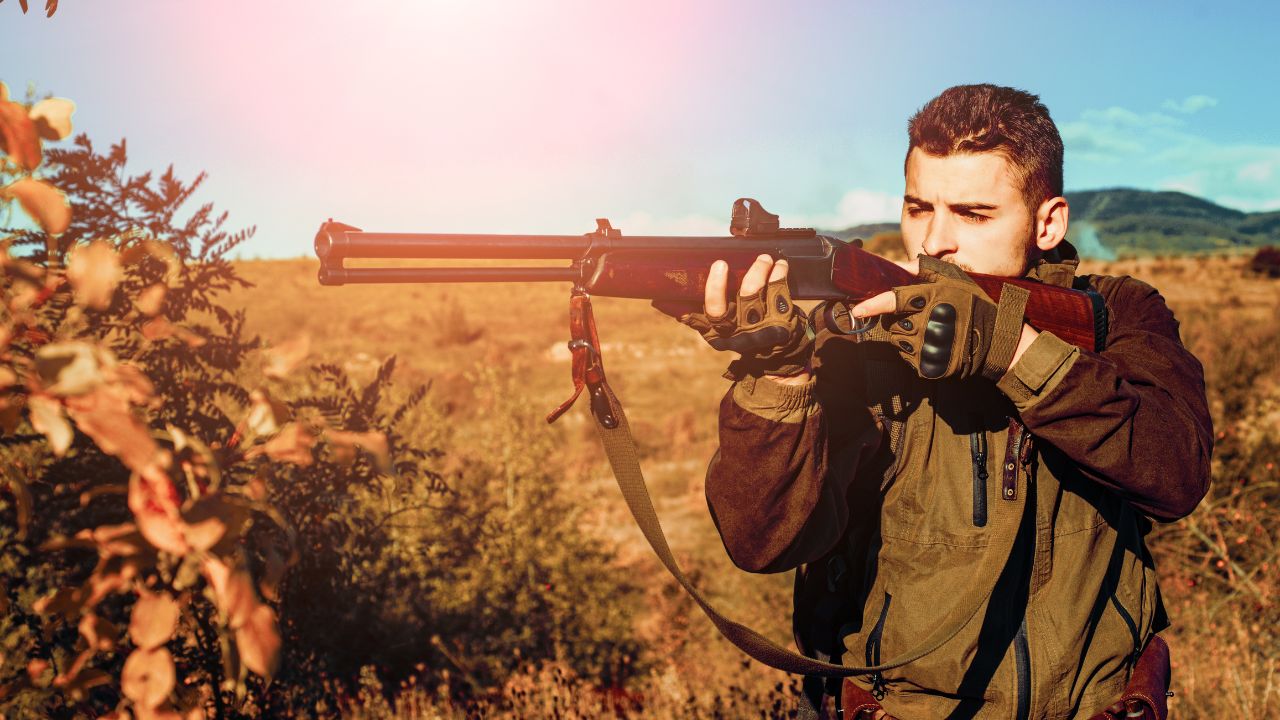
There’s something freeing about carrying a shotgun in dense habitat. You don’t worry about long shots, dialing holds, or second-guessing your zero after a bumpy ATV ride. Shotguns are built to be knocked around, rained on, and carried through rough country without losing performance.
When a deer shows up at 30 yards, that short sight radius and natural pointability help you settle immediately. If your season mostly happens where you can barely see 60 yards, the shotgun’s simplicity becomes a real advantage that lets you stay focused on the deer instead of the ballistics.
Rifles offer better performance from awkward shooting positions
Tree stands, leaning shots against trees, and sitting shots from ground blinds often favor rifles. Their weight distribution and longer sight radius help you stabilize more easily when you’re not shooting from a perfect rest. The cleaner trigger break also helps reduce any wobble you might have when settling crosshairs.
Shotguns work fine in close quarters, but when you’re making shots from less stable positions, a rifle’s ergonomics make the difference. The precision they offer under pressure is one of the reasons many hunters stick with them even in states where both options are legal.
Slug guns can anchor deer quickly at close range

One place shotguns excel is the way slugs transfer energy at impact. A large-diameter projectile moving at moderate speed dumps a lot of force into the vitals without over-penetrating. This often leads to shorter recovery distances on close-range deer, which is a major advantage in swamp country, thick pines, and river bottoms.
If your hunting area is full of quick ambush-style shot opportunities, a shotgun gives you that close-range confidence that the deer won’t go far. The combination of big frontal area and deep penetration inside 75 yards is hard to beat.
Rifles give you more flexibility across varied terrain
If your deer season takes you through everything from hardwood ridges to open edges, a rifle gives you more adaptability. You’re not locked into close shots, and you don’t have to change guns depending on where you’re hunting that day.
A rifle zeroed at 100 or 150 yards handles most whitetail scenarios without adjustment. When the terrain changes mid-hunt, you don’t have to rethink your setup. It simply covers more ground and makes you ready for almost any shot you’re likely to take.
Like The Avid Outdoorsman’s content? Be sure to follow us.
Here’s more from us:
The worst deer rifles money can buy
Sidearms That Belong in the Safe — Not Your Belt
*This article was developed with AI-powered tools and has been carefully reviewed by our editors.