Photo credit: William Hager/Shutterstock.com
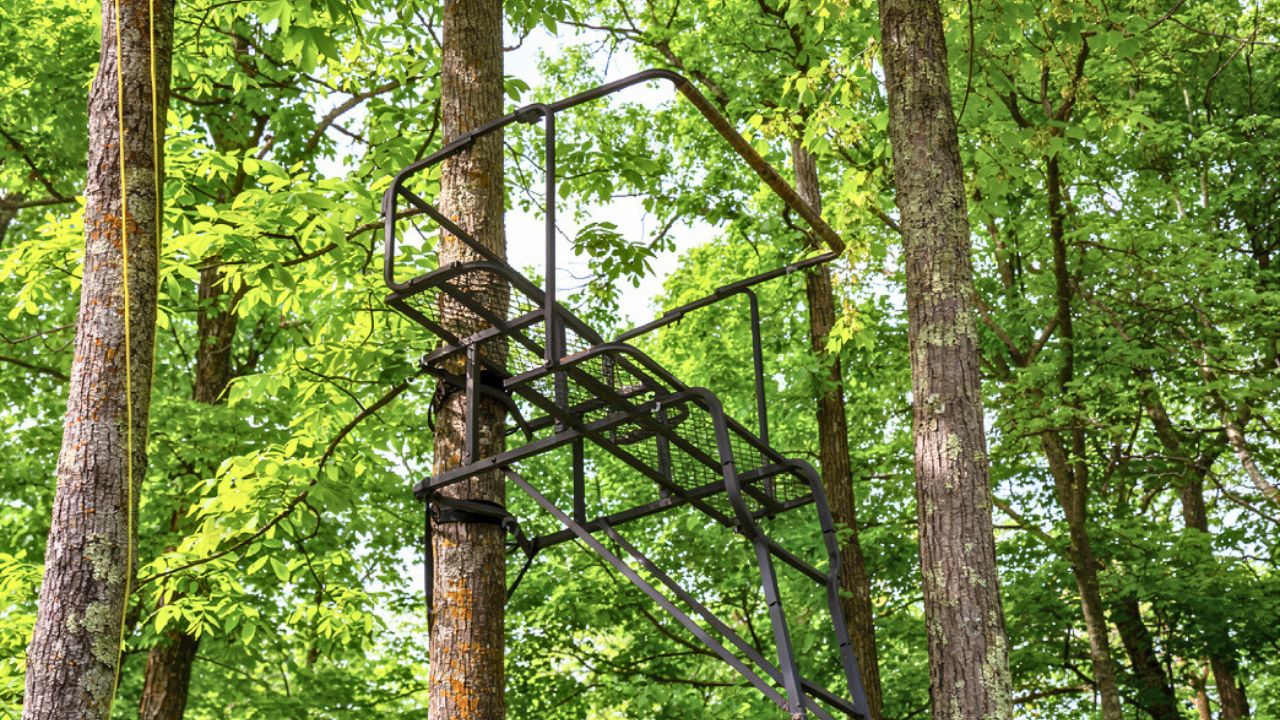
Finding another hunter’s stand in the spot you planned to hunt will test your patience in a hurry. Maybe you scouted that ridge all summer. Maybe you hung cameras, watched the wind, found the crossings, and had that exact tree picked out before the season ever opened. Then you walk in one morning and there it is: somebody else’s ladder stand, climber, saddle setup, or ground blind sitting right where you expected to be. It feels personal, even if it may not be. That is where a lot of hunters make their first mistake. They react like the other guy stole something from them, when the better move is to slow down, figure out what kind of land you are on, and handle it without turning a bad morning into a bigger problem.
Public Land Changes the Rules
On public land, “your spot” is usually not really yours. That is the hard truth, and every serious public-land hunter has had to swallow it at least once. You can put in the miles, scout harder than everybody else, and still find another hunter sitting right where you wanted to be. Unless the area has specific rules about abandoned stands, permanent setups, tagging requirements, or time limits, another hunter may have just as much right to be there as you do. That does not make it fun, but it does mean you need to keep your head.
The worst thing you can do is start touching someone else’s gear. Do not move it, damage it, leave a nasty note, or act like you are settling a claim. That can turn you from the frustrated hunter into the problem real fast. Take a picture if you need to document it, mark the location for yourself, and back out if the setup ruins your plan. Public-land hunting rewards the guy with backup spots, not the guy who spends the whole morning mad at a tree stand.
Private Land Is a Different Deal
If you are on private land that you own, lease, or have clear permission to hunt, finding a stranger’s stand is a whole different situation. That is not normal competition. That may be trespassing, permission confusion, or somebody taking advantage of a landowner who has been too loose with access. The first move should still be calm documentation. Get pictures of the stand, the location, tracks, any tags, and anything else that helps show what is going on. Do not go ripping it down while you are mad.
Then call the landowner, lease manager, or game warden, depending on the situation. If you own the place, check your local rules before removing property. Some states treat abandoned hunting equipment differently, and some situations can get messy if you handle it wrong. It may feel satisfying to drag the stand to the barn and wait for somebody to come looking, but the cleaner move is to document, report, and make sure you are standing on solid ground before you act.
Do Not Assume You Know the Whole Story
This is where hunters get themselves spun up. You see the stand and immediately build the whole story in your head. Some trespasser snuck in. Some lazy hunter followed your boot tracks. Some guy saw your camera and decided to steal your setup. Maybe that is true. Maybe it is not. Maybe the landowner gave permission to a cousin and forgot to tell you. Maybe the stand was left from last season. Maybe another hunter accessed the same public area from a different road and honestly had no clue you were hunting there.
That does not mean you ignore it. It means you avoid making accusations before you know what happened. Ask questions first. On a lease, talk to the person in charge. On private land, verify who has permission. On public land, accept that you may have simply been beaten to a good tree. A calm hunter usually gets better answers than the guy who comes in hot and starts making everyone defensive.
Have Backup Spots Before You Need Them
A lot of stand disputes feel worse because the hunter only had one plan. If that tree was your entire morning, finding someone else set up there feels like the whole hunt is ruined. That is why experienced hunters keep options. You need a primary spot, a wind-shift spot, a pressure spot, and a “somebody beat me here” spot. It does not have to be complicated. It just means you never walk into the woods with only one move.
This matters even more on public land. Other hunters are part of the landscape. So are trucks at the gate, fresh boot tracks, headlamps in the distance, and stands showing up where you did not expect them. The hunters who keep filling tags are usually not the ones who never run into pressure. They are the ones who adjust without falling apart. If you find another stand, back out quietly, let the woods settle, and go hunt the next best option.
Leave the Ego Out of It
There is a difference between standing up for yourself and letting pride run the show. If somebody is trespassing on private land, deal with it properly. If someone is putting others in danger, report it. If your lease rules are being ignored, get the landowner involved. But if the only issue is that another hunter found the same good pinch point you found, that is not a personal insult. That is hunting pressure.
The woods get crowded in good areas because good areas are good. Deer trails, oak flats, creek crossings, benches, saddles, and funnels do not stay secret forever. You can be annoyed without acting foolish. You can be frustrated without making a mess. A hunter who can walk away from a bad setup and still make a smart decision is usually the one who lasts longer in the game.
Know When to Report It
There are times when this goes beyond a normal hunting disagreement. If the stand is on private land without permission, if bait is involved where it should not be, if locks or gates were cut, if cameras are missing, or if someone is hunting dangerously close to homes, livestock, roads, or other hunters, it is time to involve the right people. That might be the landowner, lease manager, local conservation officer, sheriff’s office, or game warden.
Do not try to play officer in the woods. That is how simple problems turn into confrontations nobody needed. Good documentation helps more than a shouting match. Pictures, dates, locations, license plates when legally and safely gathered, and clear notes can make the difference between “I think someone is trespassing” and “Here is what I found, where I found it, and when it happened.”
The Best Move Is Usually the Boring One
Nobody wants to hear that the best move is to stay calm, document it, and adjust. That does not feel as good as storming in and claiming the spot back. But the boring move is usually the one that keeps you legal, safe, and in control. Hunting already comes with enough frustration. Bad wind, blown stalks, missed chances, and other hunters are part of it. You do not need to add a fight over a tree stand to the list.
If the stand is on public land, treat it as pressure and adapt. If it is on private land, document it and go through the right channels. Either way, do not touch another person’s gear unless you know exactly what the rules allow. The stand may ruin your morning, but your reaction is what decides whether it ruins anything more than that.
Like The Avid Outdoorsman’s content? Subscribe to our newsletter so you never miss an article.
Here’s more from us: