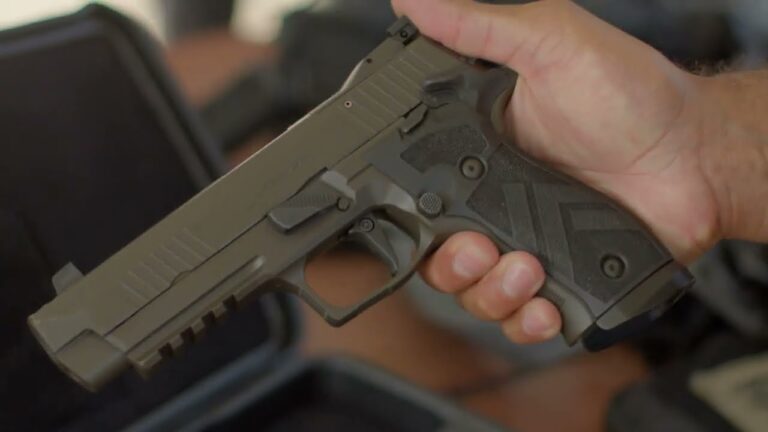
Photo credit: Studio Peace/Shutterstock.com
The fight over suppressor taxes has shifted from a niche regulatory debate to a marquee political battle, and you are now watching it play out in real time. With the National Firearms Act already rewritten to set the transfer tax at zero for many items, a fresh bill targeting how that change is implemented could still reshape what you pay, how long you wait, and what paperwork you face if you want to run a can on your rifle or pistol.
Understanding what a new NFA bill might actually do starts with the rules already on the books, the compromises Congress has already struck, and the legal challenges that are only beginning to surface. If you track those threads, you can see where another round of legislation could tighten, clarify, or even partially unwind the current $0 tax reality.
How the NFA tax fight got here
For most of its life, the National Firearms Act has been a background presence that you only noticed when you tried to buy a suppressor, a short barreled rifle, or another regulated item. Since 1934, federal law has required buyers to register these items and pay a transfer levy that was set at 200 dollars, a figure that stayed frozen even as inflation turned it from a near‑prohibitive barrier into a painful but manageable surcharge, and that long standing structure is why the National Firearms Act still defines so much of your experience at the gun counter. Over time, that framework expanded into a dense web of forms, background checks, and storage rules that created not only cost but also important compliance challenges for anyone dealing in NFA items.
Even as Congress rewrote the tax rules for suppressors and short barreled rifles, the broader NFA structure stayed in place, which is why the system ended up back in the spotlight once lawmakers started tinkering with the revenue piece. Reporting on how the NFA tax system returned to center stage notes that the underlying registration and transfer processes still exist, and that the real question now is how those processes will function in practice with a zero dollar tax layered on top.
The 200 dollar stamp and the 0 dollar revolution
If you bought a suppressor any time in the last several decades, you felt the weight of the 200 dollar transfer levy that attached to every regulated item. That charge applied each time you transferred a silencer, a short barreled rifle, a short barreled shotgun, or an any other weapon between two people or between a person and a dealer, and it was due before the transfer could be approved, which is why guidance on the NFA transfer tax has always emphasized that you must pay it when you are moving a regulated item between owners. That fixed figure became a kind of shorthand for the friction built into the NFA system, a predictable but resented cost that sat on top of already expensive hardware.
That is why the recent elimination of the 200 dollar tax for silencers, short barreled rifles, short barreled shotguns, and any other weapon is being described as a step in the direction of reduced regulation and increased firearms rights. When you see references to the transfer tax for silencers, SBRs, and SBSs now being 0 dollars, they are pointing to a structural shift that changes the economics of ownership without touching the core registration framework, and that distinction is central to understanding what a new bill might try to reinforce or roll back in the next round of NFA fights.
What H.R. 1 already changed for suppressors
The current landscape for suppressor buyers is already very different from what you dealt with only a short time ago, because H.R. 1 rewrote the tax side of the equation before anyone started talking about another bill. Earlier in the year, a Jul Update explained that H.R. 1 cut suppressor tax stamps to 0 dollars and laid out what gun owners need to know about that change, framing it as a direct response to long standing complaints about the cost barrier created by the old 200 dollar levy. That same discussion emphasized that the new structure is not just about suppressors, but also about how the broader NFA ecosystem adjusts to a world where the tax stamp itself no longer carries a price tag.
Behind that shift was a political compromise that traded full deregulation for a zero dollar tax stamp, a deal that became clear when the Senate replaced earlier language with a targeted Tax Stamp Compromise. After the original provisions were stripped, lawmakers settled on a structure that kept suppressors, SBRs, SBSs, and AOWs inside the NFA but set the transfer tax at zero, which is why you still file the same forms and wait for the same approvals even though you no longer write a check for the stamp itself.
The 2025 NFA Tax Stamp Rule update for FFLs
While most of the public attention has focused on what you pay as an individual buyer, the 2025 Update to the NFA Tax Stamp Rule has quietly reshaped what federal firearms licensees have to do behind the counter. The National Firearms Act has always governed the transfer and registration of certain firearms and accessories, but the latest Tax Stamp Rule Update spells out what is changing and when, including how dealers document transfers that now carry a zero dollar tax and how they track items that remain under NFA control. For you as a customer, that means the paperwork you sign may look familiar, but the way your dealer stores and reports it is evolving in the background.
From a compliance perspective, the National Firearms Act still presents important challenges for FFLs who handle suppressors and similar items, even with the tax reduced to zero. Detailed guidance on the NFA compliance side stresses that the law continues to govern the transfer and registration of certain firearms and accessories, and that the 2025 changes do not relieve dealers of their recordkeeping obligations. If a new bill moves, it is likely to tweak these operational rules rather than simply re‑litigate the headline question of whether the tax should be 0 dollars or 200 dollars.
How the Hearing Protection Act shaped the compromise
The current tax structure did not appear in a vacuum, it grew out of a long running push to treat suppressors more like ordinary firearms and less like exotic contraband. That effort coalesced around the Hearing Protection Act, which aimed to pull silencers out of the NFA entirely and sparked a wave of advocacy that framed suppressors as safety tools rather than crime drivers, and that framing still shapes how you hear the debate described today. Even though the most ambitious parts of that proposal did not survive intact, they set the negotiating baseline for what Congress eventually accepted.
When the bill moved through the Senate, the parliamentarian intervened and the chamber replaced the broader deregulation language with a narrower focus on zero dollar tax stamps, a shift that is captured in reporting on July Zero dollar tax stamps. Part of the bill included a revision that reduced the cost of the Tax Stamp on suppressors to 0 dollars, and that same account notes that supporters remain committed to seeing the broader concept through even after the Senate parliamentarian forced a narrower compromise. For you, that history matters because any new NFA bill is likely to be judged against the original Hearing Protection Act ambitions, not just the current zero dollar status quo.
The “Big Beautiful Bill” and what it did for cans
On the ground, the most visible change for many shooters came when the so‑called Big Beautiful Bill officially passed and altered how you acquire a suppressor. Coverage of What the Big Beautiful Bill Does for Suppressors explains that, as of Jul, the legislation had passed and set out a clearer path for how to acquire a suppressor to yourself or your trust, while still keeping the NFA framework in place. That means you can now move through the process with the expectation of a zero dollar tax stamp, but you still have to navigate the same categories and definitions that have always governed these devices.
For you, the practical takeaway is that the Big Beautiful Bill locked in the idea that suppressors remain regulated but more financially accessible, a middle ground that satisfied some advocates while frustrating others who wanted full deregulation. The fact that the bill is already law is why the current debate is not about whether suppressors should be legal, but about how the NFA should treat them in terms of tax, registration, and transfer rules, and that is the space where a new bill could either streamline your experience or add fresh layers of complexity.
From $0 tax reality to legal challenges ahead
Once the political dust settled and the tax dropped to zero, the legal questions started to surface, and those questions are exactly what a new NFA bill is likely to address. A detailed look at NFA Tax Stamp Removal describes the 0 dollar Tax Reality and Legal Challenges Ahead, and it frames the Short Answer this way, President Trump signed legislation that removed the 200 dollar tax while leaving the rest of the NFA structure intact. That combination of a zero dollar levy and ongoing registration requirements is what now drives questions about how courts will view the law and how agencies will enforce it.
For FFLs, the same analysis underscores that they are navigating evolving compliance requirements in an environment where the tax has been removed but the underlying categories and transfer rules remain. That is why you see so much emphasis on the need to document every step of an NFA transfer even when no money changes hands for the stamp itself, and why any new bill that targets the NFA tax change is likely to focus on clarifying those obligations rather than simply re‑imposing a fee that Congress has already voted to eliminate.
What changes on Jan. 1, 2026 for buyers and makers
The next big milestone on your calendar is Jan. 1, 2026, when major adjustments to the NFA take effect and reshape how lawful gun owners interact with the system. Reporting that Big changes are coming for lawful gun owners on that date explains that the National Firearms Act will see several structural tweaks, and that these Big changes are tied directly to the earlier decision to set the transfer tax at zero. For you as a buyer, that means the rules you have been learning over the past year are about to harden into a new normal that will govern suppressor purchases for the foreseeable future.
One of the most concrete shifts is that the tax on suppressor transfers is set to remain at zero beginning January 1, 2026, locking in the financial side of the compromise even as lawmakers continue to argue about the rest of the NFA. Guidance on the Suppressor Tax Stamp notes that, since the relevant law was signed into effect, the expected costs, wait times, and changes all revolve around that zero dollar figure, and that the elimination of the tax on the manufacturing application for certain items is also part of the package. If a new bill moves, it will have to either respect that 2026 baseline or explicitly rewrite it, which is why so much attention is now focused on the fine print of any fresh proposal.
Where the next NFA bill could still move the goalposts
With the tax already at zero and the 2026 changes queued up, you might assume the fight is over, but the latest bill targeting the NFA tax change shows that Congress is not done adjusting the system. Coverage of A compromise is reached describes how lawmakers previously settled on a structure that kept the NFA intact while cutting the tax to zero, and it hints at the possibility that future legislation could revisit how that compromise is implemented for suppressors and short barreled rifles. For you, that means the core idea of a free stamp may be safe, but the procedures wrapped around it are still very much in play.
At the same time, resources aimed at helping you navigate the free NFA tax stamp environment emphasize that the current system is not frictionless, even without a 200 dollar charge. You still have to deal with background checks, form submissions, and wait times that can stretch for months, and those are exactly the pain points a new bill could try to address by streamlining approvals or redefining which items fall under the NFA at all. As you watch that debate unfold, the key is to separate the symbolic fight over the word “tax” from the practical questions about how quickly and easily you can take a suppressor home once you decide to buy one.
Like The Avid Outdoorsman’s content? Be sure to follow us.
Here’s more from us: