Photo credit: steved_np3/Shutterstock.com
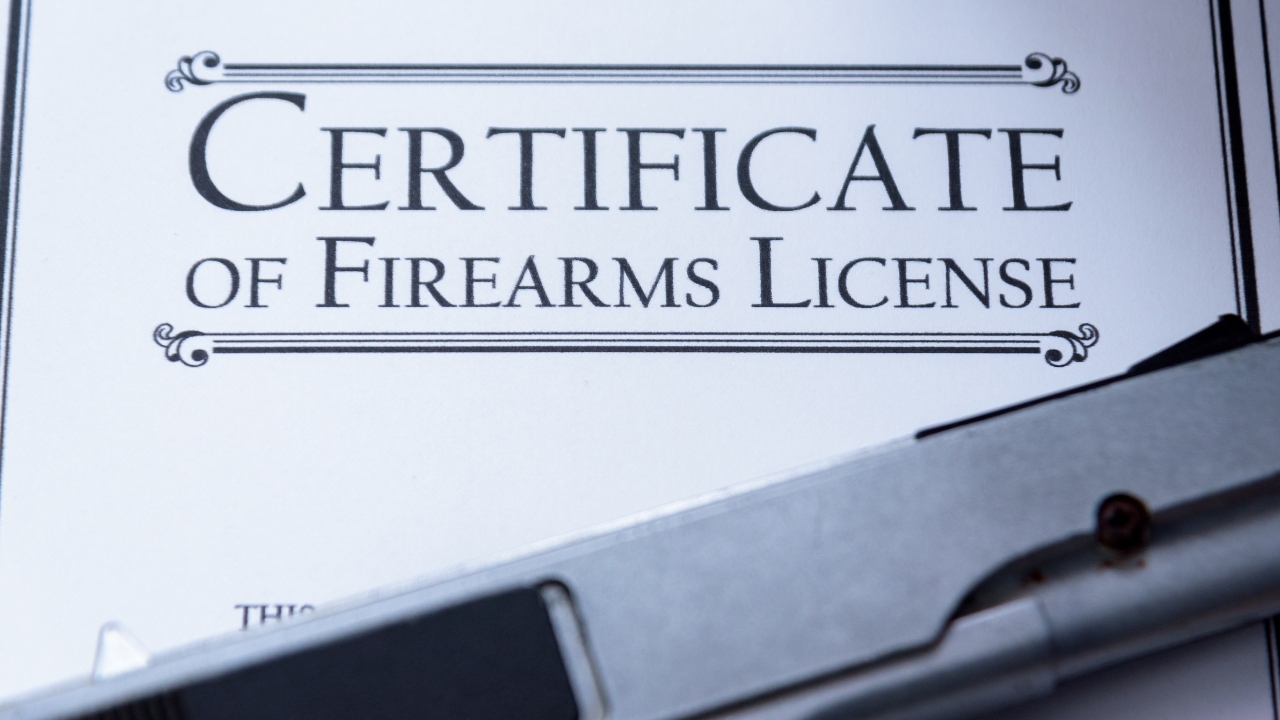
Federal gun policy is shifting from a patchwork of dealer rules and background checks toward a more explicit question: should you need a national license before you can buy or keep a firearm. The new federal gun license idea sits at the center of that debate, promising tighter screening and clearer accountability while raising hard questions about who would be screened out and how the system would work in practice. If you own guns now, sell them for a living, or are thinking about your first purchase, you are squarely in its sights.
Instead of focusing only on the gun counter, the emerging model treats firearm ownership more like driving, where you must qualify first and keep your status in good standing over time. That shift would not replace existing background checks and dealer regulations, it would layer a personal credential on top of them, reshaping how you move through every step of the legal market.
How the federal license idea fits into today’s gun law landscape
To understand what a federal gun license would actually change for you, you have to start with the current architecture, which is built around sellers rather than buyers. Today, the core federal credential is the Federal Firearms License, or FFL, which you need if you are “engaged in the business” of selling guns, while individual purchasers are screened transaction by transaction through the National Instant Criminal Background Check System. A personal license would flip that emphasis, making your eligibility the central gatekeeper instead of relying only on the dealer’s paperwork and a one time database query.
Recent proposals already point in that direction. Senator Cory Booker has pushed a Federal Firearm Licensing Act that would require you to obtain a license before buying or possessing a gun, arguing that if you need a license to drive a car, you should need one to own and use a gun, and that Data from states with licensing shows lower gun violence. At the same time, Congress has been weighing the Federal Firearm Licensee Act, or FFLA, which would modernize how dealers operate and help close gaps where sellers avoid running a background check, signaling that Washington is already comfortable tightening the regulatory net around both sides of the counter.
What a personal federal gun license would likely require from you
If lawmakers follow the template of existing licensing systems, a federal gun license would not be a casual permission slip, it would be a structured process you have to clear before you ever touch a new firearm. You could expect an application that verifies your identity, a comprehensive background check that goes beyond the instant system, and some form of safety training that proves you understand storage, handling, and the law. The goal is to move the vetting to the front of the process so that by the time you walk into a store, your status is already known.
Public health and legal experts who have studied licensing describe it as a way to combine screening with education, not just to block prohibited buyers but to reduce risky behavior among lawful owners. In a detailed discussion of firearm purchaser licensing, researchers in Jul highlighted how requiring a license can cut down on impulsive purchases and straw buying, because you must plan ahead, pass checks, and sometimes wait for approval before you can acquire a gun. For you, that would mean treating gun ownership more like a professional credential, something you maintain and renew, rather than a one time transaction.
How the Federal Firearm Licensee Act reshapes the dealer side
Even if a personal license becomes law, your experience will still be shaped by how dealers are regulated, and that is where the Federal Firearm Licensee Act comes in. The FFLA is designed to drag federal dealer rules into the twenty first century, tightening expectations for record keeping, security, and cooperation with law enforcement. If you are an FFL holder, you would see more explicit standards for how you store inventory, document sales, and respond to trace requests when a gun you sold turns up at a crime scene.
For buyers, the most visible change would be fewer loopholes at the point of sale. The FFLA is pitched as a way to help close gaps that let some sellers avoid running a background check, reinforcing the idea that every commercial transfer should go through the system. Advocates describe The Federal Firearm Licensee Act as a way to ensure that if you are buying from someone who is effectively in the business, that person has to act like a regulated dealer, with all the obligations that come with that status.
The Biden administration’s push to narrow the “gun show” gap
While Congress debates new statutes, the executive branch has been using existing authority to pull more sellers into the licensed system, which directly affects how a federal license would interact with real world markets. The Biden administration has proposed a rule that tightens the definition of who is “engaged in the business” of selling firearms, aiming to capture people who regularly sell at gun shows or online but claim to be private sellers. If you have been operating in that gray area, the rule signals that the government expects you to get an FFL and follow the same rules as a storefront shop.
The same proposal refines what counts as a personal firearms collection, making it harder to disguise a commercial operation as a hobby. According to The Justice Department, the goal is to bring more transactions into the life saving background checks system, so that if you are buying from someone who sells guns with any regularity, you face the same screening you would at a traditional dealer. A future federal purchaser license would sit on top of that, giving regulators a clearer picture of both who is selling and who is allowed to buy.
ATF’s evolving posture toward dealers and public safety
Any federal licensing regime will live or die on how it is enforced, and that is where the Bureau of Alcohol, Tobacco, Firearms and Explosives, or ATF, becomes central to your experience. The agency has recently announced a package of firearms regulatory reforms and a renewed partnership with the firearms industry, signaling that it wants to balance tougher oversight with more collaboration. If you are a dealer, that means you can expect more structured communication about compliance expectations, but also more pressure to identify and prevent diversion of guns into illegal markets.
The reforms are framed as a way to modernize oversight while prioritizing public safety and collaboration, rather than treating every paperwork error as a crisis. In a detailed alert on how ATF Announces Firearms Regulatory Reforms and Renewed Partnership with the Firearms Industry, analysts describe a shift toward using data and targeted interventions to focus on dealers linked to crime guns. If a federal purchaser license is added to that mix, you would be entering a system where both your personal status and your dealer’s compliance history are under closer, but more strategically focused, scrutiny.
Active ATF changes that preview a license era
Some of the most telling clues about how a federal license might work come from the changes ATF has already made to its enforcement philosophy. Active ATF Changes that took effect as of July 2025 include the repeal of the Zero Tolerance Policy for dealers, which had previously put FFLs at risk of losing their license over relatively minor record keeping mistakes. On April 7, 2025, the ATF announced that it would instead concentrate on willful violations that threaten public safety, a shift that matters if you are a dealer trying to navigate more complex rules without fearing that a clerical error will end your business.
Those updates are part of a broader recognition that the Second Amendment is not a second class right, a phrase ATF itself has used as it recalibrates enforcement. In May 2025, the agency emphasized that its role is to enforce the law while respecting lawful ownership, and in June it introduced a ruling that encourages the use of modern technology and data sharing to prevent firearm related crime. A detailed rundown of these Active ATF Changes shows an agency preparing for a world where both dealers and individual license holders are monitored through more sophisticated systems, not just periodic inspections and paper forms.
New federal trends that shape how your license would travel
Even without a national purchaser license, federal law is already grappling with how your gun rights travel across state lines, and those debates will shape any future licensing scheme. Proposals like the Constitutional Concealed Carry Reciprocity Act aim to create consistent standards so that if you are allowed to carry a concealed firearm in one state, you can do so in others under the same basic rules. For you, that raises the question of whether a federal license would function as a universal credential, or whether states would still layer their own conditions on top.
Industry guidance on New Gun Laws in 2025 underscores how Federal firearms regulation has shifted in ways that matter to every FFL, from shipping rules to how you verify out of state buyers. If a federal license is introduced, you can expect those cross border questions to intensify, with some lawmakers pushing for a single national standard and others insisting that states retain the power to add their own training, age, or storage requirements on top of the federal baseline.
What other countries’ licensing systems reveal about household risk
To see where a federal license might go next, it helps to look at how other countries have evolved their own systems, particularly around who in your home is scrutinized. Traditionally, gun licensing has primarily focused on the individual applicant’s background, assessing criminal records, mental health history, and other personal risk factors. That approach treats you as an isolated decision maker, even though your firearms will live in a shared environment once they are in your house.
In the United Kingdom, regulators have started to widen that lens to include others residing in the same household, recognizing that a partner’s criminal history or mental health crisis can affect how safe it is to keep guns at home. A detailed analysis of shotgun and firearms licensing notes that Traditionally the focus was narrow, but that there has been a shift in focus toward the broader household context. If U.S. lawmakers borrow that logic, your federal license application could eventually ask not just about you, but about who else has access to your gun safe and what risks they might pose.
How state level record rules preview a data heavy license
Another preview of a federal license system lies in how states are tightening their own record keeping and data requirements, which would likely feed into any national database of license holders. In California, for example, AB 574, cited as AB 574 (Stats. 2023, ch. 237), updates how dealers must handle records of sale, specifying what information must be captured and how it is stored. Effective March 1, 2025, the law mandates that the register or record of each firearm transaction be maintained in a way that allows authorities to track multiple purchases and spot suspicious patterns.
For you as a buyer, that kind of rule means your purchases are more visible to regulators, especially if you acquire several guns within a short period. For dealers, it adds another layer of compliance that dovetails with federal expectations for accurate, accessible records. The California Department of Justice explains that Stats on Firearms transactions, including the figures 574 and 237, are central to how the state monitors sales, and that Effective March rules Mandates more precise reporting. A federal license would almost certainly plug into similar data streams, giving authorities a clearer picture of who owns what, and how often guns move through the legal market.
Who the new license would actually target, and what it would change for you
When you strip away the legal jargon, the new federal gun license idea is aimed at three overlapping groups: people who are at high risk of misusing guns, people who help them get guns, and people who profit from selling into that demand. For you as a prospective buyer, the license would function as a gate that screens out those with disqualifying criminal or mental health histories before they ever reach the counter, while also slowing down impulsive purchases that can escalate conflicts. For you as a current owner, it could mean periodic renewals, mandatory training refreshers, and the possibility that a change in your circumstances, such as a domestic violence order, triggers a review of your status.
On the seller side, the combination of a purchaser license, a modernized FFLA framework, and evolving ATF enforcement would push you toward a more professionalized model of gun commerce, where sloppy practices are harder to hide and where your cooperation with trace requests and data reporting is non negotiable. The broader trend, visible in federal rulemaking, ATF policy shifts, and state laws like AB 574, is toward a system that treats firearms more like cars or pharmaceuticals, with layered licensing, detailed records, and shared responsibility across everyone who touches the supply chain. If that trajectory continues, your relationship with guns will be defined less by what you can buy on a given day and more by the license you hold, the training you complete, and the data trail you leave behind.
Like The Avid Outdoorsman’s content? Be sure to follow us.
Here’s more from us: