Photo credit: ANR Design – Thermoplastic Holsters/YouTube
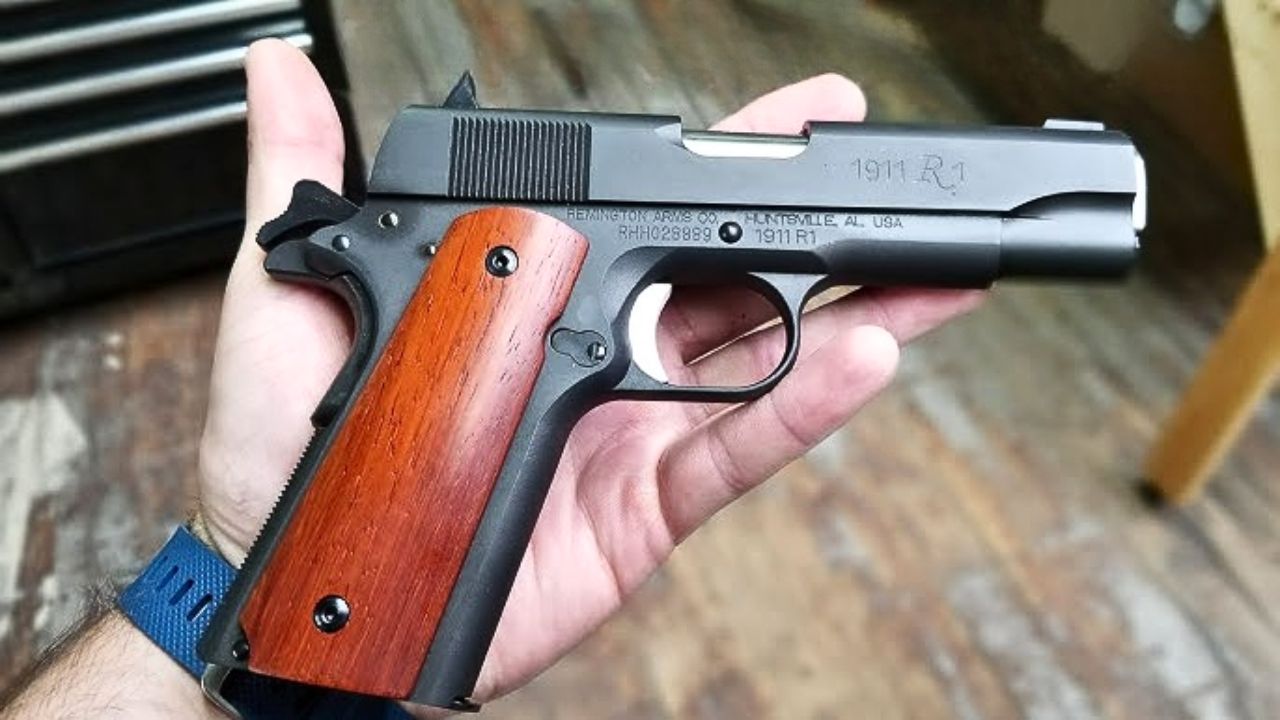
The 1911 is one of those pistols that can make you feel like a better shooter the first time you run it well. The trigger is usually the first thing you notice, but it’s not just the trigger. A good 1911 sits low, tracks flat, and gives you feedback you can actually use when you’re trying to shoot fast without spraying. That’s why it’s still around in 2026, even with modern striker guns that hold more rounds, weigh less, and ask less of the owner. The 1911 didn’t survive because it’s the “best at everything.” It survived because, in the right lane, it’s still hard to beat.
The problem is that a lot of people try to make the 1911 live in lanes it wasn’t built for, then act shocked when it becomes demanding. A 1911 can be rock-solid, but it’s more sensitive to setup, magazines, springs, and maintenance than the average polymer duty pistol. It also asks more from the shooter if you want to carry it correctly and safely, because the manual safety isn’t optional and the gun rewards consistent technique. If you’re honest about what you’re doing with it—carry, training, home defense, hunting sidearm, range work—you can put the 1911 where it shines and avoid the situations where it’s a constant compromise.
Where it still shines: practical accuracy and a trigger that helps you do your part
If you want a pistol that makes precise shooting feel more achievable, the 1911 still earns its keep. The single-action trigger, when it’s set up right, lets you break shots without fighting a long, mushy press, and that matters when you’re trying to keep hits tight at 15–25 yards or when you’re running a drill where a sloppy trigger press immediately shows up on the target. A lot of shooters can hold a better group with a 1911 than with a striker gun at the same distance simply because the trigger and reset help them keep the sights where they belong through the shot. When you’re trying to place rounds into a small zone rather than just “center mass,” that advantage isn’t theoretical, it’s measurable.
That accuracy advantage isn’t only about the trigger, either. A full-size steel gun has mass, and mass smooths things out. Even in .45, recoil feels more like a push than a snap when the gun is sprung correctly and you’re gripping it with intent. That makes it easier to call shots, track the front sight, and run controlled pairs at 7–10 yards without the gun feeling like it’s trying to climb off the target. For shooters who actually train—meaning they care about first-shot accuracy from a draw and they care about follow-ups—the 1911 can feel like a tool that rewards good habits instead of a tool that forces you to wrestle through them.
Where it still shines: slim carry, real concealment, and comfort that lasts all day
The quiet advantage of the 1911 in 2026 is still how it carries when you choose the right configuration. A single-stack 1911 is thin, and thin matters more than most people admit once you’re carrying all day in real clothes. Thickness is what prints, thickness is what digs into your side in a car, and thickness is what turns “I’ll carry it” into “I’ll carry it sometimes.” A government-size 1911 sounds huge on paper, but on a good belt with a real holster, the flat profile can conceal better than a shorter, thicker double-stack that wants to lever outward. If you’ve ever carried through a hot summer day, sweat running, shirt sticking, you learn fast that comfort and concealment aren’t just convenience, they’re compliance.
The catch is that the 1911 carries well when it’s carried like a 1911. Condition one is the normal operating mode, and that means you’re relying on a properly fit thumb safety, a reliable grip safety, and a holster that fully covers the trigger guard and holds the gun securely. It also means your drawstroke and reholster habits have to be consistent, because the safety is part of the process, not a garnish. When someone says they “don’t like safeties,” what they usually mean is they haven’t built the repetition to run one automatically under stress. If you’re willing to put in that repetition, the 1911 can be one of the more comfortable and concealable serious pistols you can carry, especially for people who hate bulky guns.
Where it doesn’t: capacity and the realities of modern defensive problem-solving
The most obvious limitation is still the one everyone dances around: capacity. In a world where compact pistols routinely carry 15 rounds and micro-compacts carry more than older duty guns, the traditional single-stack 1911 is giving up margin. That margin matters because defensive shootings are not range drills, and your hits are not guaranteed to be perfect even if you’re a good shooter. Stress, movement, awkward angles, low light, one-handed shooting, and imperfect sight pictures all push your hit rate down. More rounds don’t replace skill, but they buy you time and options when things go sideways. That’s not “fear talk,” that’s an honest look at how humans perform when they’re surprised and their heart rate spikes.
Capacity also affects how you train. With a lower-capacity gun, you reload more, which is not a bad thing, but it changes the flow of practice and it can mask problems if you’re constantly breaking cadence. It also changes how you set up for home defense, where you may be dealing with unknowns and you want the gun to be simple and forgiving. A 1911 can absolutely defend a home, but it’s operating with fewer rounds and a manual safety, which means you need to be realistic about who in the household can run it safely at 2 a.m. with shaking hands. The gun can do the job, but the modern context punishes low margin more than it used to, and pretending otherwise is how people talk themselves into compromises they didn’t think through.
Where it doesn’t: reliability without attention, and why magazines and springs decide the story
A well-built 1911 can be extremely reliable, but “well-built” and “well-maintained” are doing a lot of work in that sentence. The platform’s reliability is tied to timing, extractor tension, and feed geometry more than many striker guns, and the weak link is often boring: magazines and springs. If your magazines have weak springs, bad feed lips, or inconsistent followers, the gun can nose-dive rounds, fail to lock back, or feed with odd angles that stress the extractor. If your recoil spring is tired, the slide can cycle too fast, the gun can start battering itself, and extraction and ejection timing can get sloppy. If your firing pin spring is weak, you can end up with odd ignition behavior that shows up as intermittent light strikes, especially when the gun is dirty or dry.
The 1911 also tends to be less forgiving of “random ammo plus random maintenance.” If you run it bone-dry, carbon and friction can stack up and start slowing the gun down. If you over-lube it with the wrong stuff in cold weather, you can thicken the lubricant and slow the slide, especially with a tighter gun. If you mix hollow points that have wide mouths with magazines that don’t present the round correctly, you can create stoppages that feel mysterious until you realize the system is sensitive to how the round enters the chamber. None of this is meant to scare you off. It’s meant to put the responsibility in the right place. A 1911 can be boringly reliable, but you earn that by treating the pistol like a machine with wear items, not like a talisman with a reputation.
Where it still shines: shootability under pressure when you actually train with it
If you’ve ever watched a good shooter run a 1911 hard, you’ve seen why people stay loyal to it. The trigger and the recoil behavior can make high-quality hits easier to deliver when the timer is running and the target is small enough to punish slop. At realistic defensive distances—3 to 10 yards—shootability isn’t about making one perfect shot, it’s about making two or three good shots quickly without losing control of the sights. A 1911 with a sensible setup can let you do that in a way that feels clean and repeatable. The gun tends to return to the same place, and the reset is short enough that you can run it fast without riding a long, vague wall. When you’re working from concealment and you want a crisp break on demand, that still matters.
The flip side is that the 1911 rewards consistency and punishes lazy technique. If you have a grip that doesn’t reliably deactivate the grip safety under speed, you will eventually embarrass yourself with a dead trigger at the worst time in practice. If you ride the thumb safety incorrectly, you can induce problems that look like a malfunction but are really user-induced. If your support-hand pressure changes shot to shot, the gun will show it because the trigger is clean enough that you can’t hide behind it. In 2026, the 1911 still shines for shooters who put in reps and want a pistol that feels like a precision tool. It’s less appealing for people who want a pistol that works the same even when their technique is inconsistent and their maintenance is occasional.
Where it doesn’t: optics integration, modularity, and the “modern pistol ecosystem”
Modern pistol use has moved hard toward dots, lights, and modular setups, and the 1911 can play in that world, but it often feels like it’s being adapted rather than living there naturally. Mounting an optic on a 1911 can be done well, but it introduces new variables: plate systems, screw torque, thread locker discipline, and the reality that a reciprocating slide is a harsh environment for electronics. Add in the fact that some 1911 slides were never designed with optics in mind, and you can end up with compromised sight heights, reduced durability margins, or setups that require more checking and re-tightening than a shooter expects. If your goal is a low-maintenance, high-durability dot setup that you can ignore for long stretches, there are platforms that make that easier.
The ecosystem also matters when you need parts, magazines, and service quickly. With a 1911, quality varies wildly, and “1911” on the slide doesn’t tell you what you actually have in terms of tolerances, metallurgy, and fitting. That can make ownership either satisfying or frustrating depending on your specific gun and how it was built. In 2026, a lot of shooters want a pistol they can configure with off-the-shelf parts, run with minimal tuning, and support easily if something breaks. The 1911 can still be that, but it’s less automatic. You’re often selecting specific magazines, watching extractor tension, and replacing springs on a schedule if you’re serious about reliability, and not everyone wants their carry gun to be a hobby project.
The 1911 in 2026 still shines when you want a slim, shootable pistol with a trigger that helps you place shots precisely and run the gun cleanly under pressure, and it shines even more when you’re the kind of shooter who trains enough that the safety and manual of arms are second nature. It doesn’t shine when you want maximum capacity, minimal maintenance attention, and effortless integration into the modern dot-and-light ecosystem without added variables. If you put it in the right role and you respect the mechanics—magazines, springs, extractor tension, and sensible lubrication—it can still be one of the most satisfying pistols to shoot well, and it can still serve seriously. If you try to make it something it’s not, you’ll end up blaming the platform for choices that were always going to be compromises.
Like The Avid Outdoorsman’s content? Subscribe to our newsletter so you never miss an article.
Here’s more from us: