Photo credit: Muddy River Tactical/YouTube
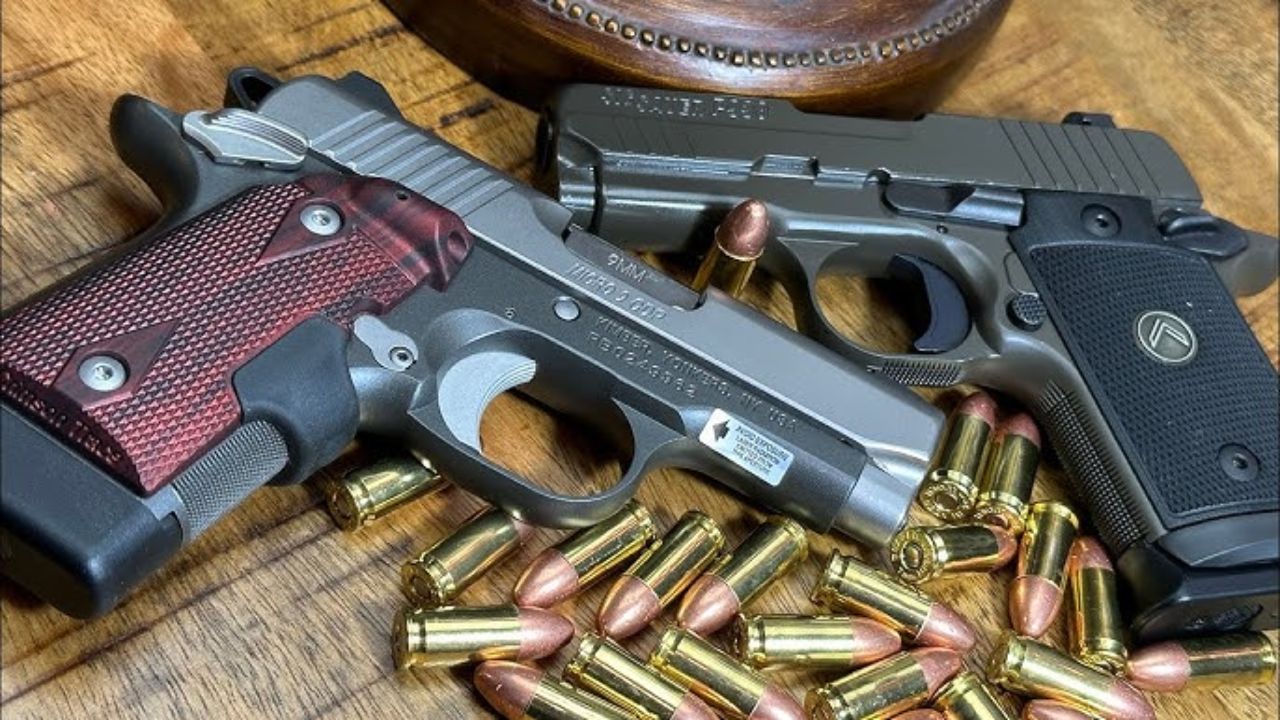
When you drop a hot defensive load into a featherweight pistol, the physics do not just add up, they stack against you. The same cartridge that feels brisk in a duty-size gun can feel punishing in a 15‑ounce micro‑compact, to the point that your “upgrade” in performance actually makes you slower and less accurate. Understanding which ammo choices amplify recoil in small guns is what keeps a practical carry setup from turning into something that feels almost twice as harsh as it needs to be.
If you carry a lightweight pistol, you are managing a three‑way trade among pressure, bullet weight, and gun weight every time you pick a box of cartridges. Once you see how those variables interact, you can choose loads that still meet your defensive goals without beating up your hands, your pistol, or your confidence.
Why tiny pistols punish you more for the same cartridge
Your lightweight pistol gives up mass, sight radius, and grip area in exchange for concealability, and all three of those losses magnify recoil. Less mass means the same cartridge drives the frame rearward faster, a shorter grip gives you less leverage to control that movement, and a short slide cycles more abruptly. Guidance on Firearm Weight stresses that gun weight is a primary factor in how recoil feels, and when you choose the lightest possible carry gun you are deliberately removing one of the easiest tools for softening the blow.
On top of that, compact and subcompact pistols often have snappier recoil springs and abbreviated grips that force you to compromise your hand placement. Training advice for shooting very small handguns notes that these subcompact pistols are “not as forgiving” as full‑size counterparts and that you must refine your technique to keep them under control, a point underscored in practical tips on subcompact shooting. When you combine that unforgiving platform with hotter or heavier ammunition, the subjective jump in recoil can feel out of proportion to the modest ballistic gains you are chasing.
Overpressure loads: what +P really does in a small gun
The quickest way to make a light pistol feel like it is kicking far above its weight is to feed it overpressure ammunition. Overpressure cartridges, commonly labeled as +P or +P+, are loaded to higher internal pressure than standard rounds so they can drive the same bullet faster and deliver more energy on target, as explained in technical overviews of Overpressure and Plus ammunition. That extra pressure translates directly into more recoil impulse, which your lightweight frame has no spare mass to soak up.
Manufacturers and trainers consistently warn that +P and +P+ loads increase recoil and mechanical stress, and that you should only use them in pistols explicitly rated for the higher pressure. Detailed guidance from Meet Botach notes that +P and +P+ ammunition is loaded hotter than standard pressure and should be reserved for handguns that are explicitly designed to handle them. When you combine that higher pressure with a very light slide and frame, the result is a sharper, faster recoil cycle that can feel dramatically harsher than the same load in a heavier pistol.
The bullet weight trap: heavy for caliber in a featherweight frame
Even if you stay at standard pressure, bullet weight has a major effect on how recoil feels in a small gun. Heavier bullets carry more momentum at a given velocity, so if you push a 147‑grain 9 mm at the same speed as a 115‑grain version, the heavier projectile will generate more recoil impulse, a relationship shooters often summarize with the simple formula p = mv in discussions of bullet weight vs felt recoil. In a compact or subcompact pistol, that extra impulse is delivered through a smaller contact patch with your hands, which makes it feel more abrupt.
Ballistic analysis of how bullet mass interacts with gun weight, grip, and barrel length reinforces that heavier projectiles can change both recoil and point of impact, especially in short barrels where velocity differences are magnified, as explored in technical breakdowns of How Does Bullet Weight Actually Affect Performance. When you stack a heavy‑for‑caliber bullet on top of a light frame and a short grip, you are effectively choosing the combination that maximizes felt recoil, even if the cartridge is not labeled as overpressure.
Why some “premium” defensive loads feel brutal in micro‑compacts
Many of the most respected defensive loads are engineered for duty pistols, not 10‑ounce pocket guns, and that context matters. A cartridge that delivers excellent penetration and expansion from a full‑size service pistol can feel punishing when you fire it from a micro‑compact with a two‑finger grip, because the load was tuned around a heavier slide and longer barrel. Law enforcement oriented rounds like Hornady Critical Duty 9 mm +P 135 g FlexLock are selected after extensive evaluation by organizations such as The Federal Bureau of Investigation, and that testing assumes a robust duty pistol platform.
When you transplant that same 135 g +P load into a subcompact, you still get the carefully tuned expansion and barrier performance that the FBI valued, but you also inherit the higher pressure and heavier bullet in a much lighter package. That is why some shooters report that certain “gold standard” defensive loads feel almost uncontrollable in very small guns, even though they are manageable in a Glock 17 or similar full‑size pistol. The cartridge did not change, your leverage and mass did, and the result is a perceived recoil spike that can make follow‑up shots noticeably slower.
The lightweight bullet alternative: less mass, less kick
One way to tame recoil in a small pistol without dropping to a weaker caliber is to move in the opposite direction and choose lighter bullets. Reducing projectile mass cuts momentum for a given velocity, which can translate into a softer push in your hands, especially in compact and subcompact frames. Modern defensive designs use advanced bullet geometry and materials to make these lighter projectiles perform on par with, or even better than, traditional weights, as seen in the growing interest in lightweight self-defense ammo.
For example, some 9 mm loads use a 65-grain bullet that is engineered to transfer energy efficiently while keeping recoil down. Reporting on these designs notes that a 65-grain round produces noticeably less recoil than heavier counterparts when fired from compact or subcompact pistols, while still using directional energy transfer to disrupt tissue. In practical terms, that means you can carry a light, flat‑shooting load that lets you get back on target faster, instead of enduring a heavy, slow‑to‑recover impulse every time you press the trigger.
How +P marketing collides with real‑world shootability
Ammo boxes and online listings often highlight velocity and energy numbers, and +P labels are marketed as a straightforward upgrade in “stopping power.” In reality, that extra performance only helps you if you can control it in the gun you actually carry. Manufacturer guidance on Choosing a +P round emphasizes that higher pressure brings higher recoil and that what works for one shooter may not work for another, which is even more true when you move from a full‑size pistol to a micro‑compact.
Independent testing of standard versus +P loads has found that in some guns the difference in recoil is subtle, while in others it is immediately obvious, a pattern highlighted in detailed comparisons that begin with the phrase Of the guns and loads used. In a very light pistol, you are almost guaranteed to be in the “obvious” category, because the platform has no spare mass or grip length to buffer the extra impulse. The marketing promise of more energy on paper has to be weighed against the practical cost of slower, less accurate strings of fire when your hands are dealing with a much sharper kick.
Where physics meets practice: energy, speed, and your hands
On paper, recoil can be described with neat formulas that relate bullet weight, velocity, and powder charge to energy and momentum. In practice, your perception of that recoil is filtered through grip shape, slide mass, and your own technique, which is why two loads with similar numbers can feel very different in the same gun. Technical discussions of bullet weight and speed point out that you can raise energy by increasing powder charge and FPS or by increasing bullet mass, but that the way those changes feel at the shooter’s end is where theory meets practice, a nuance explored in debates over bullet weight vs speed vs felt recoil.
For you as a concealed carrier, the key is to recognize that a light pistol exaggerates every theoretical increase in recoil. When you add pressure or bullet weight, you are not just nudging a graph line upward, you are making the slide cycle faster, the muzzle flip higher, and the grip twist more in your hands. That is why experienced shooters often recommend testing several loads in your specific gun rather than assuming that the highest energy figure will serve you best, a point echoed in broad overviews of handgun ammo that stress matching the cartridge to both the firearm and the shooter.
Training, technique, and why big guns feel easier
Even with careful ammo selection, you still have to drive the gun, and technique becomes more critical as the pistol gets smaller and lighter. Subcompact‑focused training emphasizes a locked‑in grip, aggressive stance, and deliberate trigger work, along with the reminder that you should not try to “slow down” the gun but instead manage its natural cycle, as highlighted in practical advice on three subcompact shooting tips. If you pair that technique with a load that is reasonably soft for your platform, you can keep even a tiny pistol running smoothly.
At the same time, it is worth remembering that a larger, heavier handgun is often easier and more enjoyable to shoot, despite its intimidating size. As one detailed look at full‑size pistols puts it, But it is a myth that a large, heavy gun is more difficult to shoot, and in reality the extra mass and longer grip usually make recoil feel milder. If you ever compare your micro‑compact with a mid‑size pistol on the same range trip, you will feel that difference immediately, and it will underline just how much your ammo choice can make a lightweight carry gun feel harsher than it has to.
Balancing recoil, reliability, and longevity in your carry setup
Choosing ammunition for a lightweight pistol is not just about comfort, it is also about reliability and the long‑term health of your firearm. Overpressure loads and heavy bullets can accelerate wear on small guns, which already operate closer to the edge of their mechanical envelope because of short slides and compact recoil systems. Guidance on What Is +P Ammo stresses that you must balance the desire for extra performance with recoil control and firearm longevity, especially in platforms that were not overbuilt for constant high‑pressure use.
At the same time, you cannot simply chase the softest shooting load and ignore terminal performance. Modern defensive ammunition lines give you a wide spectrum of options, from standard pressure, mid‑weight bullets to ultra‑light projectiles that rely on advanced shapes and materials, and broad surveys of Ammo choices highlight how many of these are tuned for specific roles. Your job is to test a few candidates in your exact pistol, confirm reliable feeding and ejection, and then decide where you are comfortable landing on the spectrum between recoil, durability, and ballistic performance. When you do that work up front, you avoid the unpleasant surprise of discovering that your ammo choice has turned a handy little pistol into something that feels twice as harsh as it needs to be.
Like The Avid Outdoorsman’s content? Be sure to follow us.
Here’s more from us: