Photo credit: GoldenWebb/YouTube
We may earn revenue from products featured on this page through affiliate links.
Walk into any gun shop and you’ll eventually see it: the big stainless revolver that looks like it belongs in a movie poster, or the massive semi-auto that’s basically a brick with sights. People pick it up, grin, and you can almost hear the thought: “This would be hilarious.” And honestly, it can be. But there’s a reason so many of these “hand cannon” purchases turn into safe queens after one range trip. It’s not that the guns are junk across the board. It’s that the ownership experience is way different than the fantasy. Weight, blast, recoil, ammo cost, and plain old practicality start winning arguments pretty fast once the novelty wears off.
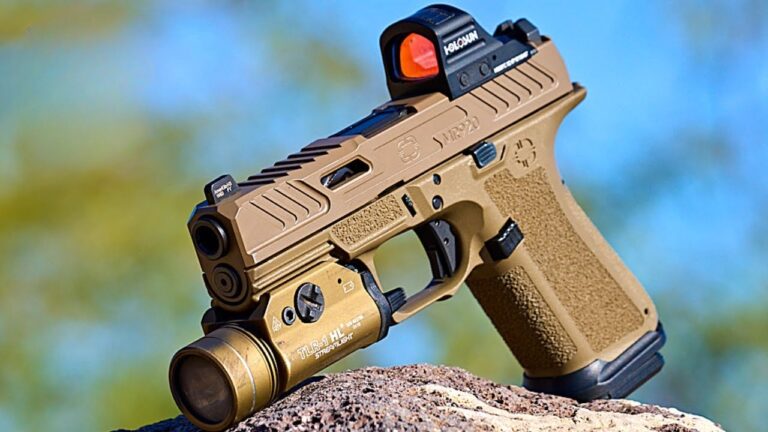
A good example is the Magnum Research Desert Eagle in .50 AE. On paper it’s iconic, and it has real specs to back up the legend: the Mark XIX in .50 AE is a gas-operated semi-auto with a 7-round magazine, and it’s about 72 ounces unloaded—over 4.5 pounds before you add ammo. That kind of mass is part of why people assume it’ll be “easy” to shoot, but the reality is that even when recoil is manageable, the size and weight alone can make it a pain to run for more than a couple mags unless you’re committed.
What a “hand cannon” really is in real life
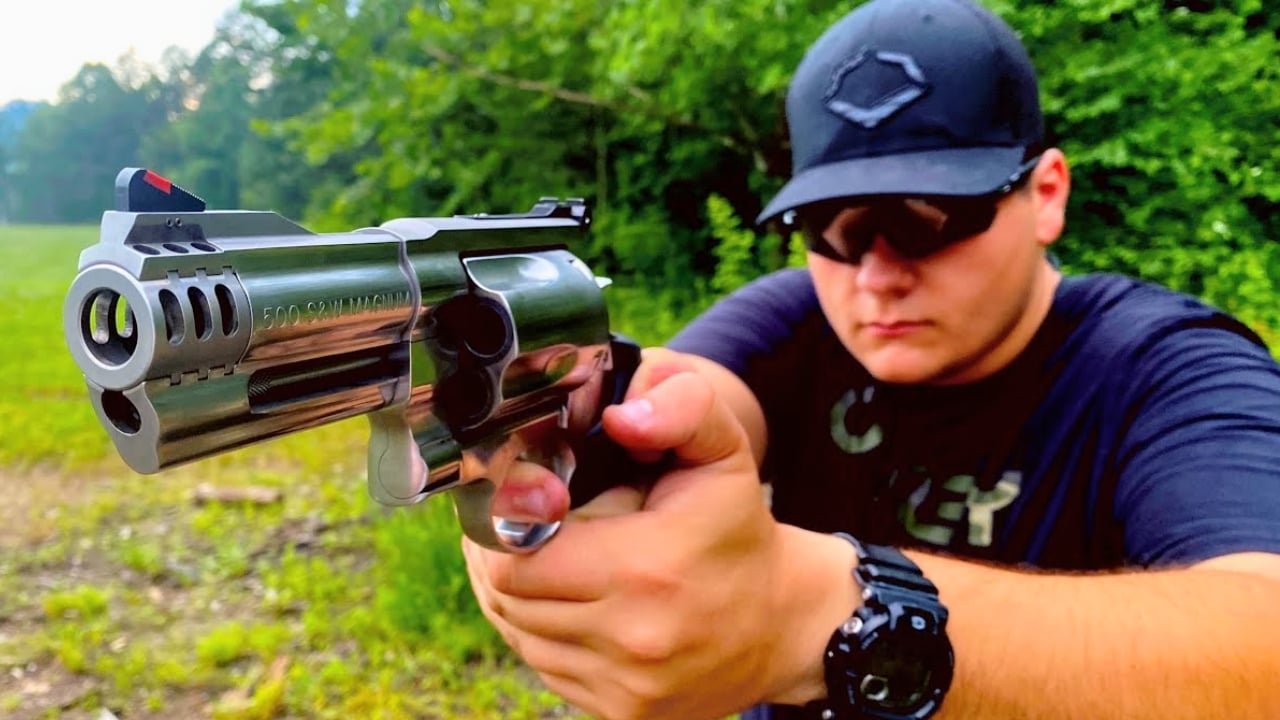
Most of the time, “hand cannon” just means you’re dealing with a handgun that’s oversized in one or more ways: huge caliber, huge frame, huge blast, or huge recoil—or all of the above. A Smith & Wesson Model 500 is the classic big-bore revolver example: a five-shot monster built around .500 S&W Magnum, and even the company-friendly writeups still call out “considerable recoil” along with a listed unloaded weight over 60 ounces for a common configuration. That weight matters because it’s what keeps the thing from being completely unshootable, but it also means you’re carrying around a chunk of metal that isn’t fun to tote, holster, or pack like a normal sidearm.
There’s also a big misconception that power automatically equals usefulness. A lot of hand cannons are bought with “bear defense” or “just in case” logic, when the owner doesn’t actually have a plan for how they’ll carry it, train with it, or even afford to practice enough to stay competent. It’s not the caliber that makes it a one-and-done purchase. It’s the gap between the reason people think they bought it and what it takes to actually own it responsibly.
The first-range-trip reality check is recoil plus blast, not recoil alone
Here’s the part people don’t describe well: recoil isn’t just “it kicks.” With big handguns, the total experience can be violent in a way that wears you out fast—blast, concussion, muzzle rise, and the mental flinch that comes with expecting all of it again. If you want a clean comparison, recoil charts that estimate recoil energy show how quickly things get silly. For instance, a .50 Action Express load and .500 S&W Magnum loads can land in recoil-energy territory that’s dramatically above common defensive calibers, depending on bullet weight, velocity, and gun weight. That’s why people will tell you, “It wasn’t that bad,” and then still never shoot it again. They survived it, sure, but they didn’t enjoy it, and they definitely didn’t want to do it for a hundred reps in a practice session.
And when people start anticipating recoil, accuracy goes downhill in a hurry. The U.S. Army Reserve marksmanship notes put it in plain language: recoil anticipation shows up hard with handguns and can wreck shooting because the shooter starts doing something before the gun fires. That’s the real reason these big pistols end up living in the safe. It’s not just “my hands hurt.” It’s “I can’t shoot this well, and it makes me feel stupid.” Folks don’t like admitting that out loud, so they call it a “novelty gun” and move on.
The hidden costs are what kill the relationship
Ammo cost is the obvious one, but it’s bigger than that. When you buy something like a Desert Eagle, you’re also buying into a heavy, specialized platform that’s not as forgiving to casual ownership as a basic 9mm. Even if you can afford the ammo, you still need to afford the time and range trips to stay competent with it, because big recoil magnifies every mistake in grip and trigger control. If you’re the kind of shooter who only trains when the weather is perfect and you “feel like it,” a hand cannon will expose that fast and make you hate training.
Then there’s the very practical “where does this thing live?” problem. A lot of these guns are too large to carry comfortably in normal daily life, so owners tell themselves it’s a “truck gun” or “woods gun,” and that often turns into “it stays in the truck until I forget it’s there,” which is its own set of legal and safety problems depending on where you live. In other words, the gun’s size quietly pushes you toward bad habits if you don’t have discipline. That’s not me being dramatic—it’s just what happens when the tool is inconvenient.
Why people still buy them anyway
Because it’s fun to own something ridiculous, and sometimes that’s enough. I’m not here to scold anybody who wants a range toy. But the smarter buyers go into it with eyes open: they know it’s heavy, they know it’s expensive to feed, and they accept that it’s more about experience than practicality. If you treat it like a “bucket list” range gun, you’ll be happier than if you treat it like a serious defensive answer to problems you haven’t thought through.
Also, some of these guns do make sense in specific roles—especially hunting, where power and cartridge choice can be part of an ethical plan (with the right setup, the right regulations, and the right training). That’s a different conversation than “I want the biggest pistol ever made because it looks cool.” One is purpose-driven. The other is impulse. The impulse purchase is the one that turns into “shot it twice, never again.”
How to buy one without immediately regretting it
If you’re dead set on buying a hand cannon, the least-regret path is simple: shoot one first, and don’t pretend you’ll magically train more after you buy it. If you can rent it, do it. If a buddy has one, ask to try it—and be honest with yourself afterward. Not “could I fire it,” but “would I realistically practice with it enough to be safe and competent?” If the answer is no, you just saved yourself a pile of money and a bunch of frustration.
And do yourself a favor: tame the experience so you can actually learn from it. A lot of flinch issues get worse because people are under-protected from the blast. Solid electronic hearing protection helps you stay calmer and more focused, and something like the Walker’s Razor Pro Slim Digital Electronic Earmuffs is built to clamp down impulse noise while still letting you hear normal sound. That alone can make the difference between “this is miserable” and “okay, I can work with this.” If you also want to improve control and comfort, Pachmayr’s Tactical Grip Gloves are designed around grip and recoil absorption concepts (they even reference the Decelerator recoil-pad material), and for some shooters that little comfort boost keeps them from developing bad habits.
Like The Avid Outdoorsman’s content? Subscribe to our newsletter so you never miss an article.
Here’s more from us: