Photo credit: Guns And Gear/YouTube
Deer hunters have more cartridge choices today than ever before, but only a handful have proven themselves across generations of hunting seasons. Some became famous because they worked equally well in thick timber and open fields. Others built their reputation through mild recoil, flat trajectories, or the ability to put deer down without destroying half the animal.
The best deer cartridges are not always the fastest or most powerful. Most deer do not require a magnum, and extra recoil rarely makes someone a better shot. The truly great cartridges combine enough power with manageable recoil, dependable accuracy, available ammunition, and bullets designed specifically for deer-sized game.
.30-06 Springfield
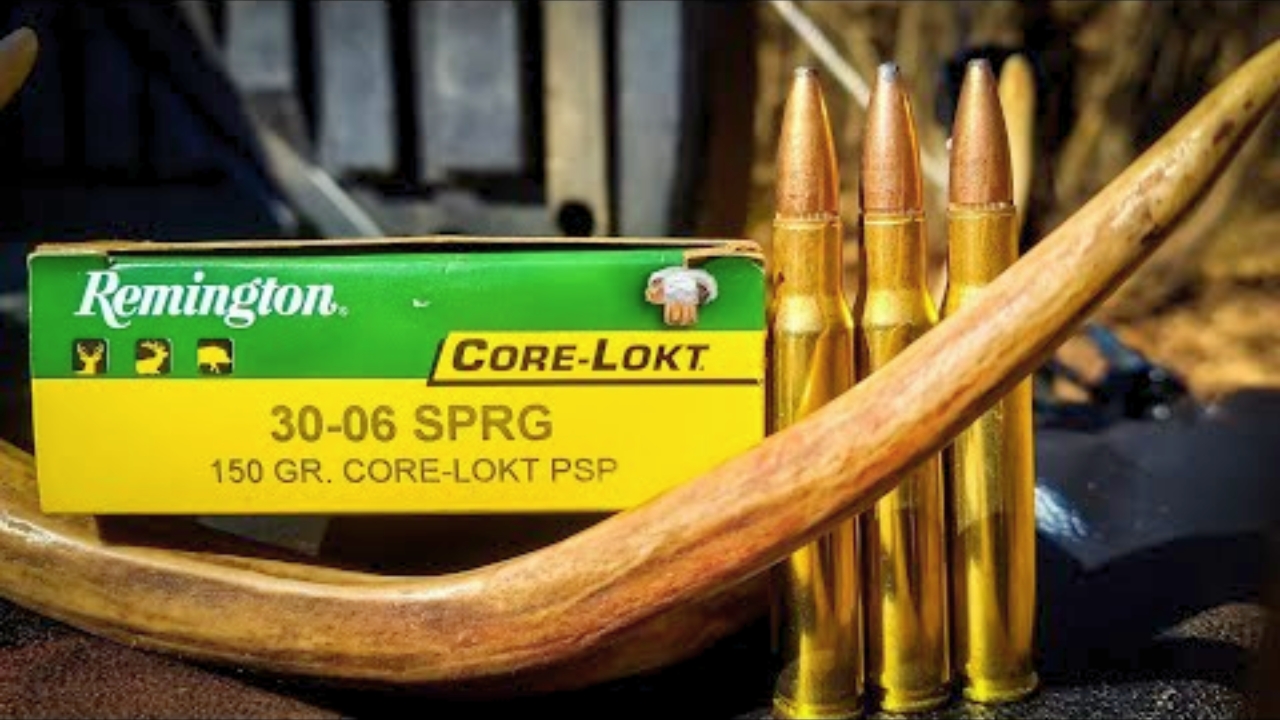
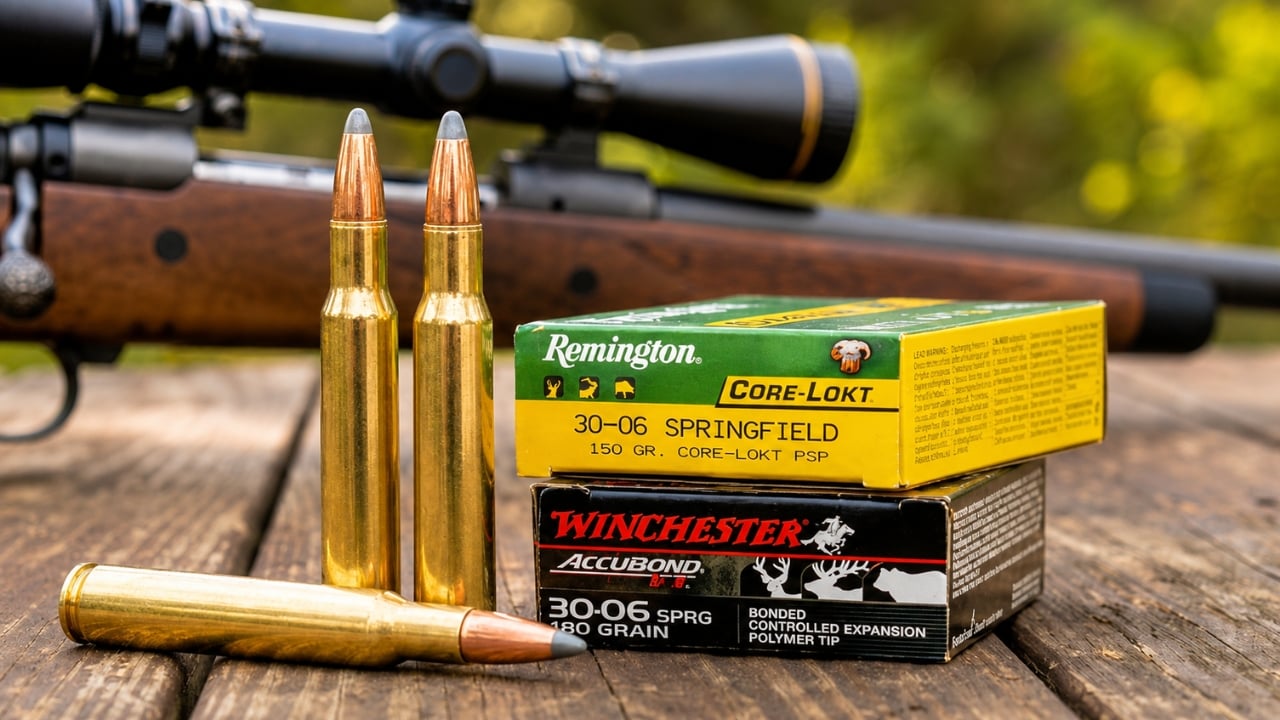
The .30-06 Springfield has been taking deer for more than a century, and it remains one of the safest cartridge choices a hunter can make. It has enough power for any whitetail or mule deer while giving hunters access to a massive selection of bullet weights and factory loads. A 150-grain bullet works well for open-country deer, while 165- and 180-grain loads add penetration for larger animals and difficult shot angles.
Its greatest strength is not raw power. It is versatility. Nearly every ammunition company loads the .30-06, and almost every major rifle manufacturer offers at least one model chambered for it. The cartridge generates more recoil than lighter deer rounds, but it remains manageable in a properly fitted rifle. Hunters can use the same rifle for deer, elk, black bear, and most other North American big game without feeling undergunned.
.308 Winchester

The .308 Winchester delivers much of the practical performance of the .30-06 in a shorter cartridge. It fits inside short-action rifles, produces moderate recoil, and works extremely well with the 150- and 165-grain bullets commonly used for deer hunting. Inside normal hunting distances, a deer will never know whether the bullet came from a .308 or a larger cartridge.
Hunters also benefit from the enormous availability of .308 Winchester rifles and ammunition. Bolt actions, lever actions, single shots, and semi-automatic rifles are all easy to find in this chambering. It may not shoot quite as flat as the fastest modern cartridges, but the difference is minor at the ranges where most deer are actually killed. The .308 has earned its reputation by being accurate, dependable, and powerful without creating unnecessary recoil or rifle weight.
.270 Winchester

The .270 Winchester became a deer-hunting favorite because it offers flat trajectories without punishing the shooter. Loaded with a 130-grain bullet, it carries plenty of velocity across open fields, clear-cuts, and western basins. Hunters who know their zero can hold directly on a deer at surprisingly long distances without making complicated elevation adjustments.
It also produces effective terminal performance without requiring oversized bullets. The .270 penetrates well, expands reliably, and has enough energy for large-bodied mule deer and northern whitetails. Recoil is lighter than the .30-06 in similar rifles, which helps many hunters shoot it more accurately. Modern 140- and 150-grain bullets have made the cartridge even more versatile, but the classic 130-grain deer load remains one of the most successful hunting combinations ever developed.
.30-30 Winchester

Few cartridges have accounted for more deer than the .30-30 Winchester. It became closely tied to lightweight lever-action rifles that were easy to carry through timber, brush, and steep country. At the short and moderate distances common in wooded deer habitat, the .30-30 provides more than enough power while producing manageable recoil and quick follow-up shots.
The cartridge does not have the flat trajectory of newer rounds, but that weakness is often exaggerated. Most eastern whitetails are taken well inside 150 yards, where the .30-30 remains completely effective. Modern pointed bullets made for tubular magazines have improved its reach, but traditional flat-point ammunition still works just as it did generations ago. A hunter who understands the cartridge’s limitations is not poorly armed. In close deer country, the .30-30 may still be one of the most practical rounds available.
7mm-08 Remington
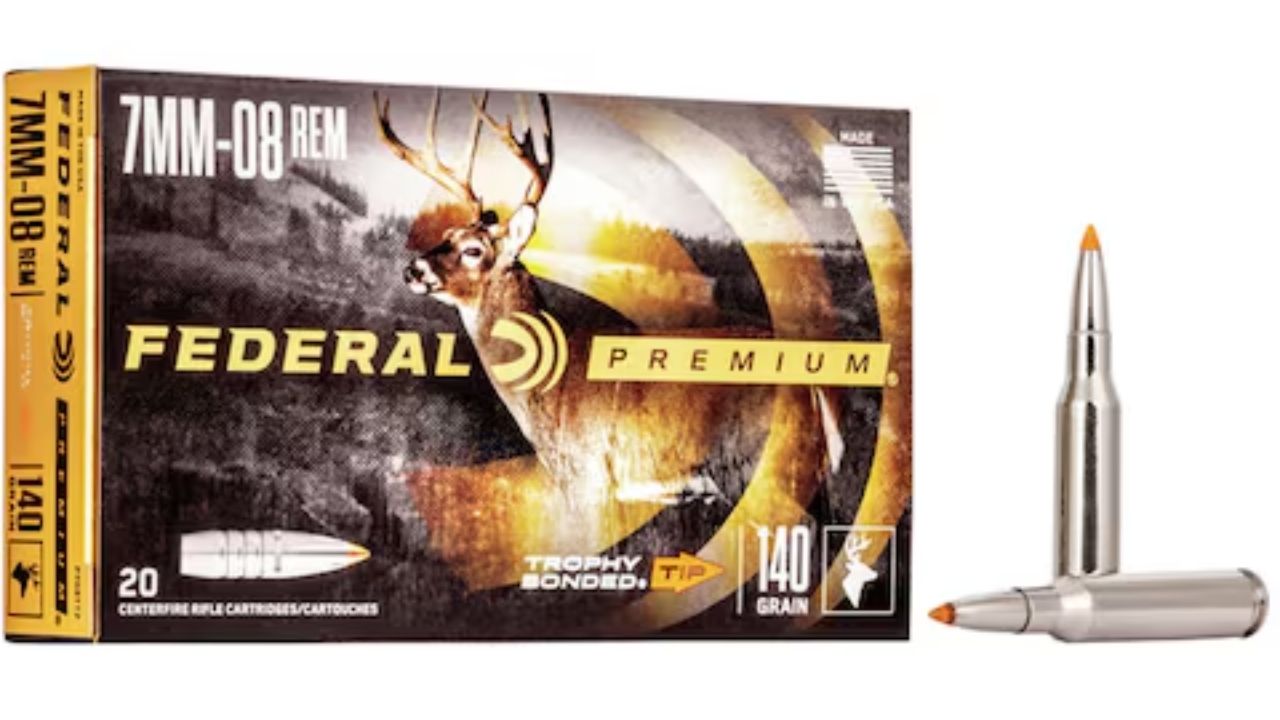
The 7mm-08 Remington has quietly become one of the best all-around deer cartridges for hunters who want performance without heavy recoil. It combines the efficient 7mm bullet diameter with the compact .308 Winchester case. Common 120- to 140-grain deer bullets provide flat trajectories, strong penetration, and reliable expansion on both whitetails and mule deer.
This cartridge is especially useful for younger hunters, smaller-framed adults, and anyone who dislikes the recoil of traditional .30-caliber rounds. That does not make it a beginner-only cartridge. Experienced hunters appreciate how accurately the 7mm-08 shoots and how well modern 7mm bullets hold velocity. It is capable beyond typical deer ranges, yet it remains comfortable in lightweight rifles. The only meaningful disadvantage is that ammunition selection may be smaller than what hunters find for the .308 or .30-06.
.243 Winchester

The .243 Winchester has introduced generations of hunters to deer hunting. Its low recoil makes it easier to practice with, and its flat trajectory helps reduce mistakes in distance estimation. Loaded with a properly constructed 90- to 105-grain hunting bullet, the .243 can cleanly take deer without the blast and recoil associated with larger cartridges.
The catch is that bullet choice and shot placement matter more than they do with heavier rounds. Light varmint bullets should not be treated as deer ammunition, and poorly angled shots leave less room for error. Used correctly, however, the .243 is far more capable than its critics admit. It works best for hunters who are disciplined enough to wait for a good shot and place the bullet through the lungs or heart. Its accuracy, mild manners, and wide availability keep it near the top of the deer-cartridge list.
6.5 Creedmoor
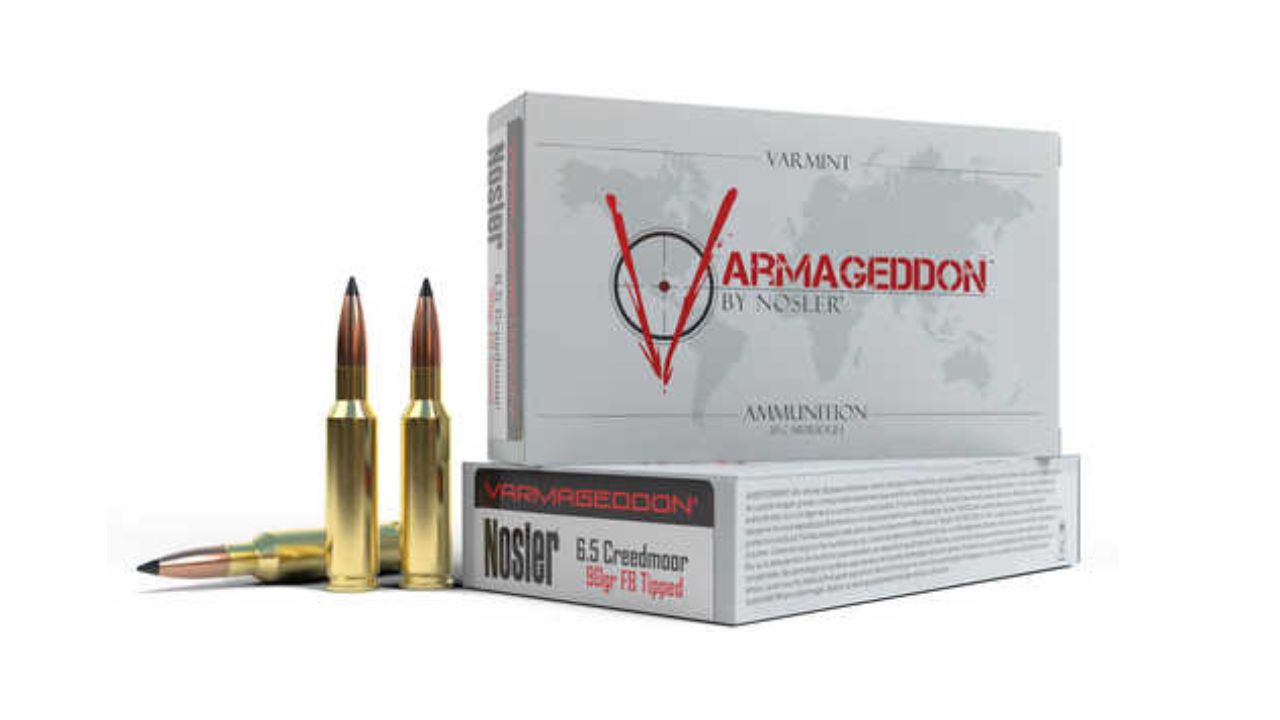
The 6.5 Creedmoor became popular because it is accurate, efficient, and easy to shoot well. It uses streamlined bullets that retain velocity and resist wind drift better than many traditional hunting projectiles. Hunters commonly use 120- to 143-grain bullets, giving the cartridge enough penetration and energy for deer at distances far beyond what most people should attempt in the field.
Despite the arguments surrounding it, the 6.5 Creedmoor is not magical and does not need to be. Its real advantage is that hunters can practice without getting beaten up by recoil. That makes good shooting habits easier to maintain. A well-placed 6.5mm hunting bullet through the chest is entirely effective on whitetails and mule deer. Hunters expecting dramatic knockdown power may prefer something larger, but those who value accuracy and manageable recoil have good reason to choose it.
.280 Remington

The .280 Remington offers an excellent balance between the .270 Winchester and the .30-06 Springfield. It shoots heavier 7mm bullets than the .270 while generating less recoil than many magnum cartridges. With 140- to 160-grain hunting bullets, it can handle deer at close range, across large crop fields, or in open western country.
The cartridge never achieved the popularity its performance deserved, partly because it spent years competing with better-known rounds. That lack of attention does not make it less effective. Modern 7mm bullets give the .280 strong penetration and excellent downrange performance. It is powerful enough for elk and other large game, yet it does not overwhelm the average deer hunter. Ammunition can be harder to find than .270 or .30-06 loads, but hunters who own one rarely complain about its field performance.
.280 Ackley Improved

The .280 Ackley Improved takes the strengths of the original .280 Remington and adds more velocity without jumping all the way to full magnum recoil. Its sharper case design creates additional powder capacity and improves performance with long, aerodynamic 7mm bullets. That makes it especially appealing to hunters working in open terrain where shots may stretch beyond normal eastern woods distances.
It is more cartridge than a hunter needs for a 75-yard whitetail, but it remains comfortable enough to use in a reasonably light rifle. With a quality 140- to 160-grain bullet, the .280 Ackley Improved offers flat trajectories, excellent wind resistance, and deep penetration. Factory ammunition is more available than it once was, though it still cannot match the shelf presence of the .270 or .30-06. For hunters who want near-magnum capability without excessive punishment, it is difficult to beat.
.25-06 Remington

The .25-06 Remington is one of the flattest-shooting traditional deer cartridges. It launches 100- to 120-grain bullets at high velocity, making it particularly effective in open country where deer may appear several hundred yards away. Recoil stays relatively mild, and many rifles chambered for it deliver excellent accuracy.
At close range, the cartridge’s speed makes bullet construction important. Fragile bullets can expand too aggressively, especially if they strike heavy bone. A strong deer bullet turns the .25-06 into a fast, decisive performer that creates less recoil than most magnums. It is a favorite among hunters who spend time watching large fields, power lines, or western plains. The cartridge is less ideal for hunters who want one rifle for the largest North American game, but for deer and pronghorn, it has few real weaknesses.
.257 Roberts

The .257 Roberts earned its reputation before high velocity became the main selling point for hunting cartridges. It provides more power than the smaller .243 Winchester while producing less recoil than most .270- and .30-caliber rounds. With 100- to 120-grain bullets, it offers enough penetration and expansion for deer without damaging excessive amounts of meat.
Its moderate velocity is part of its charm. The cartridge does not rely on extreme speed to work, and quality bullets tend to behave predictably across normal hunting distances. Factory ammunition and new rifles are not as common as they once were, which has pushed the .257 Roberts toward handloaders and hunters who appreciate older designs. It may no longer dominate sporting-goods shelves, but its mild recoil, accuracy, and practical field performance still make it one of the finest deer cartridges developed.
6.5×55 Swedish

The 6.5×55 Swedish has been proving the effectiveness of 6.5mm bullets since long before the Creedmoor arrived. European hunters have used it on animals larger than deer, relying on its deep penetration and mild recoil. In a modern rifle with suitable ammunition, the cartridge delivers excellent performance with 120- to 156-grain bullets.
Its long case generally requires a standard-length action, but that makes little difference to most hunters. The cartridge shoots smoothly, tends to be accurate, and works especially well with heavy-for-caliber bullets that penetrate deeply. American factory loads may be kept mild because of older rifles still in circulation, so hunters need to understand what ammunition is appropriate for their firearm. The 6.5×55 is not trendy, but it remains one of the most balanced and capable deer rounds ever produced.
7×57 Mauser
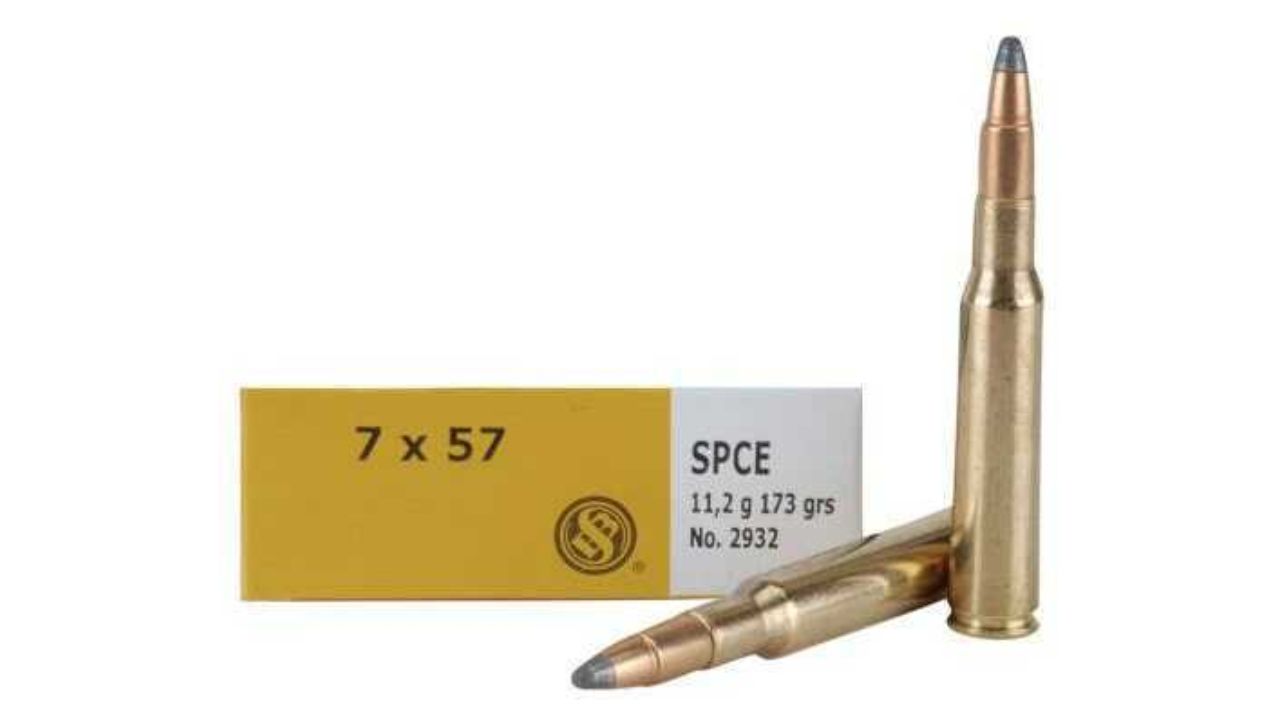
The 7×57 Mauser built a worldwide hunting reputation through moderate recoil and unusually effective penetration. It launches 7mm bullets at sensible velocities, allowing them to expand without coming apart too quickly. Hunters have used it on deer and much larger game for well over a century, often with results that seem greater than the cartridge’s paper ballistics suggest.
Its performance sits in a comfortable place between lighter deer rounds and hard-kicking magnums. A 139- to 175-grain bullet gives the hunter plenty of options, though factory ammunition is less common than it once was. Like the 6.5×55, some loads are kept conservative because older rifles remain in use. In a strong modern action, the 7×57 is accurate, capable, and pleasant to shoot. Hunters who dismiss it because of its age are overlooking one of the most proven cartridge designs in the world.
.260 Remington

The .260 Remington offered Creedmoor-like performance years before the 6.5 Creedmoor became famous. It uses the .308 Winchester case necked down for 6.5mm bullets, creating an efficient short-action cartridge with mild recoil and excellent accuracy. Hunting loads using 120- to 140-grain bullets are fully capable of handling any deer in North America.
Its greatest problem was never performance. It struggled because rifle manufacturers and ammunition companies did not support it as aggressively as they later supported the Creedmoor. The .260 can drive similar bullets slightly faster in some loads, but factory ammunition is less abundant and often more expensive. Hunters who already own a good .260 have little reason to replace it. It offers flat trajectories, deep penetration, and enough power without making the rifle unpleasant to shoot.
.300 Winchester Magnum

The .300 Winchester Magnum delivers more power than deer hunters usually need, but it remains one of the best choices for hunters who face long distances or want one rifle for multiple species. It pushes 150- to 180-grain bullets fast enough to produce flat trajectories and tremendous downrange energy. Large mule deer, northern whitetails, and deer encountered in open mountain country are all well within its capabilities.
The downside is recoil, muzzle blast, and the temptation to take shots that exceed the hunter’s ability. A powerful cartridge cannot correct bad range estimation or poor shooting form. It can also damage significant amounts of meat when lightly constructed bullets strike deer at high velocity. In the hands of a practiced shooter using a suitable bullet, the .300 Winchester Magnum is highly effective. For hunters who flinch or rarely practice, a smaller cartridge will usually produce better results.
.300 Winchester Short Magnum

The .300 Winchester Short Magnum was designed to provide magnum performance from a shorter action. It comes close to .300 Winchester Magnum ballistics while fitting into rifles that can be slightly shorter and lighter. With 150- to 180-grain bullets, it delivers more than enough power for deer at any responsible hunting range.
Its shorter, wider case can feed differently depending on the rifle, and ammunition is not as universally available as traditional .30-caliber choices. Recoil also remains substantial. The word “short” in the name should not be mistaken for mild. Still, hunters who want a compact mountain rifle with serious reach often appreciate the .300 WSM. It shoots flat, handles large-bodied deer with authority, and can move easily into elk or moose hunting without requiring another rifle.
.35 Whelen
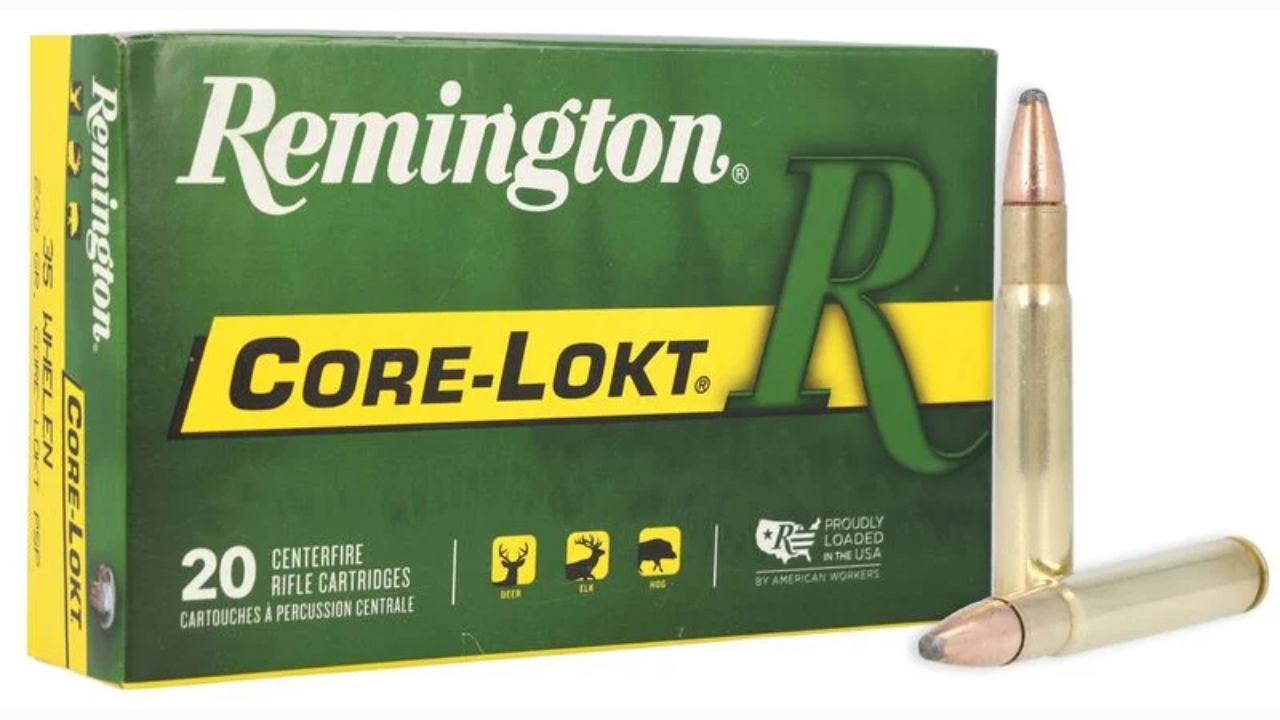
The .35 Whelen is a powerful choice for hunters who spend time in thick cover or pursue large-bodied deer. It is based on the .30-06 case necked up to accept .358-inch bullets. Common 180- to 250-grain loads produce deep penetration and wide wound channels without requiring the extreme pressures or muzzle blast of many magnum cartridges.
This is not the cartridge for hunters who prioritize the flattest possible trajectory. It shines at close and moderate distances where heavy bullets can pass through muscle, bone, and difficult shot angles. The .35 Whelen is particularly useful in bear country or for hunters who want one rifle for deer, elk, moose, and black bear. Recoil is noticeable, but many shooters find it more of a firm push than the sharp kick produced by some high-velocity magnums.
.350 Legend
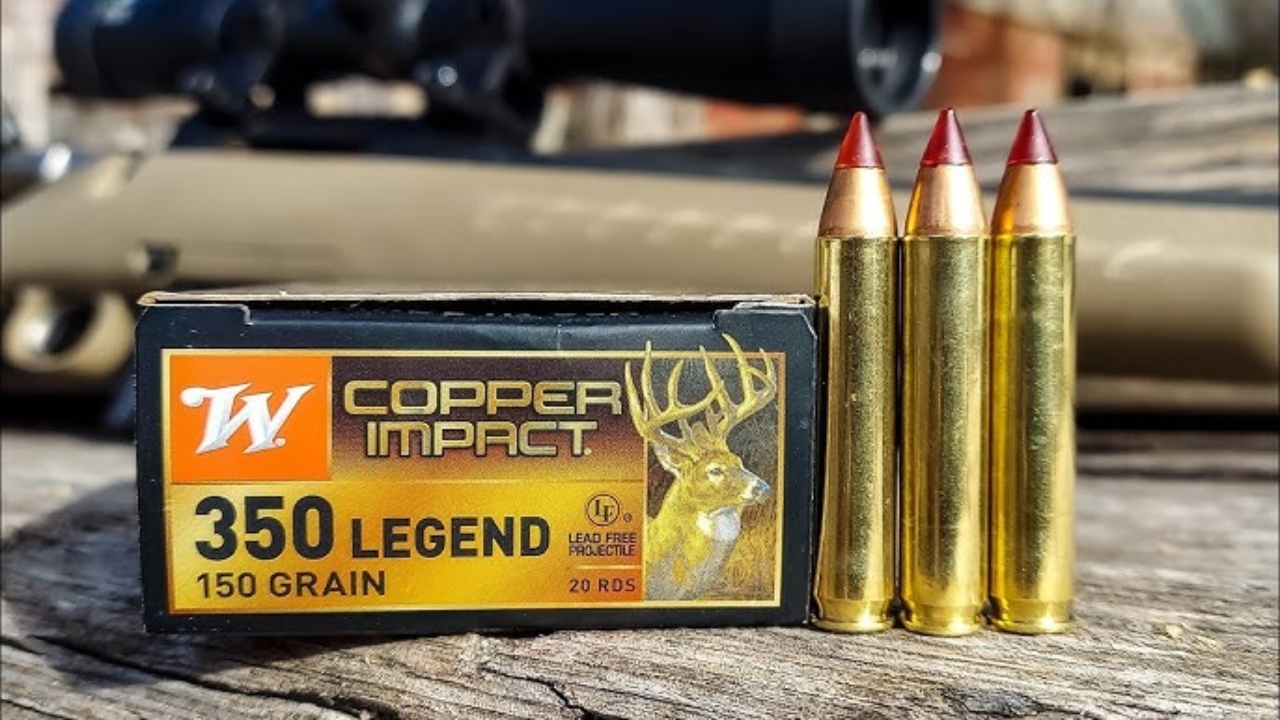
The .350 Legend gained popularity in states that allow straight-wall cartridges but restrict traditional bottleneck rifle rounds. It gives hunters a practical alternative to shotguns and older big-bore cartridges, especially in areas where shots are usually taken inside 200 yards. Recoil is mild, ammunition is reasonably affordable, and rifles chambered for it are widely available.
It does not deliver the long-range performance suggested by some early marketing, but it does not need to. Within its realistic limits, the .350 Legend puts a useful bullet diameter through a deer without punishing the shooter. It works especially well for younger hunters and adults who want more authority than a slug gun without heavy recoil. Bullet choice still matters, and hunters should resist stretching it beyond the distances where velocity and expansion remain dependable.
.45-70 Government

The .45-70 Government has survived since the black-powder era because it remains extremely effective at close and moderate range. In modern lever-action rifles, it can fire loads ranging from relatively mild deer ammunition to heavy rounds intended for large and dangerous game. A wide .458-inch bullet does not require extreme velocity to create a serious wound channel.
Trajectory is the obvious limitation. Hunters need to understand their rifle’s drop and avoid treating the .45-70 like a modern flat-shooting cartridge. Inside the woods ranges where most lever guns are used, that limitation matters very little. The cartridge hits hard, penetrates deeply, and works well in compact rifles that carry easily through brush. It can produce substantial recoil with heavy loads, but standard deer ammunition is often much more manageable than people expect.
.450 Bushmaster

The .450 Bushmaster became another major option for hunters living under straight-wall cartridge rules. It offers significantly more power than the .350 Legend and can be used in both bolt-action rifles and properly configured AR-platform firearms. With bullets generally weighing around 250 grains, it strikes deer hard and creates a large wound channel.
That performance comes with heavier recoil and more expensive ammunition. The cartridge also loses velocity quickly compared with traditional bottleneck rifle rounds, making it best suited to close and moderate distances. For hunters replacing a slug gun, however, the .450 Bushmaster can feel like a major improvement. Rifles are often more accurate, recoil can be easier to manage than heavy shotgun slugs, and follow-up shots may be faster in semi-automatic platforms. Within its range, it is a decisive and proven deer cartridge.
Like The Avid Outdoorsman’s content? Subscribe to our newsletter so you never miss an article.
Here’s more from us: