
Photo credit: UrielLu/Shutterstock.com
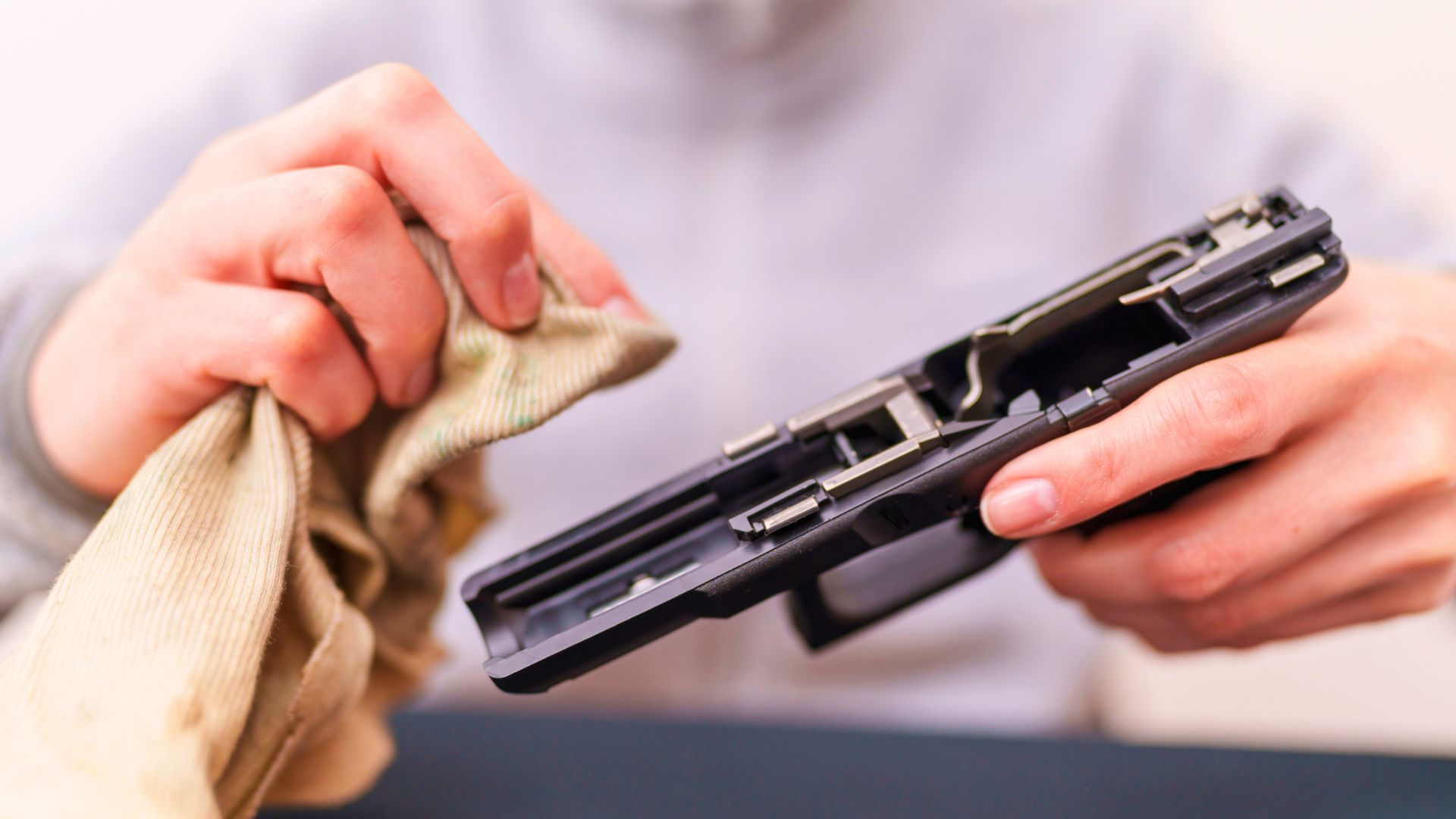
Cleaning advice gets weird because people treat it like religion: some insist you must clean constantly, others insist cleaning is pointless, and both extremes can create problems. The truth is that reliability is about friction, wear, and consistency, and you can absolutely ruin reliability over time by cleaning the wrong way, using the wrong products, or overdoing “maintenance” that actually damages parts. The most common self-inflicted reliability issues show up after someone aggressively scrubs, polishes, or floods the gun with solvents and oils, then reassembles it with debris where it shouldn’t be or with lubrication where it causes contamination. A pistol isn’t fragile, but it’s still a mechanical system with tolerances and surfaces that depend on being left alone in certain places and supported in others.
Over-lubing turns carry lint and carbon into grinding paste
One of the easiest ways to create long-term issues is to treat oil like a magic shield and drown the gun in it, especially a gun that gets carried daily. Excess oil migrates, collects lint, traps carbon, and turns normal carry debris into a sticky sludge that increases friction instead of reducing it. Then the slide starts feeling sluggish, the striker channel gets contaminated, or the gun begins returning to battery less consistently, and the owner blames springs or ammo when the real issue is that the pistol has been turned into a dirt magnet. Lubrication should be intentional and minimal in the right places, because the goal is to reduce friction on key contact surfaces, not to coat the entire gun in something that will eventually attract everything in your pocket and holster.
“Polish everything” can quietly change geometry and accelerate wear
A lot of bad cleaning advice is really “tuning advice” disguised as maintenance, where people suggest polishing feed ramps, polishing internals, or “smoothing” parts because they saw it online. Polishing can remove protective finishes, round critical edges, and change engagement surfaces in ways that don’t show up immediately but degrade over time as parts wear faster than designed. The gun might feel smoother for a while, but you’ve traded surface integrity for temporary feel, and that can lead to inconsistent function later, especially with parts like extractors, sears, and other interfaces where geometry matters. Cleaning should remove carbon and debris, not reshape metal, and anytime “cleaning” starts looking like grinding, sanding, or aggressive buffing, you’re in the zone where reliability problems get created, not solved.
Solvent in the wrong places creates failures that feel “random”
Some solvents are great at removing carbon, but if they migrate into striker channels, firing pin areas, or places that should remain relatively dry, they can carry dissolved debris into areas that become sticky when the solvent evaporates. That residue can cause light strikes, sluggish striker movement, and intermittent issues that are hard to diagnose because they don’t always happen right away. The gun may run for a magazine or two, then start acting strange as residue collects and friction increases. This is why “spray it until it drips” is a risky habit: it feels thorough, but it can push contamination into tight areas where it creates more problems later. Good maintenance is targeted, with a focus on cleaning and drying where necessary and lubricating only where lubrication actually supports reliable movement.
Reliable maintenance is simple, targeted, and boring on purpose
The cleaning advice that ruins reliability usually has one theme: more is better. More oil, more scrubbing, more solvent, more polishing, more disassembly, more “improvements.” In reality, reliability improves when you keep debris out of critical areas, keep friction under control on the right surfaces, and avoid changing the gun’s designed geometry through aggressive cleaning habits. If your pistol is a tool, treat maintenance like tool maintenance: clean the parts that actually accumulate fouling, inspect wear items like springs and magazines on a sensible schedule, and avoid turning cleaning into a hobby project that introduces new variables. A pistol that runs best is usually the one maintained with discipline and restraint, not the one constantly flooded, scrubbed, and reworked.
Like The Avid Outdoorsman’s content? Subscribe to our newsletter so you never miss an article.
Here’s more from us:


