Photo credit: Browning Europe EN/YouTube
We may earn revenue from products featured on this page through affiliate links.
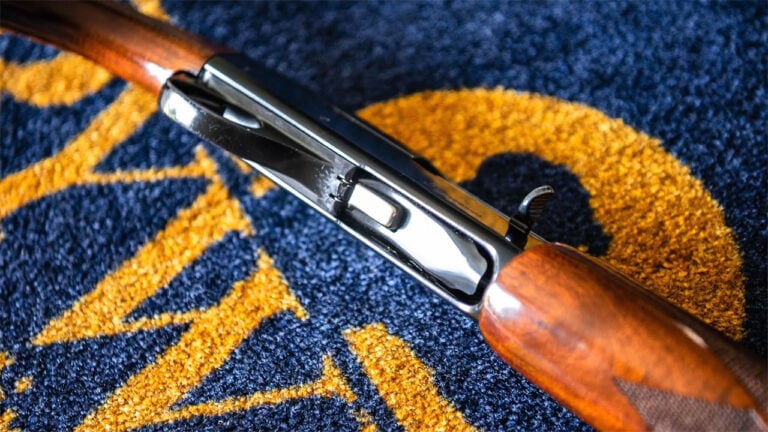
There are plenty of semi-auto hunting rifles that look good on a rack, but the reason the Browning BAR keeps sticking around is simple: it’s built for guys who want fast follow-up shots without giving up the feel of a serious hunting rifle. The BAR MK 4 isn’t trying to be a “tactical” rifle or a range toy. It’s an autoloading deer-and-elk rifle built around a gas system and action design that’s meant to cycle fast, run clean, and stay accurate enough for real hunting distances. Browning’s own description makes it clear what the MK 4 is leaning on: a gas piston system where gas doesn’t enter the receiver, a seven-lug rotating bolt that locks into the barrel, and an integrated buffer to reduce wear and stress on the operating system. If you’ve ever hunted thick cover, big woods, or places where animals don’t stand around politely after the first shot, the appeal of a BAR makes sense fast.
The short-stroke gas piston design keeps the receiver cleaner and the rifle running
A lot of people talk about semi-autos like they’re automatically less reliable than bolt guns, and most of that comes from confusing different operating systems and ignoring maintenance reality. The BAR MK 4 leans on a gas piston approach Browning highlights specifically because gas doesn’t enter the receiver, which helps reliability by keeping the action area cleaner than systems that dump gas where the parts are moving. That matters in hunting because your rifle isn’t living on a clean bench—it’s riding in a truck, getting rained on, getting carried through brush, and getting run when you’re cold and tired. Browning also points to the piston design providing fast cycling and reducing felt recoil, which is exactly what you want in a hunting semi-auto: run smooth, stay controllable, and don’t beat you up so badly you start rushing your second shot.
The seven-lug rotating bolt and threaded barrel interface are about strength and consistency
The MK 4 isn’t built like a lightweight plinker; it’s built like a rifle that’s expected to handle real hunting cartridges and still lock up the same way every time. Browning calls out the seven-lug rotating bolt locking into the barrel and describes the “precise breech-to-chamber interface” as part of the accuracy and strength story, including the strength to handle magnum rifle loads. One of the more important MK 4 changes Browning highlights is the barrel-to-receiver interface: the barrel is threaded into the receiver “like most bolt-action rifles,” which Browning says offers improved strength and accuracy. When you’re choosing an autoloader, that kind of lockup consistency matters more than people admit, because the difference between “fun gun” and “hunting tool” is whether it returns to the same lockup and prints to the same point of impact after real use.
The built-in buffer system and action design are meant to reduce wear and help accuracy
One reason some semi-auto hunting rifles feel like they get “loose” over time is that the operating system takes a beating and the rifle gradually changes personality. Browning specifically calls out an “integral buffering system” that reduces wear and stress on the operating system, which is exactly what you want if you plan to keep a rifle for years and actually shoot it. Browning also describes the action bar/inertia block link-up as reducing barrel vibration to improve accuracy. That detail matters because the big knock on semi-auto hunting rifles has always been consistency compared with a good bolt gun. The MK 4 isn’t claiming it’s a benchrest rifle—it’s built around the idea that it can cycle quickly while still keeping vibration and wear under control enough to remain a dependable hunting rifle that doesn’t start throwing surprises after a few seasons.
It’s a real hunting rifle, not a gimmick, and the model lineup reflects that
A rifle being “worth owning” isn’t only about mechanics—it’s also about whether it’s offered in configurations hunters actually want. Bass Pro’s listings show the MK 4 offered as straightforward hunting models like the BAR MK 4 Hunter in common hunting cartridges (including .30-06 and .300 Win Mag listings) with typical hunting barrel lengths and a 4-round capacity in many calibers. (Bass Pro product reference) That matters because it means the rifle is being sold as a practical hunting tool, not a niche collector piece. If you want to step up from “plain working rifle” to something with more polish while keeping the same basic operating concept, Bass Pro also lists the BAR MK 4 Medallion, which keeps the same core system while leaning harder into the classic, nicer-finish side of the BAR appeal. (Bass Pro product reference) Two different buyers, same core reason the BAR exists: a hunting semi-auto that’s built to be carried and used.
Who the BAR MK 4 is actually for, and who should skip it
The BAR MK 4 makes the most sense for hunters who value fast follow-ups, manageable recoil, and a rifle that stays clean-running across real hunting conditions—especially in thick cover, big woods, or places where shots come fast and animals don’t always give you a perfect broadside pose. The design choices Browning emphasizes—cleaner-running piston system, strong barrel lockup with a seven-lug bolt, threaded barrel-to-receiver interface, and an integrated buffer—are all aimed at making a semi-auto that behaves like a dependable hunting rifle instead of a temperamental range toy. The guys who should skip it are the ones who want the lightest rifle possible, the cheapest possible ammo plan, or the simplest “one shot, one kill, never need a follow-up” mindset. A good bolt gun is still hard to beat for pure simplicity and weight options. But if your hunting reality includes quick second shots, moving animals, or the kind of brush-country chaos where time matters, the BAR MK 4 is worth owning because it’s built around that reality instead of pretending every hunt is a calm benchrest moment.
Like The Avid Outdoorsman’s content? Subscribe to our newsletter so you never miss an article.
Here’s more from us: