
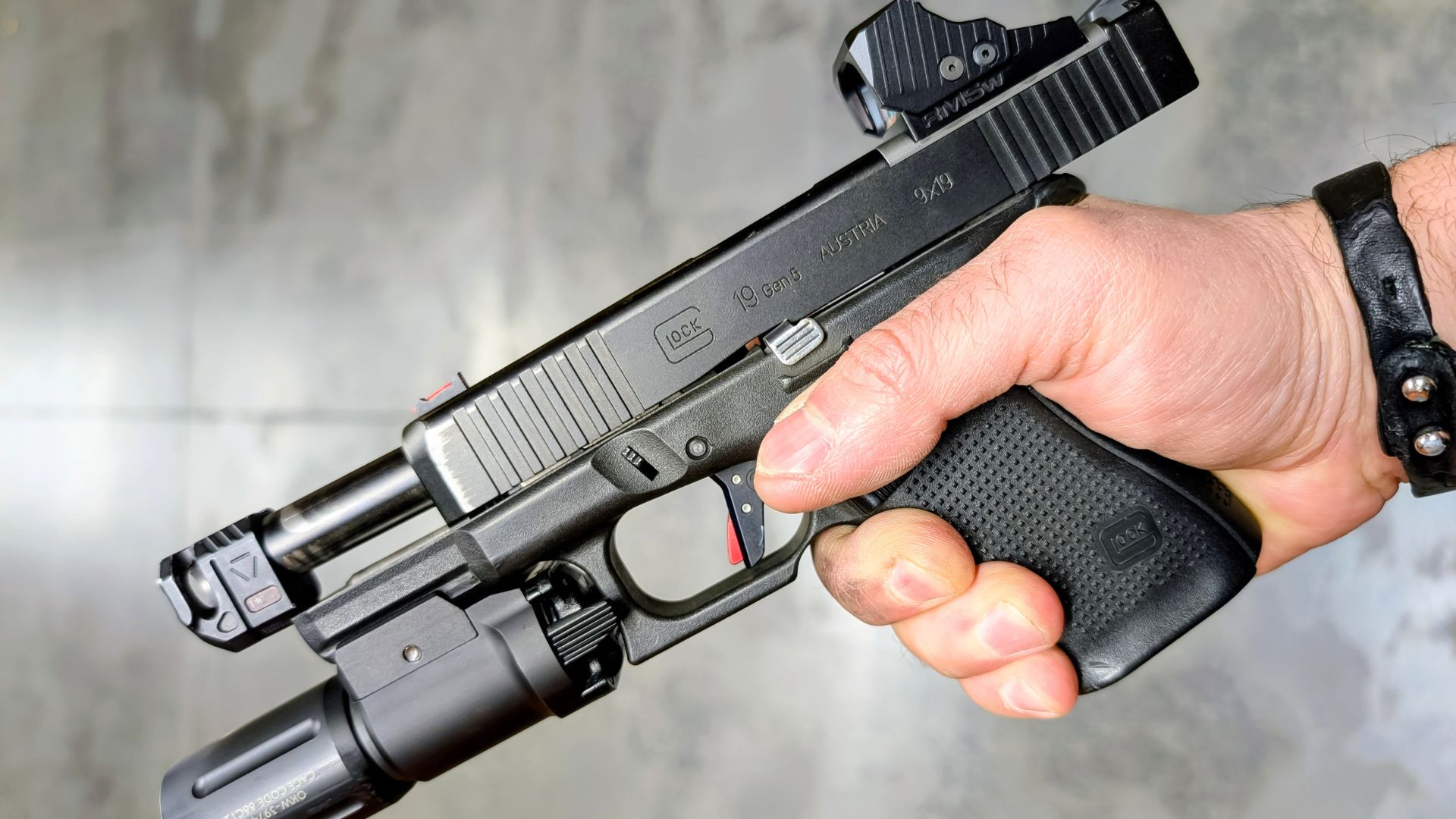
Photo credit: Dmitri T/Shutterstock.com
A spec sheet can tell you a lot about a handgun, but it cannot tell you everything that actually matters once the gun leaves the counter and starts getting carried, trained with, cleaned, and trusted. Capacity, barrel length, unloaded weight, and sight type all have value. The problem is that those numbers often pull attention away from the things shooters notice most after a few months of real use. A pistol can look outstanding on paper and still feel awkward, irritating, or less dependable than expected when it is part of your routine.
That is why experienced shooters usually judge handguns a little differently. They still care about measurable details, but they tend to care even more about how the gun behaves under pressure, how naturally it fits the hand, and whether it stays easy to live with over time. The features that matter most in real use are often less glamorous than the ones that sell guns. They are the features that make the pistol easier to shoot well, easier to trust, and less likely to fight you when the conditions stop being comfortable.
Grip shape that lets you build a repeatable hold
Grip shape matters more than a lot of shooters first realize because it affects almost everything that happens after the draw. If the pistol does not let you build a consistent hold quickly, the rest of the shooting process gets harder. Recoil control suffers, sight tracking gets less predictable, and your first impression of the trigger or sights may end up being unfair because the gun never sat in your hand correctly to begin with.
That is why a handgun that “feels good” in the store is not always enough. What matters more is whether the grip lets you return to the same hand position under speed, under sweat, and under a little stress. A pistol with a sensible grip shape often shoots better in real use than a pistol with more impressive paper specs but worse ergonomics. Good fit helps everything else work the way it should.
Texture that actually keeps the gun planted
Grip texture is one of those features that rarely looks dramatic on a spec sheet, yet it matters a great deal once real shooting begins. A pistol that shifts in the hand during recoil forces the shooter to keep correcting the grip, which costs time and consistency. That becomes even more obvious during faster strings, sweaty range sessions, or hot-weather carry where your hands may not feel as secure as they did when you first handled the gun indoors.
Texture also matters because there is a sweet spot to it. Too little and the gun moves around more than it should. Too much and daily carry becomes unpleasant against skin or clothing. In real use, the best handguns usually have texture that helps lock the gun in place without becoming abrasive enough to make you resent carrying it. That balance almost never gets enough attention when people only compare printed features.
A trigger you can press cleanly under speed
Trigger weight gets plenty of attention, but trigger quality matters more in real use than the number alone. A trigger can sound impressive because it is light, but that does not mean it is easy to use well under pressure. What matters more is whether the trigger feels predictable, clean enough to manage without disturbing the sights, and consistent enough that the shooter can build confidence with repetition. A useful trigger is one that helps honesty, not one that flatters you at a bench.
That becomes even clearer once speed enters the picture. A mushy, vague, or inconsistent trigger tends to create problems that a simple weight measurement never shows. Shooters often perform better with a slightly heavier trigger that breaks cleanly than with a lighter one that feels uncertain. In real use, control matters more than bragging rights. The trigger needs to help the shooter stay consistent when things are moving, not merely sound good in an ad.
Controls you can reach without shifting the gun
A pistol’s controls matter more in real use than many shooters expect because awkward controls slow down the parts of shooting that are supposed to happen naturally. Magazine releases, slide stops, safeties, and decockers all need to be usable without forcing the shooter into unnecessary hand movement. A handgun that requires constant grip adjustment to run efficiently starts feeling less practical the more often you train with it, especially if you are trying to move with any speed.
This is one of those areas where small differences become big differences over time. A control that seems fine during casual handling can become annoying once reloads, manipulations, and one-handed work enter the picture. Real-use handguns tend to earn their reputation by making those interactions straightforward. A gun that shoots well but feels clumsy to operate often loses some of its shine once ownership moves beyond first impressions.
Sights you can actually pick up in normal light
Sight systems often get oversimplified into brand names, fiber optics, night sights, or rear-notch dimensions. What matters more in real use is whether the sights are easy to pick up quickly in the kind of light where people actually shoot. A sight picture that works great on a bright indoor lane may not stand out as well outdoors, in shade, or during low-contrast conditions. That is where practical visibility starts mattering more than the style label.
Shooters also learn that clean sight acquisition often matters more than fancy sight details. A plain, visible front sight that the eye finds quickly can be more useful than a more complicated setup that looks impressive in product photos. In real use, the best sights are the ones that help you find what matters fast and stay visually organized when the pace increases. That matters more than whether the packaging sounded high-end.
Recoil behavior, not only recoil level
People often talk about recoil as if it is only about how hard a pistol kicks. In real use, recoil behavior matters more than raw recoil force. A pistol may not be especially harsh, but if it flips oddly, shifts in the hand, or returns to the sights inconsistently, it becomes harder to shoot well at speed. Another handgun may feel a little snappier in the hand but track more predictably, which often makes it the easier gun to run.
That difference shows up quickly once you stop shooting slow groups and start paying attention to how the sights lift and settle. A pistol that behaves predictably builds confidence. It lets the shooter call shots, manage pace, and recover naturally. That matters far more than a simplified impression that the gun “felt soft.” Real-use handguns tend to separate themselves by how they move, not only by how much they move.
Reliability with ordinary ammo and ordinary maintenance
Reliability is obvious, but the kind of reliability matters more than many spec sheets suggest. A real working handgun needs to run with common ammunition, realistic cleaning intervals, and the kind of ownership most people actually give it. A pistol that performs beautifully in ideal conditions but becomes fussy with ordinary range ammo, modest neglect, or a little dirt is less impressive than one that simply keeps going without needing special treatment.
This is where real use strips away a lot of sales language. Shooters start noticing whether the gun needs a perfect magazine, a certain recoil spring setup, or premium ammo just to behave. The handguns that build strong reputations usually do so because they remain dependable without asking the owner to constantly manage little conditions around them. In the long run, boring reliability beats exotic features nearly every time.
Slide shape that makes manipulation easier
Slide design usually gets discussed in terms of style, serrations, or whether the gun looks modern. In real use, what matters more is whether the slide is easy to grasp and manipulate cleanly. Deep serrations help, but so does overall shape. A slide that gives the shooter enough surface to work with can make malfunction drills, press checks, and routine handling much easier, especially with wet hands, cold fingers, or reduced hand strength.
That becomes a bigger deal over time than many buyers expect. A pistol that is slightly harder to rack, slightly slicker than it should be, or oddly shaped in a way that complicates manipulations can slowly wear on the owner. Practical ease is a real feature, even if it never gets highlighted as loudly as optic cuts or capacity. A handgun that is simple to run tends to stay more trusted than one that only looks the part.
Size that balances concealment with shootability
Size matters in a way that spec sheets often fail to explain. Buyers can compare barrel length, height, and width all day, but those numbers do not fully show how the gun balances concealment and control. A very small pistol may look ideal for carry until the owner realizes it takes much more effort to shoot well. A larger pistol may sound harder to conceal until good holster placement reveals that it carries more comfortably than expected while shooting far better.
That is why experienced shooters often care less about the smallest dimensions possible and more about useful dimensions. In real use, the best carry guns are often not the smallest ones. They are the ones that hide well enough while still giving the shooter enough grip, enough sight radius, and enough weight to stay competent under pressure. Practical size beats impressive measurements once the gun becomes part of daily life.
Magazine design that loads, seats, and drops free cleanly
Magazine capacity gets most of the attention, but magazine function matters more in real use than the round count alone. A good magazine should load without unreasonable struggle, seat cleanly under pressure, and drop free when the shooter needs it to. If the magazine design causes hesitation, inconsistent seating, or sticky reloads, the handgun becomes harder to trust no matter how strong the capacity sounds on paper.
This is one of those features that rarely gets appreciated until it is missing. A pistol with well-designed magazines simply feels smoother to live with. Reload practice becomes more straightforward, confidence rises, and the gun behaves more like a complete system instead of a collection of parts. In real use, magazine behavior often matters more than buyers expect because so much of the pistol’s overall trustworthiness flows through that one component.
A frame that fits the shooter better than the market trend
A final feature that matters more in real use is something that does not always show up neatly on a spec sheet at all: whether the frame actually fits the shooter. Trends push thin guns, high-capacity guns, micro-compacts, optics-ready guns, and all kinds of category winners. None of that matters much if the pistol does not point naturally, does not let the shooter reach the trigger correctly, or simply never feels settled in the hand.
That personal fit is often what separates a gun that gets carried from one that gets sold. A handgun can be respected across the market and still be the wrong choice for a specific shooter. In real use, the pistols that last are often the ones that fit the owner’s hand, habits, and needs instead of the current fashion. A good fit makes practice easier, trust stronger, and performance more repeatable. That matters more than almost any line on a printed spec card.
Like The Avid Outdoorsman’s content? Subscribe to our newsletter so you never miss an article.
Here’s more from us:


