Photo credit: Bloomberg Originals/YouTube
State lawmakers are quietly preparing the next round of fights over “smart guns,” shifting from abstract debates about biometrics to concrete proposals that could shape what you are allowed to buy and carry by 2026. Instead of broad storage rules, the new push is about whether firearms themselves must include integrated technology that recognizes an authorized user or locks out everyone else. As you look toward the 2026 sessions, you are watching a contest between legislators, gun‑safety advocates, and the firearms industry over how far to go in turning that technology from an option into a requirement.
The new definition of a “smart gun mandate” in 2026
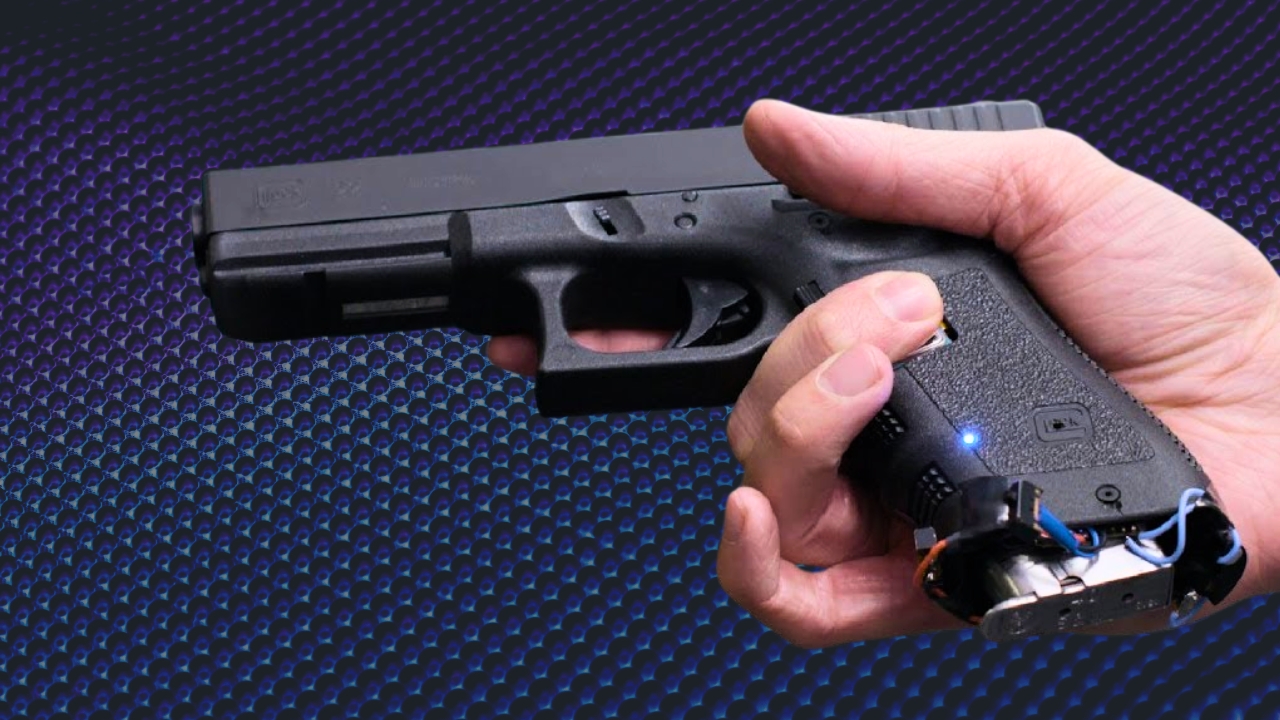
When you hear lawmakers talk about “smart gun mandates” in the coming cycle, they are not just referring to safe storage or waiting periods, but to requirements that firearms include built‑in technology such as fingerprint readers, RFID tokens, or digital locks. The core idea is that a gun would only fire for an authorized user, which is a very different policy choice than simply telling you to lock a traditional handgun in a safe. That distinction matters, because the next wave of bills is aimed at the hardware itself, from how new models are designed to which products can be sold in your state.
Advocates point to research suggesting that integrated user‑recognition could prevent a large share of accidental shootings and theft‑driven crimes, while opponents warn that any mandate risks glitches, higher costs, and a de facto ban on conventional firearms. At the federal level, you can already see this framing in proposals like the effort by Representative Zoe Lofgren and her colleagues to “bring life‑saving gun safety technology to market,” which explicitly focuses on smart gun features rather than storage rules, as described in a recent bill introduction. As statehouses gear up for 2026, that same hardware‑first logic is starting to shape what you may soon find on the shelf at your local gun store.
Why smart gun tech is back on the agenda
Smart gun technology has hovered at the edge of the market for years, but you are now seeing it pulled back into legislative agendas because the technology has matured and the politics around gun safety have shifted. Earlier entrepreneurial efforts, including fingerprint‑activated handguns like the 40-caliber model developed by Kai Kloepfer’s company, showed that “Some” designs could work in real‑world conditions, even if they never broke through commercially. Those experiments gave lawmakers a proof of concept: if a private startup can build a gun that reads your fingerprint, a state can at least ask whether new pistols should offer similar protections.
At the same time, gun‑violence data has become more granular and more politically salient, which gives you a clearer picture of what smart guns might actually prevent. A detailed analysis of unintentional gun deaths cited by Representative Lofgren’s office concluded that 37% of fatal shootings could have been prevented by smart gun technology, a figure that is now being repeated in state hearings as lawmakers justify new mandates. Policy groups that have long argued that smart guns can save lives, including those who framed the issue in terms of “Averting unintentional shootings by children” in the Mar policy debate, are using that data to push you toward seeing integrated tech as a baseline safety feature rather than a futuristic add‑on.
Massachusetts: from study commissions to potential hardware rules
If you want to see how a blue state might move from studying smart guns to mandating them, you should watch Massachusetts. Lawmakers there have already created a Special Legislative Commission on Emerging Firearm Technology, a body that was “Pushed” into existence by gun control advocates to examine biometric locks, personalized firing systems, and other innovations. Reporting on the commission’s work notes that even a smart gun manufacturer has warned that sweeping mandates could be a “dumb idea,” underscoring how cautious you can expect legislators to be as they translate technical findings into statutory language.
The commission’s remit is not to write code or pick winners among vendors, but to tell you whether it is realistic to require that new handguns sold in Massachusetts include features like biometric authentication or RFID pairing. Industry groups have seized on the commission’s early discussions, arguing through the Special Legislative Commission debate that any requirement tying a gun’s basic function to electronics could fail at the worst possible moment. As the 2026 session approaches, you should expect proposals that stop short of an outright mandate for all firearms, but that could, for example, require state police and other agencies to pilot smart sidearms or give retailers incentives to stock at least one compliant model.
New Jersey: the original smart gun test case, revisited
For years, New Jersey has been the cautionary tale in smart gun politics, after an earlier law tried to trigger a sweeping mandate once a single personalized handgun hit the market. That statute was later revised, but it left you with a clear lesson: if a mandate is too rigid, it can freeze innovation and provoke fierce backlash from gun owners who fear being forced into untested products. Today, New Jersey lawmakers are more likely to talk about “availability” requirements, such as ensuring that at least one smart gun model is offered for sale, rather than banning traditional firearms outright.
The state’s broader gun‑safety posture also shapes how far a new smart gun rule could go. A federal appeals court recently upheld a 2022 law restricting guns in “sensitive places” like parks, bars, and other public venues, a decision that signaled courts are still willing to accept some limits on where you can carry, as detailed in coverage of the New Jersey ruling. With that backdrop, legislators in New Jersey are exploring whether certain “sensitive” settings, such as government buildings or public transit, could eventually require smart‑enabled firearms for on‑duty personnel, effectively creating a narrow, context‑specific mandate that might be easier for courts to accept.
California: storage rules now, smart hardware debates next
In California, you are already seeing a dense web of gun regulations, from background checks to ammunition limits, and that environment is now starting to intersect with smart gun conversations. A new law taking effect at the start of 2026 will require firearms in homes to be secured in locked containers or with devices that prevent unauthorized use, as spelled out in SB 53. That statute still focuses on external locks rather than integrated electronics, but it primes the political ground by normalizing the idea that a gun should not be operable by just anyone who picks it up.
State officials are also updating definitions and enforcement tools in ways that could make it easier to regulate smart hardware once it is widely available. A recent update from the attorney general’s office notes that the law “Effective July” 1, 2026, “Expands the” definition of firearm to include frames and receivers, which broadens the universe of regulated components and could eventually encompass smart firing modules or digital receivers, as described in the new firearm law. Local coverage from KESQ has already framed these changes as part of a broader shift toward “improving safety within the homes of gun owners in California,” and smart gun mandates would be a logical, if politically fraught, next step in that evolution.
Illinois and Michigan: Midwestern laboratories for smart standards
While coastal states grab headlines, you should not overlook how Midwestern legislatures are quietly building the scaffolding for future smart gun rules. In Illinois, lawmakers have passed the Safe Gun Storage Act, also known as “The Safe Gun Storage Act” or “Senate Bill” 0008, which tightens how firearms must be secured in homes, especially when minors are present, as outlined in coverage of the Safe Gun Storage Act. Another report on “Gun Safety: SB 8” explains that gun owners will face new obligations in 2026, including enhanced storage expectations and changes to waiting periods, which you can see detailed in the Gun Safety summary.
These are not smart gun mandates yet, but they create a regulatory baseline that makes it easier for legislators to argue that integrated locks are simply the next logical upgrade. Local coverage of “Hundreds of” new laws taking effect on January 1, 2026, in Illinois underscores how quickly the state’s gun code is evolving, which is exactly the kind of environment where a smart gun pilot requirement could surface. Neighboring states like Michigan are also tightening storage and access rules after high‑profile school shootings, and while current reporting does not document a specific smart gun hardware bill there, the same coalition of suburban lawmakers and gun‑safety advocates is poised to look at biometric or RFID‑enabled firearms as the technology matures.
What national advocates and data labs are pushing you toward
Behind the statehouse debates, national advocacy groups and research labs are working to make smart gun mandates feel less speculative and more like a data‑driven response to specific harms. One prominent organization has launched Everytown Labs, which recently announced “Innovation in the news” through the rollout of “Everytown Labs Announces Launch of” EveryShot, an AI “Powered Tool” designed to “Track Gun Violence,” as described in the Everytown update. By mapping where and how shootings occur, tools like EveryShot give lawmakers a granular picture of unintentional shootings, thefts, and domestic incidents that smart guns are supposed to address.
Policy shops that have long argued for “Averting” preventable deaths, especially those involving children in the “United States,” are now explicitly tying their recommendations to integrated technology, as seen in the Every analysis of smart guns as life‑saving tools. On Capitol Hill, Representative Lofgren’s smart gun bill is framed as a way to help manufacturers bring products to market, not to punish you for owning a traditional firearm, which is a message state lawmakers are likely to echo as they craft 2026 proposals. The more these groups can show you that smart guns are a targeted response to specific patterns of harm, the easier it becomes for legislators to defend narrow mandates, such as requiring smart‑enabled guns in homes with minors or in certain public‑facing professions.
How courts and the Second Amendment are shaping the limits
Even if your state lawmakers are eager to mandate smart guns, they still have to navigate constitutional limits, especially after a series of Supreme Court decisions that expanded individual gun rights. Legal analysts point out that “The Second Amendment” protects your right to keep and bear arms, but that “Time and” again, courts have upheld a wide range of gun safety laws as long as they do not amount to a functional ban, as summarized in a key Second Amendment overview. That means a law requiring every new handgun to include a biometric lock would face tougher scrutiny than a rule that simply requires retailers to offer at least one smart model or that gives tax credits to buyers who choose them.
Recent litigation out of New Jersey, where a federal appeals court upheld restrictions on guns in “sensitive places,” shows you that courts are still willing to tolerate some location‑based limits, especially when states can point to historical analogues or clear public‑safety rationales. That same logic could support targeted smart gun mandates, such as requiring personalized firearms for on‑duty security in courthouses or for certain government‑issued sidearms. At the same time, industry‑backed groups are preparing to argue that any requirement tying a gun’s basic function to electronics is qualitatively different from a storage rule, and they are likely to cite the Emerging Firearm debate in Massachusetts as evidence that even sympathetic experts worry about reliability.
Who is resisting, and how they are reframing the fight
On the other side of the ledger, you have gun‑rights organizations and some smart gun entrepreneurs themselves warning you that mandates could backfire. The National Shooting Sports Foundation has highlighted comments from a smart gun maker who argued that compulsory adoption could stigmatize the technology and slow voluntary uptake, a point amplified in its critique that “even smart gun maker knows mandates are a dumb idea,” which is woven through the Apr commentary. Their message to you is simple: let the market decide, and do not let legislators turn early‑stage products into compulsory equipment.
These groups are also trying to reframe the debate away from technology and toward broader concerns about government overreach. In online videos and explainers, including a widely shared “9 States Banning Assault Weapons in 2026” clip that walks viewers through how to “pull those definitions” and check “where your guns land no cap the next piece is paperwork,” advocates warn that once you accept one kind of mandate, others will follow, as seen in the Dec video. They point to states like California and Illinois, where layered regulations already govern everything from storage to assault‑weapon definitions, as evidence that smart gun rules will not stop at a single pilot program. For you as a gun owner or policymaker, that means any 2026 smart gun bill is likely to be fought not just on technical grounds, but as part of a larger narrative about creeping regulation.
How you can track and influence the 2026 smart gun wave
As 2026 sessions approach, you are not limited to watching these debates from the sidelines. Advocacy guides emphasize that “Many” states are actively changing their gun‑related laws, and that “Some” are adding safeguards like “Extreme Risk Protection” orders while others are loosening rules through permitless carry, as laid out in a detailed advocacy guide. That same playbook applies to smart gun mandates: you can meet with legislators, testify at hearings, and push for pilot programs or safeguards that reflect your comfort level with the technology.
To understand where your state stands, you can look to national trackers that note how “Six” months into 2025, “more than a dozen states have passed new gun safety laws,” a trend summarized in a Jul trendwatch. Local explainers, such as the “What residents need to know” breakdown of new laws in Illinois or the year‑end look at changes for gun owners in California, including the Dec overview, can help you spot when a smart gun pilot or mandate is tucked into a broader safety package. Whether you favor or oppose these measures, the next wave of smart gun policy will be shaped not just by engineers and lobbyists, but by how actively you engage with the lawmakers writing the rules.
Like The Avid Outdoorsman’s content? Be sure to follow us.
Here’s more from us: