Photo credit: Rhett Noonan/Unsplash.com
Most days in the woods feel pretty controlled. You’ve got a plan, you’ve got tools, and you’re used to animals doing what animals usually do—spook, slip out, vanish. Then you get a moment that flips the whole script. Not the “cool story” kind, either. The kind where your stomach drops and your brain gets very honest about distance, angles, and how fast things can go sideways when you’re not the one setting the rules. A lot of these aren’t even “attacks.” They’re the split-second reminders that you’re sharing space with animals that live there full time, that don’t need permission to be dangerous, and that don’t care what you thought the situation was. If you’ve hunted long enough, you’ve got at least one of these stories—or you’ve heard one that made you walk a little different afterward.
When a grizzly popped out of cover at bad distance

Grizzly country has a way of making you respect the word “close.” You can be doing everything right—wind in your favor, moving slow, eyes scanning—and still end up inside a few steps of a bear that was feeding, bedded, or coming up a draw. That’s when you learn how fast your brain can lag behind reality. You’re not thinking about your draw. You’re thinking about staying upright and figuring out what you’re even looking at.
The part that humbles people is the speed. A bear doesn’t need a running start to own the moment. If it woofs, pops its jaw, or comes at you in a blur, you realize your “plan” was built for a calm encounter, not a surprise one. That’s a hard way to learn you’re not always the one in charge.
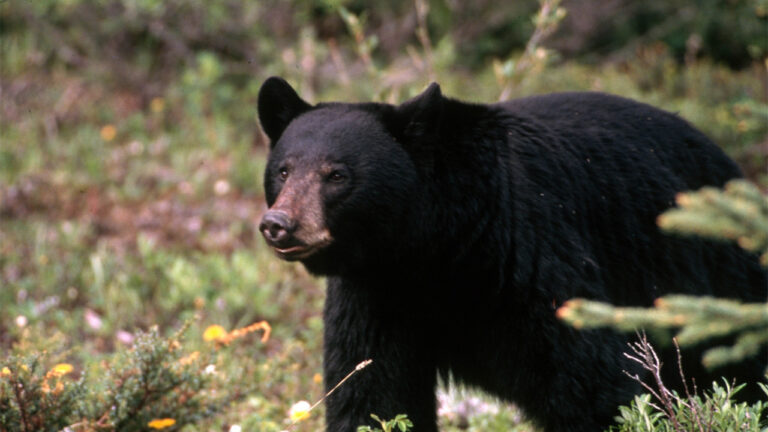
When a black bear took over the gut pile like it was his

A lot of hunters have watched black bears run off like a big nervous dog. That’s why the first time one shows up on a gut pile and acts like it owns the county, it hits different. You come back for a second load, or you’re just getting situated, and suddenly there’s a bear between you and your work. Not bluffing. Not nervous. Just present.
That’s when you realize how much confidence matters in the animal world. A bear that’s keyed up around food, or used to people, or simply not in the mood to move can flip the power dynamic fast. You can be armed and still feel outmatched, because the bear’s already in the spot you need to stand, and it’s not asking.
When a cow moose decided the trail belonged to her and the calf

Moose don’t hunt you, but they can still wreck you. The “apex predator” lesson usually shows up when you stumble into the wrong family situation—cow, calf, tight trail, limited visibility. If she pins her ears and starts coming, you learn real fast that “big herbivore” doesn’t mean “safe to push around.”
A lot of hunters describe it as pure helplessness, because it’s not about shooting skill. It’s about creating space, finding a tree, getting behind something solid, and hoping you didn’t pick the worst possible moment to be in that spot. If you’ve ever watched a moose move through brush like it isn’t even there, you stop pretending you’d simply “handle it” if it got serious.
When a wounded hog turned the tracking job into a close-range fight

Hogs are famous for making people overconfident. They’re “just pigs,” right? Then you shoot one in thick cover, it doesn’t go down, and you follow blood into palmettos or a creek bottom where visibility is measured in feet. That’s when you learn how fast a boar can change direction and how ugly it gets when something low and fast decides it’s done running.
The humbling part is how physical it becomes. You’re stepping over vines, trying to listen, trying to see, and suddenly there’s movement right under your knees. A lot of guys don’t realize how hard it is to do anything clean when you’re getting rushed at leg level. You come out of that thinking less about “gear talk” and more about “what cover did I just walk into?”
When the mountain lion never showed itself… but left proof it was there

Most lion stories that mess with hunters aren’t attacks. They’re the ones where you never see the cat, but you find the sign that says it saw you. Fresh tracks on top of your tracks. A set of prints that follows for a stretch, then disappears into rocks. A weird “something’s off” feeling that makes sense later when you look back.
That’s a brutal reminder that predatory animals don’t need to announce themselves. You can be glassing, eating a snack, taking a leak—doing normal things—and a cat can be inside your bubble without you knowing. Hunters who’ve experienced that don’t walk the same afterward. They start thinking about blind spots, noise discipline, and how “quiet” doesn’t always mean “safe.”
When wolves started working your dog instead of leaving

Nothing flips the script like realizing your dog is the target. Wolves don’t need to attack you to make you feel powerless. They can parallel a ridge, hang back in timber, or show up at the edge of a clearing and apply pressure until your dog gets anxious or starts making mistakes. That’s when the “apex predator” fantasy starts to crack.
The worst part is how it splits your attention. You’re trying to keep your dog close, you’re scanning for movement, you’re listening for footfalls, and you can’t watch every angle at once. Even if the wolves never fully commit, the situation feels like you’re being managed, not the other way around. Hunters come out of that with a new respect for what coordinated predators can do without ever showing their full hand.
When an alligator appeared where you thought the water was “clear”
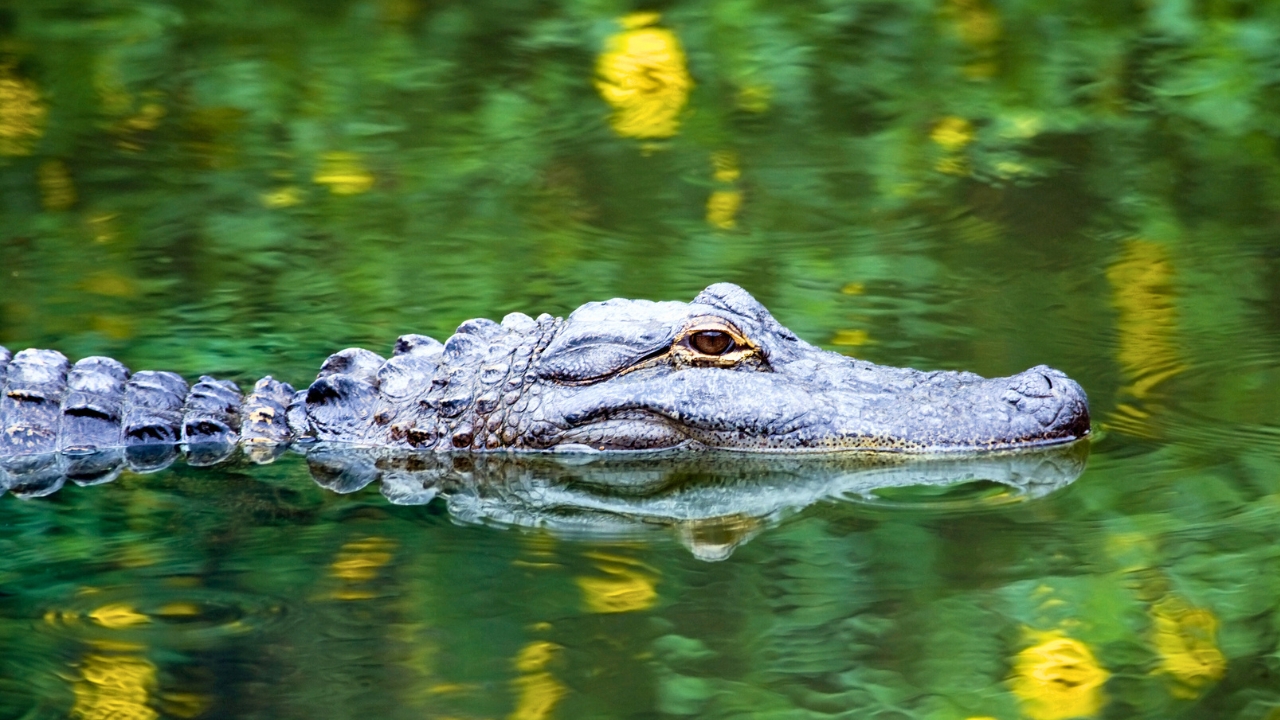
Duck hunters and anyone who spends time on warm-water banks have versions of this. You’re retrieving a bird, washing hands, stepping down for a drink, or working a boat in shallow water—and a gator you didn’t notice suddenly becomes obvious. Sometimes it’s a head that rises quietly. Sometimes it’s a swirl. Sometimes it’s just the realization that the “log” you were standing near has eyes.
That’s a hard reset because it shows how little warning you may get at the edge. You’re not “hunting a gator.” You’re just near its world. And if you’re in waders, on slick mud, or balancing a load, your mobility is already compromised. You realize you’re not the apex predator—you’re a visitor near a perfect ambush setup.
When a snake was closer than your brain could process

A lot of snake encounters happen when you’re busy—dragging a deer, stepping over deadfall, reaching into brush for a tag, grabbing a handle on a blind. The reason they humble hunters is the speed and the distance. You don’t get time to think. You get a sound, a flash, a strike range you didn’t respect enough, and you’re suddenly aware how fragile the whole day is.
Even when nothing happens, the lesson sticks. You stop reaching into places you can’t see. You stop stepping over logs without checking the landing. You remember that some animals don’t need size to dominate a moment—they just need one clean opportunity. That’s not “fear.” That’s a reality check you only learn once.
When a bull elk came in hot and didn’t stop at “close enough”

Rut makes animals do dumb things, but it also makes them do dangerous things. A fired-up bull can come to a call like he’s coming to fight, and if you’re in thick timber, that distance can collapse fast. Hunters talk about hearing the grunt, hearing the brush break, and realizing the animal is not easing in. It’s moving with a purpose.
That’s when you remember you’re not always controlling the encounter. A big bull that wants to run something off is a lot of animal in a small space. Even if you never feel “threatened,” you can still feel small. You’re not thinking about antlers and inches anymore. You’re thinking about getting out of the lane and not getting trampled in the commotion.
When a bison treated your “safe distance” like it was nothing

Bison have this reputation for being slow and lazy until the moment they aren’t. Hunters and outdoors folks learn the hard way that a bison can pivot, launch, and cover ground faster than your brain expects. It doesn’t have to “attack.” It just has to decide it doesn’t like where you are, and you’re suddenly running for terrain instead of posing for a story.
The apex predator lesson here is simple: size and mass are their own form of dominance. A bison doesn’t need teeth to win. It needs contact. And if you’re on uneven ground, in snow, or near brush where you can’t sidestep clean, the encounter becomes about escaping instead of “handling it.” People remember that because it feels like the animal is rewriting the rules mid-sentence.
When a wounded bear didn’t run away like it was supposed to

A lot of hunters expect the classic script: shot, crash, death run, follow blood. The humbling moments are when the bear doesn’t follow the script. It beds. It circles. It turns into thick cover and goes quiet. Or worse—it comes back toward the sound. That’s when the job stops being “tracking” and turns into “finding a dangerous animal that knows you’re there.”
This is where experienced guys get serious about angles, spacing, and patience. You can’t rush it. You can’t push into brush because you “want it over.” A wounded bear is one of the few times you can feel the predator-prey relationship wobble. You realize your confidence doesn’t mean much if you’re the one walking into its hiding spot.
When a big cat was already on a kill… and you walked into it

This one doesn’t get talked about enough because it’s creepy. You’re following a blood trail, you’re still-hunting, you’re moving slow—and you come across a fresh kill you didn’t expect. Sometimes it’s partially covered. Sometimes it’s dragged. Sometimes it’s just the smell and the silence. Even if you never see the cat, the message is obvious: something here eats with confidence.
Hunters rethink their place in the food chain because this is a reminder that you’re not the only one hunting the same animals. Predators key in on the same movement patterns, the same funnels, the same bedding areas. You realize you can stumble into a feeding animal without ever hearing it. That’s not a fun thought, but it’s a real one in cat country.
When a “small” animal turned into a serious medical problem fast

A lot of hunters have a story about something small that forced big decisions. A badger that tore up a dog’s face. A raccoon that latched on when it should’ve run. A bobcat that went nuts in a trap. These aren’t “apex predator” animals in the way we picture it, but the injury potential at close range is real—especially if there’s disease involved or you’re trying to handle it like it’s harmless.
The lesson isn’t that these animals are monsters. It’s that close-range wildlife contact is unpredictable. Teeth are teeth. Claws are claws. And if you get bit, suddenly you’re thinking about stitches, antibiotics, tetanus, rabies protocols—stuff that has nothing to do with hunting and everything to do with how quickly “small” can become serious.
When a swarm made you drop everything and run

Yellowjackets and ground nests have humbled more hunters than most people admit. You’ll be dragging a deer, stepping over a log, leaning on a tree, or kneeling to inspect blood—then the ground comes alive and your day becomes a sprint. There’s no “toughing it out” when you’re getting hit over and over and you can’t tell where the nest is until it’s too late.
That’s the food chain reminder in a weird way: you can be the biggest thing in the woods and still lose to something you can’t fight effectively. You can’t shoot it. You can’t wrestle it. You can’t reason with it. You just run and hope you’re not allergic. Hunters remember those moments because they feel ridiculous and terrifying at the same time.
When an owl hit your head and you realized you never saw it coming
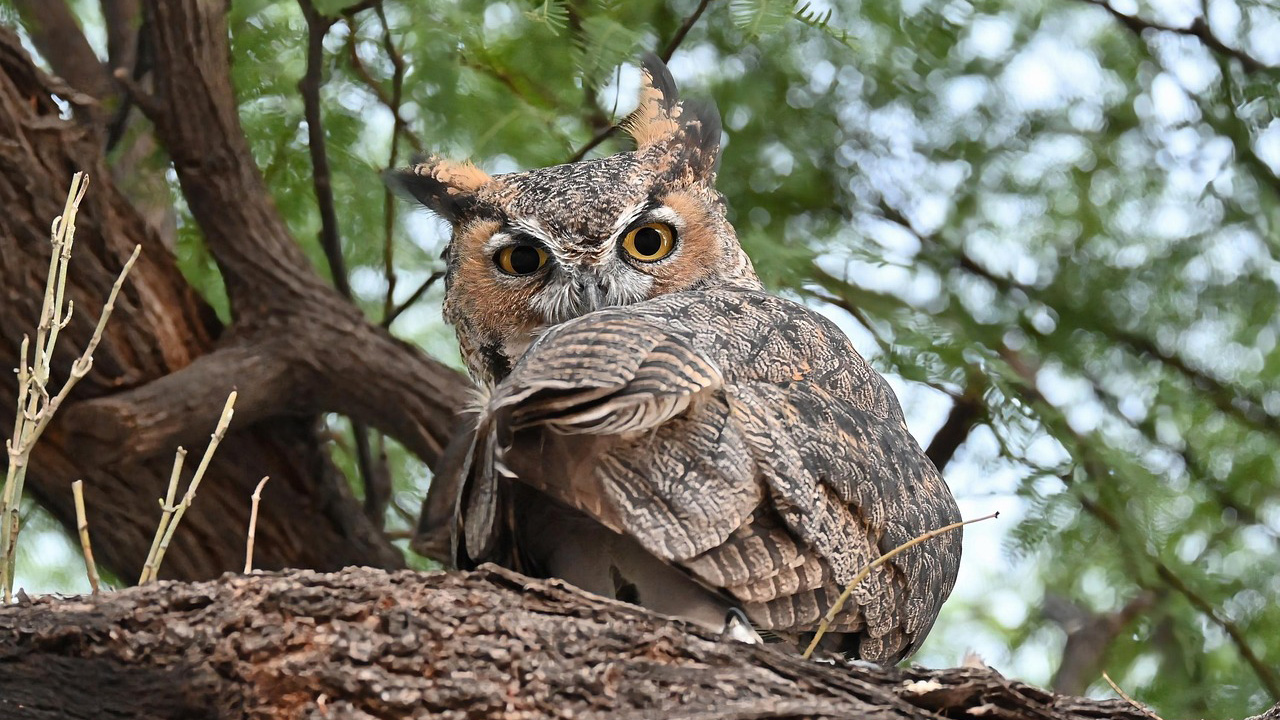
It sounds funny until you’ve had it happen. A big owl defending a nest can come in silent and hit the top of your head like a hammer. Hunters walking pre-dawn trails, checking cameras, or slipping in on a roost have had those “what just hit me?” moments where you’re instantly aware how exposed your face and eyes are to something coming from above.
This isn’t common, but it sticks because it’s such a clean example of surprise. You didn’t see it. You didn’t hear it. And in the dark, you can’t even tell where it went. It’s a reminder that your senses don’t always give you the warning you think they will. Sometimes the animal’s design simply beats your awareness.
When a pack of feral dogs reminded you the woods aren’t always “wildlife-only”

Feral dogs aren’t “nature,” but they’re real in plenty of rural areas, and hunters run into them more than folks want to admit. A pack can act bolder than a single animal, and if they’ve learned that people back up, they’ll press that advantage. The danger isn’t always an attack—it’s being boxed in, getting rushed, or watching them go after a dog or a downed animal.
The apex predator lesson is about numbers and confidence. A pack changes the math. They don’t need to be bigger than you if they can make you hesitate, split your attention, and keep closing. Hunters who’ve dealt with that don’t shrug it off. They remember how quickly a “normal” day can turn into a situation where you’re reacting instead of controlling.
When you realized the animal wasn’t the danger… it was the scramble after

Some of the most sobering moments happen right after an animal encounter, when your body is dumping adrenaline and you realize how close you were to getting hurt in a different way. Slipping on wet rocks while backing away. Falling into deadfall while trying to keep eyes on a bear. Getting tangled in brush because you moved too fast. Those “almost” injuries are the ones that teach humility, because they show how quickly your own movement can become the weak link.
Hunters learn that being “apex” isn’t about bravado. It’s about staying calm, staying stable, and making smart choices when your heart rate spikes. The woods don’t care how experienced you are. If you move sloppy at the wrong time, you can lose the day without any animal ever touching you—and that’s a lesson you don’t forget.
Like The Avid Outdoorsman’s content? Subscribe to our newsletter so you never miss an article.
Here’s more from us: