
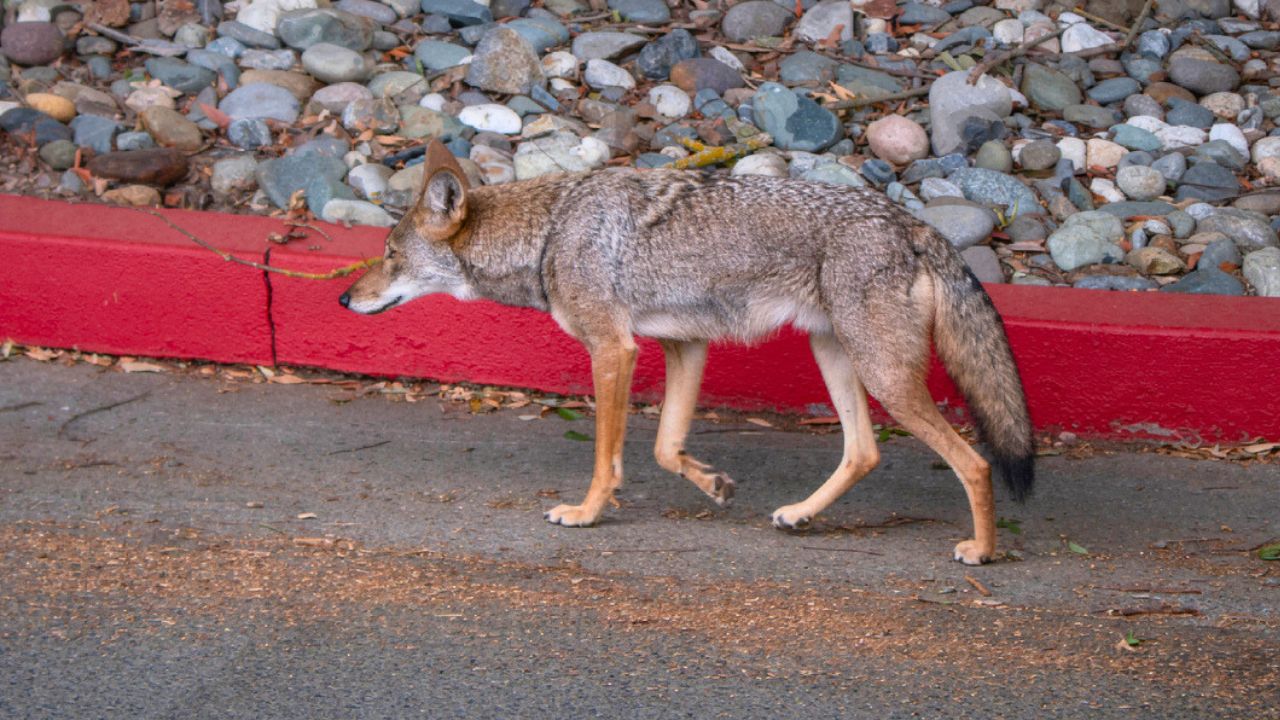
Photo credit: Eric Buell Photography-shutterstock
A coyote passing through once is not the same thing as a coyote getting comfortable near a home. The real warning sign is when the behavior stops looking cautious and starts looking routine. Texas Parks and Wildlife says coyotes are drawn in by easy food sources like pet food, garbage, compost, and even water left outside, while the Humane Society notes that coyotes that get fed, intentionally or not, can start losing fear of people and treating yards and neighborhoods like reliable feeding spots. That is when a random sighting starts becoming a pattern.
You keep seeing one in daylight
Coyotes are often most active at dawn, dusk, and night, so repeated daytime sightings close to the house can be worth a harder look. Urban Coyote Research notes that habituated or food-conditioned coyotes can show increased daytime activity in residential areas, especially when they begin associating backyards and human spaces with rewards. One daytime sighting does not automatically mean trouble, but if a coyote keeps showing up in broad daylight near the same yard, driveway, or outbuilding, that usually means its comfort level is rising.
It stops acting bothered by people
One of the clearest signs is a coyote that does not leave fast when it sees a person. The Humane Society says hazing is important specifically because it helps maintain a coyote’s fear of humans. That tells you the opposite behavior matters too: if the animal is lingering, staring, circling, or only drifting off slowly instead of clearing out, it may already be getting used to people. Urban Coyote Research makes the same point more bluntly, warning that feeding coyotes can cause them to habituate and lose fear of humans.
Your yard is offering easy food or water
This is one of the biggest clues because comfort usually starts with reward. Texas Parks and Wildlife says to keep pet food and water inside, secure garbage, and manage compost properly because these things attract coyotes. Its urban-wildlife guidance also says outdoor pet food, food waste, and shelter options around the home can make a property more appealing. If a coyote keeps coming close to the house, the first question should usually be what it is getting out of the visit.
That also includes wildlife feeding that people do not think of as “feeding coyotes.” Urban Coyote Research says one of the most effective ways to prevent coyote conflicts is to eliminate wildlife feeding, because bird feeders, garbage, and food left out at night can unintentionally support them. A yard with rabbits, rodents, fallen seed, pet dishes, and unsecured trash can start acting like a dependable grocery stop.
Pets are getting watched
Texas Parks and Wildlife says coyotes may occasionally take small domestic animals or poultry, and its urban guidance stresses keeping pets safe by limiting attractants and reducing opportunities. If a coyote is lingering near a fence, checking the edge of the yard, or showing up around the same time pets are outside, that is a stronger warning sign than just catching one out in the back pasture. Comfortable coyotes often start by studying routines before they get bolder.
This is especially worth paying attention to if the coyote seems interested in patios, dog runs, chicken areas, or places where small pets spend time. The Humane Society’s coyote-management guidance points out that unattended pets are one of the human behaviors that contribute to conflicts. In other words, the coyote does not have to attack anything for the situation to be getting worse. Repeated interest alone is a sign the distance between wild animal and home life is shrinking too much.
It keeps using the same route near the house
Coyotes that are getting comfortable often stop moving through an area randomly and start using the same path over and over. USDA’s coyote guidance says travel corridors are important when investigating coyote activity, and trail cameras can help show whether the animal is just passing through or regularly working a route. If the same fence gap, creek edge, driveway edge, or brush line keeps producing sightings or camera hits, that is usually a sign the coyote now considers that approach safe.
That repeated use matters because routine is what turns a nearby coyote from background wildlife into a real yard problem. A coyote that cuts through the back corner once a month is one thing. A coyote that checks the same side yard, same chicken pen, or same pet area several nights a week is operating with much more confidence.
It is showing up closer to structures
Another sign is when the coyote’s comfort zone starts creeping inward. Texas Parks and Wildlife’s urban-coyote guidance focuses heavily on reducing attractants around homes, which only makes sense because coyotes do move into those spaces when they find reasons to. A coyote staying out by a distant tree line is different from one cutting behind the garage, crossing the driveway, lingering near the porch, or checking around sheds and dog pens. That kind of proximity usually means the animal has stopped treating the house itself as much of a deterrent.
Neighbors are seeing the same thing
Coyotes that are truly getting comfortable usually are not just working one yard. Urban Coyote Research’s community guidance stresses that coyote conflicts are often neighborhood-level problems, especially when multiple households are leaving out food sources or not responding consistently. If several nearby homes are all seeing coyotes in daylight, hearing them near houses, or noticing them around pets, that is a stronger sign of a local comfort problem than one isolated report.
What to do before it gets worse
The good news is that the fix usually starts with basic property discipline. Texas Parks and Wildlife says not to feed coyotes, to bring pet food and water inside, secure trash, and keep compost properly managed. The Humane Society says hazing can help maintain a coyote’s fear of humans, which means yelling, making noise, and driving it off matters when the animal is acting too casual near the yard. Comfort gets worse when coyotes keep getting rewarded and face no pushback.
That is really the whole point. The sign a coyote has gotten comfortable too close to the house is not just that you saw one. It is that the animal is acting like the house, yard, pets, and routines around it are now part of normal business. Daylight appearances, repeated routes, easy food, weak fear of people, and growing interest in pet spaces all point in the same direction. Once those signs start stacking up, it is time to treat it like a behavior problem, not just a wildlife sighting.
Like The Avid Outdoorsman’s content? Subscribe to our newsletter so you never miss an article.
Here’s more from us:


