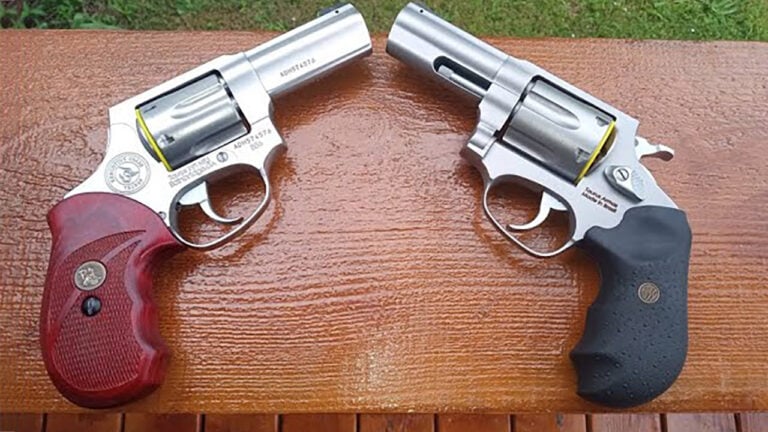
Photo credit: Andrew Conrad/YouTube
Tiny carry guns are hard teachers. Short grips punish weak support-hand pressure. Short sight radiuses make sloppy trigger work show up fast. And light weight means recoil moves the gun more than you want. The good news is you don’t have to suffer through that learning curve with every micro you pick up.
The tiny carry guns that are easiest to shoot well usually share a few traits: a grip you can actually lock into, a trigger you can press without guessing, sights you can see fast, and enough slide mass to keep the gun tracking flatter. Capacity matters, too, because more rounds means more reps before you’re back to stuffing mags. These are the small carry pistols that tend to make you look better than you are—because they’re built to help you run them.
SIG Sauer P365 XL

The P365 XL hits a sweet spot for real-world shooting. You still get a slim, easy-carry shape, but the longer grip and slide calm things down. Your hands have more to hold onto, and the gun doesn’t feel like it’s trying to jump out of your grip every shot.
What makes it easy to shoot well is how predictable it feels. The sight picture settles quickly, and the trigger press is easier to manage than a lot of tiny guns with heavier, stacky pulls. If you’re trying to keep fast strings inside a fist-sized area at defensive distances, the XL gives you a bigger margin for error without turning into a belt gun.
Glock 43X

The 43X is one of those pistols that makes you understand why grip length matters. It’s slim and easy to hide, but it gives you a full-height grip that lets you clamp down with both hands. That alone makes most shooters steadier and faster.
Glock’s consistency helps, too. The trigger feel, reset, and controls tend to be familiar if you’ve spent time on other Glocks, so you’re not relearning a whole system. The gun also points naturally for a lot of people, which matters when you’re trying to bring the sights back onto target without over-correcting. For a small carry gun, it’s forgiving in the ways that count.
Glock 48

Think of the Glock 48 as the 43X’s calmer brother. The longer slide adds a bit of weight out front, and that helps the gun track flatter under recoil. It’s still slim, still easy to carry, but it tends to feel less snappy than shorter-slide options.
That longer sight radius is a real advantage when you’re trying to shoot tight groups at speed. Little errors show up less dramatically, and you can call your shots easier. If you’re the type who actually practices at 15 to 25 yards, the 48 makes that feel less like a chore. It’s a carry gun that rewards good technique without punishing you for every tiny mistake.
Smith & Wesson M&P 9 Shield Plus

The Shield Plus is small enough to carry anywhere, but it doesn’t shoot like a featherweight pocket gun. The grip shape fits a lot of hands well, and the texture gives you traction without feeling like sandpaper against your skin all day.
Where it really earns its keep is in controllability. The recoil impulse is manageable for its size, and the gun settles back onto target quickly if your grip is solid. The trigger varies a bit across examples and generations, but in general it’s a workable press that doesn’t force you to slap at it. For a slim 9mm you’ll actually carry, it’s one of the easier ones to run fast and clean.
Springfield Armory Hellcat Pro

The Hellcat Pro is “small” in the way that matters: thin, light, and easy to conceal. But it gives you enough grip and enough slide length that you can shoot it like a real pistol, not a compromise tool you tolerate.
The sights are a big part of why it’s easy to shoot well. A clear front sight and a straightforward sight picture help you track the gun in recoil instead of searching for it. The frame also gives you a good purchase, which matters when you start pushing pace. If you’ve ever shot a true micro and felt like you were hanging on for dear life, the Pro feels more settled while still carrying like a slim single-stack.
Ruger Max-9

The Max-9 doesn’t get talked about as much as the big-name micros, but it has the kind of manners that help newer and intermediate shooters. The grip is slim, the controls are straightforward, and the gun tends to point naturally without feeling awkward in the hand.
What makes it easier to shoot well is that it doesn’t fight you. The recoil is manageable, and the gun doesn’t feel overly “whippy” for its size. With decent sights and a usable trigger, you can focus on fundamentals instead of wrestling the pistol. It’s also a gun you can practice with without feeling like you’re burning money every time you load magazines. If you want small, affordable, and shootable, it’s worth a serious look.
FN Reflex MRD

The Reflex is compact, thin, and built around the idea that a small gun should still run like a service pistol. The grip lets you get higher on the gun, and that helps control muzzle rise when you’re shooting fast.
The big advantage here is shootability without drama. The trigger system and overall feel tend to be more refined than many bargain micros, and that shows up on paper. When you can press the trigger without the gun yanking off target, your groups shrink fast. Add the option to mount an optic on the MRD model, and the gun becomes even easier to shoot well under time pressure. For a small carry pistol, it gives you a lot of control.
HK VP9SK

The VP9SK is thicker than the super-slim micros, but it’s short, easy to conceal, and very easy to shoot well. The grip design is one of the best in the business, and it helps your hands find the same placement every time you draw.
That consistency pays off on target. The gun feels stable in recoil, and the trigger is usually clean enough that you can run it hard without feeling like you’re fighting the press. The added weight compared to the tiniest carry guns also helps, especially if you shoot +P or hotter defensive loads. If you care more about performance than shaving every fraction of an inch off thickness, this is one of the easiest “small” pistols to shoot well.
CZ P-10 S

The P-10 S is compact, chunky enough to control, and built with shootability in mind. You get a grip shape that encourages a high hold, and the gun tends to stay flat when you do your part.
The trigger is a strong point for many shooters. A clean break and a usable reset help you shoot tighter groups without slowing down. The slide and frame mass also help tame recoil compared to the smallest micros, which can feel nervous in the hand. It’s not the tiniest option on the list, but it carries well with the right holster and belt, and it shoots like a bigger pistol. That combination is why people often run it better than expected.
Glock 26

The Glock 26 has been proving a point for decades: you can carry a short gun that still shoots well if the design is balanced. The thickness gives you control, the slide mass helps with recoil, and the overall feel is steady when you start shooting faster.
It also benefits from the Glock ecosystem. Parts, magazines, and support are everywhere, which makes it easier to set the gun up in a way that fits you. Even with the short grip, the gun tends to track predictably, and many shooters find they can keep rounds together better than they can with ultra-thin micros. If you want a compact gun that doesn’t feel fragile or twitchy, the 26 is still one of the best answers.
SIG Sauer P365 X

The P365 X is a smart configuration for shootability. You get a grip that gives your hands more real estate than the shortest P365 models, and that extra purchase makes recoil control easier without making the gun a pain to conceal.
It’s the kind of pistol that lets you build confidence quickly. You can shoot it at speed, get honest feedback, and see improvement without feeling like the gun is punishing you. The sight picture is easy to work with, and the overall balance helps you return to target faster. If you like the P365 platform but want something that’s easier to run hard than the smallest version, the X tends to feel like a step toward “easy mode” while staying carry-friendly.
Ruger Security-380

A lot of people shoot a .380 better than a 9mm when the gun is light and small, and the Security-380 plays into that reality. It’s compact and easy to carry, but it’s large enough in the hand that you can get a real two-handed grip and manage recoil without strain.
The softer recoil makes fundamentals easier. You can focus on sight alignment and trigger press instead of bracing for muzzle flip. That’s a big deal if you’re trying to build speed and accuracy together. The gun’s size also helps it feel stable during longer practice sessions. If you’ve struggled to shoot tiny 9mms well, a shootable .380 like this can keep you practicing longer and shooting better, which is the whole point.
Glock 42

The Glock 42 is one of the easiest truly small pistols to shoot well because it isn’t trying to be a pocket rocket. In .380 ACP, the recoil is mild, and the gun stays controllable even when your grip isn’t perfect.
That matters in real carry situations. You’re not always going to have the same perfect stance and perfect grip you have on a square range. The 42 gives you a little grace. The controls are familiar, the gun runs smoothly, and it’s easier to keep your sights tracking in recoil. If you want a tiny gun that doesn’t beat you up, this is a strong option—especially for people who prioritize fast, accurate follow-up shots over raw power in a lightweight package.
SIG Sauer P365-380

The P365-380 takes an already shootable platform and makes it calmer. With .380 ACP in that frame size, recoil is noticeably softer, and you can usually run faster strings with better control. For a lot of shooters, that translates to tighter groups with less effort.
It’s also a confidence builder. You can work on draw-to-first-shot speed, transitions, and cadence without feeling like the gun is punishing you for every mistake. The sight tracking is easier, and you can stay honest about your trigger press. If you carry every day but still want to practice a lot, a setup like this can keep your range sessions productive. A gun you shoot well is a gun you’re more likely to train with, and this one makes that easier.
Smith & Wesson Bodyguard 2.0

The Bodyguard 2.0 is built for deep concealment, but it’s designed to be more shootable than the older crop of tiny .380s. You’re still dealing with a small grip and light weight, yet the overall shape and controls are more user-friendly than what a lot of people remember from the true “mouse gun” era.
The key is managing expectations while getting real performance. You’re not buying it to run long, blazing strings at 25 yards. You’re buying it because you can carry it when you won’t carry anything else—and you can still shoot it well enough to keep rounds where they belong at realistic distances. With a disciplined grip and steady trigger press, it rewards you more than most guns its size. That makes it a tiny carry option you can actually train with.
Like The Avid Outdoorsman’s content? Be sure to follow us.
Here’s more from us: