Photo credit: Chamber Brake (Aaron Miesse)/YouTube
A lot of deer hunters end up in the same rut: pick the loudest, most common cartridge on the shelf, accept the recoil, and call it “normal.” But you don’t have to get beat up to get clean kills. There’s a whole class of deer rounds that hit plenty hard for whitetails, yet feel surprisingly tame when you press the trigger—especially in a sane rifle weight with a decent pad.
Most of these cartridges got overshadowed by newer marketing cycles or by the “one rifle does everything” crowd. The funny part is, many of them shoot flatter than you’d guess, track well through a scope, and let you practice more because they don’t punish you. If you want a deer rifle you’ll actually enjoy shooting all afternoon, these are worth a serious look.
.257 Roberts

The .257 Roberts is one of those cartridges that makes you wonder why it isn’t more common. With good 100- to 120-grain bullets, it has plenty of punch for whitetails while staying easy on your shoulder. The recoil is the kind you can shoot all day without developing a flinch, and that matters more than most folks admit.
Where it shines is in real hunting conditions—quick shots, awkward angles, cold hands. You’re more likely to stay disciplined behind the rifle because it doesn’t rattle you. It also tends to be accurate in a wide variety of rifles, and it’s friendly to new shooters who still want a “real” deer cartridge.
.250 Savage

The .250 Savage has been putting deer in the freezer for over a century, and it still works because the idea was right from the start: moderate velocity, sensible bullet weights, and recoil you can manage. In most rifles it feels closer to a .243 than the typical deer round people hand a new hunter.
You’ll notice it most on follow-up shots. The rifle comes back on target quickly, and you’re not fighting the gun. Pair it with a quality 100-grain soft point or a modern controlled-expansion bullet, keep your shots honest, and it’s a calm, effective way to hunt whitetails without getting hammered every time you touch one off.
.260 Remington

The .260 Remington doesn’t get the attention it deserves because the 6.5 Creedmoor grabbed the spotlight. But on deer, the .260 does the same kind of work with recoil that stays very manageable. It’s a smooth shooter with excellent bullet options, and it tends to make rifles feel “easy” even when you’re shooting from field positions.
The other advantage is how well it handles wind and imperfect angles compared to the lighter .24-caliber stuff. You can run 120- to 140-grain bullets, get strong penetration, and still keep the recoil at a level where practice is actually enjoyable. If you want a deer cartridge that shoots like a polite target round, this is it.
6.5×55 Swedish

The 6.5×55 has been quietly stacking game for a long time, and it earned its reputation the hard way. It shoots sleek 6.5mm bullets that penetrate well without relying on brute force. In many rifles, the recoil feels softer than you’d expect from how well it performs on deer.
What you’ll like is how steady it feels through the scope. The impulse is more of a push than a slap, which makes it easier to call your shots. With 120- to 140-grain bullets, it’s fully at home in the deer woods, and it’s forgiving for shooters who want to stay accurate without getting punished. It’s an old round with very modern manners.
7×57 Mauser

The 7×57 Mauser is another classic that got buried under newer names, even though it still does deer work extremely well. Loaded with 140- to 160-grain bullets, it hits with authority without feeling sharp. In a standard-weight bolt gun, the recoil is more comfortable than most hunters expect from a 7mm.
It’s also a cartridge that encourages good shooting. You don’t dread the trigger press, so you tend to practice more and shoot cleaner in the field. The 7×57 carries well at normal whitetail distances, and it’s calm enough that you can spot impacts and stay in control during fast follow-ups. It’s a hunter’s cartridge, not a shoulder-beater.
7mm-08 Remington
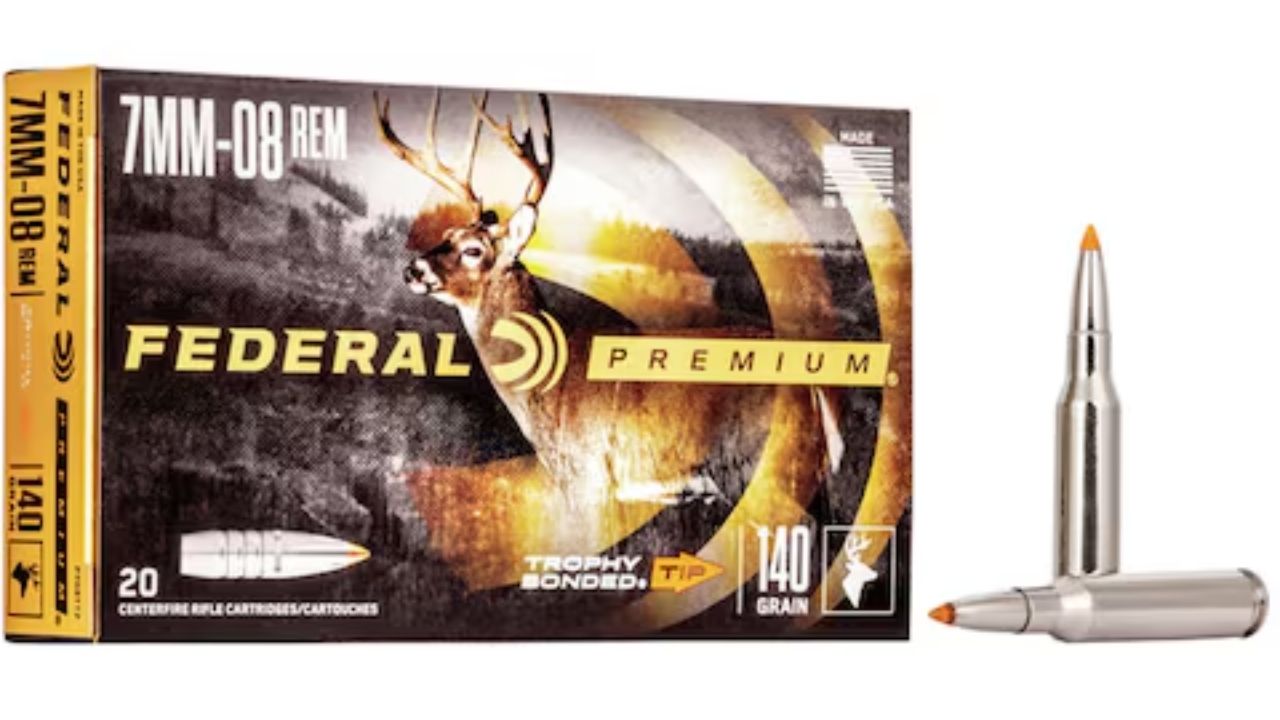
The 7mm-08 is often treated like a “youth cartridge,” which is a lazy label. It’s a legit deer round that stays pleasant to shoot in real rifles. You get excellent bullet selection, good downrange performance, and recoil that’s noticeably easier than .270 or .30-06 in similar setups.
Where it really helps is when you’re shooting from a stand rail, a blind window, or kneeling in brush—positions where recoil can throw you off your follow-through. The 7mm-08 lets you stay honest and steady. With 120- to 150-grain bullets, it punches above its reputation while keeping things comfortable enough that you’ll actually want to practice before season.
6mm Remington

The 6mm Remington is the “other” 6mm that never got as popular as the .243, but it’s a great deer cartridge when you run it with the right bullets. Recoil is mild, report is reasonable, and it’s the type of round that makes accuracy feel easier because you’re not bracing for impact.
The key is bullet choice and discipline. Use a quality deer bullet in the 90- to 105-grain range and keep your shots to angles you can stand behind. Do that, and you get fast kills without the drama. It’s a cartridge that makes you a better shooter because you can shoot more, learn more, and stay relaxed behind the rifle.
.300 Savage

The .300 Savage has a reputation for being “old,” but it’s still a very smart deer round—especially for shooters who don’t enjoy recoil. In many rifles, it lands in a comfortable middle ground: more bullet than the mild stuff, less thump than the modern .308 loads people love to hot-rod.
It shines in the woods, where most whitetails are taken. With 150- to 180-grain bullets, it hits hard enough without needing punishing velocity. The recoil is often more of a firm shove than a sharp snap, and that keeps you in the scope. If you like traditional hunting distances and want something you’ll shoot well under pressure, the .300 Savage is still worth your time.
6.5 Grendel

The 6.5 Grendel is underused in the deer world mostly because people argue about it online instead of hunting with it. In the field—inside reasonable distances—it can be extremely effective. Recoil is light, especially in a gas gun, and that makes it easy to stay fast and accurate.
This is a cartridge where you need to be honest about range and bullet choice. Use a true hunting bullet, not a match pill, and keep your shots in the window where the cartridge performs best. Do that, and you get a deer setup that’s easy to control, easy to practice with, and easy to shoot well from awkward positions. It’s not a cannon, but it doesn’t need to be.
7.5×55 Swiss

The 7.5×55 Swiss is one of the best “nobody talks about it” deer cartridges out there. It’s accurate, efficient, and surprisingly comfortable to shoot for how well it carries. In many rifles, the recoil feels more manageable than common .30-caliber hunting loads, even though it has plenty of capability.
A lot of that comes down to how smoothly it delivers its impulse. You get a steady push that doesn’t encourage flinching, and that keeps your groups tight when it counts. With proper soft points or controlled-expansion bullets, it’s absolutely deer-capable. If you like classic rifles and want something that shoots better than you’d guess, the Swiss round is a quiet winner.
.35 Remington

People hear “.35” and assume it’s going to kick like a mule. The .35 Remington usually doesn’t—especially in a classic deer rifle with a decent stock and pad. What you get is a big, slow-moving bullet that hits hard at woods ranges without needing punishing speed.
It’s also forgiving on shot angles in close cover. That heavier bullet tends to drive straight, and you’re not relying on fragile velocity tricks. The recoil is there, but it’s not the sharp slap you get from some lighter rifles in faster cartridges. If your deer hunting is thick timber, creek bottoms, and shots that happen fast, the .35 Rem is easier to shoot well than most folks expect.
.25-35 Winchester

The .25-35 Winchester is overlooked because it’s old and not always sitting on every shelf, but it’s a soft-shooting deer round that can be very effective within its lane. Recoil is mild enough that you can focus on trigger control and sight picture instead of bracing for the shot.
It’s best treated like a woods cartridge. Use good hunting bullets, keep distances realistic, and it’ll surprise you with how cleanly it can take whitetails. It’s also a confidence builder for shooters who struggle with recoil or who want a light rifle they’ll actually carry all day. When you do your part, the .25-35 does its part without beating you up.
.280 Remington

The .280 Remington lives in the shadow of the .270 and the 7mm magnums, which is a shame because it’s a very practical deer cartridge. It can be loaded with 140- to 160-grain bullets, offers strong performance, and still stays controllable in a normal rifle. For many shooters, it feels more comfortable than the louder, harder-kicking magnum crowd.
What makes it “easier than you’d think” is how well it balances speed and recoil. You can shoot it accurately without feeling like you’re paying a price every time you touch off a round. It’s a cartridge that rewards steady fundamentals and gives you enough horsepower for bigger-bodied deer without forcing you into heavy recoil territory.
.308 Marlin Express

The .308 Marlin Express is underused mostly because it never got mainstream momentum, but it’s a smart deer cartridge with a friendly shooting feel. It delivers more reach than older lever-gun rounds while keeping recoil in a manageable zone for most hunters. You get a flatter trajectory than you’d expect from a lever-action setup.
In the field, it’s a fast-handling woods rifle that doesn’t punish you during practice. That matters if you like to shoot from field positions and run quick follow-ups. It’s not the cheapest round to feed, but as a deer cartridge it offers a lot without demanding a lot from your shoulder. If you like lever guns but want more than traditional ballistics, it’s a solid option.
.30-40 Krag

The .30-40 Krag is another cartridge that doesn’t get talked about much anymore, but it remains a very workable deer round. It was designed in an era when shooters cared about practical recoil and reliable performance, not maximum speed. In many rifles, it feels surprisingly gentle for a .30-caliber.
That softer recoil pays off when you’re shooting in the real world—off sticks, over a pack, or from a tree stand rail. You’re more likely to stay relaxed, press clean, and keep your eyes open through the shot. With proper hunting bullets and reasonable distances, it can be very effective on whitetails. It’s not flashy, but it’s steady, and steady kills deer.
Like The Avid Outdoorsman’s content? Be sure to follow us.
Here’s more from us: