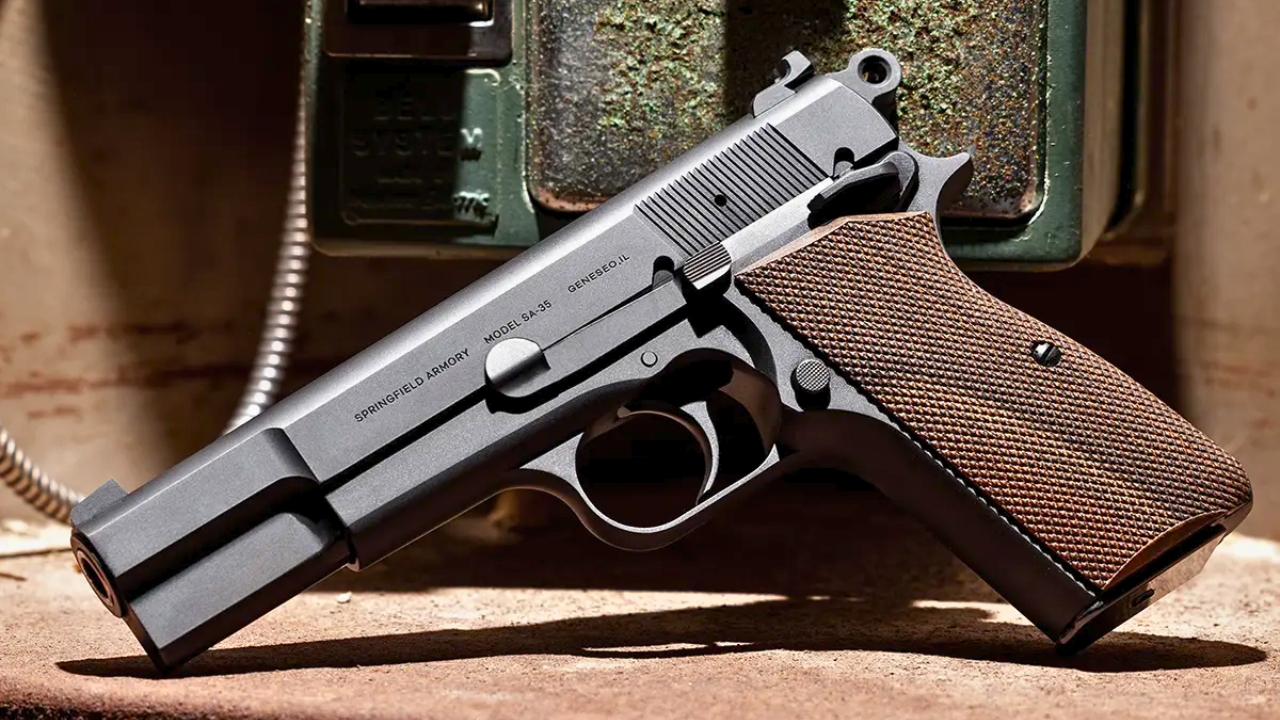
Photo credit: Springfield Armory
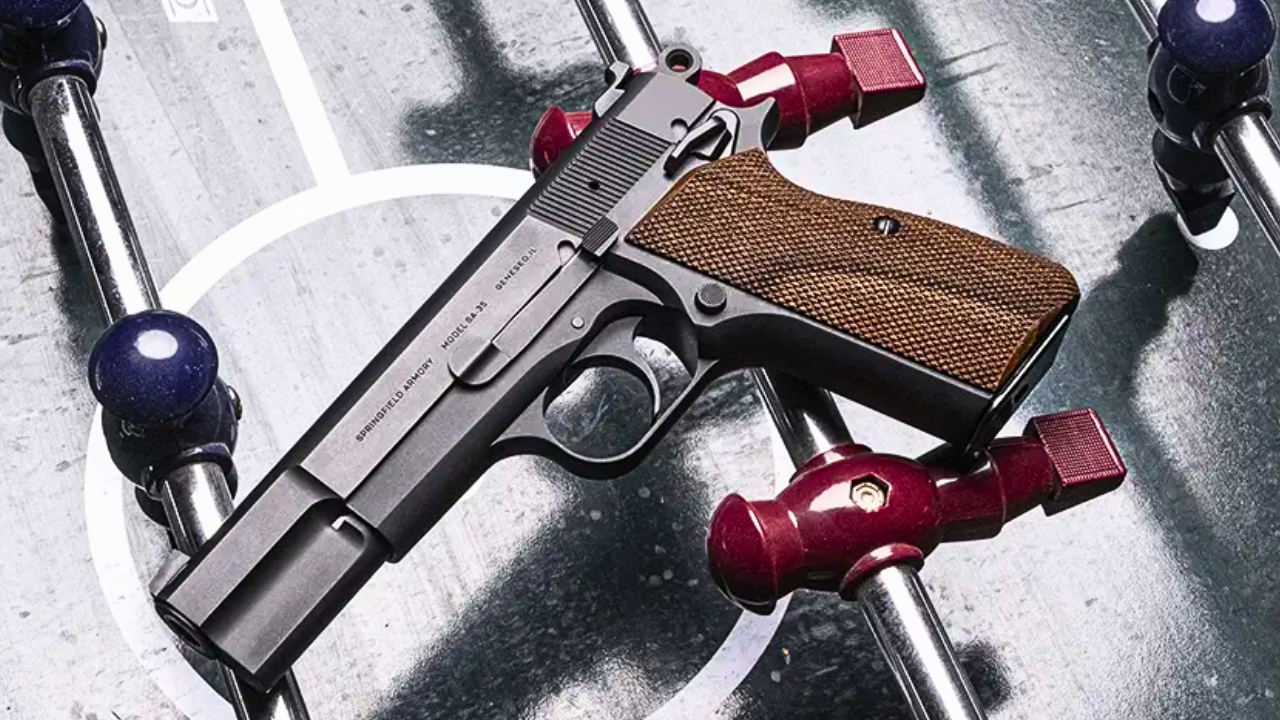
When you pick up the Springfield SA-35, you think you’re grabbing a Hi-Power. In some ways, you are. The lines are there, the magazine fits the same, and it feels familiar in the hand. But then you start shooting, and it’s clear this isn’t a carbon copy of the original FN. Springfield trimmed off a lot of the quirks folks used to put up with—like the magazine disconnect and that gritty trigger feel. If you grew up on Hi-Powers, it’ll feel both familiar and foreign. If you didn’t, you might wonder what all the fuss was about. Either way, you’re shooting a new gun with old roots.
The trigger is better—but not perfect
The removal of the magazine disconnect is a welcome change. It gives the SA-35 a cleaner break than most Hi-Powers ever had, especially the older ones. But don’t expect a match-grade feel out of the box. There’s still a little grit, a little weight, and some reset you have to learn. That’s not necessarily a flaw—it’s just different. It feels like a carry gun with a history lesson baked in. You’ll get used to it. You might even come to like it. But if you were expecting something glassy and tuned, this isn’t that. This is a working trigger on a fighting pistol.
It feeds better than the Hi-Power ever did
Anyone who ran surplus Hi-Powers knows how picky they could be with modern hollow points. That old feed ramp was designed for ball ammo and didn’t care much about your carry load. The SA-35 fixes that. Springfield reworked the geometry and it shows. Most users report reliable cycling with a wide range of modern loads. That means you can actually trust this gun for defense without spending hours polishing ramps or swapping mags. It’s one of those behind-the-scenes upgrades you might not notice at first—but it’s what makes the SA-35 more than a nostalgia piece.
It feels like a Hi-Power, until recoil hits
The SA-35 is all steel, so it has that same weight and balance that made the Hi-Power such a pleasure to hold. But when you touch off rounds, you’ll feel the difference. The recoil impulse is snappier. It’s not punishing, but it’s there. Some of that might come from the updated internals and lighter trigger parts. Some of it’s just the way the thing cycles. Either way, you’ll need a firmer grip if you’re running it hard. It teaches you to drive the gun with purpose. That’s not a bad thing—just don’t expect it to shoot as soft as your buddy’s tuned 2011.
The finish is a looker—but it’s not tough
That matte blue finish looks sharp out of the box. It gives the SA-35 an old-school feel that’s hard not to appreciate. But after a few months of carry or range use, you’ll notice wear. Holster rub, oil spots, light scratches—it all shows up faster than you’d hope. If you’re a collector, that might bug you. If you’re a shooter, you’ll live with it. Still, it’s something to know going in. This gun isn’t coated like a duty pistol. It’s dressed more like a weekend shooter, and it wears faster than some of its competition. Function doesn’t suffer, but cosmetics will.
The sights are better—but still dated

Springfield gave the SA-35 modern white-dot sights, which is a huge step up from the tiny nubs on old Hi-Powers. They’re usable in bright light, and they pick up faster than the original iron. But they’re still pretty basic. No fiber, no tritium, no blacked-out rear—not much to work with in low light. If you’re planning to carry this thing, you might want to upgrade them. If you’re running it for range time or as a glove box gun, they’ll do the job. Just don’t expect them to compete with what you get on most factory guns today.
It’s priced like nostalgia—but shoots like something new
At a glance, the SA-35 might look overpriced next to polymer guns with more features. But when you shoot it, you realize you’re getting something different. It’s not trying to compete with striker-fired pistols. It’s a steel single-action with character, and it performs like one. It’s more accurate than most folks expect. It stays on target and shoots flat once you learn its rhythm. You’re paying for something you can grow with, not something you’ll outshoot in a month. It’s a range gun, a carry gun, and a conversation starter. It’s not cheap—but it’s not a safe queen either.
It reminds you why some guns stick around
There’s something about shooting the SA-35 that makes you slow down and appreciate what you’re holding. It’s a nod to a different era—but not stuck in it. You feel the legacy, but it doesn’t shoot like an antique. It forces you to focus on grip, sights, and control. It makes newer shooters learn good habits. And it gives older shooters a reason to smile. It’s not the Hi-Power you expected, and maybe that’s the point. It’s a Hi-Power you can actually carry and shoot without compromise—and that alone makes it worth paying attention to.
Like The Avid Outdoorsman’s content? Be sure to follow us.
Here’s more from us:
The worst deer rifles money can buy
Sidearms That Belong in the Safe — Not Your Belt
*This article was developed with AI-powered tools and has been carefully reviewed by our editors.