Photo credit: Edwin Sarkissian/YouTube
Most shooters end up in 9mm, and that makes sense. It’s cheaper, easier on the hands, and modern loads work. But every once in a while you pick up a pistol and it’s obvious what it was built around. The slide timing feels right. The recoil system feels like it’s doing its job. The gun runs with authority instead of feeling over-sprung, under-sprung, or picky about what’s in the magazine.
When I say a gun “performs better” in .40, I’m not talking about magic. I’m talking about platforms that were designed around .40, or ones where the extra slide mass and springing make the gun track better, cycle cleaner, or fit its intended role better than the 9mm sibling. Here are the models where .40 often feels like the native language.
SIG Sauer P229

The P229 earned its reputation as a .40/.357 SIG duty gun first, and you can feel that in how it cycles. The slide mass, springing, and overall timing match .40 pressure and impulse in a way that comes across as controlled instead of frantic.
When you shoot it side by side with the 9mm version, the 9mm can feel almost too mild for the hardware, especially with softer range ammo. In .40, the gun tends to come alive. It feeds with confidence, the sights return in a predictable rhythm, and the recoil feels like a firm push through a heavy pistol rather than a snap. You still have to do your part, but the platform feels settled in its original mission, which is exactly what you want from a serious carry or duty-style handgun.
SIG Sauer P226

The P226 is a big, stable gun to begin with, and in .40 it often feels like it’s working in its comfort zone. The extra slide energy of .40 pairs well with the pistol’s weight and recoil system, so the cycling feels consistent across a wide range of duty-type loads.
In 9mm, the P226 is easy to shoot, but it can feel “too smooth” with lighter ammo, almost like the gun is loafing. In .40, the gun’s weight starts paying rent. The muzzle doesn’t hop as much as you’d expect from the caliber, and the gun tends to track in a steady, repeatable arc that’s easy to manage when you’re running drills. You’re still spending more on ammo and taking more recoil than 9mm, but the platform itself handles .40 in a way that makes sense.
HK USP .40

HK built the USP to handle .40 from the ground up, and it shows. The recoil system and overall build make the gun feel like it’s absorbing the caliber instead of getting slapped by it. You don’t buy a USP because you want the lightest carry gun. You buy it because you want a pistol that runs hard.
In 9mm, the USP is fine, but it can feel like you’re driving a heavy truck to pick up groceries. In .40, the truck has a job. The slide velocity feels right, the gun returns to battery with a solid, consistent cadence, and it tends to stay reliable when you’re not babying it. If you’re the kind of shooter who values durability and cycling consistency over soft recoil, the USP in .40 is one of the clearest examples of a platform that was built with that cartridge in mind.
HK P2000 .40

The P2000 often gets overlooked, but it has a real following among people who carried .40 for work. In .40, the gun feels tuned for service ammo and real-world handling, with a recoil character that’s more controlled than you’d expect from a compact pistol.
The 9mm version is easier on the hands, but the .40 version tends to feel more decisive in the way it cycles. That matters when you’re shooting fast, clearing malfunctions, or running the gun in less-than-clean conditions. The P2000 also has a grip shape that helps you clamp down without fighting the gun, which can make .40 feel more manageable than it does in many lighter compacts. If you want a carry-sized pistol where .40 doesn’t feel like a punishment, the P2000 is a model that often surprises people in a good way.
Beretta 96A1

The Beretta 92 in 9mm is a classic, but the 96A1 is where you see that same platform pressed into the .40 role with a heavier, more duty-focused personality. The gun’s size and weight help tame .40, and the recoil system on the A1 line is built to handle the cartridge’s stress better than earlier generations.
In 9mm, you’re dealing with a smooth shooter that almost anyone can run well. In .40, the 96A1 feels like it finally has a purpose that matches its bulk. The extra mass helps keep the sights flatter than many .40 pistols, and the gun tends to run full-power .40 loads in a way that feels steady rather than violent. You’re still carrying a large pistol, but if you’re going to carry a Beretta-sized handgun, .40 is one of the calibers that makes that size feel more justified.
Smith & Wesson M&P40

The M&P frame does a lot to make recoil feel manageable, and the .40 version benefits from that. The grip shape and low bore line help you control the snappy part of .40, and the gun’s weight distribution tends to keep it from feeling top-heavy when you’re shooting fast.
In 9mm, the M&P is easy to live with and easy to train with. In .40, it often feels like the gun’s recoil system is doing more meaningful work, especially with duty-weight loads. The cycle can feel more positive, and the gun tends to settle back on target with a rhythm that experienced shooters appreciate. None of this makes .40 “better” in a vacuum, but in this specific platform, .40 can feel like a natural fit instead of an awkward upgrade. If you want a practical .40 that isn’t trying to beat you up, the M&P40 is a strong example.
Springfield XD .40 Service Model

The XD has always had a reputation for running reliably, and the .40 Service Model is one of the versions that built that name. It has enough slide and frame mass that .40 doesn’t turn it into a handful, and the gun tends to cycle with a steady, repeatable feel that’s helpful when you’re trying to shoot clean strings.
In 9mm, the XD is straightforward and easy to shoot, but it doesn’t stand out the way it does in .40. In .40, the platform feels like it’s carrying the load it was meant to carry, especially with full-power defensive ammo. The recoil isn’t “soft,” but it’s predictable, and predictability is what lets you shoot well under pressure. If you’re the type who wants a striker gun that feels more substantial and cycles with authority, the XD .40 Service Model is one of the better fits in that caliber.
FN FNX-40

The FNX-40 is a big, high-capacity .40 that feels like it was designed by people who expected it to be used hard. The grip and frame size give you plenty to hold onto, and the pistol’s weight helps keep the recoil impulse from getting too sharp.
In 9mm, the FNX is fine, but it can feel like you’re carrying more gun than you need for what you’re getting. In .40, the size starts making sense. You get a duty-style pistol that handles heavier loads without feeling like it’s on the edge of control. The cycling tends to feel confident, and the gun’s ergonomics make it easier to keep the sights working during faster shooting. If you want a .40 that feels stable and doesn’t punish you with tiny grip real estate, the FNX-40 is one of the models that tends to shoot better than its caliber reputation suggests.
Glock 35

The Glock 35 is one of the most honest examples of “better performance” in .40 because the gun’s competitive history is tied to that cartridge. In USPSA and similar games, .40 was the path to major power factor for years, and the G35 became a workhorse because it ran, it fed, and it held up.
In 9mm, you can shoot a long-slide Glock and do great, but you’re playing a different scoring game and a different recoil game. In .40, the G35’s longer slide and sight radius help you track the gun and call shots, and the platform’s consistency makes it easy to build a repeatable training routine. The recoil is still .40, but the longer slide helps stretch it out and keep it manageable. If your definition of performance includes competition use and fast, accurate strings, the G35 is a model where .40 is part of why it exists.
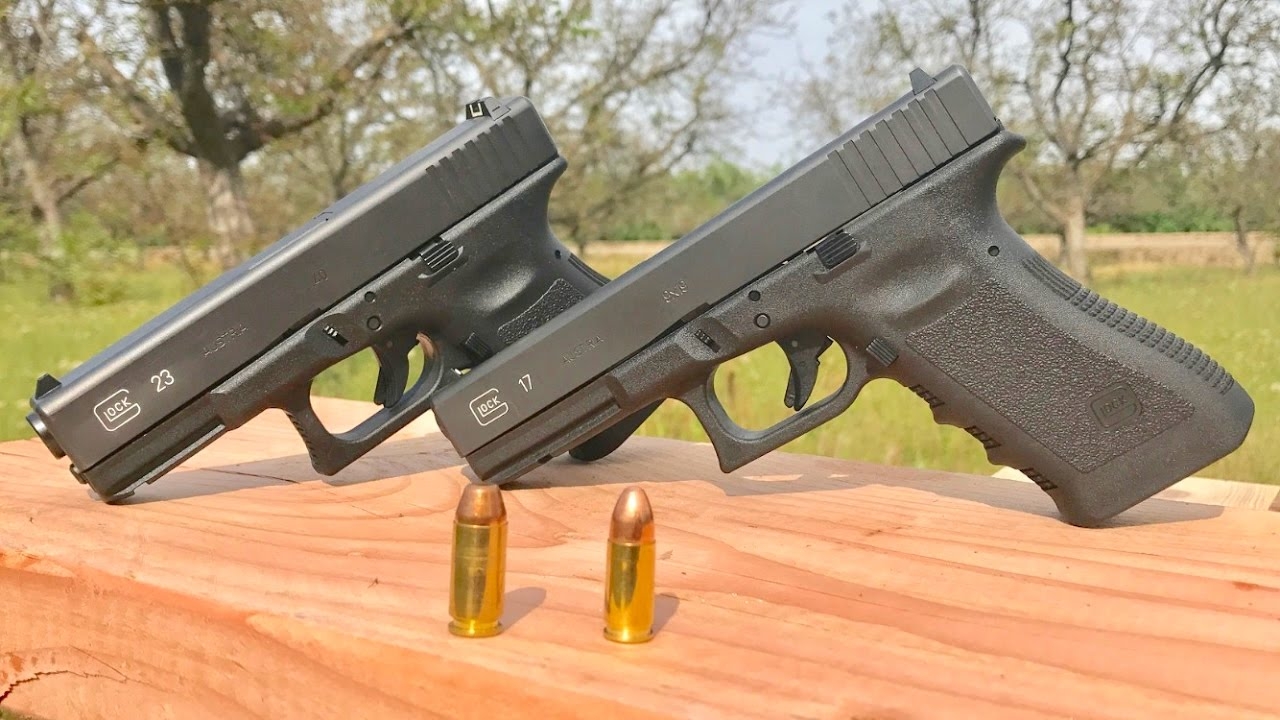
Glock 23
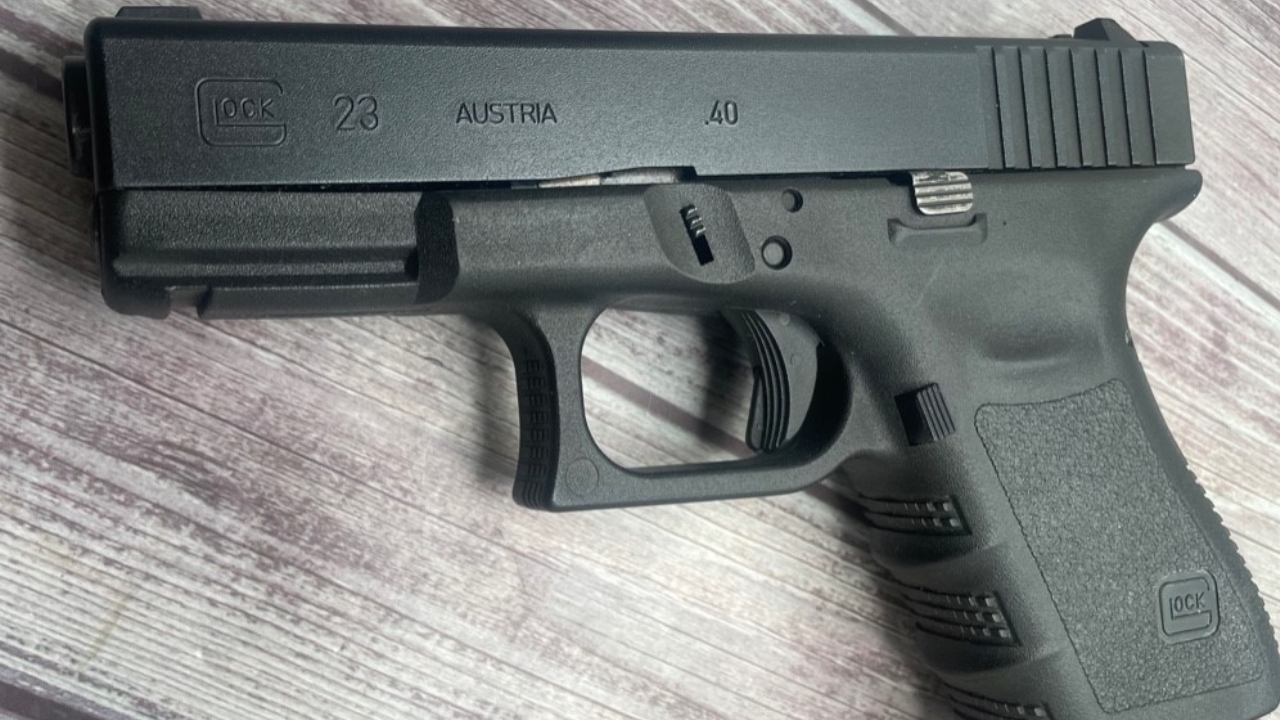
The Glock 23 became a default carry and duty pistol in the era when .40 was king. It’s a compact that was built to run service .40 loads, and plenty of departments ran them hard for years. That track record matters when you’re talking about a gun’s “native” caliber.
In 9mm, you’re usually looking at the Glock 19, which is a great pistol. But the Glock 23 in .40 has a certain purpose-built feel, especially with quality duty ammo. The cycle is energetic, the gun runs with authority, and the platform has a long history of magazines and parts that were refined around .40 use. Recoil is sharper than 9mm, so you have to grip it correctly and train with intention. If you do that, the G23 gives you a compact package that was designed during the peak of .40 development and it shows in how the gun tends to run.
Glock 27

The Glock 27 is not a range toy. It’s a small pistol built to carry .40, and it fits the role of a backup or deep-carry gun that still hits with service-caliber energy. When you run it in .40, you’re using it the way it was designed to be used, which matters with these small, high-pressure packages.
In 9mm, most people gravitate to the Glock 26, and for good reason. But the G27 has a long history in the backup-gun world because it cycles and functions with .40 as its baseline. The recoil is snappy, and you’ll feel it, but the performance angle here is about the gun doing its job when you carry it, not about being comfortable at 500 rounds a weekend. If you’re honest about what a subcompact is for, the Glock 27 is a model where .40 was the point, not an afterthought.
CZ 75B .40

The CZ 75 platform is known for its ergonomics and shootability, and the .40 version benefits from the gun’s weight and grip design. A steel-framed CZ gives you the kind of stability that takes the edge off .40 and helps you run the gun with better control than many polymer compacts.
In 9mm, the CZ 75B is a smooth shooter and easy to like. In .40, the extra weight and the way the grip lets you lock in can make the gun feel more planted than you’d expect from the caliber. The recoil impulse becomes more of a push through a heavy frame, and the gun tends to track in a way that’s easy to manage when you’re shooting fast. You still need good mags and good ammo, but if you want a .40 that doesn’t feel like it’s trying to climb out of your hands, a steel CZ 75 in .40 is one of the better ways to do it.
Walther P99 .40

The P99 doesn’t get the modern spotlight the way newer Walthers do, but the .40 version has a solid reputation as a duty-style pistol that runs. The ergonomics are a big part of it. The grip lets you get a high, secure hold, which is what keeps .40 from turning into a sloppy, high-muzzle-flip experience.
In 9mm, the P99 is smooth and fast, but the .40 version often feels more deliberate in how it cycles, especially with full-power defensive loads. That can translate into a steadier rhythm when you’re doing real training instead of slow-fire groups. The gun also has a design that keeps controls accessible and predictable under stress, which is part of performance too. If you want a .40 that feels controllable without being oversized, the P99 is one of those models that tends to make the caliber feel more workable than its reputation suggests.
Ruger SR40

The Ruger SR-series doesn’t get talked about much anymore, but the SR40 has a loyal following for a reason. It’s a straightforward .40 that tends to run reliably, and the grip shape and size give you enough leverage to manage the cartridge without fighting the gun.
In 9mm, the SR9 is a soft shooter, but the SR40 often feels like the platform is more “awake” with the cartridge it was expected to handle in the duty era. The cycling feels positive, the recoil impulse is manageable for a service-sized pistol, and the gun’s overall size keeps it from being punishing during training. It’s not a match pistol, and it’s not trying to be. It’s a practical .40 that functions well when you feed it good ammo and use quality magazines. If you want a .40 that doesn’t feel overly sensitive, the SR40 has a reputation for being a solid worker.
Steyr M40-A1

The Steyr M40-A1 is one of those pistols that people either forget about or swear by, and in .40 it tends to make a lot of sense. The low bore axis and grip angle help you control recoil in a way that keeps the sights from jumping wildly, which is exactly what you need with .40.
In 9mm, Steyr pistols shoot well, but the M40-A1 feels especially purpose-built when you’re running .40 at speed. The gun’s recoil character is more straight back than many expect, and the platform’s design helps you stay locked in through the cycle. That translates into faster follow-up shots when your grip and trigger work are solid. The downside is that parts and support aren’t as common as Glock or SIG, so you need to be realistic about long-term logistics. But purely in terms of how the gun handles .40, the M40-A1 is one of the models that makes the caliber feel more controllable than it usually does.
Like The Avid Outdoorsman’s content? Be sure to follow us.
Here’s more from us: