Photo credit: Theavidoutdoorsman.com
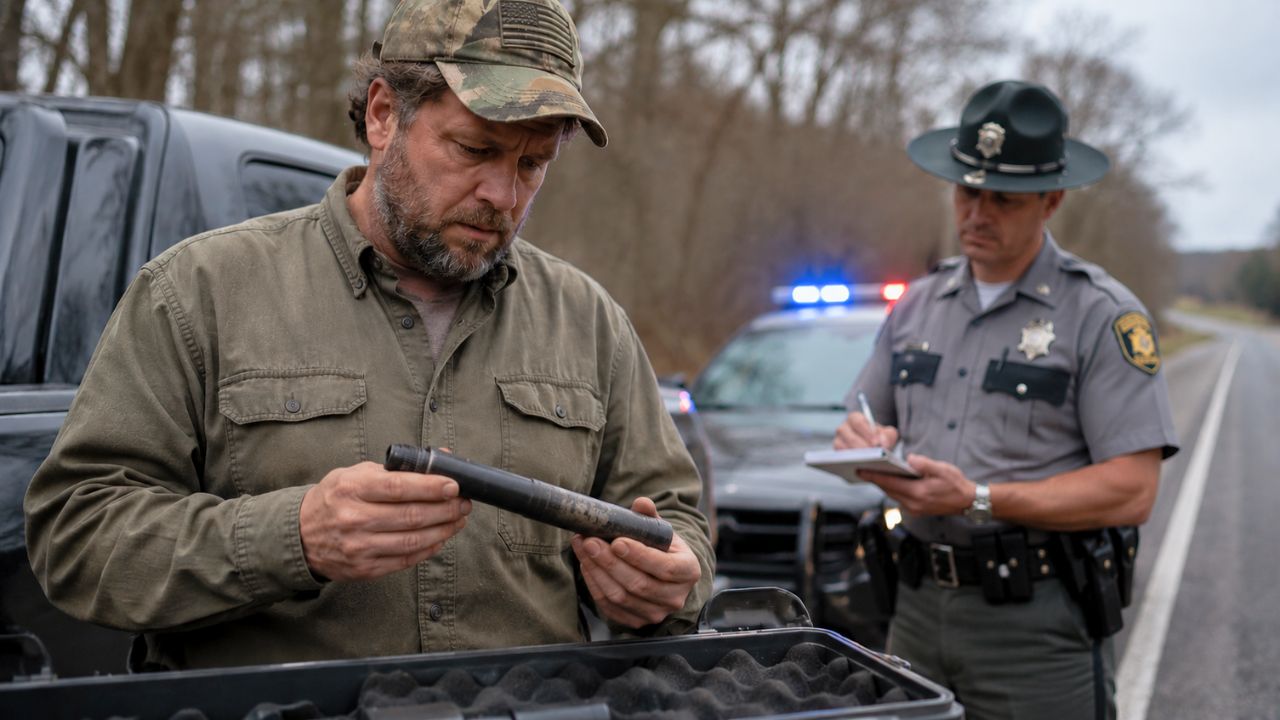
A traffic stop is already a headache when you’ve got a cooler in the back and you’re thinking about tomorrow’s stand, not paperwork. Add a regulated accessory to the mix, and the smallest misunderstanding can turn into a long, expensive lesson. That’s exactly what a Kentucky hunter ran into after a routine stop ended with his lawfully owned suppressor taken on the shoulder of the road.
What made the situation sting wasn’t just the seizure. It was the wait. The device sat in a lab for months while the hunter tried to do everything the right way—tracking paperwork, making calls, and staying patient—only to get it back with obvious damage.
The stop that turned into a seizure
From what’s been shared around the local hunting circles, the hunter was headed home with a suppressed rifle set up for predators and deer camp practice—nothing exotic, nothing sketchy. The suppressor was the standard, serialized kind that comes with a tax stamp and a trail of documentation most hunters keep filed away like a vehicle title.
The stop itself sounded ordinary at first: a minor traffic issue, questions about what was in the truck, and then the moment an officer spotted the can. That’s where things changed. Even in states where suppressors are legal, not every patrol officer deals with them often, and “legal” doesn’t always mean “understood” at roadside level.
The hunter reportedly had documentation available—either a copy on his phone or a paper copy in the vehicle—but the suppressor was still taken “to verify.” That phrase is where a lot of lawful gun owners get stuck. On the side of a road, “verify” can turn into “we’ll hold it until someone else says it’s fine.”
Why suppressors still get treated like contraband
Suppressors sit in a weird spot in American gun culture. A lot of hunters see them as simple hearing-safety gear and neighbor-friendly equipment, especially for small-acreage shooting. But years of Hollywood nonsense and old habits in policing make them sound sinister to people who haven’t spent time around them.
On top of that, the paperwork is federal. Most officers are trained on state statutes day in and day out, not the details of NFA rules. A tax stamp isn’t a “permit” the same way a concealed carry card is, and depending on how the suppressor is registered—individual, trust, or business—names and formats can look unfamiliar to someone flipping through a phone screen.
That doesn’t excuse seizing lawful property, but it explains why these situations happen. It’s also why a lot of experienced outdoorsmen keep a printed copy of their approval and a clean photo of the serial number stored where it’s easy to access without fumbling around.
The lab hold that dragged on through seasons
Once the suppressor was taken, it reportedly went into an evidence chain and then to a lab for examination. In theory, that’s where someone confirms the serial number, checks that it’s not stolen, and verifies it matches registration. In practice, labs have backlogs, and a hunter’s property can sit while higher-priority cases jump the line.
Eight months is a long time in the outdoors. That’s a full run of coyote calling, spring range work, summer pest control, and a big chunk of deer season prep. A suppressor isn’t just a “nice to have” for many folks anymore. It changes how you train, how much you shoot, and how comfortable it is to practice without beating up your ears.
There’s also the money side. Between the purchase price and the tax stamp, most hunters have a lot tied up in a single serialized item they can’t just replace with a quick stop at the gun counter. And because suppressors are serialized NFA items, you can’t simply borrow a buddy’s and carry on like normal.
Getting it back—then noticing the damage
The real gut-punch came when the suppressor finally returned. According to those familiar with the situation, it wasn’t returned in the same condition. Visible damage was apparent—marks consistent with rough handling, and signs that it had been clamped or torqued improperly during some part of the inspection process.
Anyone who actually uses suppressors in the field knows they aren’t fragile like glass, but they’re also not immune to abuse. A dented tube, compromised threads, or a tweaked mount can turn a perfectly good setup into a safety concern. Even minor misalignment can cause endcap strikes or baffle damage once it’s back on a rifle.
And here’s the part a lot of non-gun folks don’t understand: this isn’t like getting a scratched cooler back. A damaged suppressor isn’t just “cosmetic.” If it’s out of spec, you may not be able to legally repair it the way you would normal gear. Depending on the type of damage and the manufacturer, repair can be complicated, and replacement is never as simple as “swap it out.”
What other hunters latched onto: paperwork, patience, and receipts
Hunters and gun owners who followed the story didn’t spend much time debating whether suppressors should be legal. In Kentucky, they already are. The focus was on practical survival: what you can do to keep a routine stop from turning into a months-long mess.
A lot of folks pointed out the value of keeping multiple forms of documentation: a printed copy in a zip bag, a digital copy saved offline, and clear photos of the serial number and the approval page. Others mentioned keeping the suppressor stored separately from the rifle when traveling, especially if you’re crossing county lines at odd hours and don’t want roadside confusion to snowball.
Another common theme was documentation after the fact. If property is returned damaged, you need photos immediately—before you mount it, before you clean it, before you test it. Some suggested getting an assessment from a competent gunsmith or the manufacturer so you have a professional description of what’s wrong, not just a frustrated opinion.
And plenty of people brought up the hard truth: being calm and respectful during the stop is smart, but it doesn’t guarantee your gear won’t get taken anyway. “Comply now, fight later” may not be satisfying, but it’s often the safest route on the side of a highway.
The real takeaway for outdoorsmen who travel with NFA gear
This is one of those situations that makes lawful hunters feel like they’re playing a game where the rules change depending on who walks up to the window. Even when you do everything right—buy through the proper process, wait for approval, keep your paperwork—you can still lose your equipment for months and get it back worse than you handed it over.
If you travel with a suppressor, treat it like you’d treat a passport and a rifle combined: secure it, document it, and assume you may have to prove what it is to someone who doesn’t see them often. Keep copies of approvals handy, record serial numbers, and consider how you store it in the vehicle so a quick glance doesn’t turn into a bigger ordeal.
Most importantly, if your gear is ever seized and later returned, inspect it like your safety depends on it—because with suppressors, it does. A damaged can isn’t just an inconvenience. It can turn a safe rifle into a problem in a single shot.