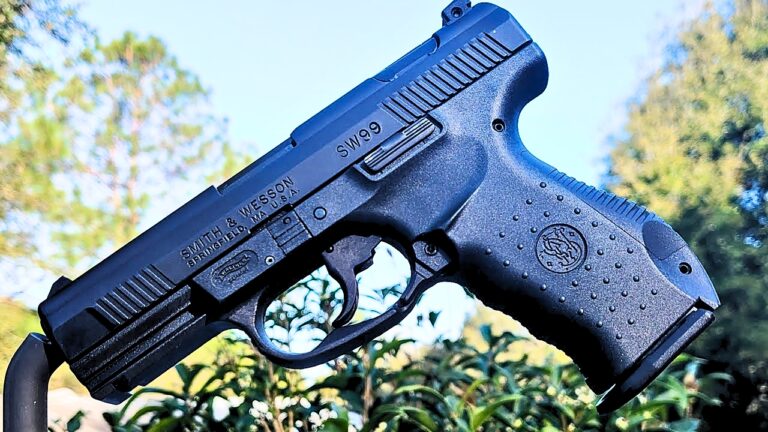
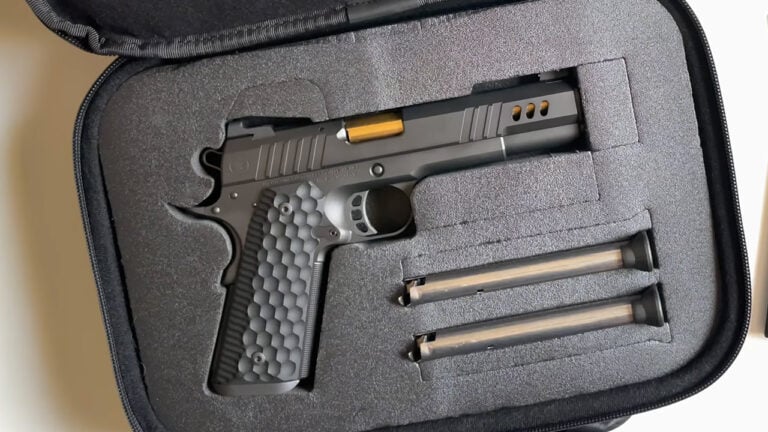
Image Credit: Falco Holsters.
A carry holster is life-support equipment. If it’s sloppy, unsafe, uncomfortable, or inconsistent, it will either get you hurt or get left at home—sometimes both. A good holster does three things every single time: it covers the trigger completely, it holds the gun securely, and it gives you a consistent draw and reholster without you fighting your clothing or your belt. Everything else is secondary. People buy holsters based on hype, comfort in the mirror, or what some influencer wears, then wonder why it shifts, prints, or makes the gun feel sketchy. Before you declare a holster “good,” check these things with your actual belt, your actual clothes, and the way you actually move in real life.
Full trigger guard coverage with no gaps
This is non-negotiable. The holster must cover the trigger guard completely and prevent anything from entering that area—shirt tails, drawstrings, jacket cords, fingers, anything. Some holsters look fine until you press around the trigger guard and realize there’s flex or a gap where material can sneak in. If you’re carrying a striker gun, this matters even more because the trigger is the control. The check is simple: holster the unloaded gun, then look and feel around the trigger guard area from every angle. Try to press the holster material inward. If you can reach the trigger or cause the material to press it, that holster is out. Comfort doesn’t matter if the design is unsafe. I’d rather carry slightly less comfortably than carry with a trigger guard that isn’t locked down.
Positive retention that holds through movement, not just standing still
A holster that “clicks” in place but dumps the gun when you sit, run, or bend isn’t retention—it’s a noise. You want consistent retention that holds the gun through real movement and doesn’t change as the holster warms up against your body. With the unloaded gun holstered, do a shake test (carefully), then move: squat, sit, climb, jog in place. The gun should stay seated and not walk up. Then check whether retention screws (if present) actually adjust correctly and stay put. Some holsters loosen over time and retention changes without you noticing. A good holster feels secure but doesn’t require a wrestling match to draw. If it’s too tight, you’ll start doing weird draw mechanics. If it’s too loose, you’re relying on luck.
No interference with the draw grip
You should be able to get a full, correct firing grip before the gun leaves the holster. If the holster rides too deep, collapses, or blocks your fingers, you’ll start “fixing” your grip after you draw, and that’s a bad habit under stress. Check your grip access with the clothes you actually wear. Can you clear your cover garment and get high on the backstrap? Can your middle finger land where it should without the holster lip blocking it? Is the sweat guard so tall it blocks your thumb or shifts your grip? A holster that forces a compromised grip might still be “comfortable,” but it’ll slow you down and make your draw inconsistent. If you can’t get your normal grip cleanly, you don’t trust that holster for real carry.
Proper ride height for your body and your draw
Ride height is one of the biggest reasons holsters get abandoned. Too high and it feels top-heavy, prints more, and can shift. Too low and you can’t grip the gun or you smash your knuckles into the belt line. The right height depends on your build, belt, and carry position, but the test is practical: can you draw smoothly without digging, without hunting for grip, and without the holster trying to come up with the gun? Also check seated access. A holster that’s “fine standing” can be miserable in the truck. Adjustability helps, but only if it actually holds its settings. Don’t just mirror-check it. Run reps. If the draw feels forced, you’ll avoid practicing, and if you avoid practicing, you’ll get slow and sloppy.
Cant that matches your wrist mechanics
Cant isn’t fashion. It’s about whether your wrist and elbow can pull the gun straight and present it without weird angles. A cant that’s wrong for your position will make the draw feel like it’s fighting you, especially under concealment when you’re clearing a shirt and trying to get to the grip fast. Some people do great with neutral cant. Others need a slight forward cant for strong-side carry. Appendix often benefits from neutral or slight reverse depending on body type and pistol length. The check is reps—slow and then faster—watching whether the gun wants to rotate or snag. If you’re consistently digging the muzzle into the holster mouth or pulling the gun out crooked, your cant and ride height combo isn’t right. Fix the mechanics, don’t just “muscle through.”
Belt attachment that won’t slip, pop off, or rotate
Your belt clip or loops are the foundation. If they slip, everything shifts. If they pop off, you have a bigger problem. If they rotate, your draw angle changes and concealment gets worse. Check how the attachment locks onto your belt and whether it stays locked when you move. This is where cheap plastic clips can fail—especially on thicker belts or when you’re getting in and out of vehicles all day. Do a draw-and-hold test with the unloaded gun: draw with normal speed and see if the holster comes up with the gun or shifts on the belt. Then reholster and see if it stayed put. A good holster should feel like it’s bolted to you. If the attachment is the weak link, the whole system is compromised.
Reholstering should be safe, clean, and not require “two hands and prayer”
Reholstering is where people get careless—and where gear problems show up. The holster mouth should stay open enough (or be rigid enough) that you can reholster without pointing the gun at yourself or fishing around. If the holster collapses when the gun is drawn, that’s a safety issue because you’ll be tempted to use the muzzle to “open” the holster or you’ll end up muzzling yourself during the process. With the unloaded gun, practice slow reholsters while watching the mouth and the trigger area. Also check that your clothing doesn’t get pulled into the mouth easily. A holster that reholsters cleanly reduces risk and keeps your system consistent. You don’t need to speed-reholster, but you do need it to be safe every time.
Comfort that holds up after hours, not minutes
A holster that feels fine for five minutes can become miserable after five hours, and discomfort is what makes people “just leave it in the truck.” Comfort isn’t only about softness—it’s about pressure points, angle, and whether the gun is levering into your body when you sit or bend. Wear it around the house. Do chores. Sit on the couch. Drive. Pick something up off the floor. If the holster digs into your hip bone, pinches your waistband, or creates a hotspot, it’s going to become a problem fast. Also pay attention to sweat management and skin contact—rough edges and bad finishing will chew you up. A carry setup that hurts you will not get carried consistently, and consistency is the whole point.
Concealment in real clothing, not just a mirror pose
Printing isn’t just “does it show when I stand still.” It’s “does it show when I move like a normal person.” Check concealment under the clothes you actually wear: walking, bending, reaching, sitting. Some holsters conceal fine until you sit, then the grip prints like a brick. Others conceal fine until you reach overhead. If your holster has a claw/wing, make sure it’s actually doing its job by rotating the grip inward. If it doesn’t, don’t assume it’s “fine.” Print patterns are predictable once you look for them. The goal isn’t perfection. The goal is realistic concealment that won’t constantly announce itself in daily movement. If you have to dress around the holster in a way you hate, you’ll stop carrying.
Compatibility with your exact gun setup (light, dot, sights, and barrel length)
This is where people get burned. They buy a holster for “Glock 19” and forget they have a dot, tall sights, a threaded barrel, or a light. Then they force it, grind it, or accept a bad fit. A holster needs to fit the gun as configured, not as pictured on the website. Check sight channel clearance, optic clearance, and whether the holster is indexing on the right surfaces. Light-bearing holsters especially need correct fit, because the holster often indexes off the light. If the light or gun isn’t seated correctly, retention can be weak or inconsistent. Also check whether the draw feels smooth without dragging on the optic or front sight. If you’re adding a dot later, plan for it now. A “close enough” holster becomes a problem at the worst time.
Real-world draw testing with safe reps before you trust it
Before you trust a holster, you need reps. Not one draw. Not “it feels okay.” You need enough safe, unloaded repetitions to expose snags, grip issues, shifting, and clothing problems. Do slow reps first, then speed up only when everything is clean. Test from standing, seated, and awkward positions. Try it after the holster has been worn for an hour and warmed up—some kydex fit changes slightly with heat and movement. Test with your normal belt and your normal cover garment. Then, once you’re confident, validate with live fire at the range if your range allows safe holster work. A holster earns trust through repetition, not marketing. If a holster fails basic reps, it doesn’t get promoted to daily carry.
Like The Avid Outdoorsman’s content? Subscribe to our newsletter so you never miss an article.
Here’s more from us: