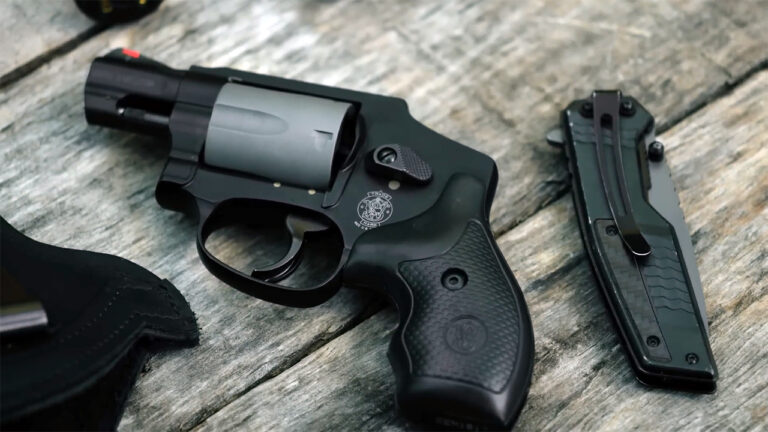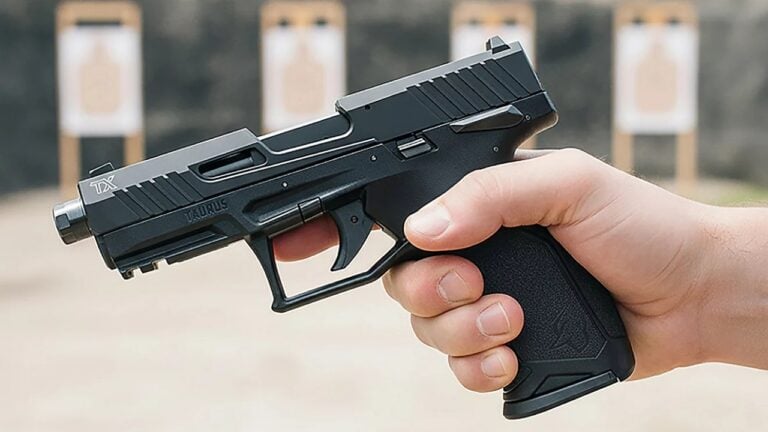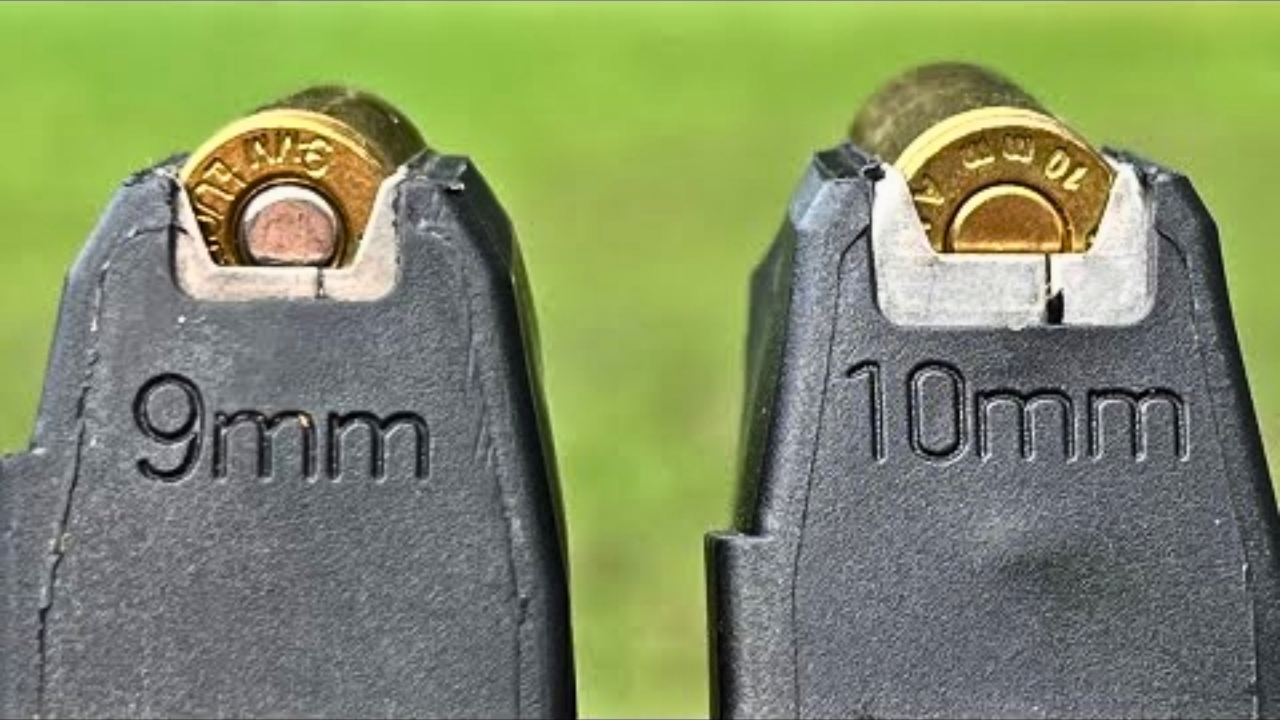
Photo credit: Banana Ballistics/YouTube
We may earn revenue from products featured on this page through affiliate links.
The 10mm didn’t “come back” because somebody on the internet decided it was cool again. It’s getting attention because a bunch of real-world trends stacked up at the same time: more people spending time in bear and hog country, more hunters wanting a sidearm that can do more than punch paper, more optics-ready pistols making big calibers easier to shoot well, and a whole lot of shooters realizing 10mm fills a gap that 9mm and .45 don’t fill the same way. The 10mm is still not for everybody, and it’s not some magical do-all cartridge, but it’s also not a meme caliber anymore. If you want one handgun round that can pull double duty—serious woods carry, plus real defensive performance, plus the ability to hunt with the right setup—10mm is one of the few rounds that can make a strong case for itself without hand-waving.
It fills the “woods defense” gap without turning into a hand cannon
The fastest way to understand the 10mm hype is to stop thinking about it like a range caliber and start thinking about it like a backcountry problem-solver. A lot of people want something stronger than 9mm for hogs, aggressive dogs, and the “this is getting too close” animal encounters that happen fast. They also don’t want to commit to the recoil, bulk, and slower follow-ups of the big revolver cartridges if they don’t shoot them constantly. That’s where 10mm earns attention: it can push heavier bullets faster than typical service calibers, and when you load it with the right projectile, it can drive deep enough to matter on tough animals. It’s also available in pistols that are still practical to carry all day, which is the part people forget. A gun that’s too big or too punishing to shoot tends to get left in the truck, and a gun left in the truck doesn’t defend anybody. The 10mm’s popularity spike is largely coming from guys who want a sidearm they’ll actually carry, that still has a serious penetration ceiling when loaded correctly.
Modern 10mm pistols are easier to shoot well than the older reputation suggests
The 10mm gained a reputation years ago for being “too much,” partly because early guns and loads didn’t always feel refined and partly because a lot of shooters tried it once with full-power ammo and decided they hated it. What’s different now is the platform ecosystem. Current 10mm pistols are better designed, and optics-ready setups have changed how people manage recoil and shoot quickly. A good example of the kind of pistol driving the renewed interest is the GLOCK G20 Gen5 MOS, which is set up for optics via the MOS system and is built around a size and capacity that makes sense for woods carry instead of feeling like a novelty. The point isn’t that everyone needs a dot, but optics do help a lot of shooters track faster and place shots more confidently when recoil is snappier than a 9mm. When you combine that with better grip textures, improved triggers, and better recoil systems across the market, you get more shooters who can actually run a 10mm instead of just talking about it.
Ammo has gotten better and more purpose-built, which makes the caliber make sense
A big part of the 10mm story is ammunition becoming more honest and more specialized. Shooters have more options now that make sense for different jobs, instead of one “hot” load and a bunch of shrugging. For personal defense, you want reliable expansion with controlled penetration; for woods carry, a lot of people prioritize deep penetration and straight-line performance; for range use, you want something that doesn’t beat you up or cost a fortune. That spread of use cases is exactly why the 10mm conversation keeps coming up—because people are buying one pistol and then building multiple load-outs around it depending on what they’re doing. If you want a clean example of a high-quality defensive load that’s widely available through a major retailer, Federal Premium Personal Defense 10mm 200-grain HST is one of the better-known choices in that category and is sold through Bass Pro. I’m not saying that’s the only good option—there are plenty—but it’s a good illustration of how the caliber has matured. When a cartridge has serious, mainstream defensive loads from major manufacturers, it stops being a niche hobby round and starts being a practical choice.
It’s also getting attention because people are using it for hunting, not just carrying it
Another reason 10mm keeps getting talked about is that more hunters are actually taking game with it in legal seasons and finding it works within realistic distances. That’s not a “long-range handgun” argument. It’s a “close-range woods tool” argument. With the right bullet, good shot placement, and honest range discipline, 10mm can put deer down cleanly, and it can be especially appealing for hunters who already carry a pistol and like the idea of one sidearm that isn’t dead weight if an opportunity shows up. The big thing here is expectations. 10mm isn’t a rifle replacement. It’s not something you stretch because you saw a video. It’s a close-range option that can be effective when you treat it like a handgun and respect what handgun hunting actually is: tighter margins, faster shot windows, and less forgiveness if you get sloppy. The hunters getting value out of 10mm are the ones who practice from field positions, keep ranges sane, and pick bullets that do the job instead of picking bullets that look cool on a chart.
The hard truth: 10mm isn’t for everyone, and that’s why the debate stays loud
The reason the 10mm conversation never stays calm is because it sits in a middle ground that forces honesty. If you don’t shoot much, 10mm recoil and cost can be a real barrier, and some people would be better served by a 9mm they can shoot constantly and place perfectly. If you’re recoil-sensitive or you hate training with snappier guns, you’ll end up owning a pistol you don’t practice with, which defeats the whole point. And if you buy 10mm because you want “the most power” but you load it with the wrong ammo for the job, you can create problems you didn’t need—either poor penetration for woods defense or too much penetration in some defensive contexts. That’s the real reason it’s getting talked about so much: 10mm forces you to define what you’re actually doing. Are you carrying for the woods? Are you carrying for people? Are you hunting? Are you trying to have one pistol that can cover multiple roles? If the answer is “yes, multiple roles,” 10mm makes a compelling case. If the answer is “I just want something easy and cheap to practice with,” it may not be the smartest move. The caliber isn’t magic. But the reason it’s suddenly everywhere is because, for a lot of hunters and backcountry guys right now, it solves a real problem better than the usual defaults.
Like The Avid Outdoorsman’s content? Subscribe to our newsletter so you never miss an article.
Here’s more from us: