Photo credit: Tony LePrieur Photography/Shutterstock.com
Shooting from a bench doesn’t prepare you for the wind, uneven ground, or a deer that won’t stand still. Out in the field, your stance has to adapt to the moment. The wind moves your rifle, your heartbeat feels louder than the breeze, and the animal you’ve been tracking suddenly takes a few steps forward. It’s in those moments that your shooting stance becomes the difference between a clean hit and a miss. Learning to use terrain, brace your body, and stay flexible in your setup helps you beat wind drift and time your shots with moving deer. It’s not about looking perfect—it’s about building a stable position fast and staying steady when everything around you moves.
Reading the wind before you shoulder the rifle
Wind doesn’t just push bullets—it pushes you. Before you even shoulder your rifle, take a second to feel what it’s doing. Grass, leaves, and your own breath can tell you if it’s steady, gusting, or swirling. Adjusting your stance before the shot can keep you from fighting the wind mid-trigger pull.
A wider base helps in crosswinds, while leaning slightly into the breeze adds control. If it’s gusty, don’t rush the shot—wait for the rhythm of the wind to settle. The more you notice before you shoot, the fewer surprises you’ll have after the trigger breaks. Wind awareness starts with your body, not your scope.
Using the terrain to anchor your body

Flat ground is a rarity in real hunting. Whether you’re on a slope, ridge, or brushy edge, use what’s around you to build stability. A knee against a tree, an elbow on a pack, or a toe dug into dirt can turn a shaky position into a rock-solid one.
Natural rests make up for what the wind and terrain take away. They reduce movement, let you breathe steadier, and keep your rifle locked in place. When you learn to use the land itself as your support system, you waste less time setting up and shoot more confidently, even in awkward spots.
Adapting to moving deer instead of forcing the shot
Deer rarely stand broadside for long, and trying to rush a shot before they move again usually ends poorly. The key is adapting your stance so you can pivot or track without losing control. Keep your feet grounded but flexible, allowing your hips and shoulders to follow smoothly.
If you’re sitting or kneeling, use your off-hand knee as a pivot point while staying anchored through your elbow or rest. Practicing these shifts before you hunt makes it second nature in the field. The goal isn’t to outguess the deer—it’s to stay ready when it stops long enough for your shot.
Staying low when the wind picks up
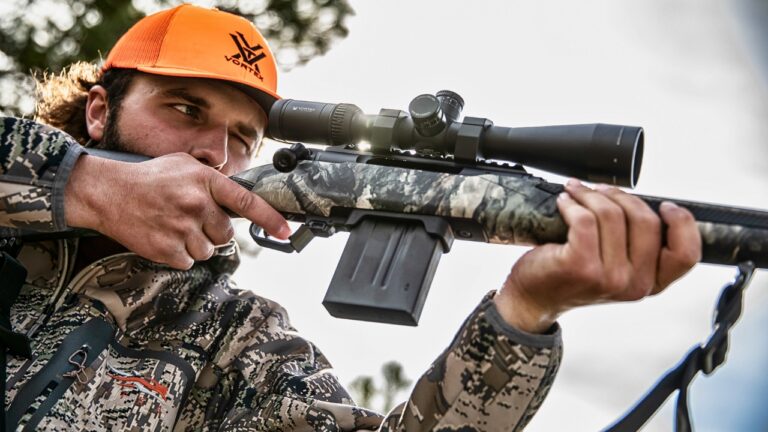
When the wind starts to shove your barrel, dropping your profile makes all the difference. Going prone or sitting helps lower your center of gravity, reducing the rifle’s sway. In heavy crosswinds, even a kneeling stance can feel too exposed.
Laying flat behind your rifle gives the wind less to grab. Use your pack, jacket, or bipod for front-end stability and tuck your elbows tight. You’ll feel your rifle settle the second you do. Staying low doesn’t just steady the gun—it steadies your breathing, your focus, and your trigger control.
Using your sling for extra stability
Your sling can do more than carry your rifle—it can lock you in place when everything’s moving. Wrapping your support arm through the sling creates natural tension that absorbs shake and recoil. It’s one of the oldest tricks in field marksmanship, and it still works as well today as it did generations ago.
With practice, the sling becomes a built-in shooting aid. It helps you brace against the wind, steady your aim, and take pressure off your muscles. In the field, it’s often the difference between a rushed shot and a confident squeeze. Learn to use it, and the rifle will feel like an extension of your arm.
Building a stance you can hold under stress

When the deer’s close and your heart’s pounding, muscle memory takes over. A solid stance isn’t about perfection—it’s about comfort and repeatability. If you can’t hold it for thirty seconds while breathing normally, it’s not stable enough.
Keep your body aligned behind the rifle, with weight balanced and elbows supported whenever possible. The more natural the position feels, the steadier your crosshairs will stay. You can’t stop adrenaline, but you can learn to work through it. The best stance is one your body finds on instinct, even when the moment’s chaos hits.
Using your pack or jacket as a rest
When the wind’s whipping or the terrain won’t cooperate, your backpack or rolled-up jacket can make an instant rifle rest. It’s soft enough to absorb vibration but firm enough to stabilize your rifle. Place it under the forend and let your non-shooting hand control elevation or fine adjustments.
This kind of improvised support is a lifesaver during fast encounters. It takes seconds to set up and dramatically improves accuracy when the wind’s gusting. Hunters who practice using field rests always seem calmer when it counts—because they’ve turned whatever’s on their back into a steadying tool.
Controlling your breathing in the wind
Wind makes you tense up without realizing it. Your breathing quickens, your shoulders rise, and your shot timing gets unpredictable. Before breaking the trigger, take one deep, slow breath. Let half of it out, then pause. That’s your window for a clean shot.
Practicing that rhythm in windy conditions builds discipline. It keeps your rifle motion consistent and prevents you from jerking the trigger. When the breeze starts tossing your barrel around, your breathing becomes your metronome—steadying your body when the weather won’t.
Practicing awkward positions before the season
Hunting rarely gives you perfect form, so you have to practice imperfection. Set up on slopes, shoot from seated angles, or brace against uneven ground. Learning how your rifle behaves when you’re off-balance builds confidence for the real thing.
Every awkward setup teaches you something about body alignment, trigger feel, and stability. It’s how you discover which positions let you hold steady longest under pressure. The more you train this way, the less the wind, adrenaline, or moving deer will throw you off. Comfort in chaos comes from preparation.
Trusting movement instead of fighting it

Sometimes the best way to steady a shot is to move with the environment. Let the wind rock you slightly, then time your shot during the natural pause in motion. Fighting every gust or tremor only amplifies it.
Your stance should feel fluid—flexible knees, shoulders that roll with the rhythm, and hands that guide instead of grip. It’s counterintuitive, but accepting motion helps you work with it, not against it. In the end, that’s what separates rushed shots from deliberate, confident ones when nature refuses to sit still.
Like The Avid Outdoorsman’s content? Be sure to follow us.
Here’s more from us:
The worst deer rifles money can buy
Sidearms That Belong in the Safe — Not Your Belt
*This article was developed with AI-powered tools and has been carefully reviewed by our editors.