Photo credit: Sascha Burkard/Shutterstock.com
Optics are often judged by glass clarity, magnification range, and turret feel, but the failure that ends hunts and ruins confidence is simpler: the scope stops holding zero. This tends to happen after impacts, recoil cycles, repeated turret adjustments, or long-term vibration from vehicle travel. Some scopes retain zero because their internal mechanics are designed and assembled with tight tolerances and robust erector support. Others lose zero because internal components shift, rings slip, bases loosen, or tube deformation changes alignment. The difference is not always visible until the shooter misses an animal or finds a surprise shift at the range.
Erector systems and internal retention are the real durability test
A scope’s ability to hold zero depends heavily on its internal erector system, which is the mechanism that moves the reticle relative to the tube when the shooter adjusts windage and elevation. In many scopes, the erector assembly is held under spring pressure and moved by turret screws. If those springs are weak, if the contact surfaces are inconsistent, or if internal components are not supported well, recoil can cause micro-shifts that add up over time. These shifts often show up as wandering point of impact, inconsistent tracking, or a rifle that seems to “lose zero” between trips even when the rings and bases appear tight. In practical terms, a scope can look perfect on the outside while the internal mechanics are slowly moving under recoil and impact. This is why some low-cost scopes fail under heavy use even if their glass looks acceptable: the durability problem is mechanical, not optical.
Hard impacts often move the mounting system before the scope breaks visibly
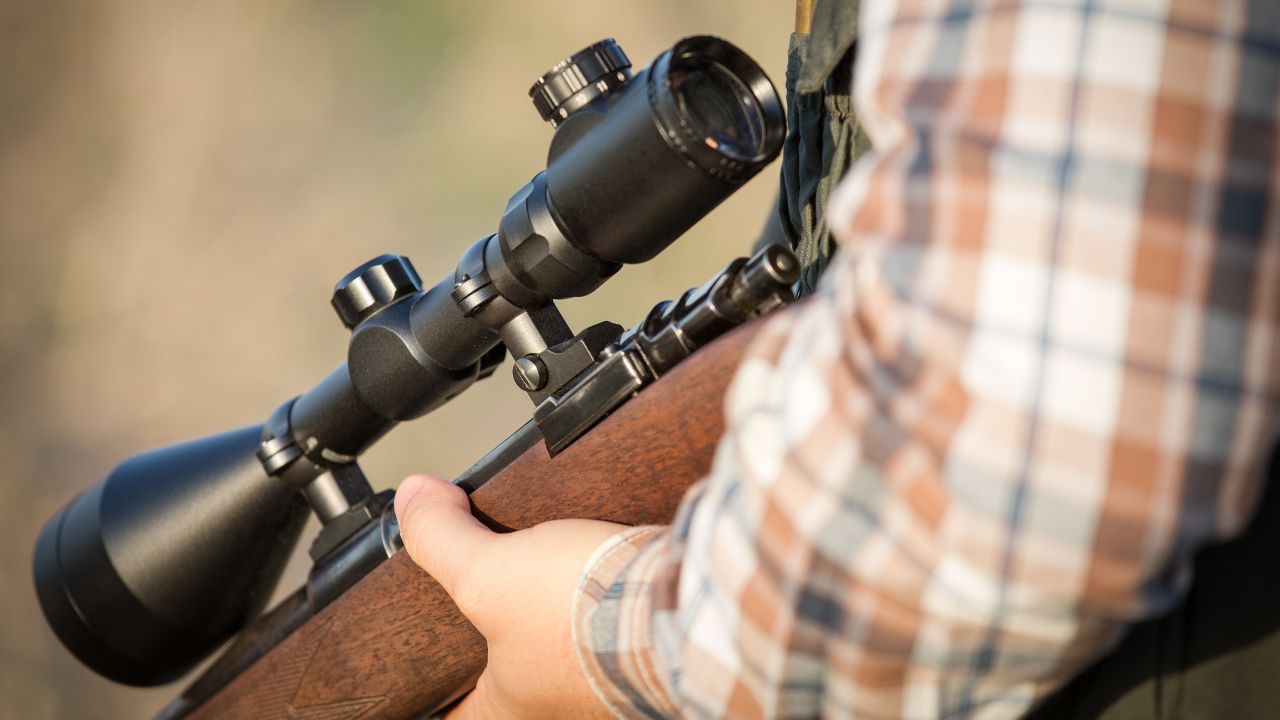
Many zero shifts blamed on “bad scopes” are actually caused by mounting issues. Rings can slip on the tube, bases can loosen, screws can back out, and receiver surfaces can settle under repeated recoil. This is especially common when proper torque values are not used, when thread locker is applied incorrectly, or when rings are mismatched to the tube or clamping surfaces. Even a high-quality scope can lose zero if the mounting system is not stable. The reason this is hard to diagnose is that the shift can be small—an inch or two at 100 yards—and the rifle may still group well, leading shooters to think their ammo is inconsistent rather than recognizing a mechanical movement in the mounting system. Hard use also includes vehicle vibration and repeated knocks against door frames, rocks, and tree stands, which can stress screws and clamps in ways a bench setup never sees.
Recoil, especially on lighter rifles, accelerates failures
Scopes face repeated recoil cycles, and the stress is magnified on lightweight rifles and heavier-recoiling cartridges because the acceleration profile can be more abrupt. The scope is effectively being hammered in the rings each time the rifle fires, and internal assemblies are experiencing repeated shock. This is why some scopes that survive on mild calibers fail on magnums, and why the same model can behave differently depending on the rifle it is mounted on. Recoil also interacts with turret use. Scopes that track well in controlled testing can still drift if the erector system does not return consistently under repeated recoil. For hunters who dial elevation frequently, the durability question becomes not just “does it hold zero,” but “does it return to zero after dialing and after recoil exposure,” because a scope that shifts after turret movement is effectively unreliable for field use.
Environmental factors can create subtle movement and inconsistency
Temperature changes, moisture, dust, and long-term exposure can affect scope performance in ways that are not obvious. Lubricants can thicken in cold conditions, altering turret feel and internal movement. Seals can degrade over time, allowing moisture intrusion that affects clarity and can create internal corrosion. Dust and grit can get into turret interfaces, affecting adjustment consistency. Even small temperature-driven expansion and contraction can loosen screws if torque was marginal to begin with. Hard use usually involves a mix of these factors, not a single clean variable, and this is why some scopes that look fine in a controlled range environment become unreliable after multiple seasons of hunting. The shooter experiences it as “it shifted,” but the root cause is often a combination of mechanical tolerance, mounting stability, and environmental exposure.
The practical test is verification, not assumptions
The only reliable way to know an optic holds zero after hard use is to verify it. Hunters should confirm zero after travel, after any significant impact, and after any turret-heavy practice session. They should also mark ring and base screws and track whether anything has moved over time. If zero shifts occur, the first step is to check mounting torque and ring alignment before blaming the scope, because mounting failures are common and easy to fix. If the mounting system is solid and shifts persist, the scope is likely the weak link. In real use, the best scopes are not the ones with the most features. They are the ones with internal mechanics that remain stable after recoil, travel, and impacts, because that stability is what keeps bullets landing where the shooter expects when the shot actually matters.
Like The Avid Outdoorsman’s content? Subscribe to our newsletter so you never miss an article.
Here’s more from us: