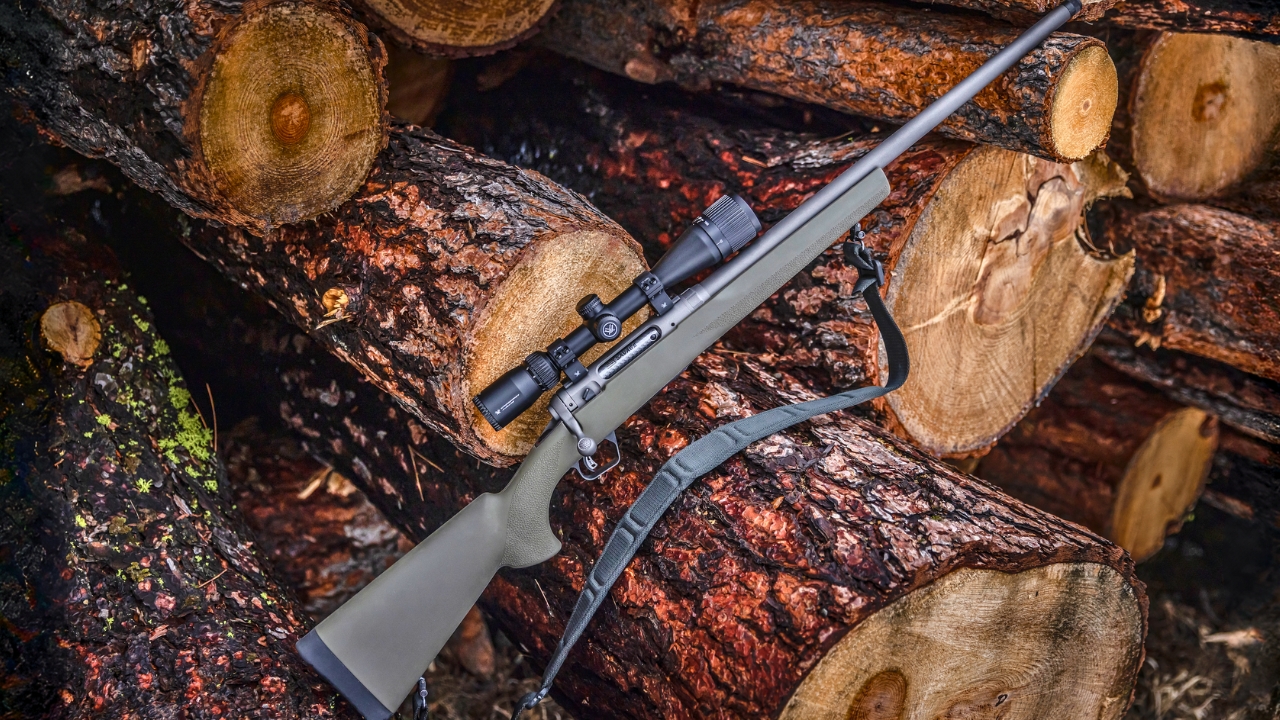
Photo credit: Savage Arms
Lightweight rifles are popular because they are easier to carry in steep country, they reduce fatigue over long hikes, and they make it more realistic for hunters to keep a rifle on their shoulder instead of leaving it in a vehicle. The tradeoff is that as rifle weight drops, small problems become bigger problems. Recoil becomes sharper, the rifle is harder to shoot steadily from field positions, barrels heat faster, and lightweight stocks and mounting systems can be less forgiving of hard use. For many hunters, the point where a rifle becomes “light enough” is also the point where it becomes harder to shoot well, and that is where a convenience choice turns into a performance liability.
The recoil and stability penalty shows up first in field positions
A lightweight rifle can be comfortable to carry but unpleasant to shoot, particularly in common big-game cartridges. Lower mass means more felt recoil and more movement during the shot, which makes it harder to maintain sight picture and harder to deliver fast follow-up shots. That is not a theoretical issue. In real hunting positions—kneeling, sitting, off sticks, off a pack, or braced against a tree—stability matters more than it does on a bench, and lighter rifles are easier to wobble. The same cartridge that feels manageable in an eight- or nine-pound setup can feel abrupt in a six-pound rifle, and that abrupt recoil impulse can cause flinching and rushed trigger presses. In practical terms, a rifle that is too light for the shooter’s recoil tolerance will shrink their effective range, not because of ballistics, but because they cannot execute clean shots consistently when cold, tired, and under pressure.
Lightweight barrels heat faster and can shift point of impact

The move toward thin-profile barrels is a common weight-saving step, but it brings predictable performance costs. Thin barrels heat faster, and as they heat, point of impact can shift due to changes in barrel harmonics and stress. In hunting, that might not matter if the only shot taken is a single cold-bore shot, but it matters if follow-up shots are required, if the rifle is used for practice strings, or if the hunter verifies zero with multiple shots before a trip. Heat sensitivity can also reveal itself during range sessions, leading owners to chase accuracy problems with ammo changes when the real issue is barrel contour and thermal behavior. Thin barrels can shoot very well, but they are less forgiving when the rifle is fired repeatedly, and the shooter who expects bench-style consistency from a mountain-weight barrel may be disappointed when groups open or impacts wander as the barrel warms.
Ultralight stocks and mounting systems can lose stability under hard use
Cutting weight often means lighter stocks, lighter chassis components, and smaller or lighter optic mounting solutions. Those parts can be reliable, but they can also be less tolerant of impacts, sling pressure, and torque changes. A light stock that flexes under bipod load or sling tension can change point of impact, especially if the fore-end contacts the barrel or alters bedding pressure. Lightweight rings and bases can also loosen if torque is not verified, and ultralight setups have less mass to absorb impacts when a rifle is dropped, banged on rocks, or carried in vehicles. These issues are often mistaken for “bad ammo” or a “bad barrel,” when the root problem is that the rifle is built with less structural margin and requires more attention to setup, torque, and verification. A heavier rifle often hides these problems simply by being more rigid and more forgiving.
Lightweight rifles can be harder to run well with suppressors and accessories
As suppressors become more common, many hunters are adding weight forward of the muzzle, which changes balance and can amplify the disadvantages of a light rifle. A suppressor can make a lightweight rifle feel muzzle-heavy and harder to hold steady, particularly for offhand or improvised positions. It can also increase heat retention and change barrel harmonics, which may exacerbate point-of-impact shifts in thin barrels. Other accessories, such as bipods, lights, and larger optics, can also negate the original weight savings, leaving the shooter with a rifle that is neither truly light nor truly stable. The outcome is a setup that feels awkward and is harder to shoot well than a slightly heavier rifle that was balanced from the start. A lightweight rifle can still work with modern accessories, but it requires intentional balance planning rather than simply adding parts and hoping the system remains coherent.
The right lightweight rifle is one you can still shoot confidently
A lightweight rifle becomes a liability when it degrades the shooter’s ability to place shots quickly and accurately under real conditions. The practical standard is not “it carries well.” It is “I can shoot it well from field positions, with hunting ammo, when cold and tired.” If recoil causes flinching, if the rifle will not hold a consistent zero, or if point of impact shifts with normal use, the weight savings are not worth it. Many hunters are better served by a rifle that is slightly heavier but more stable, because stability increases hit probability and reduces the chance of wounded animals. The right move is to find the balance point where the rifle is light enough to carry without fatigue but heavy and rigid enough to shoot predictably, hold zero, and stay consistent through a season of hard use.
Like The Avid Outdoorsman’s content? Subscribe to our newsletter so you never miss an article.
Here’s more from us: