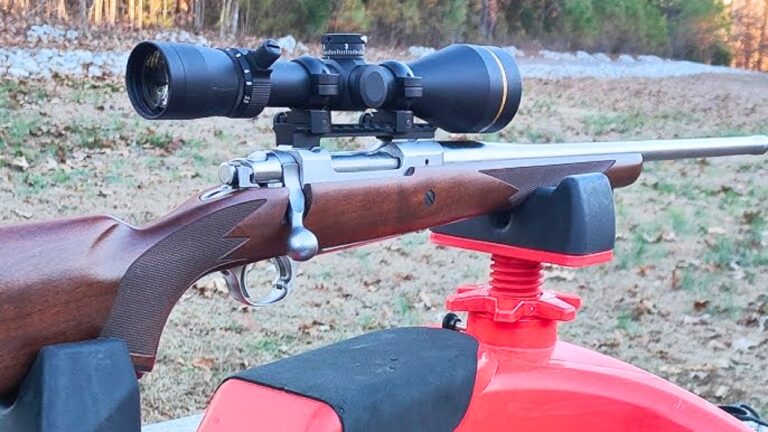
Photo credit: The Outdoor Generalist/YouTube
Some rifles hang around because they’re reliable. The Marlin 336 hangs around because it flat-out shoots. Decade after decade, it’s held its ground against newer, pricier, and flashier rifles that come and go. Hunters have trusted it through rain, dust, and recoil that would make lesser guns whimper. There’s a reason so many still carry one into the woods every fall—it does what a hunting rifle should do, without pretense or fuss.
The 336 doesn’t try to keep up with trends. It doesn’t need modular rails, optics cuts, or space-age materials to perform. It points naturally, cycles smoothly, and hits where you aim. That’s what real hunters care about, and that’s why the 336 still outshoots most modern lever guns on the market today.
Built for Accuracy, Not Applause
The Marlin 336 earned its reputation the old-fashioned way—by punching tight groups when other lever guns scattered shots. Its solid-top receiver and side ejection make mounting scopes straightforward, and the micro-groove rifling stabilizes bullets better than many realize. That combination gives the 336 accuracy that’s easy to underestimate until you put it on paper.
Even with iron sights, the rifle’s natural balance and clean trigger break make it easy to stay consistent. Add a low-power optic and you’re talking about a lever gun capable of ethical shots well past 150 yards. That’s not theory—it’s something generations of deer hunters have proven season after season.
The Action That Defines Smooth

Run the lever on a 336, and you’ll understand why it’s still the benchmark. The throw is short, the lock-up is tight, and it feeds with a mechanical confidence that makes every round feel deliberate. That smooth cycling translates into faster follow-ups and fewer hang-ups in the field.
Part of the magic comes from its straightforward design. Fewer parts mean fewer problems, and everything inside that receiver has been refined by nearly a century of production. When you’re shouldering a shot in cold weather or pushing through brush, that action feels like an extension of your instincts.
Balanced Where It Counts
The 336’s proportions are nearly perfect for real-world hunting. It’s not too long to maneuver through timber and not too light to hold steady offhand. The weight settles right between your hands, and that balance helps it shoot beyond its size. Modern rifles sometimes chase ounces and end up feeling twitchy. The 336 keeps enough heft to soak up recoil and steady your sight picture.
That natural handling shows up when a buck steps out at 60 yards and you shoulder the rifle without thinking. It points where you look. No adjustments, no hesitation—just aim and break the shot. Balance like that isn’t engineered on a computer; it’s earned through decades of refinement.
Cartridges That Still Work
The .30-30 Winchester and the .35 Remington may sound old-fashioned, but they still put meat on the ground with authority. The 336 made those cartridges famous because it shoots them so well. The .30-30 remains one of the most practical hunting rounds in North America—flat enough for mid-range shots, heavy enough to drop deer and hogs with clean hits.
Modern ammo has made these old cartridges even better. Hornady’s LeveRevolution loads extend their reach, while standard soft points still anchor game inside 150 yards with ease. The rifle and cartridge were built for each other, and that partnership still delivers when newer rounds fade with the latest trend.
Durability You Don’t Have to Baby

The 336 was built to be carried, not coddled. Its solid steel receiver, walnut stock, and straightforward internals can take weather, bumps, and years of field use without losing zero or cycling issues. You can ride it in the truck, strap it to an ATV, or lean it in a blind—it’ll keep shooting.
Unlike many modern lever guns that emphasize aesthetics, the 336 wears its scars with pride. A little rust on the barrel or a dent in the stock doesn’t stop it from doing what it’s made to do. That kind of dependability matters when your rifle’s not just a tool but a companion through long seasons.
The Trigger That Teaches Control
A good trigger separates an average rifle from a great one, and the 336’s trigger is better than most give it credit for. It’s clean, predictable, and breaks right where it should. You feel when it’s ready without the spongy take-up that plagues newer rifles. That clarity lets you stay focused on the shot, not the mechanics.
For hunters used to modern triggers with excessive safety levers or inconsistent breaks, the 336 feels refreshingly direct. It teaches discipline, helping you refine your trigger press and timing. That skill carries over to any rifle you shoot afterward—a subtle reminder of why older designs still make better teachers.
Still Relevant After All These Years
The 336 hasn’t changed much because it didn’t need to. It still delivers the same tight groups, smooth cycling, and steady balance that made it a favorite half a century ago. It may not win over the tactical crowd, but for hunters who care more about performance than flash, it remains the standard.
In a world full of rifles chasing “modern” features, the Marlin 336 proves that precision and practicality never go out of style. It’s the rifle you grab when you don’t want to wonder if your gear will hold up—and that’s why it still outshoots most lever guns built today.
Like The Avid Outdoorsman’s content? Be sure to follow us.
Here’s more from us:
The worst deer rifles money can buy
Sidearms That Belong in the Safe — Not Your Belt
*This article was developed with AI-powered tools and has been carefully reviewed by our editors.