Photo credit: KELENY/Shutterstock.com
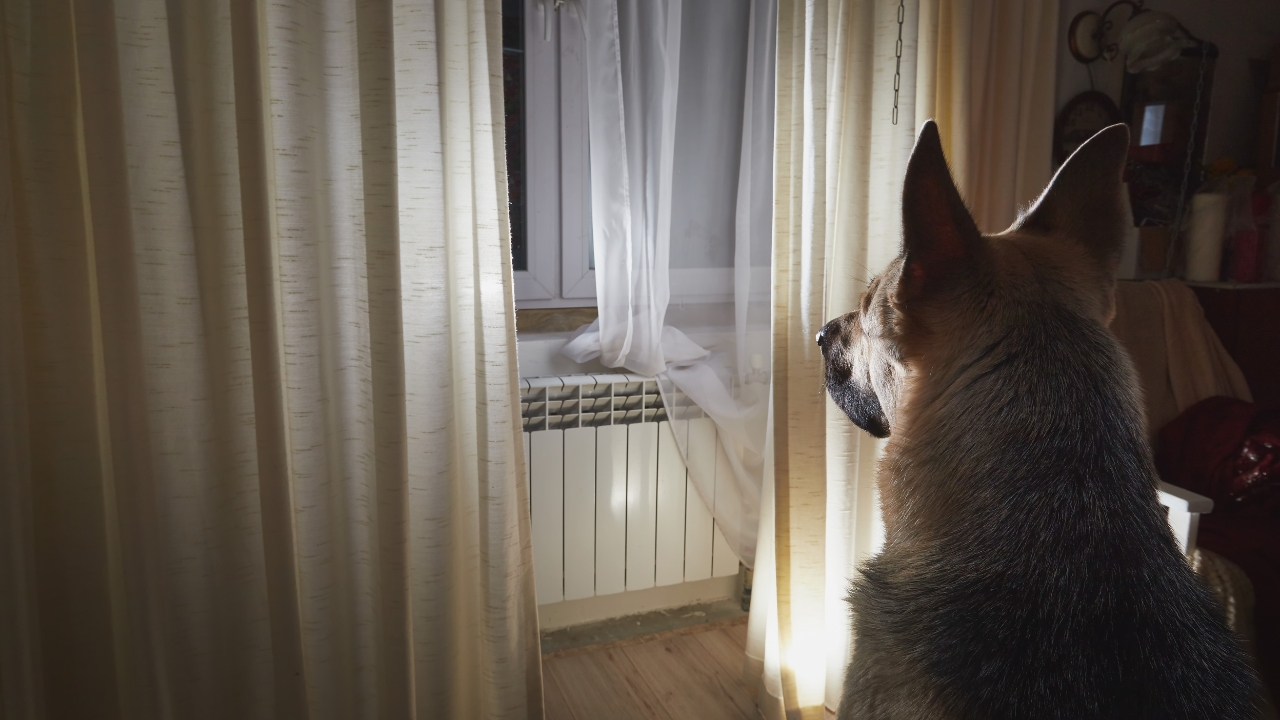
A dog that keeps going back to the windows after dark can make a house feel a lot less relaxing. One minute everything is quiet, and the next your dog is up again, staring into the glass, listening, shifting from one room to another like something outside matters more than sleep. It can feel creepy if you are already tired, but most of the time the reason is a lot more ordinary than people think. Dogs are built to notice things you miss, and nighttime gives them a version of the world that sounds, smells, and moves very differently than it does during the day.
The bigger reason this behavior stands out is that people expect the house to settle down at night. Dogs do not always see it that way. For some of them, nighttime is when the outside world gets more active, more noticeable, and harder to ignore. Wildlife comes through, neighbors get home, lights change, shadows move, sounds travel farther, and the house itself gets quieter. A dog that keeps checking the windows is usually responding to one of those shifts, not acting mysterious for no reason.
Your dog probably hears more than you do
One of the simplest explanations is usually the right one. At night, the house gets quieter, which means outside sounds stand out more to your dog. A car door down the street, footsteps on a sidewalk, an animal in the yard, wind pushing something against the fence, or a neighbor coming home late can all grab your dog’s attention before you notice anything at all. What feels like random window-checking to you may be a very logical response to repeated sounds.
Dogs do not need much to get interested either. They may hear a sound once, go investigate, and then keep rechecking because they are waiting to see if it happens again. If the pattern keeps repeating night after night, the behavior can turn into a routine all by itself. Your dog starts expecting nighttime noise, so it starts policing the windows before anything obvious even happens.
Nighttime smells can make the windows more important
Dogs do not only use windows for seeing. They also use the area around them to pick up scent and air changes. At night, cooler air and calmer surroundings can make outside smells feel stronger or more noticeable. If wildlife passes through the yard, another dog walks by, or something keeps moving near the property line, your dog may be checking the window because that is where the outside information feels strongest.
This is especially common if your dog seems interested in one window more than the others. That usually means something outside that side of the house has become meaningful. Maybe raccoons pass through there, maybe cats move along that fence, or maybe it is just the direction where neighborhood activity is easiest to track. The dog is not checking the glass for no reason. It is checking the information coming through it.
Some dogs get more watchful when the house settles down
A lot of dogs are naturally more alert once the family stops moving around. During the day, there is enough noise and activity inside the home that the dog’s attention gets spread out. At night, that changes. The household goes quiet, the lights dim, and the dog suddenly has less going on inside and more ability to focus on what is happening outside. That can bring out a watchful streak that barely shows up during the day.
For some dogs, this is just personality. They take nighttime seriously. They see it as the part of the day when they need to keep tabs on the property, the family, or the sounds around the house. That does not automatically mean anxiety. Sometimes it simply means your dog is more vigilant by nature and nighttime gives that instinct more room to show itself.
Wildlife may be closer than you realize
If your dog checks the windows at night constantly, there is a decent chance something outside really is passing through more often than you think. Cats, raccoons, opossums, deer, coyotes, rabbits, or even rodents near the house can all keep a dog on alert. You may never see them because they move in the quiet hours, but your dog may know they are there every night.
This is one of the more common reasons the behavior feels intense. Your dog is not imagining the activity. It may be reacting to a very real nighttime routine happening outside the house. If the checking is always focused on the same side of the yard, same fence line, or same window, that makes this explanation even more likely.
Anxiety can make the behavior stick
Sometimes the outside trigger is real, but the dog’s response grows bigger than the trigger itself. A dog that starts checking the windows because of one sound or one visitor can slowly turn the behavior into a habit. It begins anticipating outside activity, and that anticipation keeps it alert even when nothing major is happening. At that point, the behavior is less about one noise and more about the dog feeling like it needs to stay on duty.
You can usually tell when this is happening because the dog seems unable to let it go. It does not only check once. It keeps circling back, struggles to settle, and reacts to smaller and smaller things. That is when the behavior starts looking less like healthy curiosity and more like nighttime hypervigilance.
Boredom can make nighttime checking worse
A dog with too little stimulation during the day often turns small nighttime activity into a major event. If your dog has not had enough exercise, training, or mental work, window-checking can become the most interesting part of the evening. The outside world becomes entertainment, and the dog keeps going back because there is not much else satisfying its brain.
This does not mean boredom is the only reason, but it can definitely make the habit stronger. A dog that gets enough activity and settles well is more likely to notice something outside and move on. A dog with pent-up energy is more likely to stay locked into it and keep patrolling.
Older dogs may do this for different reasons
With older dogs, repeated nighttime window-checking can sometimes be part of a bigger restlessness pattern. Age-related changes can make dogs sleep lighter, react more to small sounds, or become more unsettled after dark. Some older dogs also get a little more confused at night and drift toward familiar lookout spots, like windows and doors, when they are not sure what else to do.
That does not mean every older dog checking the window is having cognitive trouble. But if the behavior is new and comes with pacing, nighttime wandering, clinginess, or trouble settling, it is worth looking at the full picture instead of only the window habit itself.
What your dog may want
Most of the time, your dog wants one of a few things: to investigate, to alert you, to confirm the outside noise is gone, or to feel reassured that everything is okay. Sometimes it wants you to get up and look too. Sometimes it wants outside access. Sometimes it simply wants help settling after noticing something it cannot fully understand.
The easiest way to read it is by context. If your dog checks the window, then looks at you, it may be asking for backup. If it goes to the back door right after, it may want outside. If it keeps circling back without asking for anything direct, it is probably monitoring more than requesting. The behavior is usually communication, even when it is silent.
When it deserves more attention
If your dog checks the windows at night once or twice and then settles, that is usually normal. If it becomes constant, obsessive, or comes with barking, pacing, shaking, or trouble sleeping, it is worth paying closer attention. At that point, the behavior may be less about simple alertness and more about stress, understimulation, or a real outside trigger that needs to be addressed.
The main thing is not to assume the behavior is meaningless. Dogs rarely repeat something that often without a reason. The window-checking may look strange from the couch, but in your dog’s mind, it is probably a very practical response to a world that feels much busier after dark than you realized.
Like The Avid Outdoorsman’s content? Subscribe to our newsletter so you never miss an article.
Here’s more from us: