Photo credit: Martin Menšík/YouTube
There’s a reason you still see the Beretta 92FS on duty belts, in range bags, and tucked away in nightstands decades after its debut. It’s not nostalgia—it’s trust. The 92FS earned its reputation the hard way, through years of military use, police service, and real-world experience that few handguns can match. While polymer-framed pistols have taken over most of the spotlight, the Beretta still hangs on because it works. It runs clean, feels good in the hand, and stays accurate long after others start to loosen up. When a pistol earns that kind of loyalty across generations, it doesn’t disappear—it just quietly keeps doing its job while trends come and go.
The military gave it credibility
When the U.S. military adopted the M9, it gave the 92FS instant legitimacy. For decades, soldiers and Marines carried it through every environment imaginable—sand, snow, jungle, and desert—and it kept going. That kind of real-world proof built a level of trust that advertising dollars can’t buy.
Even after newer designs came along, many who served with the M9 carried that experience into civilian life. They knew it was accurate, reliable, and forgiving under pressure. That credibility cemented the 92FS as more than a sidearm—it became a known quantity, something people could bet their life on.
The open-slide design works

Beretta’s open-slide design looks unconventional, but it’s a big reason the gun runs so clean. By exposing more of the barrel and slide, it lets heat and debris escape instead of building up inside the action. The result is fewer stovepipes, fewer malfunctions, and easier cleaning compared to enclosed slides.
This layout also contributes to the 92FS’s smooth cycling. It stays balanced during recoil and returns to battery cleanly, even with lighter loads. In a world full of polymer pistols that can feel snappy or uneven, the 92FS cycles like a machine built for endurance—because it is.
It’s a soft shooter
The 92FS’s all-metal frame adds weight, but that weight tames recoil. You can shoot faster, stay on target longer, and recover your sights quicker. For many, that controllability makes the Beretta easier to shoot well than lighter, snappier polymer guns.
Whether you’re shooting drills or defending your home, the smooth recoil impulse makes it feel like it’s working with you, not against you. That’s why you see older shooters stick with it—they can still shoot it accurately after thousands of rounds without the fatigue that comes from ultralight pistols.
The trigger gets better with time

If you’ve spent time behind a 92FS, you know the double-action trigger smooths out beautifully with use. Out of the box, it’s long and heavy, but once it breaks in, it’s consistent and predictable. The single-action pull is crisp, giving you excellent control when you need precision.
That kind of mechanical consistency is something you can feel. You learn exactly where the wall is, how it breaks, and how it resets. After enough rounds, it starts to feel like second nature—something few striker-fired guns can match in feedback and rhythm.
It’s built like a tank
There’s a mechanical confidence to the 92FS that you notice as soon as you rack the slide. The locking block, barrel fit, and steel frame all come together with a tightness that feels substantial. These guns are known to run for tens of thousands of rounds with minimal wear if you keep them lubed and clean.
You don’t see cracked frames or worn-out rails unless someone has seriously neglected it. That durability is part of why so many old service pistols still shoot like new. The 92FS wasn’t made to be cheap—it was made to last.
It points naturally
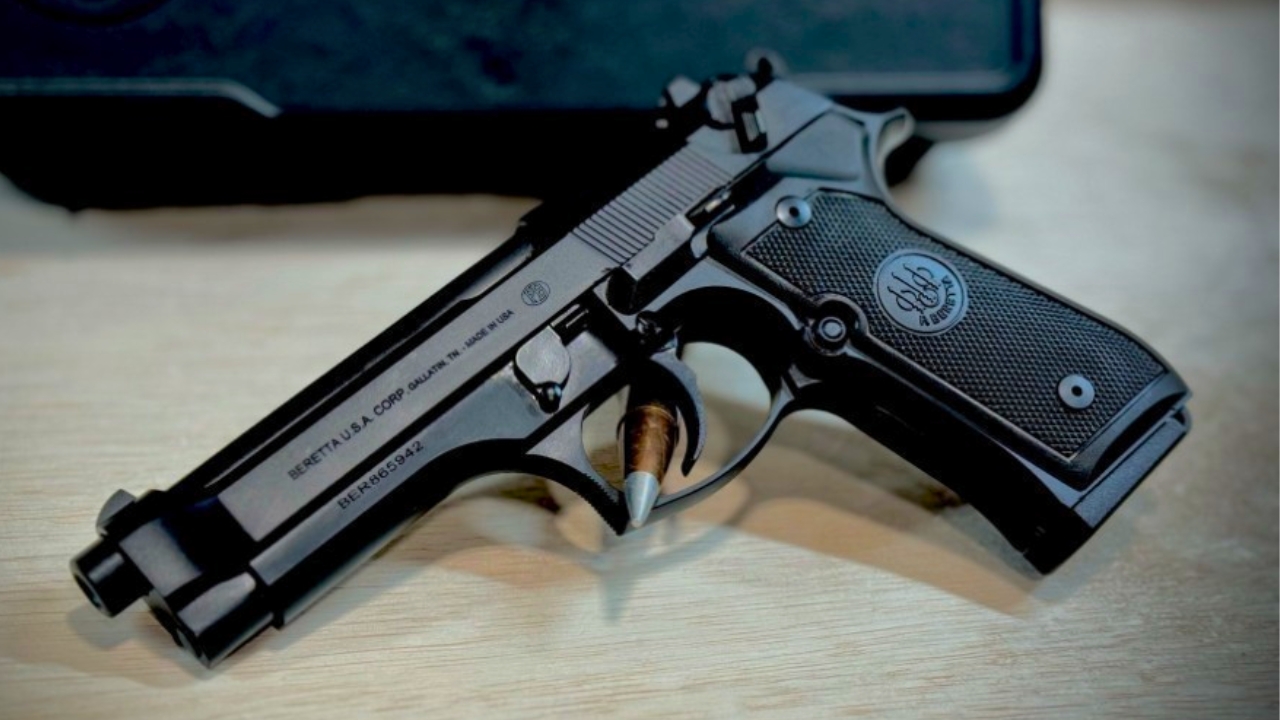
The grip angle and balance of the 92FS help it align on target without much conscious effort. Its longer sight radius makes precise shooting easier, and the weight helps keep the muzzle steady. Many shooters who switch back to it after years with other pistols find it feels instantly familiar again.
That’s not luck—it’s smart design. The curved backstrap, generous beavertail, and full-size grip all contribute to a pistol that sits naturally in your hand. You can transition between targets smoothly because the gun wants to stay flat instead of jumping.
It’s still one of the most accurate service pistols
The Beretta 92FS has always been known for its accuracy. The fixed barrel-to-slide relationship and tight lockup contribute to that, and you’ll notice it when you start grouping shots. Even used military surplus models still shoot tighter than many brand-new pistols in the same class.
You can take one off the rack, put a quality barrel and sights on it, and have a competition-capable pistol without spending a fortune. Its mechanical consistency and balance make it forgiving, even when you’re shooting fast or at distance.
Aftermarket support never died

One reason the 92FS never faded is because support for it never stopped. Parts, magazines, holsters, and upgrades are still widely available. Whether you’re rebuilding an old M9 or tuning a new model, you can find everything you need without hunting obscure sources.
Companies still make upgraded triggers, sights, and grips for it, which keeps it relevant for today’s shooters. That ecosystem ensures the 92FS isn’t just surviving—it’s evolving alongside newer designs.
It became a Hollywood icon
From Lethal Weapon to Die Hard, the 92FS became the face of the modern handgun for an entire generation. Before Glocks took over the screen, the Beretta was the hero’s gun—the one every kid recognized. That pop-culture presence kept it in the public eye long after its military service faded.
Even people who don’t own one often know what it is. It’s one of the few handguns that’s both instantly recognizable and respected across different generations. That’s a rare combination that keeps demand alive.
It still holds its own today

Despite newer, lighter, higher-capacity pistols on the market, the 92FS continues to earn respect. Its combination of reliability, shootability, and timeless design still appeals to shooters who value feel and function over fashion. You don’t need to baby it, and it doesn’t punish you for using it hard.
It’s not the newest pistol in the case, but it’s one of the few that still feels built for real work. Decades later, the 92FS remains what it’s always been: a dependable sidearm that does its job without complaint—and that’s exactly why it never went away.
Like The Avid Outdoorsman’s content? Be sure to follow us.
Here’s more from us:
The worst deer rifles money can buy
Sidearms That Belong in the Safe — Not Your Belt
*This article was developed with AI-powered tools and has been carefully reviewed by our editors.