Photo credit: DrunkDriver – CC BY-SA 3.0/Wiki Commons
Most guns from the early 20th century have either become collector pieces or have been thoroughly modernized beyond recognition. But the Browning Hi-Power managed something different—it held its own. If you’ve ever run one, you know it doesn’t feel like some relic you’re humoring at the range. It feels like a well-thought-out sidearm that still has a place today.
Despite being overshadowed by polymer-framed competitors and high-capacity striker-fired pistols, the Hi-Power stayed relevant. And it didn’t do it by getting louder or flashier—it did it by staying useful. If you look closely, you’ll see why a design that came out nearly a century ago can still feel at home on your hip.
It carried more rounds when most didn’t
Back when most pistols topped out at 7 or 8 rounds, the Hi-Power stepped onto the scene with 13 in the magazine. That wasn’t just a step forward—it was a leap. For decades, it was the king of capacity in a reasonably sized handgun, and that made it a serious choice for military, law enforcement, and civilian carry alike.
You didn’t have to carry a full-size duty gun to have firepower. That extra capacity gave peace of mind without adding bulk. Even now, 13 rounds of 9mm in a slim single-action pistol feels pretty efficient when you compare it to what’s on shelves.
It fits the hand better than most modern guns

One thing you notice right away when you pick up a Hi-Power is how naturally it sits in your hand. The grip angle, the slimness, the balance—it’s all there. Unlike chunky modern double-stacks, the Hi-Power’s grip isn’t fighting your fingers.
That’s because it was designed with actual human hands in mind, not to check boxes in a spec sheet. The arched backstrap, the narrow slide, and the low bore axis all come together to create something that feels more like an extension of your arm than a tool.
It actually shoots well under pressure
Plenty of old service pistols look nice in the safe but feel like a chore at the range. The Hi-Power isn’t one of them. Between the single-action trigger, decent sights (especially on later models), and manageable recoil, it’s a pistol that rewards good shooting.
You can shoot it fast and stay on target. It doesn’t buck or wobble around, and it resets predictably. Sure, it’s not match-grade out of the box, but for its era—and even today—it’s more shootable than most expect it to be.
It’s a metal gun that carries light

At a time when everything is going polymer, the Hi-Power still makes a solid argument for steel. It’s not featherweight, but it’s slim enough to carry without dragging your belt down. And unlike a lot of newer alloy-framed options, it balances well loaded or unloaded.
You don’t feel like you’re lugging a boat anchor, and it doesn’t print like a brick under a t-shirt. For a full-capacity all-steel gun, it rides surprisingly easy—especially in a good leather IWB rig. That’s part of why it never got completely pushed out of the rotation.
The trigger is better than you remember
The Hi-Power gets a bad rap for its magazine disconnect, and sure—it doesn’t help. But once you address that (and a lot of folks do), the trigger really shines. It’s crisp, consistent, and breaks clean. Not squishy. Not spongy.
And even in stock form, it’s still more predictable than the long, vague pulls you’ll find on a lot of double-action guns. It might not be a 1911 trigger, but it’s a clear step up from what most striker-fired pistols give you. It’s one of those things you notice once you start shooting better with it.
It didn’t need rails, optics, or gimmicks to work
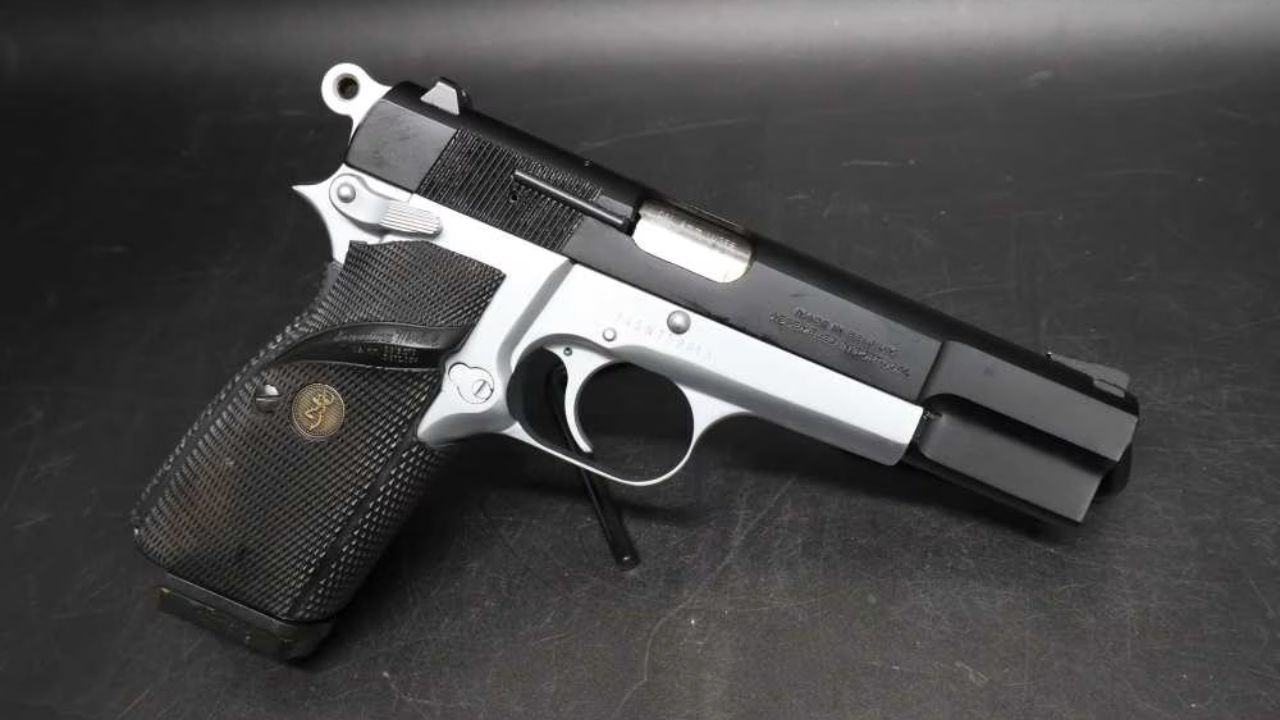
The Hi-Power wasn’t built for accessories—it was built to be a fighting pistol. No rails, no optics plates, no fancy backstraps. And somehow, that’s part of the charm. It just works, with no need to bolt anything on or keep track of batteries.
It points naturally, shoots flat, and functions clean. If you’re someone who likes to keep your carry setup straightforward, the Hi-Power still makes a lot of sense. It’s a pistol that lets you focus on shooting, not fiddling.
It earned trust in the real world, not marketing
A lot of guns today are hyped up before they’ve ever been through a hard season. The Hi-Power didn’t need to be sold—it was proven. Carried in wars, used by countless police agencies, and trusted by people who actually depended on their sidearm.
That kind of track record means something. It wasn’t the loudest option or the flashiest, but it worked when it needed to. And that reliability—earned the hard way—is what helped it hang around longer than anyone predicted. You can’t fake a legacy like that.
Like The Avid Outdoorsman’s content? Be sure to follow us.
Here’s more from us:
The worst deer rifles money can buy
Sidearms That Belong in the Safe — Not Your Belt
*This article was developed with AI-powered tools and has been carefully reviewed by our editors.