Photo credit: thegunpenguin/YouTube
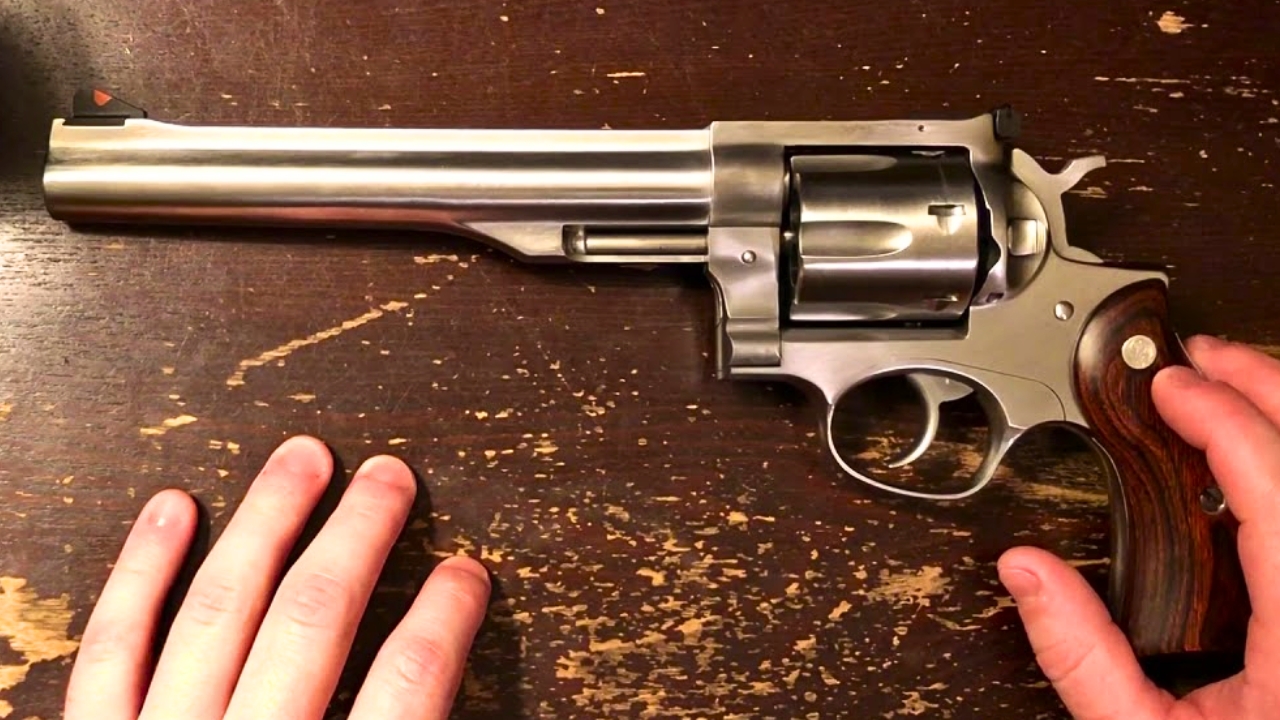
You don’t need a flashy revolver in the backcountry—you need one that keeps working, no matter what you put it through. That’s why the Ruger Redhawk has earned such a reputation among guides, hunters, and anyone who’s spent time in bear country. It’s not light. It’s not dainty. And it doesn’t care if it gets rained on, dropped in the mud, or fired with gloves on. This revolver has quietly built a track record that’s hard to ignore. While other wheelguns wear out their timing or develop wiggle, the Redhawk stays tight. It’s overbuilt, underappreciated by some, and nearly indestructible when you need it most.
It was built with heavy loads in mind
Ruger didn’t make the Redhawk for .38 Special target shooters. This thing was built for full-house .44 Magnum and even the .45 Colt when handloaded hot. The cylinder is unfluted, the frame is solid, and everything inside is designed to soak up pressure that would crack lesser guns. You don’t have to baby it or second-guess your ammo. If you’re stuffing in heavy bear loads or hunting rounds, the Redhawk can take it all day without backing off or loosening up. That makes a real difference when your sidearm isn’t for show—it’s for survival.
The one-piece frame shrugs off abuse

Most revolvers are built with side plates, which can become weak points over time. The Redhawk ditched all that and went with a single-piece frame that keeps things solid. Fewer parts mean fewer chances for something to shift, warp, or work loose. That design decision gives the Redhawk its well-earned reputation for durability, especially when the weather turns rough or the terrain gets nasty. If your revolver has to spend a season on your hip in bear country, a one-piece frame isn’t a luxury—it’s a necessity.
Timing stays tight after years of use
With some double-action revolvers, the timing starts slipping after a few seasons. The cylinder doesn’t lock up quite right, or you notice it’s starting to spit a little lead. The Redhawk, on the other hand, has a knack for staying tuned even after thousands of rounds. Its locking mechanism is stronger than most, and the internals don’t wear out nearly as fast. You can holster and unholster it, shoot it double-action, carry it in the rain, and it’ll still rotate into battery like it’s fresh from the factory.
You can run it in any weather

The Redhawk isn’t a fair-weather gun. It’ll run in a downpour, take freezing temps without locking up, and shrug off dust or grit. Hunters who carry them in Alaska, Idaho, or the Rockies keep coming back to that same point—it works when their fingers are frozen and their gear is soaked. There aren’t many sidearms you can draw and fire with gloves on and still count on consistent trigger feel. This one delivers, whether you’re in the heat of summer or the bottom of a snowdrift.
Field-stripping isn’t a nightmare
A lot of revolvers require a degree in engineering to get inside. The Redhawk doesn’t. Once you pull the grips and take out the mainspring, the internals come out as a modular assembly. That means fewer tiny springs to lose and fewer headaches when you need to clean it after a muddy hunt. It also means easier maintenance, which helps extend its already impressive service life. You won’t need a gunsmith every season to keep this thing running.
It handles recoil like a heavyweight should

The Redhawk isn’t light, and for good reason. That weight isn’t there for looks—it helps soak up the punishment of big-bore rounds. When you’re shooting full-power .44 Mag or handloaded .45 Colt, that extra heft makes a world of difference in follow-up shots and wrist fatigue. It doesn’t buck like the featherweights or twist in your grip. It stays planted and controllable, especially with Hogue or Pachmayr grips. If you’re hunting with it or backing up a partner on a blood trail, that kind of control matters.
It’s one of the few revolvers that actually lasts a lifetime
Plenty of revolvers get passed down, but the Redhawk earns it. Not because it’s pretty or nostalgic, but because it still works after decades of use. Hunters who bought one in the ‘80s are still carrying them, still trusting them, and still taking them into places where things go sideways fast. That kind of longevity doesn’t come from clever marketing or weekend range trips—it comes from surviving the worst hunts and still being ready for the next. That’s why the Redhawk outlasts nearly everything.
Like The Avid Outdoorsman’s content? Be sure to follow us.
Here’s more from us:
The worst deer rifles money can buy
Sidearms That Belong in the Safe — Not Your Belt
*This article was developed with AI-powered tools and has been carefully reviewed by our editors.