Photo credit: Dmitry Markov152/Shutterstock.com
We may earn revenue from products featured on this page through affiliate links.
Gun cleaning has turned into a weird flex online. Guys will post spotless patches like that’s the same thing as a reliable carry gun, and it’s not. A clean gun is fine, but a trusted gun is better, and trust comes from a routine that keeps the gun running and helps you catch problems early. Most modern firearms don’t need a full-on teardown and solvent bath every time you shoot, and even people in the industry have pointed out that the bigger risk usually isn’t “cleaning too often,” it’s cleaning with the wrong tools and going way harder than the gun needs.
If you want the shortest version of this whole topic, it’s this: your cleaning routine should be about maintenance and inspection, not chasing “white-glove” perfection. A responsible process starts with basic safety, making sure the firearm is unloaded, and following the owner’s manual for how far to disassemble and where to lube. When you treat cleaning like an inspection, you stop missing the stuff that actually causes malfunctions: worn mags, loose screws, over-lubed gunk traps, and small parts starting to fail.
Overcleaning isn’t the real issue — overdoing it is
A lot of people hear “don’t overclean” and take it as permission to never maintain anything. That’s not what I’m saying. Cleaning is still important for reliability and corrosion prevention, and several credible sources still recommend regular cleaning for guns you rely on, especially after shooting sessions or when conditions are harsh. The point is that “deep clean every time” is often wasted effort, and sometimes it creates new problems when people get aggressive with rods, brushes, and solvents, or they start disassembling past what they actually understand.
This is where people get burned: they clean constantly but don’t improve reliability because they’re focusing on the wrong surfaces. They’ll scrub a bore that wasn’t causing issues, then ignore the magazine that’s been dropped on concrete fifty times. They’ll polish a feed ramp like it’s a religion, then skip the basic check for lint and grime in a carry gun that rides against skin and clothing every day. Cleaning doesn’t replace inspection. It should force inspection.
The “too much oil” problem is real, and it causes dumb failures
If you carry concealed, your gun lives in lint. That’s just the truth. Add too much oil and you’ve basically made lint glue. Multiple sources that talk about maintenance for defensive handguns warn that over-lubrication attracts dirt and debris, and that you only need a small amount in the right places. This is one of the biggest reasons people think they need to “clean more,” because their gun starts feeling sluggish or gritty… when the real issue is they’ve been marinating it in oil.
Another common mistake is failing to remove excess oil after you’re done. One long-standing NRA publication point-blank lists “remove excess oil” as an actual step, and even gives the simple logic: oil can build up into goo and cause issues, and you don’t want to soak stocks or trap grime. If you want your gun to run, you want lubrication where it belongs, not everywhere. A light film on the right friction points is a different thing than a wet gun that prints oil on your shirt.
Most “cleaning” time should be spent checking the stuff that quits first
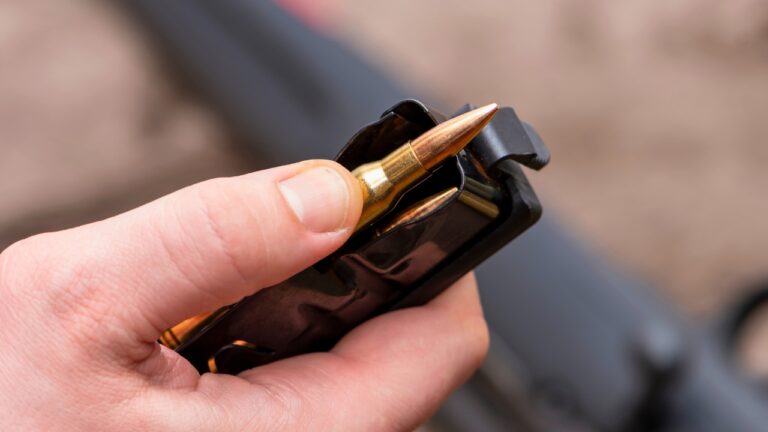
Here’s what experienced shooters quietly do while everyone else is chasing spotless parts: they check wear points and failure points. They look at magazines for cracks, dented feed lips, weak springs, and baseplates that are starting to shift. They check screws and mounts because “mysterious accuracy problems” are often loose hardware, not a dirty barrel. They look at the extractor area for buildup and function issues, because a gun can be “clean” and still be one weak extraction away from a bad day.
And if we’re talking carry guns, the inspection list gets even more practical. You want to know if the holster is leaving debris where it shouldn’t, if your belt setup is pushing the gun into weird angles, if your sights are drifting, if your light/optic is loosening, and if your magazines are actually reliable with your carry ammo. None of that gets solved by scrubbing harder. That gets solved by paying attention like you’re maintaining equipment you may bet your life on.
“Clean as needed” beats “clean on a ritual schedule”
Some guns run filthy. Some guns get finicky faster. Some ammo is dirtier than others. And your environment matters. A solid rule from a gunsmithing perspective is basically “clean as needed,” which means you’re watching performance and conditions, not following a superstition. If a gun starts to feel sluggish, if you’ve been in rain, snow, dust, or sweat-soaked carry conditions, or if the firearm has been exposed to water, then maintenance becomes urgent, not optional.
There’s also a middle ground that a lot of smart shooters use: quick wipe-down and light maintenance most of the time, and deeper cleaning on a sensible interval or when performance tells you it’s time. One NRA Women piece even spells out the common-sense version for ordinary range days: a wipe-down plus a couple passes with a bore snake can be enough until a deeper clean, while still stressing that bad weather exposure changes the equation. That’s the mindset: maintain the gun without turning every session into a multi-hour teardown.
The fastest “smart clean” for most guns is boring and effective
If you want a routine that’s actually sustainable, keep it simple: safe handling, follow your manual, remove obvious debris and fouling, and focus on the parts that affect cycling and reliability. You don’t need to get into exotic chemistry to do this well. You need consistency and restraint. A lot of cleaning guides repeat the same basic idea for a reason: clean what matters, lube lightly, wipe excess, reassemble, and function-check like an adult.
If you want one purchase that genuinely makes “quick maintenance” easier, it’s a bore snake. Something like the Hoppe’s BoreSnake Den is built for fast passes through the bore and is easy to toss in a range bag, which helps people stop skipping maintenance because “I don’t feel like setting up a bench.” Pair that with a proven solvent like Hoppe’s No. 9 when you actually need solvent work, and you’ve got the basics covered without pretending every gun needs to be detailed like a show truck.
What you’re missing when you obsess over “perfectly clean”
The biggest loss with obsessive cleaning is that you stop paying attention to function. You’re so focused on making it look good that you don’t notice the small stuff: the magazine that’s starting to nose-dive rounds, the recoil spring that’s getting tired, the optic mount that’s loosening, the extractor tension that’s changing, or the carry gun that’s slowly filling with lint because you never do a quick weekly check. And ironically, obsessive cleaning can create wear when people use poor tools, sloppy rods, or heavy-handed techniques. Even “don’t overclean” discussions usually land on the same conclusion: aggressive methods and bad tools are what cause avoidable damage, not reasonable maintenance.
So if you want a standard to live by, make it this: clean enough to be reliable, and inspect enough to stay ahead of failures. The clean gun that hasn’t been function-checked is not a comfort. The slightly dirty gun that’s been inspected, lubed correctly, and run with proven mags is the one I trust.
Like The Avid Outdoorsman’s content? Subscribe to our newsletter so you never miss an article.
Here’s more from us: