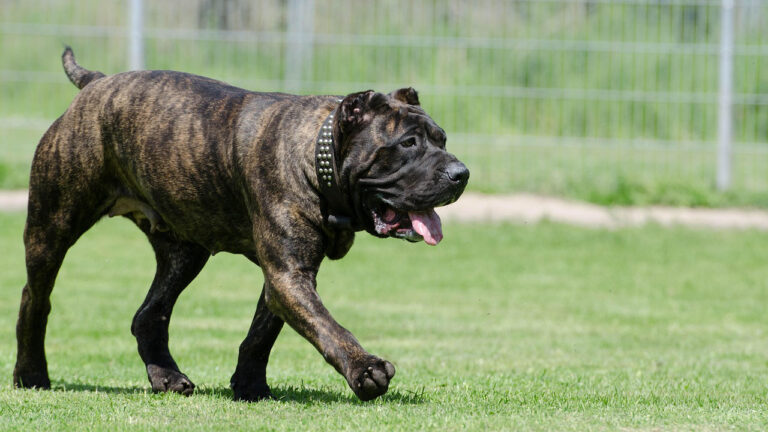
Photo credit: Roberto La Rosa/Shutterstock.com
Suburbs feel controlled—trimmed lawns, streetlights, trash pickup, fences. That setup convinces people they are living outside of “real” wildlife country. The truth is you have built an edge habitat on purpose: food, water, shelter, and travel lanes packed into neat blocks. Add a few wooded creeks, storm drains, retention ponds, and backyard bird feeders, and you have created a buffet with cover.
What catches you off guard is not that animals show up. It is how well they learn your routines. They move at the quiet hours, use landscaping like brush piles, and treat fences like speed bumps. If you spend time outdoors, you will see the signs—tracks in mud, tipped cans, missing fruit, and that uneasy feeling that something is watching from the treeline.
Coyote (Canis latrans)

Coyotes do not need “wilderness” the way people imagine it. They need cover to travel, a few places to bed, and a steady supply of easy meals. In suburbs, that can mean rabbits in greenbelts, rodents under sheds, and pet food left on porches. You will often hear them before you see them, especially in the late evening when neighborhoods quiet down.
The part that surprises people is how bold a coyote can look without acting reckless. It will trot a sidewalk, cut through a drainage ditch, then vanish into a strip of brush that you never paid attention to. If you have outdoor cats or small dogs, you cannot treat a fenced yard like a safe bubble. Coyotes learn patterns fast and take chances when the reward is easy.
Raccoon (Procyon lotor)
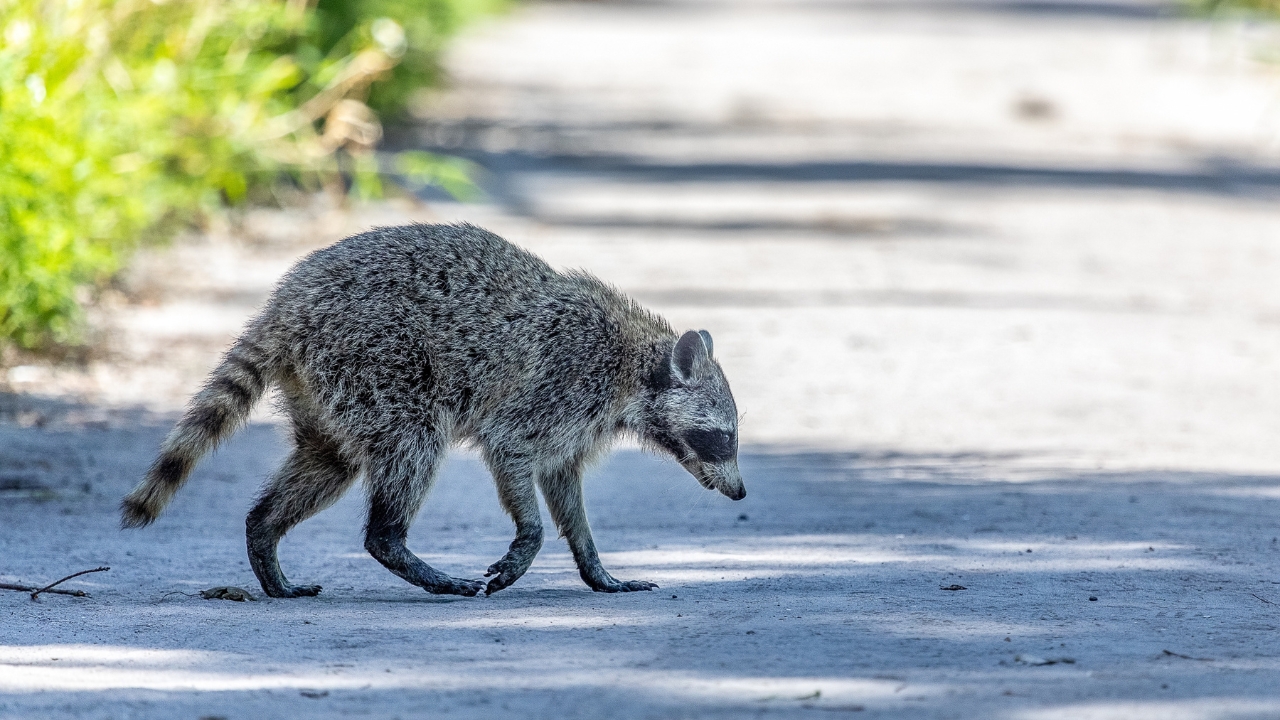
A raccoon is built for suburb living. It climbs, pries, and problem-solves like it has been studying your house all week. Rooflines, downspouts, decks, and fences turn into ramps. Trash cans become food puzzles. If you have a bird feeder, you have probably fed raccoons too, whether you meant to or not.
What throws people is how fearless raccoons can act when they feel cornered. A raccoon in an attic, crawlspace, or chimney is not thinking about “running away.” It is thinking about surviving. They also leave a mess that looks like vandalism—torn insulation, scattered litter, and muddy handprints on siding. If you see repeated trash raids or hear heavy thumps overhead at night, you are not dealing with a one-time visitor.
Striped skunk (Mephitis mephitis)

Skunks thrive where people keep food sources close to the ground. Grubs in irrigated lawns, fallen fruit, compost piles, and pet bowls make suburban yards feel like a steady diner. A skunk also loves easy shelter—under decks, sheds, porches, and brushy corners that never get cleaned out.
People get caught off guard because skunks move slowly and look harmless until they are not. A skunk does not need to chase you. It needs you to push it into a decision. That happens when you surprise one near a doorway, let a dog run it down, or corner it near a foundation. The smell is not the only problem. Skunks can carry rabies, and an aggressive or unusually bold skunk is a serious red flag. Treat them with space and patience, not panic.
Virginia opossum (Didelphis virginiana)

Opossums are the blue-collar survivors of the neighborhood food chain. They eat what is easy: spilled birdseed, fallen fruit, insects, carrion, and whatever is sitting in an uncovered trash can. They are not fast and they are not glamorous, which is why people underestimate how often they pass through a yard.
What surprises you is the act they put on. An opossum that “plays dead” looks dramatic, but it is not a joke. It is a defense that works when predators get confused. They also wander with a slow, unbothered confidence that makes people think the animal is sick. Sometimes it is, but often it is normal behavior. You will notice them most at night near fences and gardens, and around garages where food smells collect. They are not looking for a fight; they are looking for the easiest calories.
White-tailed deer (Odocoileus virginianus)

Deer in suburbs can look like a different species than deer out in big woods. They get used to cars, porch lights, and people walking dogs. They browse on landscaping that stays green longer than native browse, and they bed in tiny pockets of cover—behind schools, in creek bottoms, or in strips of brush along back fences.
You can be a good outdoorsman and still get fooled by how close deer live. They often move in daylight because human activity discourages many predators, and because lawns and ornamentals offer steady food. The real surprise comes in fall. During the rut, bucks follow does through neighborhoods with the same intensity they do in timber. That is when you see deer sprint across roads, jump fences into backyards, and tangle themselves in places that seem impossible.
Black bear (Ursus americanus)

In many parts of the country, black bears have learned that suburbs offer high-calorie rewards with low effort. A bear does not need to “hunt” when it can hit bird feeders, garbage, and outdoor grills. It will travel greenbelts and creek corridors like highways, stepping into backyards when the neighborhood quiets down.
What catches you off guard is how quickly a bear can turn a normal evening into a high-stress situation. A bear that finds food will often come back, and it will start testing boundaries—more daylight visits, less hesitation, more property damage. Most black bears want to avoid conflict, but food-conditioning changes behavior. If you see a bear repeatedly, you are not looking at a one-off wanderer. You are looking at an animal that has decided your neighborhood is part of its route, and it will keep running that route until the payoff disappears.
Bobcat (Lynx rufus)

Bobcats slip into suburbs the way smoke slips under a door. You rarely hear them, and you may not see one for years even if they live close. They hunt along creek lines, brushy lots, and the edges of neighborhoods where rabbits and squirrels stay thick. If your area has a strong prey base, bobcats can hold territory surprisingly near people.
The surprise factor is how “normal” a bobcat can look until you process what you are seeing. It stands taller than most house cats, moves with a heavy, deliberate gait, and vanishes with one hop into cover. They usually avoid humans, but they do not always avoid yards—especially if a property backs into a wooded strip. Small pets left outside at dawn or dusk can become targets. You do not need fear; you need awareness and smart habits.
Red fox (Vulpes vulpes)

Red foxes fit suburbs like they were designed for them. They hunt mice in mowed fields, patrol fencerows, and raise pups in tucked-away spots like brush piles and drainage edges. You will often spot them at first light, trotting with that casual confidence that makes people think they are tame.
What catches you off guard is how adaptable a fox is. It can live near traffic, ignore porch lights, and use landscaping as cover. A fox also tends to look “healthy” even when it is living on scraps and rodents, so people assume it belongs there. The main concern is not that a fox is present; it is how people react. Feeding foxes changes their behavior fast and pulls them closer to homes. If you keep a yard clean of easy food, most fox activity stays on the edges, where it belongs.
Canada goose (Branta canadensis)

Canada geese thrive in suburbs because suburbs provide exactly what they want: short grass near water, open sight lines, and fewer natural predators. Retention ponds, golf courses, park lakes, and school fields become nesting habitat. Once geese claim a spot, they treat it like property, especially in spring when they are guarding nests.
The surprise is how aggressive a goose can be when it decides you are too close. Geese do not need to win a fight to ruin your day. They need to pressure you into backing off, and they are good at it. You also pay the price in droppings, which pile up fast when flocks loaf on lawns. People expect geese to “pass through.” In many suburbs, they stay, raise young, and return year after year because the habitat stays stable and the food stays easy.
Wild turkey (Meleagris gallopavo)

Wild turkeys have expanded into plenty of suburban areas, and they do it with a mix of caution and arrogance. They roost in tall trees near creeks or parks, then drop down to feed in yards and open fields. You will see them in groups, moving like a slow patrol, pecking at acorns, insects, and whatever food sources they find along the way.
What catches you off guard is how turkeys behave around people and cars. They can look completely unbothered, then turn territorial during breeding season. Toms may posture, fan, and follow pedestrians, and they sometimes peck at reflections on vehicles. They are not “attacking” like a predator; they are asserting dominance the only way they know. If you give them room and remove attractants like spilled birdseed, they usually keep to a routine that stays predictable.
American alligator (Alligator mississippiensis)

In the Southeast, suburbs built around ponds, canals, and wetlands are prime alligator country. Gators use stormwater systems, retention ponds, and marsh edges as travel routes. People get caught off guard because the water looks like a decorative feature, not wildlife habitat, until something big surfaces near the bank.
The danger comes from familiarity. When people treat gators like scenery, they get too close, let dogs splash at the edge, or assume a small gator will stay small. Even a moderate-size alligator can move fast over short distance, especially at the shoreline where most incidents begin. The other problem is feeding, whether intentional or accidental. Once an alligator associates neighborhoods with food, it becomes far less predictable. In gator country, you treat every pond like it has a resident, even if you never see one.
Barred owl (Strix varia)

Barred owls thrive in mature trees near water, and plenty of suburbs have exactly that—old oaks along creeks, wooded parks, and tree-lined neighborhoods. You may never see one, but you will hear them. Their calls carry, and once you recognize the sound, you realize how close they live.
What surprises people is how bold a barred owl can be when it is hunting. Owls will work along fence lines, perch on street signs, and sweep low over lawns where mice and rabbits feed. They also show up around backyard poultry setups, especially if you keep small birds in lightweight pens. A barred owl is not a “yard visitor” in the way a songbird is. It is a serious predator that has learned your neighborhood offers steady prey. If you keep animals outside, secure them like you mean it.
Cooper’s hawk (Accipiter cooperii)
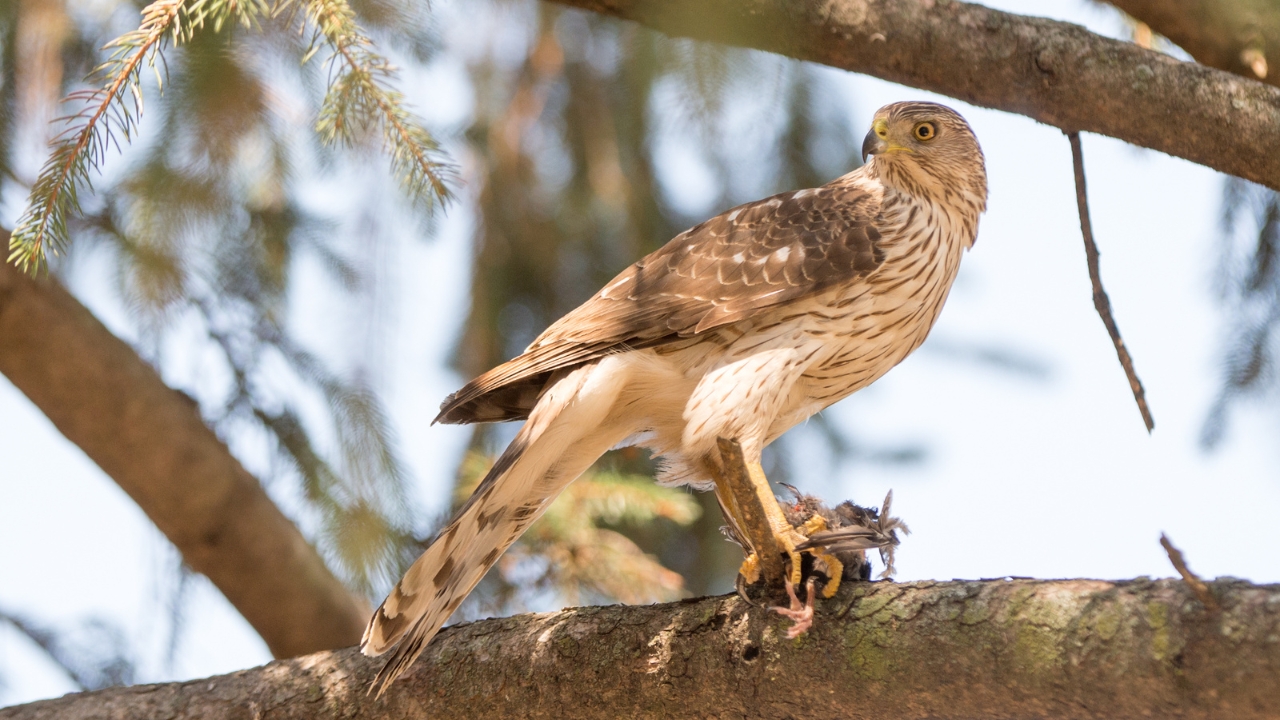
Cooper’s hawks are built for suburban ambush. They use trees, fences, and hedges as cover, then accelerate hard through tight spaces to grab prey. If you run bird feeders, you have probably noticed sudden explosions of panic—songbirds scattering at once. That is often a Cooper’s hawk working the area.
The surprise is how close they hunt to people. These hawks will sweep through a backyard like it is a natural corridor, then perch calmly on a branch ten yards from your window. They are not doing anything “wrong.” They are taking advantage of concentrated prey. Suburbs concentrate birds, and birds attract hawks. If you keep small pets outside, especially rabbits or small dogs, you stay mindful during peak hunting times. You cannot remove predators from the system without consequences. You can control where you place food and how exposed you make prey.
Norway rat (Rattus norvegicus)
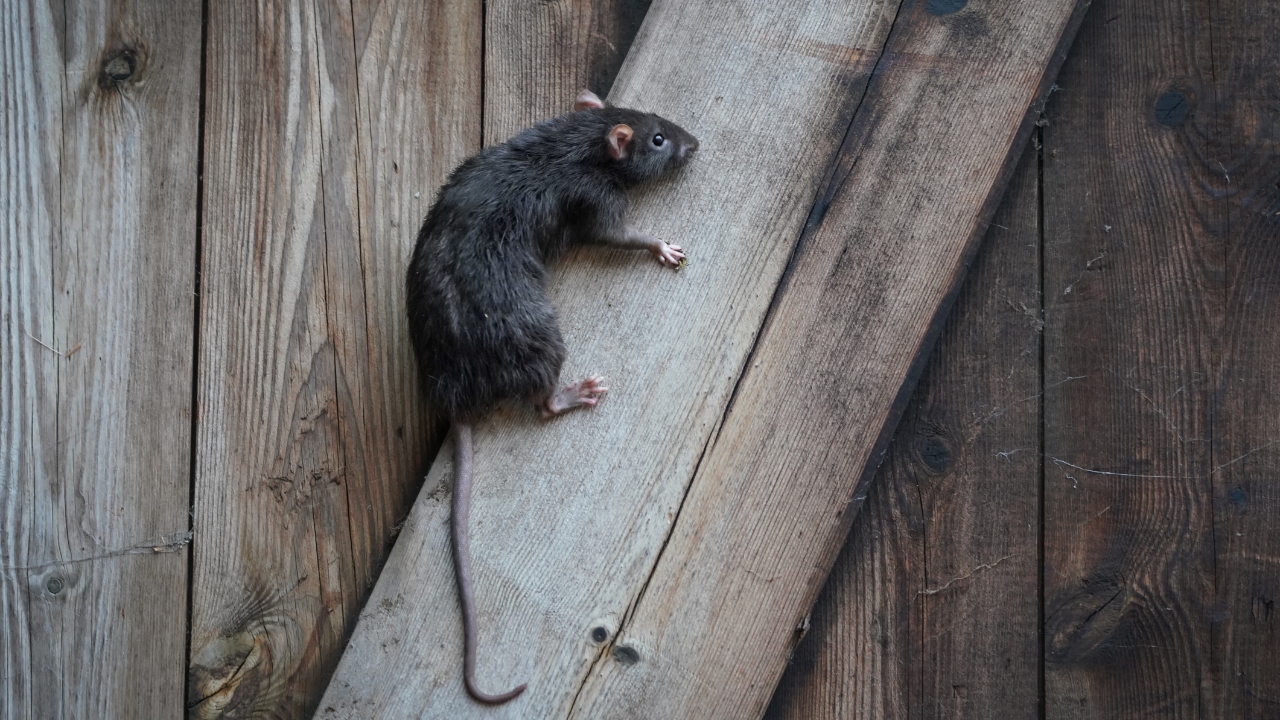
Rats are the unglamorous truth behind a lot of suburban “wildlife” activity. Where you have birdseed, pet food, compost, fallen fruit, and unsecured trash, you can build a rat problem without realizing it. They live under sheds, inside retaining walls, in crawlspaces, and along overgrown fence lines.
What catches you off guard is how quickly rats scale up once they find steady food. You may think you are seeing a “few” around dusk, then you notice burrows, gnawed corners, and droppings in places you rarely check. Rats also pull in predators—owls, foxes, coyotes—so a rodent issue can quietly become a wildlife issue across the whole neighborhood. If you want fewer surprises, you start with the basics: tighten up feed storage, clean spills, seal entry points, and stop making your yard an all-you-can-eat line.
Beaver (Castor canadensis)

Beavers do not need remote wilderness to cause big changes. If your suburb has creeks, drainage canals, or pond systems, beavers can move in and start reshaping water flow fast. They cut ornamental trees, plug culverts, and build dams that raise water levels in places you never expected to flood.
The surprise is how quickly their work shows up. One weekend you have normal drainage, the next you have standing water on a trail or a backed-up ditch near roads. Beavers are not being destructive for entertainment; they are doing what they do to create stable water. In a suburban setting, that can collide with infrastructure. You will also see the sign—freshly gnawed stumps, peeled sticks, and muddy slides into the water. If you value your trees and your drainage, you take beaver presence seriously early, before the water changes get expensive.
River otter (Lontra canadensis)

River otters are one of those animals that make people do a double take because they feel “too wild” for a neighborhood. In reality, if you have clean waterways and connected ponds, otters can travel right through suburb corridors. They hunt fish, frogs, and crayfish, and they use shoreline cover to stay out of sight.
The surprise comes when they hit stocked ponds or backyard fish setups. Otters are efficient, and they can wipe out fish in a short window if they find an easy source. You might find fish remains near banks, muddy slides, or tracks that look like someone dragged a wet rope across the edge. They also move in groups at times, which makes the activity feel sudden. If you live near water, you do not assume the only “wildlife” is ducks. Otters can be close, unseen, and very effective.
Like The Avid Outdoorsman’s content? Subscribe to our newsletter so you never miss an article.
Here’s more from us: