Photo credit: W14A/Shutterstock.com
Military firearms stick in your head for a reason. Some earned that place because they changed warfare. Some built a reputation through reliability, hard service, and the kind of field history that keeps getting retold long after the wars are over. And some simply have that look and feel that makes you stop and pay attention, even if you are seeing one behind glass instead of slung over a shoulder. If you spend enough time around old service rifles, pistols, and subguns, you start to understand why certain models keep pulling people back in.
What makes these guns memorable is not only rarity or collector value. It is the mix of design, history, and real-world use. These are the firearms people read about, hunt down at shows, and think about owning even when they know prices have gone through the roof. If you have ever caught yourself staring too long at an old rack of military surplus, these are the kinds of guns you probably already understand.
M1 Garand

The M1 Garand stays on people’s minds because it still feels like a real fighting rifle, not a museum piece that lost all relevance the moment the war ended. It gave American infantry a major edge in World War II with its semi-automatic action at a time when many other armies were still leaning on bolt guns. That alone would have secured its place, but the Garand also earned a reputation for strength, reliability, and real battlefield usefulness.
When you handle one, you can see why people stay hooked on it. It has weight, balance, and a mechanical feel that makes it memorable the first time you run the action. The en bloc clip system is old-school, but it is part of the charm. For a lot of shooters, the Garand is not only historic. It is one of the few military rifles that still feels deeply satisfying on the range today.
M1 Carbine
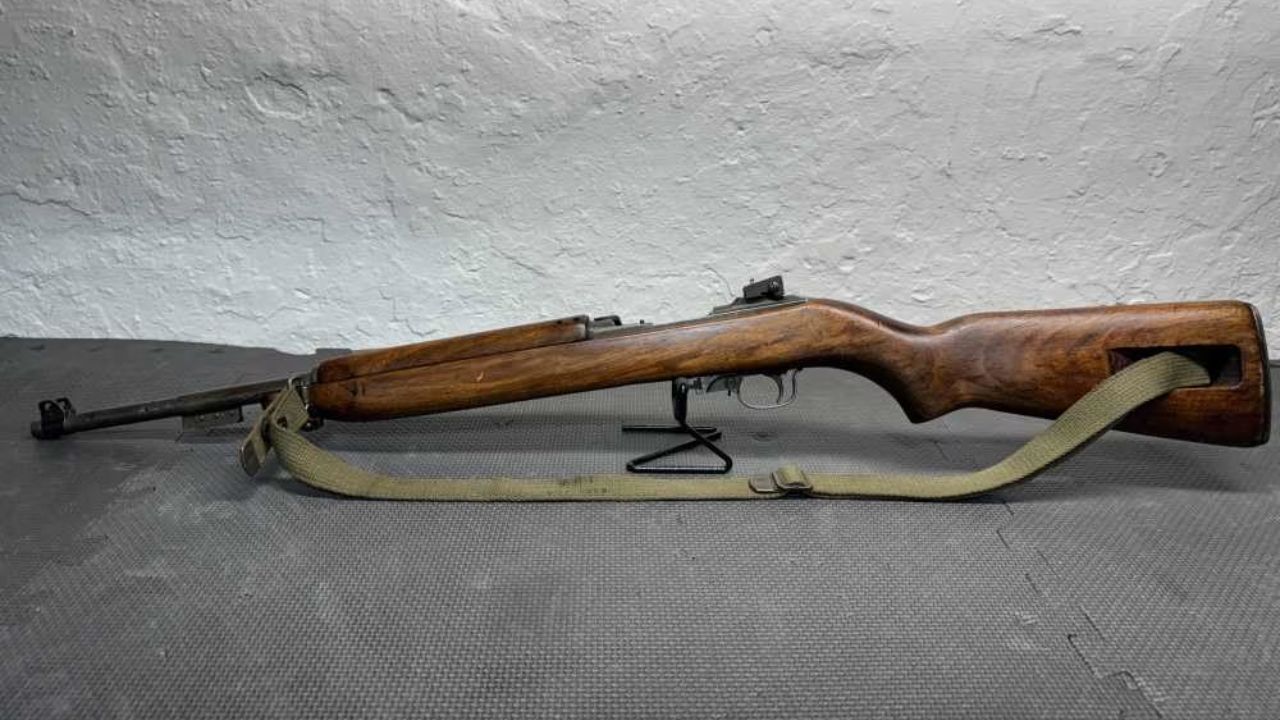
The M1 Carbine keeps a loyal following because it sits in that unusual middle ground between full-size battle rifle and something handier. It was built to give support troops, officers, and others a lighter shoulder-fired weapon than the Garand, and it did that job well. It is compact, fast to the shoulder, and easier to carry than many military long guns of its era. That practical design still makes sense when you pick one up.
A lot of enthusiasts keep thinking about the M1 Carbine because it is approachable in a way many classic service rifles are not. It does not feel as heavy or punishing, and it has a clean, compact profile that makes it stand out. Add in its World War II, Korea, and broader Cold War history, and you end up with a rifle that feels tied to real service without being cumbersome or overly complicated.
M1903 Springfield
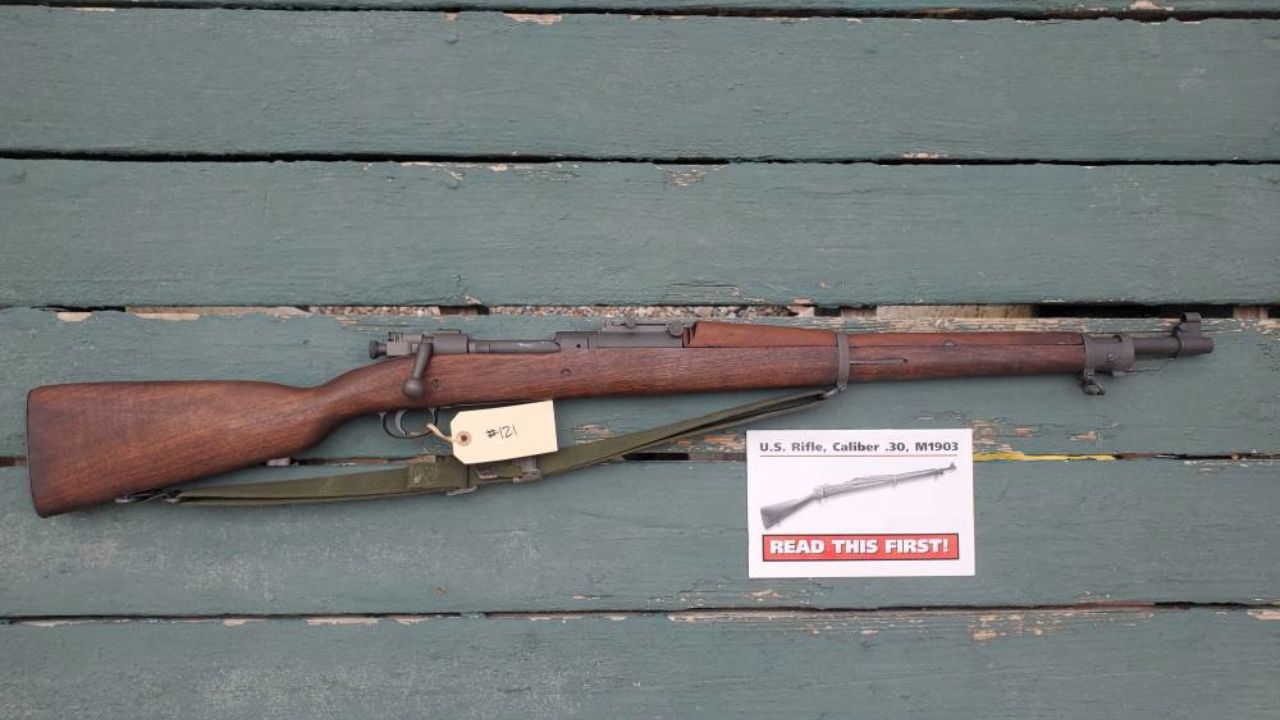
The M1903 Springfield holds attention because it represents the high point of the American military bolt-action rifle before semi-autos changed everything. It was accurate, strong, and trusted in both World Wars, even after newer designs started to take over. The action is smooth, the sights are well regarded for the era, and the rifle has the kind of solid, serious feel that makes older shooters respect it immediately.
You do not have to be a collector to understand the pull. The M1903 has clean lines, excellent balance for a full-length military rifle, and a reputation for accuracy that still gets talked about today. It also carries a lot of weight historically, both as a standard infantry arm and as the basis for sniper variants. For many enthusiasts, it is one of those rifles that keeps showing up in the back of your mind.
Karabiner 98k

The Karabiner 98k remains one of the most talked-about military bolt guns because it is tied so closely to the Mauser system at its peak. It served as Germany’s standard service rifle in World War II, and even people who do not collect military firearms usually know the shape of it right away. The action is controlled, strong, and influential enough that countless sporting rifles owe something to its design.
Part of the obsession is mechanical respect. The 98k feels purposeful, with a bolt action that helped define what a serious military rifle looked like in its time. It also carries enormous historical weight, which keeps collectors and historians circling back to it. Even stripped of the politics and the era around it, the rifle itself still draws attention because it is one of the clearest examples of rugged military bolt-gun engineering.
Lee-Enfield No. 4 Mk I

The Lee-Enfield No. 4 Mk I stays stuck in people’s minds because it combines speed and battle-proven service in a way most bolt-action rifles do not. British and Commonwealth troops used Lee-Enfields through multiple wars, and the rifle developed a reputation for fast operation in trained hands. The short bolt throw and 10-round magazine helped set it apart when compared with many of its military contemporaries.
If you spend any time around old service rifles, you hear the same praise over and over: smooth cycling, good practical accuracy, and a fighting rifle feel that still holds up. The No. 4 version especially gets attention because of its cleaner sight setup and wartime role. It may not have the same American nostalgia as the Garand, but for many enthusiasts, the Lee-Enfield scratches a very specific itch that never really goes away.
M1911A1

The M1911A1 keeps military handgun fans locked in because it is more than a sidearm with a long service record. It is one of the few pistols that became part of the identity of American military history. Adopted in 1911 and carried in updated form through decades of conflict, it earned its place through durability, familiarity, and a shootable design that still feels relevant long after its official front-line prime.
What keeps it in your head is how natural it still feels in the hand. The grip angle, trigger, and all-steel construction give it a character many modern pistols do not try to copy, even when they borrow from it. There is also the history factor. When you think about military sidearms that actually mattered across generations, the M1911A1 stays near the top. For many people, it is the classic service pistol they still measure others against.
Luger P08

The Luger P08 has the kind of profile that makes it instantly recognizable, even to people who are not deep into old military pistols. That alone keeps it living rent-free in a lot of collectors’ heads. But the real draw is not only the shape. It is the strange, precise toggle-lock action, the grip angle, and the way the pistol feels like it came out of a very specific moment in firearm design.
You think about the Luger because there is nothing quite like it. It is elegant in a way most service pistols are not, yet it still carries real military history from the early 20th century through both world wars in German service. It is not the most practical old pistol by modern standards, and it can be expensive to own well. None of that hurts its hold on people. If anything, it adds to it.
Walther P38

The Walther P38 stays in the conversation because it marked a real step forward in military sidearm design. It brought a double-action/single-action system into major wartime use and helped push service pistols toward a format that influenced countless later handguns. While it served alongside the Luger in World War II, it feels more modern in concept, and that alone makes it stand out when you compare the two.
For enthusiasts, the P38 has that rare combination of historic importance and interesting mechanics. It is not only a relic people admire for wartime markings. It is a pistol you can look at and clearly see design ideas that lived on well past its era. The open-top slide, the decocking feature, and the overall layout make it easy to appreciate as more than a collectible. It holds attention because it helped point service pistols forward.
Thompson Submachine Gun

The Thompson is one of those guns people think about even if they never have a chance to shoot one. The heavy receiver, the wood furniture, and the unmistakable outline made it one of the most recognizable American military firearms of the 20th century. While it is tied in many minds to gangland imagery, its real military history in World War II and beyond is what keeps serious enthusiasts coming back to it.
There is also the physical presence of the gun itself. A Thompson looks and feels substantial in a way many later subguns do not. It is heavy, mechanical, and built with a kind of old-world steel-and-wood confidence that stands out immediately. Whether you are looking at an M1928 or the more streamlined M1 and M1A1 versions, the Thompson stays memorable because it feels like a serious artifact of a hard, very specific era.
MP40
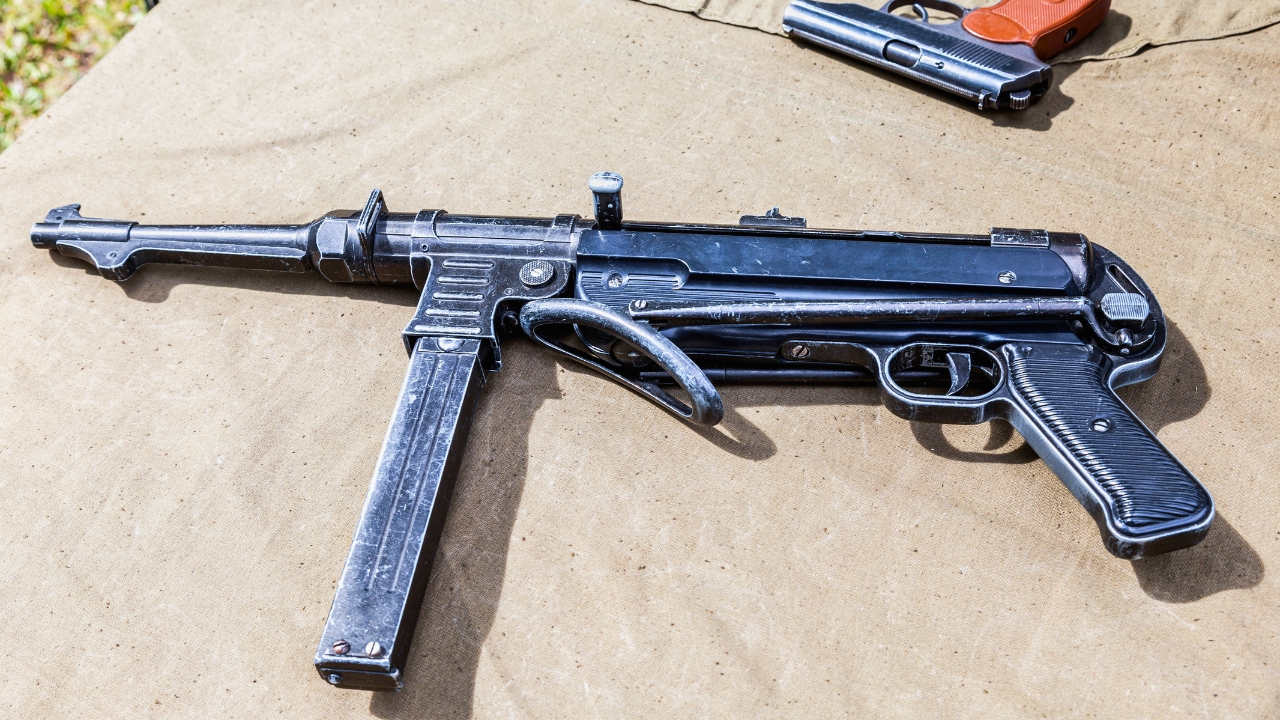
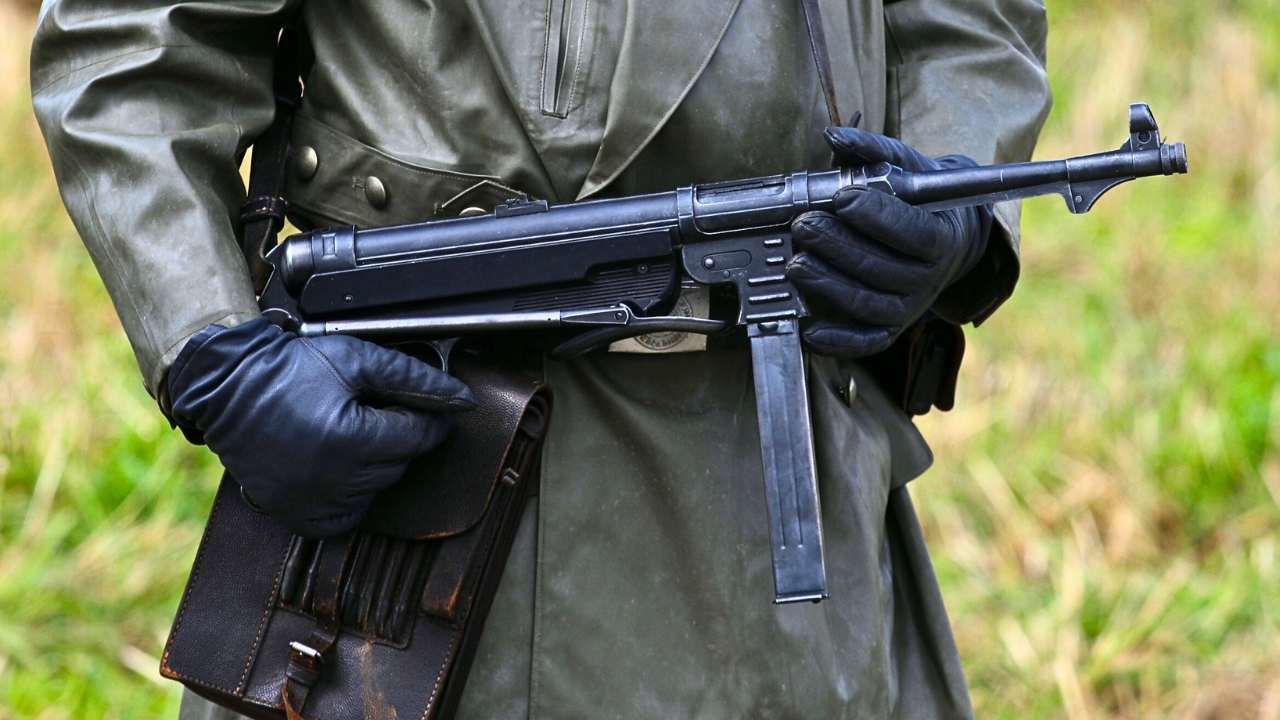
The MP40 keeps drawing military firearm fans because it is one of the clearest examples of a practical wartime submachine gun done right for its time. It was not ornate, and it was not overbuilt in the old sense. It was compact, functional, and designed around mass wartime production in a way that showed where infantry weapons were heading. That mix of utility and unmistakable silhouette gives it lasting appeal.
A lot of enthusiasts keep thinking about the MP40 because it feels like a transition gun. It still has real metal-and-wood-era character, but it points toward the simpler stamped-gun future that would dominate later. The folding stock, manageable size, and wartime role all add to its reputation. Even people who never plan to own one tend to remember it, because few military firearms capture their place in design history as clearly as the MP40.
Like The Avid Outdoorsman’s content? Subscribe to our newsletter so you never miss an article.
Here’s more from us: