Photo credit: twogunjay/GunBroker
You can make a strong case that 9mm wins on cost, recoil, and capacity, but that is not the whole story. The .40 S&W has hung around because it gives you a little more bullet weight and a little more edge in some full-size and mid-size pistols without jumping all the way into the bulk and recoil of .45 ACP. That does not make it better for everyone. It does mean there are handguns that seem to make more sense in .40 than people like to admit. In the right frame, with the right grip shape, recoil system, and purpose, a .40 can feel fast, authoritative, and easier to trust than the internet would have you believe. The pistols below are the ones that keep proving the cartridge still has real life in it.
Glock 22

The Glock 22 has been one of the clearest examples of a pistol that made .40 feel mainstream instead of niche. Glock itself has described it as the most popular police service pistol in the United States, and that matters because duty use is where a cartridge either proves practical or it gets exposed fast. In a full-size frame, the .40 has room to breathe, and the G22 gives you enough grip, sight radius, and weight to keep the round manageable.
What makes it stand out over many 9mm service pistols is not that it magically shoots softer. It is that the platform has enough maturity and enough size that the extra snap feels worth it to shooters who want a little more shove on target. If you already like full-size Glocks, the 22 often feels like the .40 that makes the strongest argument for staying with the cartridge.
Glock 23

The Glock 23 is where the .40 starts making a more interesting case for people who want a smaller package without dropping into tiny-gun territory. Glock notes that the G23 combines compact dimensions for open or concealed carry and has repeatedly demonstrated durability in hard use. That is the whole draw here. You get a pistol that is easier to carry than the G22 while still keeping enough grip and barrel to avoid feeling like a handful for no reason.
This is one of the few compact .40s that built a real track record instead of a short-lived fan base. In 9mm, the same size gun is easier on the hands, sure, but the G23 keeps enough controllability that many experienced shooters still find the trade worth making. If you like compact pistols that still feel duty-capable, this one explains why .40 refused to disappear.
SIG Sauer P229

The SIG P229 has long been one of the strongest arguments for .40 because the gun was always well suited to service calibers that hit harder than 9mm. SIG states that the P229 is available in .40 S&W and has been carried by thousands of law enforcement professionals, which tells you exactly where its reputation was built. Its metal frame, solid feel, and controlled slide movement help the cartridge feel planted instead of abrupt.
That is why the P229 often comes up when shooters talk about .40 done right. In lighter polymer pistols, the round can feel sharp and busy. In the P229, it usually feels more settled. You still know you are shooting a .40, but the gun’s weight and shape take some of the edge off and turn that energy into something more usable. If you want a .40 that feels like it belongs in a serious fighting pistol, this is one of the best examples.
Heckler & Koch USP .40

The HK USP has always had a reputation for being built to keep going when conditions get ugly, and HK still describes it as accurate and ultra-reliable, with an internal recoil buffering system that helps it keep shooting accurately over long use. That matters a lot in .40, because recoil control and long-term durability are exactly where weaker pistol designs start to show their limits. The USP was built around the .40 S&W early on, and that shows.
If you have ever handled one, you know the USP does not feel like it was reluctantly adapted to the cartridge. It feels like the gun and round make sense together. The frame is not small, the slide is not dainty, and the recoil system helps smooth out what can feel choppy in other pistols. If you want a .40 that feels purpose-built rather than compromised, the USP is one of the clearest cases.
Beretta PX4 Storm

The PX4 Storm does not always get the attention it deserves, but it is one of the more interesting .40 pistols because Beretta’s rotating-barrel system gives it a different recoil feel than a lot of striker-fired guns. Beretta says the PX4 was designed to meet stringent military standards and reports endurance well past 150,000 rounds without part breakage. Whether you buy every marketing line or not, the platform has a real durability reputation behind it.
Where it outshines a lot of ordinary 9mm pistols is in the way it manages the cartridge. The recoil impulse often feels less abrupt than you would expect from a .40, and that gives the gun a loyal following among shooters who never warmed up to snappier polymer options. If you want a pistol that makes .40 feel smoother than the caliber’s reputation suggests, the PX4 is hard to ignore.
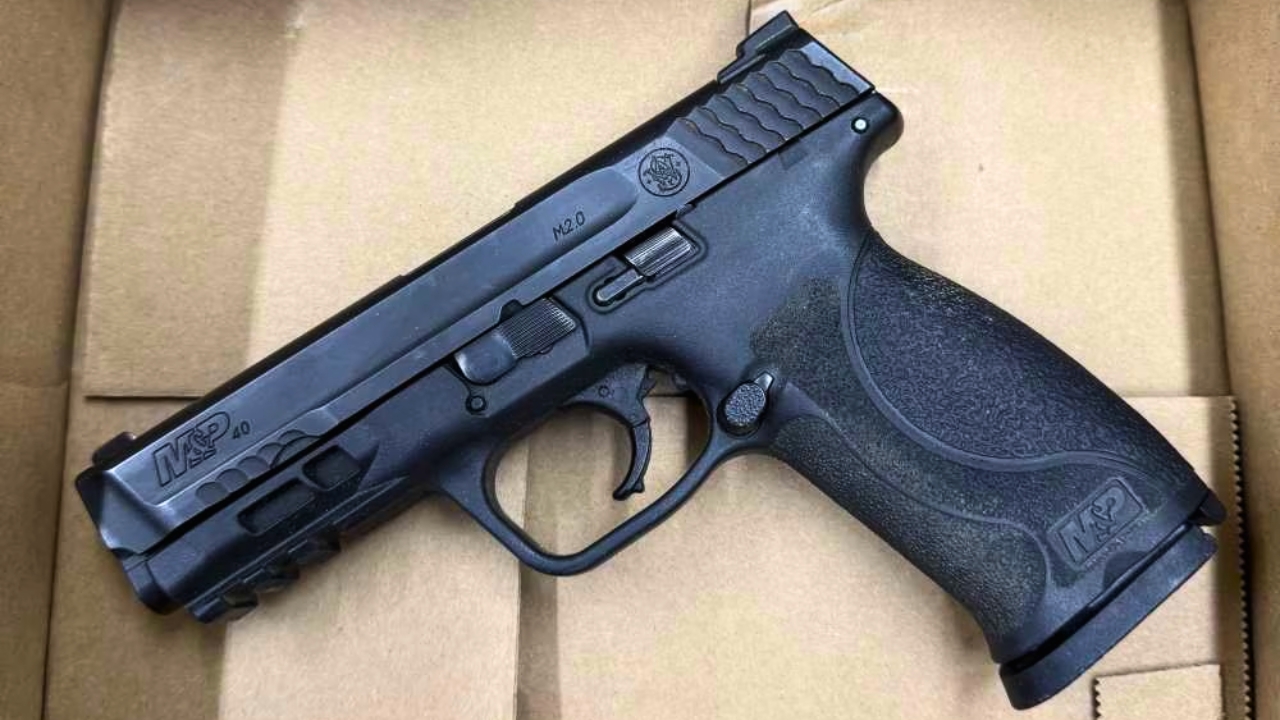
Smith & Wesson M&P40 M2.0

The M&P40 M2.0 is one of those pistols that reminds you .40 works best when the gun gives you real control. Smith & Wesson highlights a high grip-to-bore axis relationship that reduces muzzle rise and allows faster aim recovery, and that kind of design claim matters more in .40 than it does in softer-shooting 9mm. When a pistol helps you stay flatter in recoil, the cartridge becomes easier to appreciate.
The M&P line has always appealed to shooters who want a duty-style grip and a practical, workmanlike feel. In .40, that layout pays off. You still get a lively round, but the ergonomics and updated M2.0 setup help keep the gun from feeling jumpy or awkward. If you are the kind of shooter who finds some .40 pistols annoying but still likes the cartridge on paper, the M&P40 is one of the stronger chances to change your mind.
Springfield XD 4-inch Service Model .40

The 4-inch Springfield XD in .40 has always made sense for shooters who want a full-handed grip and straightforward controls in a striker-fired gun. Springfield says the XD 4-inch .40 offers grip texturing for recoil management in rapid fire, plus features like a loaded chamber indicator and a grip angle built for comfort and control. That matters because .40 punishes poor ergonomics faster than 9mm does.
What keeps this pistol relevant is that it gives the cartridge a stable place to work. The size is large enough to avoid the worst habits of compact .40s, but still practical enough for real carry or home use. Some shooters prefer 9mm in striker guns because it is easier to run fast, and that is fair. But the XD service-size .40 shows that with enough grip and enough gun, the older round still brings something useful to the table.
FN FNS-40

The FN FNS-40 never got the same broad public spotlight as some of its competitors, but it deserved more attention than it got. FN describes it as a striker-fired pistol chambered in .40 S&W with fully ambidextrous controls, interchangeable backstraps, and a stainless slide and barrel. That kind of layout gives you a practical, duty-ready gun with the sort of flexibility many shooters want in a serious sidearm.
In .40, the FNS-40 makes a good case for itself because it feels like a service pistol first, not a trendy range toy. The controls are useful, the frame shape is workable, and the gun has enough size to keep the cartridge from feeling wild. It may not be the first name most people bring up in this caliber, but that is part of why it still stands out. It is an underrated .40 that holds its own on merit.
Ruger SR40

The Ruger SR40 is one of those discontinued pistols that still earns respect because it gave shooters a slim, practical .40 without feeling cheap or half-finished. Ruger’s own product history places its production start in 2010, and the company’s launch announcement highlighted a 4.1-inch barrel, adjustable three-dot sights, an accessory rail, and ambidextrous manual safety controls. That gave buyers a modern package in a caliber many of them still trusted.
What made the SR40 work was balance. It was trim enough in the hand to feel more approachable than some thicker .40s, but still large enough to keep the recoil from becoming obnoxious. A lot of 9mm pistols are easier to recommend to new shooters, but the SR40 made .40 feel more reasonable than many people expected. If you like practical, mid-size handguns that do not need fanfare to make sense, this one still has a solid case.
Smith & Wesson 4006
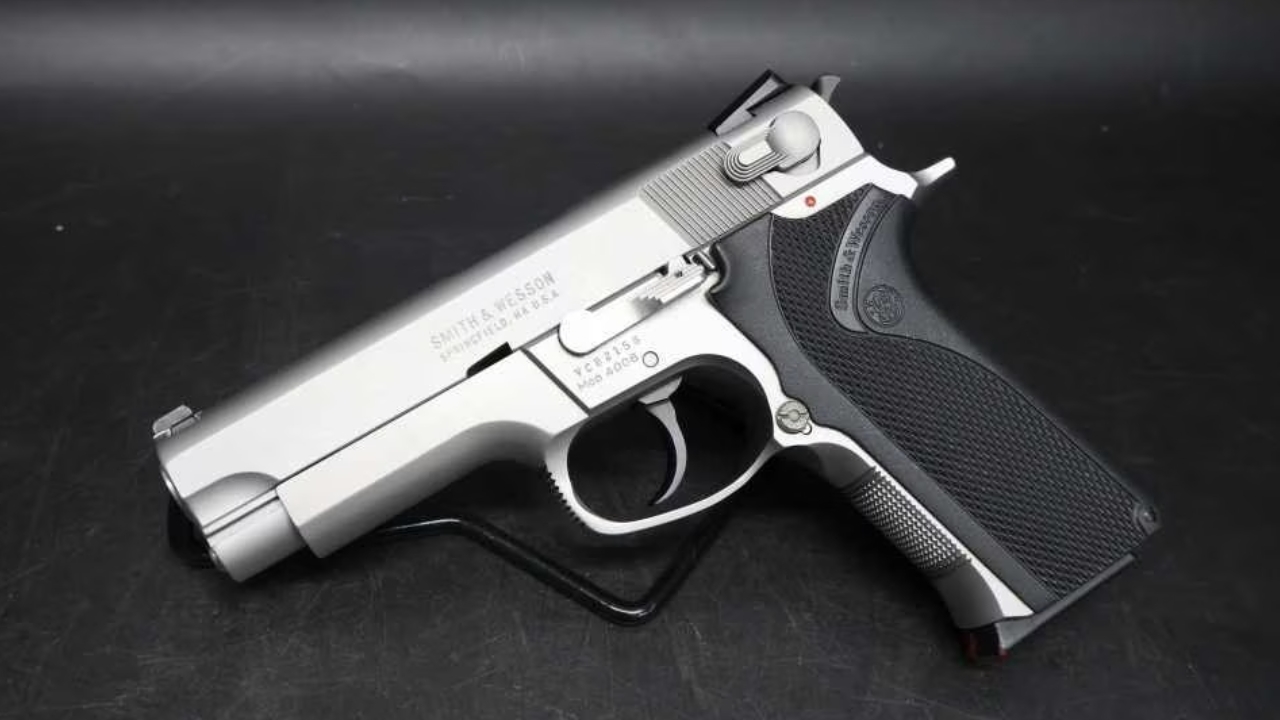
The Smith & Wesson 4006 deserves a spot here because it was there when .40 was new and serious agencies were still figuring out what the cartridge could be. The 4006 was introduced in 1990 alongside the .40 S&W cartridge and built as a third-generation all-stainless service pistol. That heavy, duty-grade construction is a big reason the gun still gets talked about with respect. It was made to handle the round, not merely tolerate it.
Compared with many 9mm pistols, the 4006 feels old-school and heavy, but that is exactly why it can make .40 seem more convincing. The weight helps settle the recoil, the gun feels planted, and the cartridge comes across as firm rather than frantic. You are not carrying this because it is light or fashionable. You carry it because it feels like a serious service pistol built for a serious service round.
Browning Hi-Power .40

The Browning Hi-Power in .40 is an interesting one because it took a legendary 9mm design and adapted it to a tougher, more demanding cartridge. Browning notes that the .40 S&W version was introduced in 1994, and historical references on the design point out that later frame changes were made to better handle the pressures of the new round. That alone tells you this was not a lazy caliber swap.
What makes the .40 Hi-Power stand out is the feel. You still get the familiar pointing qualities that made the platform famous, but with a heavier-hitting chambering that gives the gun a different personality. It is not the softest .40 ever made, and it is not the easiest one to find, but it remains one of the more memorable examples of a classic pistol proving it could carry more than its original identity.
Like The Avid Outdoorsman’s content? Subscribe to our newsletter so you never miss an article.
Here’s more from us: