Photo credit: All Outdoors/YouTube
Lever guns keep sticking around because they solve real hunting problems. In thick timber, a short, fast rifle carries easy and comes up quick. In a saddle scabbard or behind a truck seat, a lever gun rides flat and stays out of the way. And when you’re hunting where shots happen fast and close, a second shot with a lever can be as natural as working a pump shotgun.
In 2025, you’ve also got better options than ever. Classic .30-30s are still doing their job, big-bore thumpers keep filling freezers, and modern lever designs let you run pointed bullets and longer-range cartridges without giving up the lever feel. The best part is none of this requires chasing rare collector pieces. These are the lever guns hunters keep returning to because they carry well, hit hard, and keep working season after season.
Marlin 336 Classic (.30-30)

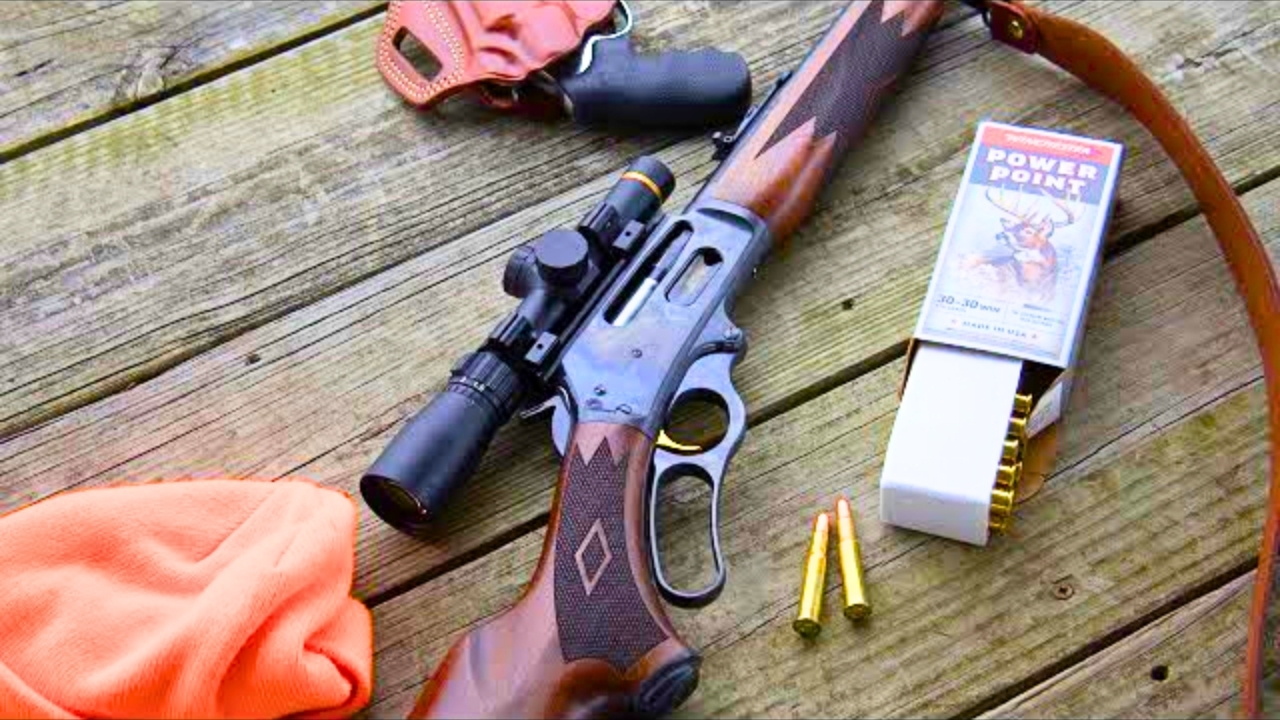
If you hunt whitetails in hardwoods, the Marlin 336 pattern is hard to beat. A .30-30 in a handy lever rifle points fast, swings smooth, and puts venison down without drama. The side-eject design also makes scope mounting straightforward, which matters when your eyes aren’t getting any younger.
Hunters keep coming back to the 336 because it balances well and feeds reliably when it’s clean and when it’s dusty. With modern .30-30 loads, you get better bullets than the old days, and that shows on quartering shots through ribs. It’s still a woods rifle, not a canyon rifle, but that’s the point. When the shot happens inside 150 yards and your heart is thumping, the 336 feels like it was built for that moment.
Winchester Model 94 (.30-30)

The Model 94 is the lever gun that taught generations what a deer rifle feels like. It’s light in the hands, quick to shoulder, and easy to carry all day without feeling like you packed a fence post through the timber. When people say “lever gun,” this is often what they picture.
The reason hunters keep returning to the 94 is how naturally it handles in close cover. A .30-30 out of a 94 doesn’t need perfect conditions to work. Put the bullet through the lungs and the job gets done. The top-eject vs. angle-eject details matter for optics, but plenty of hunters still run irons or a receiver sight and never look back. It’s a rifle that rewards getting close, staying quiet, and shooting clean when the window opens.
Henry Side Gate (.30-30, .45-70)

Henry’s side gate models won over a lot of hunters who wanted traditional loading without giving up Henry’s smooth action. Being able to top off through the gate is handy in the field, especially if you’re bouncing between stands, drives, and quick walks through thick stuff.
What keeps this rifle in rotation is the way it feels in real hunting use. The action is slick, the rifles tend to be accurate enough for practical ranges, and the fit and finish hold up to hard seasons. In .30-30 it’s a steady deer rifle. In .45-70 it’s a close-range hammer for bear country or big hogs. It’s not the lightest lever gun you’ll carry, but it carries like a serious tool. When you want a modern-built lever that still feels traditional, this one scratches the itch.
Henry All-Weather (.30-30, .45-70, .357)

A lever gun that lives behind a truck seat gets rained on, scratched, and forgotten until it matters. That’s where the All-Weather models make sense. The finish and furniture are built around bad conditions—wet brush, snow, mud, and the kind of hunts where everything you own ends up damp.
Hunters keep coming back to these because they don’t baby them. In .30-30, it’s a dependable woods deer setup you can carry in nasty weather without worry. In .45-70, it becomes a rough-country rifle that you can wipe down and keep moving. In .357, it’s a handy option for close-range deer in the right states and a great small-property hog rifle. The All-Weather doesn’t magically make you tougher, but it does take one stress off your plate when the forecast looks ugly.
Marlin 1895 Trapper (.45-70)

Short-barreled .45-70 lever guns exist for a reason: thick cover, steep country, and big animals that don’t give you extra time. The 1895 Trapper format carries easy, comes out of the scabbard clean, and hits like a sledge at practical distances.
What keeps hunters coming back is how it performs in real moments, not on paper. With the right load, you get deep penetration and straight tracking, even when the angle isn’t perfect. Recoil is real in a light .45-70, so you earn it, but it’s manageable with good technique and a pad. This is the rifle you grab when you want a lever gun that feels compact yet serious. For bear bait sites, brushy elk timber, or hogs in palmettos, the Trapper setup is hard to replace once you’ve carried one.
Marlin 1895 SBL (.45-70)
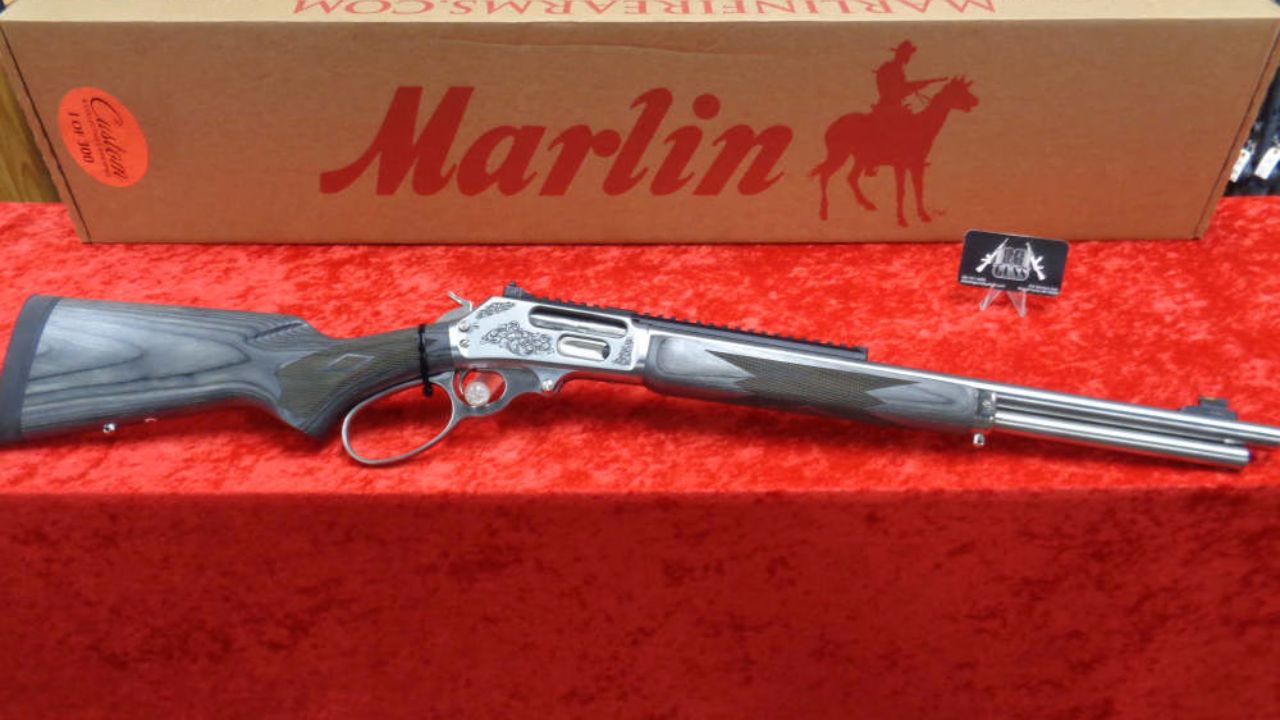
The 1895 SBL has become a modern classic because it blends old-school power with practical features hunters actually use. The sights are useful, the finish holds up, and the rifle feels like it’s meant to ride hard and still shoot straight when the moment shows up.
Hunters keep coming back to the SBL because it’s a confident rifle in ugly places. It’s heavy enough to tame some recoil compared to shorter carbines, and that weight also helps you stay steady for a careful shot. In thick timber, you’re rarely shooting far, but you may be shooting through brush gaps, odd angles, and fast-moving opportunities. A .45-70 with a good bullet solves problems quickly. The SBL isn’t cheap, but it’s the kind of lever gun that ends up being carried for years because it does what it’s supposed to do.
Henry X Model (.45-70, .30-30, .357, 9mm and more)

The Henry X line gets picked because it’s practical: shorter, handier, and set up for modern accessories without turning into a science project. Many hunters want a lever gun that can wear a light, an optic, or a suppressor-ready setup and still feel like a lever gun.
The reason it keeps coming back into camps is versatility. In .45-70, it’s a thick-country big-game tool. In .30-30, it’s a slick woods deer rifle with modern mounting options. In .357, it’s a low-recoil brush gun that’s also fun to practice with, which usually means you shoot it better. The action is smooth, the rifles run, and the format makes sense for hunters who bounce between stands and tracking. When you want one lever gun that fits the old school vibe but works with modern gear, the X Model keeps getting the nod.
Marlin 1894 Classic (.357 Mag, .44 Mag)

Pistol-caliber lever guns are back in a big way, and the 1894 pattern is a big reason why. In the woods, a .357 or .44 lever gun is fast, light, and accurate enough for realistic distances. It also makes a lot of sense if you like pairing a rifle and revolver in the same caliber.
Hunters keep coming back because these rifles carry like a .22 but hit far harder than you’d think with the right load. A .357 with good hunting ammo can do clean work on deer at close ranges where legal. A .44 gives you more bullet weight and a wider comfort zone on angles. The 1894 format is also quick to cycle and easy to keep on target for follow-up shots. If your hunting is thick cover, short windows, and shots that happen fast, a pistol-caliber 1894 is a smart kind of fun.
Winchester Model 92 (pistol calibers)

The Model 92 is a slick, compact lever action that feels almost alive in your hands. In pistol calibers, it carries easy, cycles fast, and makes a great brush companion when you’re hunting from the ground and moving a lot.
Hunters keep coming back because the format is practical. A .357 or .44 in a 92 gives you quick handling and enough punch for close-range deer and hogs with the right ammo. The rifle is also a joy to practice with, and practice shows up in the field. You’re more likely to take the rifle out when it’s fun to shoot, and you’re more likely to make good hits when you’ve shot it a lot. The 92 isn’t built for long-range work, and it doesn’t need to be. It’s a close-range lever gun that’s easy to live with.
Rossi R92

The Rossi R92 gets bought for one big reason: it gets you into the 92-style lever gun world without draining your wallet. Plenty of hunters run them hard, tune them lightly if they feel like it, and then carry them every season because they’re handy and they work.
What keeps people coming back is value that holds up in the woods. In .357, it’s a light, fast rifle for close-range deer in the right places and a great small-property hog option. In .44, it steps up in bullet weight and authority while staying compact. The finish and action won’t feel like a high-end rifle out of the box, but many examples smooth out with use and a little care. If you want a lever gun you won’t worry about scratching, and you want it to still put meat on the ground, the R92 is a repeat buyer.
Henry Big Boy Steel (.357, .44, .45 Colt)

The Big Boy Steel is the lever gun a lot of hunters end up keeping because it’s solid, accurate, and pleasant to shoot. The weight helps with recoil, and that makes it easier to shoot well in quick strings, especially with .44 Mag loads that can feel snappy in lighter carbines.
Hunters keep coming back because it’s a reliable work rifle for close-range hunting with a side of fun. In .357 it’s easy to shoot a lot, and that usually means better field performance. In .44, it becomes a legitimate short-range hammer for hogs and deer with the right bullet. .45 Colt can be excellent too with strong hunting loads in a rifle. The Big Boy Steel carries a bit heavier than some, but it also feels steady in the hands when you’re shooting off sticks or braced against a tree. It’s a lever gun that invites practice.
Browning BLR (modern rifle cartridges)

The BLR is for the hunter who wants lever handling but doesn’t want to give up pointed bullets and modern cartridges. The box magazine lets you run spitzers safely, and that opens up a whole different world of ballistic performance compared to traditional tube-fed designs.
Hunters keep coming back because the BLR can do lever gun things in places lever guns didn’t always belong. It can stretch shots farther, carry more energy downrange, and still handle well in the woods. You get a strong, fast action and often very good accuracy for a factory hunting rifle. The trigger feel varies, but the overall package is proven. If you hunt big country one week and thick timber the next, the BLR gives you flexibility without feeling like you switched to a completely different style of rifle. It’s a lever gun that behaves like a modern hunting rifle.
Henry Long Ranger

The Long Ranger fills a niche a lot of hunters didn’t realize they wanted: a lever gun that feeds like a bolt gun. The detachable magazine means pointed bullets are on the menu, and that makes cartridges like .243, .308, and 6.5 Creedmoor far more useful at distance than traditional tube-fed lever calibers.
Hunters keep coming back because it’s a real field rifle, not a novelty. It carries well, balances nicely, and gives you lever speed with modern ballistics. If you like the lever feel but you hunt open ground, this is one of the easiest ways to bridge that gap without building a one-off rifle. It’s also a good choice for hunters who want one rifle that can cover deer, antelope, and even elk with the right cartridge and bullet. The Long Ranger isn’t trying to be a cowboy gun. It’s trying to be a practical hunting lever, and it does that job.
Mossberg 464 (.30-30)

The Mossberg 464 has been a steady, working-man .30-30 option for years, and it still shows up because it does what a woods rifle needs to do. It carries light, points fast, and doesn’t demand special treatment. A lever gun like this is meant to be hunted, not admired in a safe.
Hunters keep coming back because .30-30 works, and the 464 gives them a straightforward platform to run it. You get classic handling, practical accuracy, and enough reliability for the kind of hunting where you’re walking ridges, sitting quick stands, and taking shots inside normal woods distances. The finish and feel aren’t boutique, but the rifle fills tags when the shooter does their part. If you want a lever gun you can buy, hunt hard, and not stress over every scratch, the 464 keeps earning a spot in camps that care more about meat than polish.
Savage Model 99 (used market favorite)

Even though it’s not a current-production rifle, the Savage 99 keeps showing up in deer camps because hunters who own one rarely let it go. The rotary magazine design lets you run pointed bullets, and that gave the 99 an edge long before “modern lever gun” was a category. It also tends to balance beautifully.
Hunters keep coming back because the 99 carries like a lever gun but hits and reaches more like a traditional rifle, depending on the chambering. Many of them were built in cartridges that have proven themselves on deer and elk for generations. The feel is different than today’s levers—more classic, more mechanical—and that’s part of the appeal. You do need to be smart when buying used: check function, check bore, and make sure it locks up correctly. If you find a good one, it’s the kind of lever rifle that becomes a lifelong hunting partner.
Like The Avid Outdoorsman’s content? Subscribe to our newsletter so you never miss an article.
Here’s more from us: