Photo credit: Slatan/Shutterstock.com
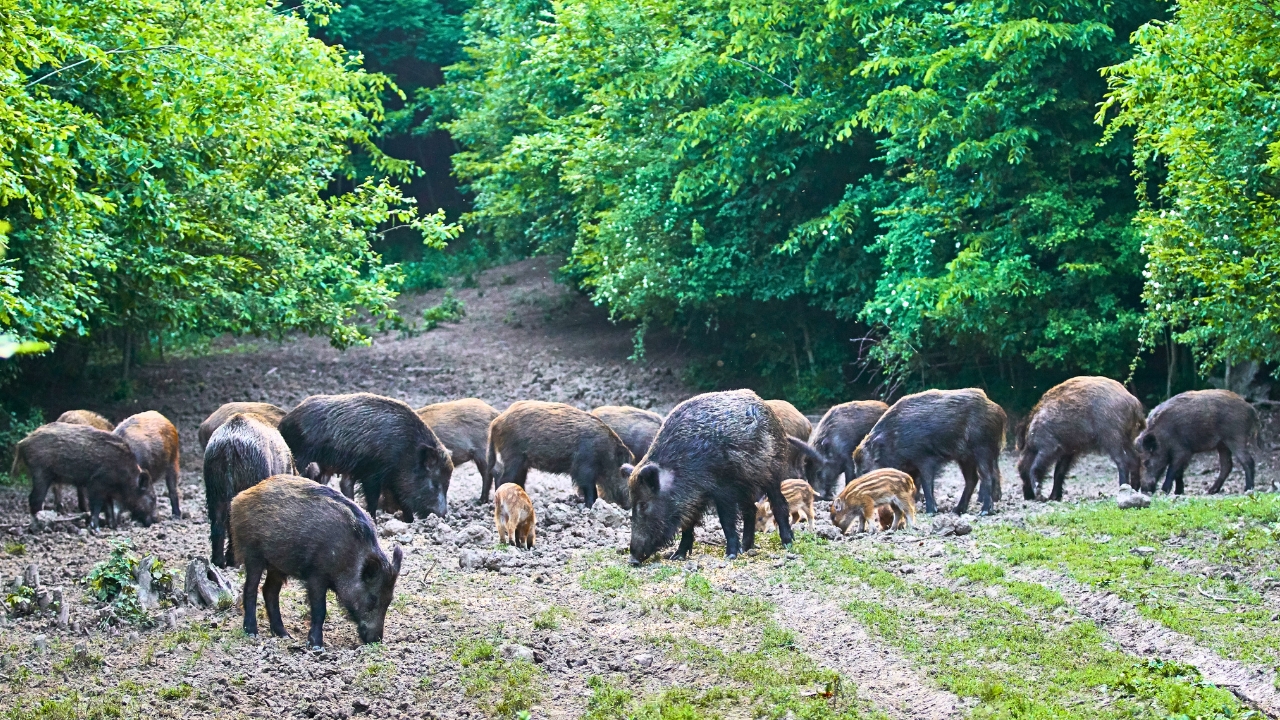
Feral hogs are one of the fastest-spreading invasive mammals in the United States, with populations now reported in at least 35 states and continuing to push into new territory. They’ve expanded from a few southern states decades ago to a near-national presence thanks to high reproductive rates, adaptable habitat use, and human-assisted movements. Their numbers are estimated in the millions nationwide, and they’re causing serious ecological and economic damage while steadily moving into places where they were once rare or absent.
Below are 15 U.S. states where feral hog populations are expanding quickly and where sightings and established populations are increasing, reflecting broad trends in range growth and impact.
Texas

Texas has the largest feral hog population in the country, with an estimated millions of animals spread across nearly all counties. These hogs reproduce rapidly and adapt to diverse landscapes—from coastal plains to brush country to riverside bottomland—making Texas a focal point of ongoing expansion. The state’s sheer size and habitat variety help sustain growing populations that push into new counties each year.
Every range of terrain in Texas seems to support feral hogs, and sightings near suburban edges are becoming more common as hogs seek food and water. Cooler weather and drought can drive more visible movement, which sometimes brings hogs into neighborhoods and agricultural areas that previously saw them less often. This expansion creates challenges for landowners and wildlife managers alike, as hogs continue to grow their foothold across the state.
Oklahoma

Oklahoma has experienced a rapid increase in feral hog numbers and distribution in recent years. Hogs are now found in a majority of counties, especially in southern parts of the state, where they dig up crops, damage pastureland, and compete with native wildlife. The state’s central location and mix of prairie and wooded river breaks provide ideal conditions for expansion.
Oklahoma’s hog population has been estimated at hundreds of thousands to over a million animals, and numbers continue to grow through natural reproduction and movement from neighboring states. Their adaptability to different habitat types—from agricultural fields to creek bottoms—makes controlling their spread difficult without coordinated, sustained efforts.
Louisiana

Louisiana has long hosted abundant feral hogs, but recent surveys indicate that populations are increasing and expanding, particularly in rural parishes with water-rich landscapes and minimal development. Swamps, bottomlands, and timbered ridges all harbor hogs, allowing them to spread into adjacent counties.
The state’s mild winters and plentiful mast crops make it a fertile area for hog reproduction. Combined with human-assisted movement and limited natural predators, hogs continue to push into areas that previously had few or no sightings. Their rooting behavior and large sounders can rapidly degrade crops and sensitive habitats, making Louisiana a hotspot of ongoing expansion.
Georgia

Georgia’s feral hog population has ballooned in recent decades, with reports indicating six-figure counts in many counties. Forested agricultural zones and bottomland hardwoods provide excellent cover and food, encouraging hogs to expand from traditional strongholds into upland regions.
Population growth is driven by high reproductive output and the ability of hogs to thrive in a range of conditions—from pine forests to riverine thickets. Sightings in new counties suggest that hogs continue their spread northward and westward, often following waterways and feed sources that draw them out of their historic range.
Florida

Florida’s feral hog numbers have climbed steadily, with hundreds of thousands of hogs reported in many parts of the state. Abundant wetlands, hammocks, and agricultural land allow hogs to find food year-round, and population pressure is encouraging movement into new central and northern counties.
Seasonal weather events and habitat fragmentation can push hogs into suburban and forest edge areas that were once infrequently used. Their presence in sensitive ecosystems also poses threats to native species and water quality, underlining how rapidly hogs are moving into new parts of the Sunshine State.
South Carolina

South Carolina has seen a marked increase in feral hog sightings and established populations, especially in coastal plain and piedmont regions where food and cover are abundant. These animals have expanded from isolated pockets into a broad distribution through much of the state.
The relative lack of predators, coupled with agricultural food sources and patchwork forests, helps hog populations grow and establish new breeding areas. As they spread, conflicts with farmers and landowners over crop damage and pasture destruction have become more frequent.
Alabama

Alabama has experienced a significant rise in feral hog numbers, particularly in the Black Belt and southern forested regions. Hogs have moved into areas where they were once rare, encouraged by mast crops and cover that allow them to survive winterless southern conditions.
Their expansion is evident in increasing sightings and reports of damage to farmland and hardwood stands. Like other southeastern states, Alabama’s combination of food, cover, and mild winters has allowed hogs to build strong populations and push into new counties quickly.
California

California’s feral hog problem has grown with expanding populations in the Central Valley, coastal foothills, and Sierra foothill regions. While hogs have been present for decades, recent data show a trend toward shifting into new counties and pushing into foothill woodlands and agricultural valleys.
Their movement is propelled by habitat changes, water availability, and agriculture that provides abundant feed sources. Increased sightings in previously low-density areas suggest that hogs are adapting and spreading across a wide range of California environments—raising concerns for vineyards, orchards, and natural habitats.
Mississippi

Mississippi continues to report rising feral hog populations in both delta bottomlands and upland forest regions. Hogs have been expanding outward from core areas along rivers and into more inland counties, drawn by mast, agricultural crops, and mild winter conditions that favor survival.
The state’s mix of agricultural land and forests provides plenty of cover and food, and hog numbers have increased enough to pose growing challenges for landowners and wildlife managers. Damage reports and sightings in new regions underscore continued growth.
Arkansas

Arkansas has seen its feral hog population expand into new territories, especially in riverine and forested regions where dense cover and food resources abound. Hogs that once clustered in a few southern counties are now being reported across much of the state.
Their ability to adapt to various habitats has allowed them to survive and reproduce on both public and private land. Crop damage, rooting in pastures, and competition with native wildlife are signs that populations are hitting new ground and establishing in inland counties.
North Carolina

North Carolina has witnessed growth in feral hog sightings, particularly in eastern agricultural counties and Piedmont forests. Hogs have expanded from isolated areas into broader ranges, often following river systems and food sources that lead them across county lines.
Their adaptability to both wooded and farmland environments plays into how quickly they’ve colonized new areas. Reports of hog damage to crops and woodland areas show populations increasing and spreading beyond traditional strongholds.
Tennessee

Tennessee’s feral hog populations are spreading into new areas, particularly in the western and central parts of the state. Reports indicate hogs moving into counties where sightings were once rare, and damage to fields and forest floors is becoming more frequent.
The state’s varied terrain—from farmland to hardwood hills—provides niches where hogs can thrive. As populations expand, landowners and hunters are seeing hog activity in places previously untouched.
Kentucky

Kentucky has seen increasing feral hog sightings and confirmed breeding populations in several counties, reflecting a broader northward expansion of wild pigs across the Appalachians. Populations are growing where mild winters and food availability coincide.
Their presence in forest edge and agricultural areas has become more noticeable, and the trend suggests continued spread as adults and piglets move through cover and along riparian corridors.
Ohio

Ohio—with reported sightings in multiple counties—represents ongoing northern range expansion for feral hogs. While numbers are lower than in southern states, sightings and damage reports are increasing, signaling a slow but clear movement into new territory.
Their presence in farm fields and woodlots suggests hogs are adapting to cooler climates and exploiting food sources when available. Ohio’s growing reports show that range expansion isn’t confined to the South.
Pennsylvania

Pennsylvania has recorded rising feral hog activity, especially in southeastern counties. Sightings and confirmed presence have grown in recent years, indicating that hogs are moving into more northern and eastern parts of the state.
While populations are far smaller than in southern states, the appearance of hogs in new areas highlights how adaptable they are. The combination of forests, agricultural areas, and mild food sources allows them to persist and spread where conditions permit.
New Hampshire

New Hampshire represents feral hog expansion into the far northeastern United States, with recent reports of sightings and small groups establishing in rural areas. This northern movement reflects broader trends of hogs pushing into climates once thought marginal.
Their ability to survive in varied habitats—from farmland to woodlots—means that even states with colder winters aren’t immune. Continued sightings suggest that populations are persisting and pushing into more counties over time.
Like The Avid Outdoorsman’s content? Be sure to follow us.
Here’s more from us: