Photo credit: AvidOutdoorsman
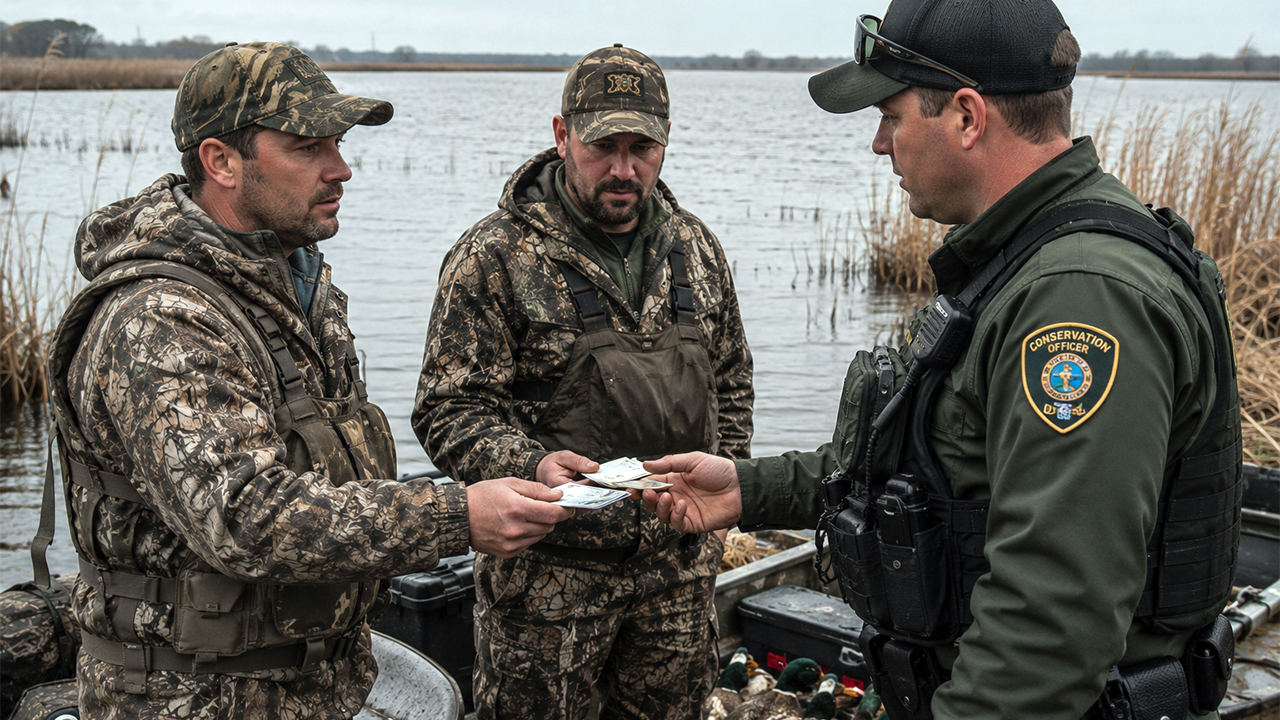
The boat was still rocking from the last push through the cattails when the warden’s bow light hit the blind. Two duck hunters did what a lot of folks say they’ll do when the blue lights show up on the water: hands visible, calm voices, licenses already out. They figured they were ahead of the game.
They weren’t expecting the whole stop to hinge on something as small as one lonely shotgun shell sitting in a jacket pocket.
A routine board turned into a full gear check
The pair had set up on the edge of a shallow backwater, the kind of spot you can only reach by skimming a mud flat at first light. It was mid-morning when the warden eased in—no yelling, no drama—just a standard compliance check. He asked the usual questions: who shot what, where the birds were, how many were down, and to see licenses, stamps, and hunter education cards.
They handed everything over right away. That part was clean. The warden then asked to see their shotguns and look over their shells. If you’ve been checked before, you know the flow: guns open and safe, magazines checked, birds examined, and then the little details that can make or break your day.
The “one extra shell” issue most waterfowlers forget about
Waterfowl rules are strict for a reason. Limiting shotguns to three shells total (one in the chamber and two in the magazine) is one of those regulations that gets hammered into you early. Most duck hunters know to run a plug, and most of us have had that brief moment of panic—wondering if the plug is seated right—right when the warden reaches for your gun.
What trips people up is that some states and some specific management areas don’t just care about what’s in the gun. They care about what’s immediately accessible during the hunt. That can include loose rounds on your person if the regulation is written in a way that treats them as “in possession while hunting” beyond the legal limit for a certain method or area.
In this case, both shotguns checked out. Plugs were in. Chambers were empty at the time of inspection. The hunters likely thought they were done—until the warden asked them to empty their pockets and open up their jackets and shell pouches.
How a pocketed shell can become a citation
The shell that caused all the trouble wasn’t in a gun or even in a shell belt. It was tucked into the inside pocket of a jacket—easy to forget after a long morning of reloading and grabbing handfuls of shells with cold fingers. A lot of hunters do that without thinking, especially when they don’t want loose ammo rattling around in a blind bag.
The warden didn’t treat it like a harmless oversight. He treated it like a violation.
From the hunter’s perspective, it feels petty. From an enforcement perspective, it’s simple: if the rule in that area is written as a hard cap on shells possessed or immediately available while actively hunting, then a shell in your pocket isn’t “extra,” it’s “in possession.” And “in possession” is what gets written on the ticket.
That’s the part that blindsides people. Hunters tend to think in terms of “my gun is legal.” Wardens often think in terms of “your hunt is legal,” and that can include ammo on your body, in the blind, or within arm’s reach.
Why wardens press on small details during duck season
Duck season is one of the most enforcement-heavy times of year, and it’s not because every waterfowler is a problem. It’s because the violations are common, the limits and methods are specific, and the temptation to “just do it this once” is always there—especially when birds are flying and somebody’s got a buddy counting on them.
A single shell might sound silly until you think about how often small shortcuts stack up: a plug missing, a lead load “just to finish the box,” a bird tossed under a seat that doesn’t make it onto the strap, or a limit that gets “fuzzy” when groups are rotating shooters. Wardens learn to treat every check the same way because the people who push bigger violations usually start with smaller ones.
That doesn’t make it any less frustrating when you feel like you did everything right and still got nailed. It just explains why the warden didn’t shrug and move on.
What other hunters fixated on: fairness, discretion, and keeping your pockets clean
Whenever a story like this makes the rounds at boat ramps and check stations, the opinions fall into two camps.
The first camp says a warning would have been the right call. Their argument is pretty straightforward: if the guns were plugged and safe, and if there wasn’t evidence of over-limit birds or illegal shot, a single stray shell in a jacket is the definition of an honest mistake. They’ll also point out that duck hunting is chaotic—gloves, mud, cold, and gear everywhere—and it’s easy to stuff a shell somewhere and forget about it.
The second camp says it’s on the hunter to know the rule and keep their gear squared away. They’ll tell you that if the regulation reads like a hard limit, then enforcement is enforcement. Discretion is nice when you get it, but you can’t rely on it like it’s part of the law.
Both camps tend to agree on one thing: pocket shells are trouble. If the warden is going to check, that’s one of the first places he’ll look, right along with blind bags, seat compartments, and the bottom of a layout blind where loose ammo loves to disappear.
The practical advice floating around is simple and worth following: before you leave the ramp, do a quick “ammo sweep.” Check the pockets on your waders and jacket. Open the blind bag. Look in the boat’s side trays. Count what you’ve got and where it’s sitting. It’s not about hiding anything—it’s about making sure you don’t accidentally create a problem you didn’t intend to have.
The real cost isn’t the shell—it’s what comes after
A citation over something small still hits like a hammer. Beyond the fine, there’s the hassle: court dates, time off work, and the possibility of points or license issues depending on how your state handles hunting violations. Even if it’s treated as a lower-level offense, it can still follow you around during future checks.
And it changes the mood of a hunt. A morning that should’ve ended with cleaning birds and telling lies at the tailgate ends with paperwork, second-guessing, and a sour taste that lasts a while.
The lesson here isn’t “don’t cooperate.” Those hunters did the right thing by being calm and handing over their documents. The lesson is that compliance doesn’t stop at the license holder. In waterfowl season, it runs all the way down to the last stray shell you forgot was riding in your coat.
If you hunt ducks long enough, you’ll get checked. When it happens, you want the conversation to be short, polite, and boring—and the easiest way to make it boring is to keep your gun legal, your birds accounted for, and your pockets empty of surprises.
Like The Avid Outdoorsman’s content? Be sure to follow us.
Here’s more from us: