Photo credit: AvidOutdoorsman
Public land bow season has a way of putting people on edge even when everyone’s doing things right. Add a uniform, a badge, and a citation book, and the temperature can jump fast. That’s exactly what played out when a pair of bowhunters decided to keep their phones rolling during a stop that turned into a ticket—and later, a pretty embarrassing rules mix-up.
A routine check turned into a citation in a hurry
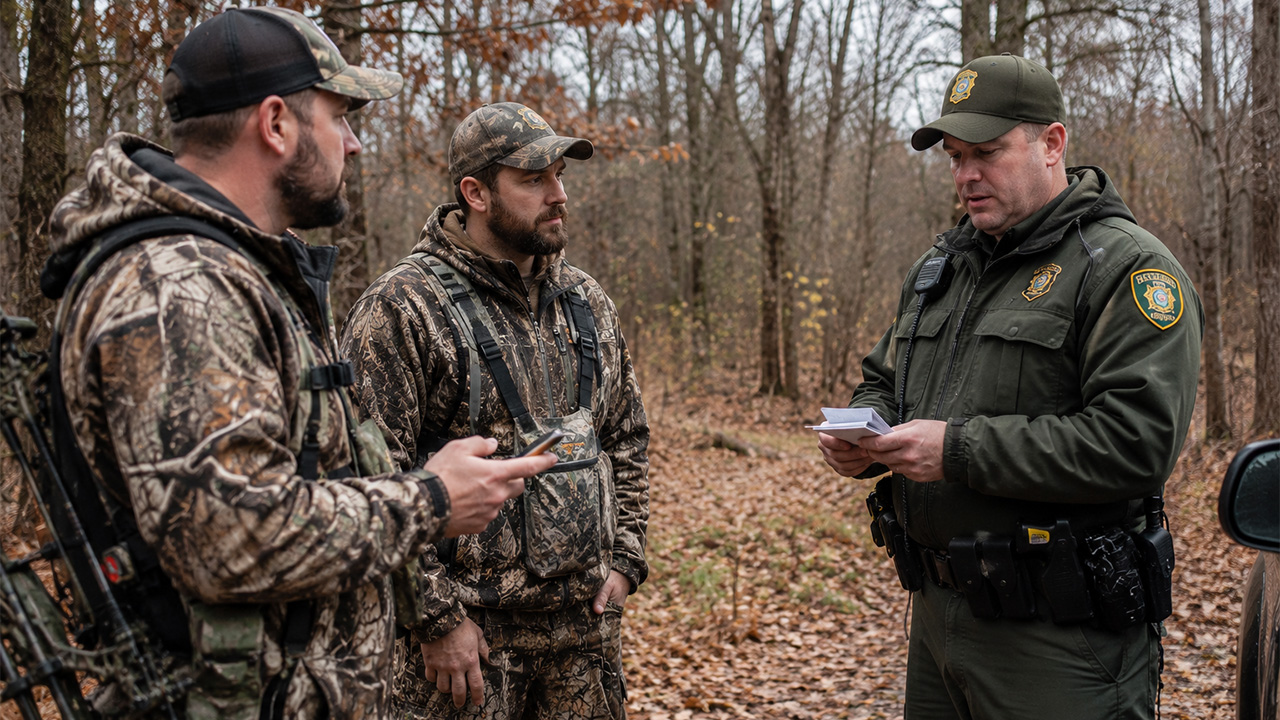
The hunters were parked at a well-known access pull-off before daylight, the kind with a signboard full of maps, seasonal notices, and the usual “pack it in, pack it out” reminders. They had their bows cased, packs on, and were walking in on a two-track that cut across a chunk of mixed timber and brushy draws.
A game warden met them near the gate and started with the normal stuff: licenses, tags, broadheads, and whether they’d been successful yet. The exchange stayed calm, but it didn’t take long before the conversation shifted from “Where you headed?” to “You can’t hunt here like that.”
The “rule” he cited didn’t match the season they were in
The issue centered on a small detail that matters a lot in the woods: what kind of access the unit allowed and what counted as legal travel. The warden told them they were in violation of a regulation that applied to a different season and, more importantly, a different weapon category.
In the video, the hunters didn’t get loud or try to talk over him. They did what I wish more folks would do: they asked for the specific regulation number and requested he point out the language. The warden referenced a restriction tied to firearm hunting and road closures, explaining it as if it applied across the board.
Here’s where it went sideways. The bowhunters had already saved the current-year digest on their phones. When they pulled it up, the language the warden was quoting wasn’t there for archery season. The restriction existed—but it was clearly listed under a separate section tied to a different hunt structure and dates.
Why public-land rules get confusing, even for people who enforce them
If you’ve hunted public long enough, you’ve seen how messy regulations can be. One wildlife area has “walk-in only” during one window, but allows vehicle access for retrieval. Another has a “no hunting within X yards” rule that applies only to a campground, not the whole property. Then you’ve got special-access permits, motorized closures, and different rules for legal equipment depending on the season.
Wardens cover huge territories. Some of them are absolute pros who know every corner and every line of the book. Others are newer, rotated into a district, or dealing with a patchwork of rule changes that happen year to year. That doesn’t excuse a bad citation, but it does explain how a warden can confidently state something that isn’t actually true for that specific place and time.
The hunters’ video also showed the most common failure point: mixing up a “travel management” rule with a “hunting method” rule. The warden treated a firearm-season access restriction like it was a general rule for anyone carrying hunting equipment on that ground.
What the video captured that matters in real life
The most useful part of the clip wasn’t the argument. It was the details—because details are what save you when you’re standing there in the dark with a ticket being written.
The hunters stayed polite and kept their hands visible. They didn’t step toward the warden, didn’t try to crowd him, and didn’t make it a pride contest. They asked direct questions: what regulation, what section, and what part of their actions triggered it. That’s the kind of calm pushback that can keep a misunderstanding from turning into something worse.
They also did something that gets overlooked: they documented the signage at the access point after the stop. On a lot of public parcels, the only place the agency posts the most current restrictions is on that board. If the sign says one thing and the warden says another, that photo matters.
Commenters zeroed in on phones, paperwork, and “don’t argue in the field”
Most hunters watching a situation like this tend to split into two camps. One side sees any enforcement mistake as proof you should never talk to a warden without a lawyer. The other side acts like wardens are never wrong and the hunters must have done something shady off camera.
What stood out in the reaction was how many experienced folks focused on practical habits rather than internet outrage. A lot of people pointed out that recording a law-enforcement interaction can protect both sides, as long as you’re not being theatrical about it. Others reminded hunters to keep the current-year regulations downloaded, not just bookmarked, because service is spotty in the hills.
The most common good advice was the simplest: don’t try to win the argument at the tailgate. Take the citation, get the officer’s information, and handle the dispute through the proper channels. If you’re right, the paper trail is what gets it corrected—not a debate on the side of the road.
The ripple effect for hunters who do everything by the book
A wrong citation is more than an inconvenience. It can cost you a day of hunting, force you to take time off work for court, and create stress you didn’t need. In some states and circumstances, citations can also trigger equipment seizures or at least a temporary hold on gear while things get sorted out.
That’s why this kind of mix-up hits a nerve for public land hunters. Most guys I know aren’t trying to cut corners. They’re trying to follow a rulebook that reads like a tax code and changes just often enough to keep you guessing.
The other ripple effect is trust. Wardens do an important job, and most of us want the poachers and trespassers dealt with. But when enforcement looks sloppy—especially when the wrong regulation is being used as the foundation for a ticket—it makes everybody more defensive the next time a truck pulls in behind them.
If there’s a takeaway here, it’s not “wardens don’t know the laws.” It’s that hunters need to be ready to back up their own compliance. Keep the current digest downloaded. Screenshot unit-specific notices. Photograph the signboard when you park. And if you do get cited and you truly believe the regulation was misapplied, handle it the right way—calmly, with documentation, and through the process that exists for exactly this kind of mistake.
Like The Avid Outdoorsman’s content? Subscribe to our newsletter so you never miss an article.
Here’s more from us: