Photo credit: AvidOutdoorsman
It started the way a lot of spring turkey trips start: a truck full of out-of-state hunters rolling in before daylight, coffee in the cupholders, and a guy in the lead vehicle who promised he knew where the birds wanted to be. They weren’t freelancing. They’d paid an outfitter, booked the dates months out, and expected the hard parts—permission, access, and scouting—were already handled.
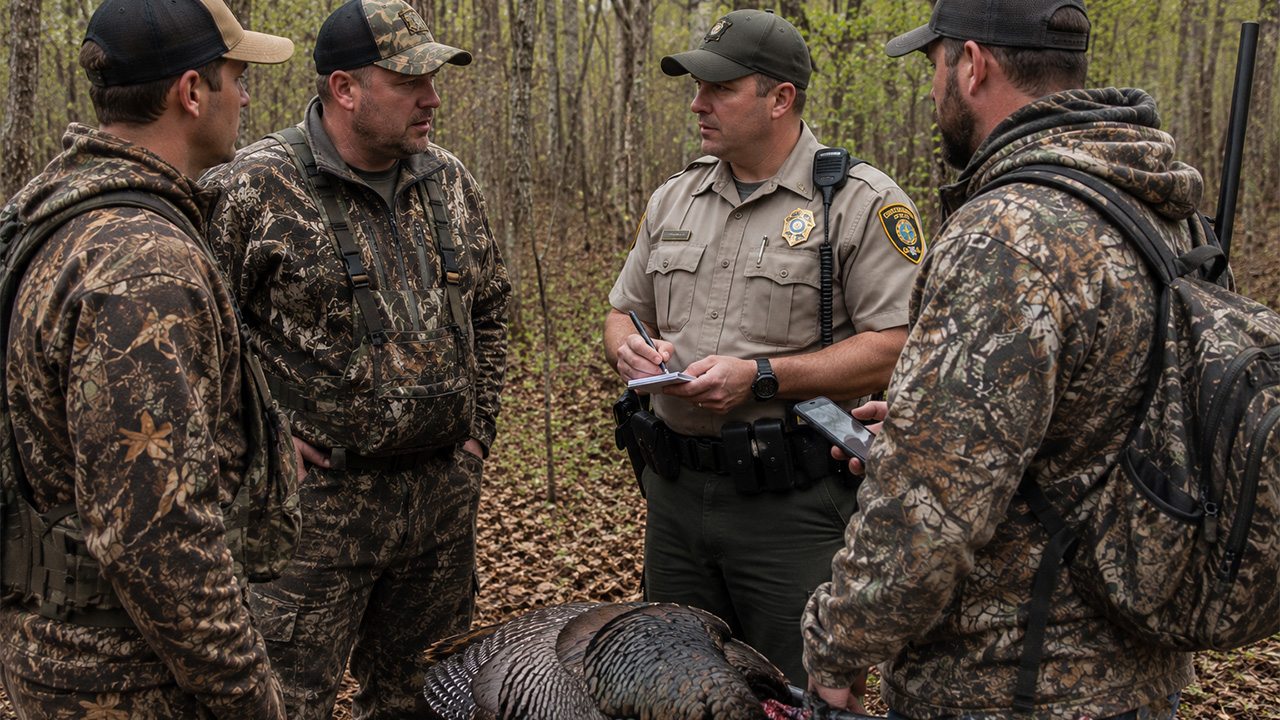
Instead, the morning ended with a wildlife warden walking up on the setup, checking licenses, asking a few pointed questions, and writing citations. By the time the dust settled, the visiting hunters were headed home with court dates, and the outfitter who’d been guiding them was staring at the kind of administrative hammer no one wants: his license suspended and then pulled.
The “follow me” plan put everyone in the same boat
The group had met the outfitter the evening prior at a small pull-off outside a patchwork of timber, pasture, and creek bottoms—classic turkey country. The outfitter laid out a simple plan: meet at a set time, follow him to the gate, and he’d walk them to a couple of pre-hung stands and ground setups he claimed were already positioned on travel corridors.
That detail alone raised eyebrows with a few seasoned hunters. Turkey hunters don’t usually talk “stands” the same way deer hunters do, but plenty of folks use elevated box stands or ladder stands on field edges when they’re watching strut zones or trying to keep movement down. The outfitter’s pitch was that the birds liked to pitch down into an open flat and work a fence line mid-morning.
The out-of-staters did what most clients do when they’ve paid good money: they trusted the guide. They followed his headlights down a minimum-maintenance road, parked in a low spot, and walked in behind him in a tight line, carrying shotguns and day packs.
A property line problem was hiding in plain sight
The issue wasn’t birds, and it wasn’t calling. It was access. The location the outfitter used was bordered by multiple landowners, and the “gate” that made it feel like one big piece of ground didn’t necessarily mean a hunter had permission to be there. In rural country, a cattle gate can be nothing more than a way for a neighbor to move equipment, not a green light for guiding clients.
From what came out later, the outfitter had permission on one tract—enough to sound legitimate—but he walked the group across a corner into an adjoining piece that was not included in the agreement. If you’ve ever hunted a checkerboard farm where two fence lines and a creek meet, you know how easy it is to slide into the wrong 40 acres, especially in the dark.
But “easy” doesn’t mean “forgiven.” A lot of states treat hunting without landowner permission as a serious offense, and many of them put extra weight on it when money changes hands.
The warden didn’t show up by accident
Wardens don’t usually appear out of thin air at the exact time a party gets settled, unless somebody has been watching a pattern. In this case, the response had the feel of a planned check. That can happen a few ways: a landowner calls in suspicious headlights, a neighbor reports repeated trespass issues, or an officer has already heard chatter about a guide running clients where he shouldn’t.
When the warden approached, the tone was reportedly calm but direct. Licenses were checked first—nonresident turkey tags, hunter ed cards if required, and photo IDs. Then came the questions that matter in trespass cases: Who gave you permission? What’s the name on the permission slip? Where are you parked? Who brought you in?
The hunters, caught in the middle, answered honestly. They’d paid the outfitter. They’d followed him in. They assumed it was all squared away. That’s the problem with assumptions in the outdoors: the law tends to land on the person holding the firearm, not the person telling the story.
Citations for the clients, bigger consequences for the guide
The visiting hunters were cited for hunting without proper permission on private land. In some places, that’s categorized as criminal trespass while hunting; in others, it’s an administrative wildlife violation that still carries teeth—fines, potential restitution, and the possibility of losing hunting privileges depending on the state and prior history.
The outfitter’s situation was worse. Guiding is a regulated business in many states, and the rules generally revolve around two non-negotiables: you must operate within the boundaries of your permits and landowner agreements, and you can’t misrepresent access. When an officer believes a guide knowingly led clients onto ground he didn’t have permission to use, it can become a license violation, not just a trespass issue.
That’s how you get from a couple of tickets to a license being pulled. Agencies don’t like policing bad apples through word-of-mouth when a license revocation is sitting right there as a tool to stop it from happening again next weekend.
What people zeroed in on: “It’s still on the hunter” vs. “Clients got set up”
Whenever a case like this hits campfire conversation, it splits into two camps. One side says the hard truth: if you’re the one hunting, you’re responsible for knowing you’re legal. That includes where your boots are and whose dirt you’re standing on. A paid guide doesn’t magically transfer liability away from the hunter.
The other side looks at it like a consumer problem. These guys weren’t freelancing or trying to sneak. They hired a licensed operator specifically to avoid the access mess, and they followed directions like most clients would. In that view, writing the hunters is technically correct but still feels like punishing the wrong end of the chain.
What most folks agreed on was this: wardens are going to enforce what they can prove in the moment. The outfitter’s license action takes time and paperwork. The citations on the hunters happen right there at the tailgate.
Practical takeaways if you’re paying for a turkey hunt
If you’re a nonresident booking a guided turkey hunt, ask a few questions that might feel awkward but can save you a pile of money and frustration. First: What properties are you hunting, and are they private or leased? Second: Do you have written permission or a lease agreement for each tract you’ll use? A legitimate outfitter won’t act offended by that. He’ll be used to it.
Next, pay attention to the little tells when you arrive. If the guide has you meeting in weird spots, avoiding driveways, or slipping through “no big deal” gates with no signage, slow down and ask again. Good operators are proud of their access. They don’t act like they’re sneaking around on it.
And finally, carry the basic tools. A mapping app with property lines is cheap insurance, even on guided hunts. It won’t make you an expert on easements, but it can stop you from walking across a corner you shouldn’t. If you see you’re crossing into a different parcel than the one you were told you had, that’s the moment to speak up—before a warden does it for you.
Spring turkey season is supposed to be early mornings, close calls, and maybe a long-beard in the back of the truck. When a guided hunt ends with citations and a revoked license, it’s a reminder that “follow me” isn’t a legal plan. The birds don’t care whose land it is, but the landowners and the wardens sure do.
Like The Avid Outdoorsman’s content? Be sure to follow us.
Here’s more from us: