Photo credit: Springfield Armory
In 2025, the handgun world is in a good place for regular shooters. You’ve got optics-ready pistols everywhere, compact guns that carry like a slim single-stack but shoot closer to a duty gun, and enough aftermarket support that you can set up a pistol for your life instead of forcing your life around the pistol.
This list isn’t about chasing whatever’s newest. It’s about handguns that make sense to own right now because they’re proven, supported, and easy to live with. Some are built for concealed carry. Some are built for hard training days. A couple are old-school wheelguns that still earn their keep when you’re on the move outdoors.
If you’re building a “real” handgun lineup in 2025, these are the kinds of pistols you end up with because they keep working, keep teaching you, and keep fitting the way you actually shoot.
Glock 19 Gen5

If you only keep one “do-most-things” pistol, this is the kind of pick that never feels like a gamble. The Glock 19 rides the line between carry and duty better than most guns ever have. It’s big enough to run hard in classes and on the range, yet compact enough that you can carry it without needing a wardrobe change.
In 2025, what really makes the G19 smart is the ecosystem around it. Holsters, magazines, sights, small parts, and support are everywhere. The Gen5 frame and controls work for a lot of different hands, and the platform is easy to maintain without turning ownership into a hobby you didn’t ask for. If you want to run a dot, the MOS versions keep the path pretty straightforward.
SIG Sauer P365 XMacro

This one is for the shooter who wants real capacity without committing to a thick, heavy pistol. The XMacro hits that sweet spot where the grip feels more like a service gun, but the overall package still carries well. It’s the kind of pistol that makes you practice more, because it doesn’t beat you up and it doesn’t feel like a compromise.
The other reason it’s a strong “2025 gun” is how it fits modern carry setups. The platform was built around the idea that you might run a light, a dot, and still want a gun that disappears under regular clothes. It also has broad parts and accessory support, so you can keep it stock or set it up to match your hands and your training style without reinventing the wheel.
Smith & Wesson M&P 2.0 (9mm)

The M&P 2.0 is one of those pistols that tends to win you over slowly, then you look up and realize you’ve got thousands of rounds on it. It points naturally for a lot of shooters, and it’s built for the person who actually practices. If you’re trying to keep your fundamentals clean, a pistol that returns to target predictably matters more than internet opinions.
In 2025, the M&P 2.0 lineup is deep, which is a nice way of saying you can get the format you want without jumping brands. Full-size for duty-style training, compact for carry, optics-ready versions for modern setups, and plenty of magazine and holster support. It’s also a platform that holds up when you run it hard, dirty, and often, which is the only way you really learn what you’re doing.
Walther PDP Compact
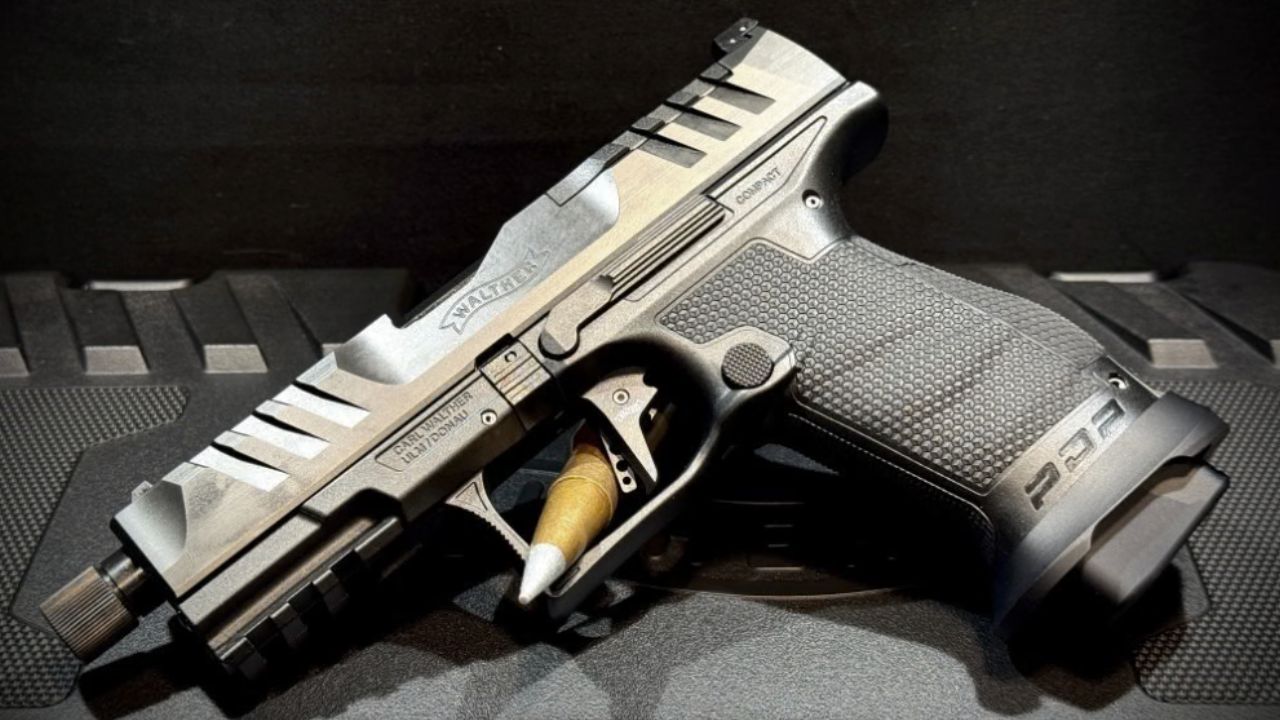
If you care about how a pistol feels in your hands and how it behaves when you start shooting faster, the PDP Compact belongs on your list. The grip texture and ergonomics lock in, and the trigger feel tends to reward good work without forcing you to fight the gun. It’s the type of pistol that makes you want to push your pace, because it stays controllable when you do.
The PDP’s other strength in 2025 is that it’s built for how people actually shoot now. Optics-ready options are baked into the series, and the overall design supports both defensive use and high-volume range time. You can run it as a carry gun, keep it as a training pistol, or make it a “do-everything” 9mm and never feel under-equipped.
Springfield Armory Echelon

The Echelon is aimed at shooters who want a modern striker-fired pistol that’s meant to be configured, not merely tolerated. The chassis-based design and optics mounting approach are built around today’s reality: many shooters want a dot, and they want it mounted cleanly without turning the slide into a custom project.
Where the Echelon earns its place in 2025 is how adaptable it is without feeling fussy. You can set it up as a duty-size training pistol, or lean into the more carry-friendly direction with compact variants, while keeping the same general handling. It’s also the kind of gun that makes sense for someone who’s tired of buying a pistol, then buying a pile of parts to make it feel “finished.” You can start closer to the end goal.
Springfield Armory Hellcat Pro

The Hellcat Pro is built for the shooter who carries a lot and still wants a pistol that shoots like a real gun on the range. It’s not a tiny pocket piece that you tolerate. It’s a slim 9mm that you can train with, reload confidently, and run at speed without feeling like you’re hanging onto a two-finger compromise.
In 2025, it’s hard to ignore what the Hellcat Pro offers in the size category. Capacity is strong for its footprint, and the format fits the way most people actually carry day to day. It also has enough support for lights, optics-ready setups, and holsters that you can build a consistent system around it. If you want one compact 9mm that can be “carry” and “practice” without two separate personalities, this is a smart answer.
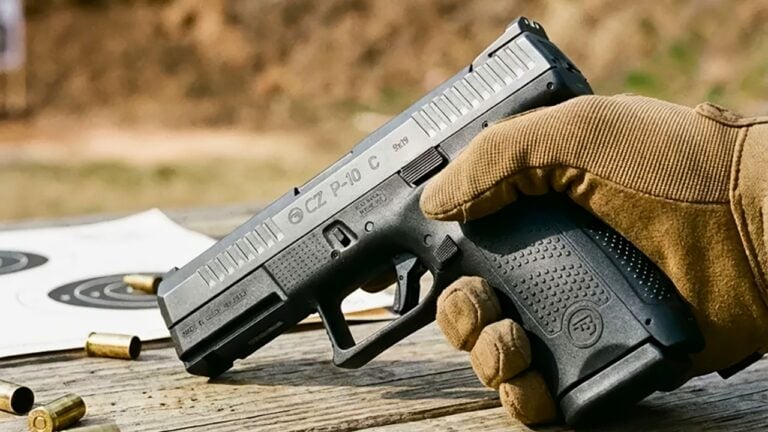
CZ P-10 C

The P-10 C is a practical pick for the shooter who wants a compact striker gun that feels like it was designed by people who shoot a lot. The grip shape works for many hands, the gun tracks well in recoil, and it has a reputation for being boring in the best way once you start putting real rounds through it.
It also fits 2025 reality because you can run it in multiple lanes. It’s compact enough to carry, big enough to train hard, and widely supported enough that you won’t spend months hunting for basics like holsters and magazines. If you’re the kind of shooter who cares more about consistency than status, the P-10 C scratches that itch. You can spend your money on ammo and time instead of chasing a platform that needs constant attention.
HK VP9

The VP9 is for the shooter who wants a refined, shootable 9mm that still feels duty-capable. It tends to fit hands well, the recoil impulse is manageable, and the overall gun feels like it was built with longevity in mind. When you’re doing longer strings or higher round counts, a pistol that stays comfortable matters more than people admit.
In 2025, the VP9 makes sense because it’s a mature platform with a lot of options around it. You can go full-size, long-slide, or more compact formats, and keep the same core feel. The VP9 line also appeals to shooters who want a pistol that feels “finished” out of the box, without needing a to-do list of upgrades before it becomes enjoyable. If your goal is to shoot well, it’s a tool that helps instead of distracts.
SIG Sauer P320 (M17/M18 family)

A lot of shooters want the P320 because it’s modular, widely used, and easy to configure around your needs. You can keep a duty-size setup, change grip modules for fit, and run it in a way that matches your training. For many people, it’s a “one platform, many roles” pistol that stays familiar while everything else changes.
You also need to be honest about the real-world noise around it. The P320 has faced lawsuits and serious public scrutiny over claims of unintended discharges, while SIG has also put out safety information and some agencies have conducted their own reviews and inspections. In 2025, owning one means you stay disciplined about safe handling, choose quality holsters, and pay attention to manufacturer guidance and any updates tied to your specific model. It can be a strong tool, but it’s not a platform to treat casually.
Beretta 92X RDO

If you’ve never spent time behind a Beretta 92 pattern gun, 2025 is a good year to fix that. The 92X RDO gives you the classic feel of that system with more modern touches, and it’s a pistol that rewards a smooth trigger press and a steady grip. It’s also one of those guns that can make range days more fun, because it has personality without being temperamental.
The RDO part matters now because the industry moved hard toward dots, and the 92X gives you a path that doesn’t feel like an afterthought. For a shooter who likes metal guns, likes a little weight out front, and wants a pistol that runs well across long practice sessions, the 92X RDO is an easy gun to appreciate. It’s also a nice counterbalance to a safe full of polymer strikers.
FN 509 Tactical

The 509 Tactical is the pick for the shooter who wants a purpose-built, modern fighting pistol with room to grow. It’s set up around the idea that you may run a dot, you may run suppressor-height sights, and you may want a gun that doesn’t blink when you start adding accessories and shooting it hard.
In 2025, it also earns points for flexibility. The optics mounting system is designed to accept a wide range of sights, and the “tactical” configuration is built with practical use in mind, not a showroom checklist. If you want a pistol that can live as a home-defense gun, range gun, or suppressor host without needing major surgery, this model is aimed directly at that life. It’s a tool for the shooter who likes capability, not novelty.
Staccato C2

There’s a reason the Staccato name keeps showing up among shooters who care about performance. The C2 gives you a compact 2011-style pistol that still shoots with that flat, controlled feel people chase. When you get serious about fast, accurate shooting, the gun’s trigger characteristics and overall stability can make a real difference in how confident you feel pushing speed.
In 2025, the C2 belongs on a “want” list because it’s one of the few compact pistols that can carry like a serious defensive gun and still run like a range hammer. It’s not a casual purchase, and it’s not meant to be. It’s the kind of handgun you buy when you already know you’re going to shoot, train, and carry enough to appreciate what it does better than most. For a lot of shooters, it becomes the benchmark.
Ruger Mark IV 22/45

If you actually want to shoot better with a handgun, a .22 that you enjoy shooting is one of the smartest things you can own. The Mark IV 22/45 gives you a familiar grip angle, cheap practice, and the freedom to work fundamentals without recoil masking your mistakes. In 2025, that’s still the fastest way to build skill without going broke.
The Mark IV also earns its keep because it’s easy to live with. Cleaning and maintenance are far less annoying than older rimfire designs, and the platform has a deep aftermarket if you want to tune it for steel matches, suppressor use, or pure plinking. It’s the pistol you grab when you want a high-volume range session that still teaches you something. For a lot of shooters, it’s the most-used handgun they own.
Ruger LCP Max

The LCP Max is for the days when you are carrying because you’re supposed to, not because it’s convenient. This is the pocket-friendly pistol that makes it possible to stay armed in situations where a larger gun tends to get left behind. In that role, small differences matter, and the LCP Max is built around making a tiny pistol more shootable and more practical.
In 2025, it’s a smart “want” because it fills a real gap. It’s compact, light, and built for deep concealment while still giving you useful capacity for its size. It’s also the kind of pistol you can carry as a backup, a quick errand gun, or a warm-weather option when bigger setups feel like too much. You still need to practice with it, but it’s far more usable than older pocket guns that felt like a punishment.
Smith & Wesson Shield Plus

The Shield Plus is for the shooter who wants a slim carry gun that still behaves like a real pistol in training. It’s easy to conceal, easy to fit to your body, and it doesn’t demand a special lifestyle. When you carry daily, comfort and consistency start to matter as much as the shooting part.
In 2025, the Shield Plus stays relevant because it’s a mature platform with options that match how people carry now, including optics-ready variants. It also tends to hit a sweet spot in size: thin enough to disappear, yet large enough that you can still build solid habits with it. If you want a pistol that’s realistic for everyday carry and still worth bringing to the range for serious practice, the Shield Plus earns its place. It’s a “carry a lot, shoot a lot” kind of handgun.
Ruger GP100 (.357 Magnum)

A .357 revolver still makes a lot of sense in 2025, especially if you spend time outdoors or you value rugged reliability and straightforward operation. The GP100 is built like a working tool. It’s heavy enough to manage magnum loads well, and it’s the type of revolver you can shoot a lot without feeling like you’re babying it.
The reason you want one is that it gives you options. You can run .38 Special for practice and fundamentals, then step up to .357 when you want the full performance the cartridge offers. The platform is also easy to support with grips, holsters, and sight choices. If you want a revolver that can do range work, trail carry, and defensive roles without being fragile, the GP100 is a long-standing answer that still holds up in modern times.
Colt Python

The Python is the revolver that makes you slow down and do things right. The weight, the balance, and the overall feel encourage a clean trigger press and careful sight work. In a world full of polymer pistols, a well-made .357 revolver brings a different kind of satisfaction, and it can make you a better shooter because it doesn’t let you hide sloppy technique.
In 2025, you want a Python because it’s both practical and timeless without being a museum piece. It handles .357 Magnum and .38 Special, giving you a wide range of training and use options, and it’s a revolver that holds interest for the long haul. It also fits that “one great wheelgun” slot that many shooters eventually decide they want, even if they didn’t start out as revolver people. It’s the kind of gun you keep, shoot, and pass on with pride.
Like The Avid Outdoorsman’s content? Be sure to follow us.
Here’s more from us: