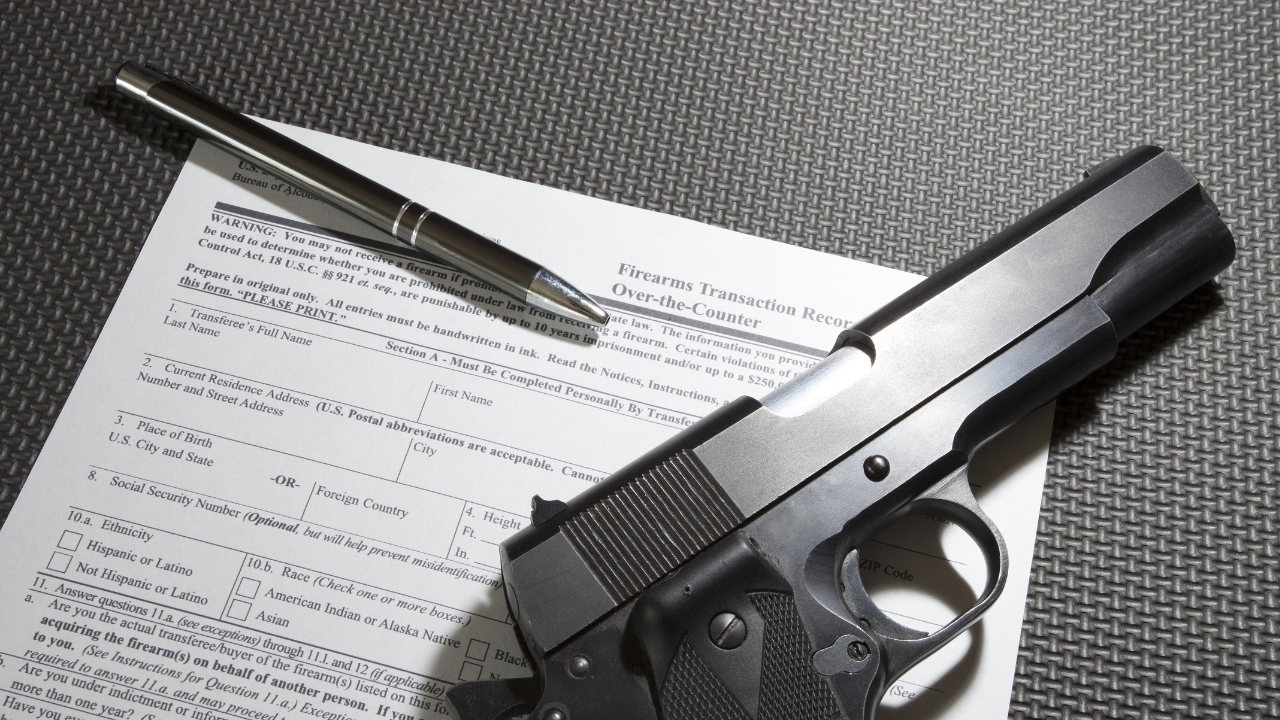
Photo credit: Guy J. Sagi/Shutterstock.com
Gun background checks in November slipped noticeably, interrupting the long run of elevated demand that has defined recent years. You are looking at a market that is still large by historical standards but is clearly cooling, with fewer people initiating the process to buy a firearm and retailers feeling the shift on their balance sheets.
Reading the November slowdown in context
You cannot understand a single month’s decline without first recognizing how high the baseline has been. Since the pandemic era, background checks have run at levels that would have seemed extraordinary a decade ago, so a pullback now reflects both normalization and changing expectations about politics and public safety. When you hear that November checks fell, you are really seeing a market that is stepping down from a peak rather than collapsing outright.
Industry analysts tracking the National Instant Criminal Background Check System, or NICS, describe the latest figures as a significant retreat from last year’s pace. One detailed review of November 2025 NICS Data characterizes the shift as a “Data Reveals Significant Drop” in U.S. Firearm Sales and Background Checks, underscoring that the change is not a rounding error but a clear move lower. For you as a reader, the key takeaway is that the market is still active, yet the urgency that drove earlier surges has eased.
The headline number: how far checks fell
The cleanest way to see the November cooling is to look at the adjusted counts that strip out administrative uses of NICS and focus on likely sales. The November 2025 NSSF-adjusted National Instant Criminal Background Check System figure of 1,408,230 checks is a sharp decline from the 2,509,368 recorded in November 2024. When you compare those two numbers side by side, you see a market that has shed more than a million checks year over year, a scale of change that no retailer or manufacturer can ignore.
For you, that drop means fewer first-time buyers walking into shops and less repeat purchasing from existing gun owners who might otherwise add another handgun or rifle. The November figure still represents a substantial volume of transactions, but the direction of travel is unmistakable. When analysts describe the month as a “significant drop,” they are capturing the reality that a sector built around elevated demand is now adjusting to a leaner environment.
Why NICS data is an imperfect but vital gauge
Even as you rely on NICS to understand the market, you need to know what the numbers do and do not capture. A background check is a proxy for a potential sale, not a perfect one-to-one record of every firearm that changes hands. Some checks cover multiple guns in a single transaction, while others never result in a purchase because the buyer walks away or is denied.
There are also entire categories of transfers that do not show up in the raw counts. In several states, qualifying permits substitute for a fresh NICS call at the point of sale, which means those transactions are invisible in the federal tally. Industry analysts explicitly note that the number of NICS checks in these states does not include these legal transfers based on qualifying permits, and that NSSF distinguishes between a background check and a firearm sale. When you interpret November’s decline, you should treat NICS as a strong indicator of direction, not a precise inventory of every gun sold.
Black Friday week: a softer holiday spike
For years, you could count on the shopping period around Black Friday to deliver one of the busiest stretches for gun background checks, as discounts and holiday buying converged. This year, that seasonal spike still appeared, but it was noticeably smaller than in the recent past, reinforcing the broader story of a market that is cooling rather than surging.
Industry data shows that Black Friday week saw about 530,000 g background checks, according to an analysis that adjusted the raw FBI figures to better reflect likely retail sales. That total is still strong compared with older historical trends, but it is weaker than the prior year’s holiday rush. A separate report noted that NICS checks for the same week had previously topped 613,000, and that unadjusted FBI NICS background checks still showed robust interest. For you, the message is that the holiday bump remains, but it is no longer breaking records.
Retailers on the ground feel the “Trump slump”
Behind the national figures are individual shop owners who have to decide how much inventory to carry and whether to expand or retrench. Many of them are telling you the same story: the panic-driven waves of customers that once emptied display cases have faded, replaced by a slower, more predictable trickle of regulars. That shift has real consequences for staffing, cash flow, and long term planning.
One vivid example comes from John Francis, who owns Competition Shooting Supplies in Pawtucket, Rhode Island. He describes his store as far quieter than during the peak years of fear driven buying, even though the broader data still shows substantial national volume. For you, his experience illustrates how a macro level decline in NICS checks translates into day to day reality: fewer impulse purchases, more cautious spending, and a sense that the market has shifted from frenzy to grind.
Panic buying, politics, and the end of the surge
To understand why November’s checks fell, you have to look back at what pushed them so high in the first place. Over the past decade, panic based buying has repeatedly driven spikes in demand, as gun owners rushed to beat potential new regulations or reacted to high profile crises. Those bursts are inherently unstable, and once the immediate fear passes, the market tends to sag.
Reporting on the so called “Trump slump” in gun sales points out that Panic based buying has led to volatile swings in demand, leaving retailers unsure when the next rush will arrive or when their wares will bottom out. One example came when Oregon voters approved Ballot Measure 114, which triggered a surge of purchases ahead of new rules. With President Donald Trump in office and large scale federal gun restrictions off the immediate agenda, that kind of panic has ebbed, and you are now seeing the other side of the curve in the November numbers.
How trade groups frame the downturn
When you listen to industry organizations, you hear a careful balancing act between acknowledging the slowdown and emphasizing long term strength. Trade groups want you to see November’s decline as part of a broader normalization, not as a sign that interest in firearms is disappearing. Their messaging often stresses that even reduced figures remain high by pre pandemic standards.
The Firearm Industry Trade Association, known as NSSF, has highlighted that the FBI’s National Instant Criminal Ba system still processed hundreds of thousands of checks in a single week, even as totals slipped from prior peaks. In one update, NSSF noted that NICS checks top 530000 for Black Friday week in WASHINGTON, D.C., while also acknowledging that the figure was lower than the previous year. For you, that framing underscores a key point: the industry is trying to reassure investors and customers that the market is stabilizing, not collapsing.
Methodology matters: adjusted versus raw checks
As you parse November’s data, it is crucial to distinguish between raw NICS checks and the adjusted figures that analysts prefer. The raw counts include everything from permit renewals to pawn redemptions, which can inflate the apparent level of gun buying. Adjusted numbers attempt to filter out those categories so you can focus on checks most likely tied to retail sales.
That is why the reference to The November 2025 NSSF adjusted National Instant Criminal Background Check System, or NICS, figure of 1,408,230 is so important. By focusing on the adjusted total, analysts are telling you that the decline is not an artifact of administrative changes but a real shift in consumer behavior. When you see trade groups and researchers emphasize NSSF adjusted NICS rather than the headline FBI total, they are inviting you to look past noise and focus on the underlying trend.
What the November drop means for you next year
For you as a consumer, policymaker, or investor, the November downturn is less a verdict on the gun market than a signal about its next phase. A cooler environment can mean more stable pricing, fewer stockouts, and a shift in product mix as manufacturers pivot from chasing volume to courting specific segments such as concealed carry owners or hunters. It also gives lawmakers and advocates a clearer view of baseline demand without the distortion of panic buying.
Looking ahead, you should expect debates over gun policy to continue, but without the same immediate impact on background check volumes that you saw when every headline seemed to trigger a rush to the counter. Analysts who describe the latest NICS Data Reveals Significant Drop are effectively telling you that the market is entering a more mature, less frantic stage. Whether you see that as a risk or an opportunity depends on where you sit, but the numbers are clear: the era of automatic record breaking months has paused, and November’s background checks are your first solid glimpse of the new normal.
Like The Avid Outdoorsman’s content? Be sure to follow us.
Here’s more from us: