Photo credit: Line45/YouTube
When shooters say a pistol “shoots flat,” they’re not talking about trajectory. They mean the gun tracks straight back, the dot or front sight doesn’t jump into the rafters, and the muzzle settles back where it started without you wrestling it. A flat shooter lets you run fast splits, call your shots, and keep the gun honest when you’re tired, cold, or shooting from less-than-perfect positions.
Some of that is caliber, but a lot of it is design: weight up front, a grip that locks your hands in, a recoil system that isn’t over-sprung, and a bore line that doesn’t pry the muzzle upward. The pistols below aren’t magic. They’re simply the models that tend to make their caliber feel calmer than you’d expect—especially when you’re trying to shoot fast and stay accountable.
SIG Sauer P320 X-Five Legion (9mm)
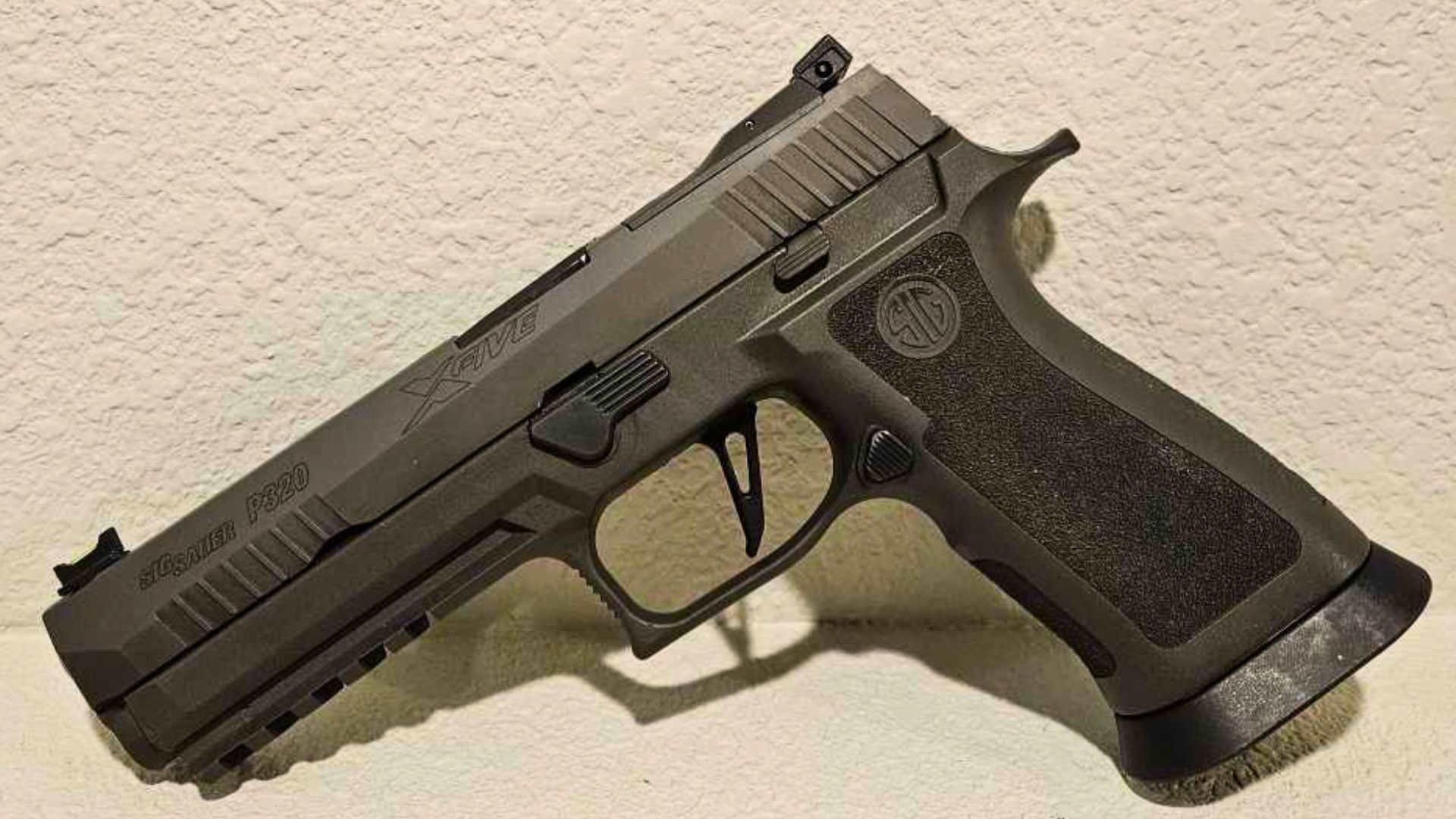
The X-Five Legion is one of those 9mms that feels heavier than it looks, and that extra mass is a big part of why it stays so level in recoil. The gun tracks more straight back than up, and the front end doesn’t feel whippy when you start pushing speed. That makes it easier to keep the sights in your vision instead of searching for them between shots.
The grip angle and beavertail also help you get your hands high without feeling cramped. With decent ammo, the recoil impulse feels smooth and predictable, which is what you want for fast, repeatable shooting. In its lane—range work, competition, training—it’s a steady platform that makes 9mm feel almost boring.
CZ Shadow 2 (9mm)

The Shadow 2 has a reputation for a reason. It’s a steel gun with enough weight and balance to keep the muzzle from climbing much, even when you’re shooting hard. The slide rides low in the frame and the gun’s geometry encourages a high grip, so recoil feels like a controlled push rather than a sharp snap.
What you notice most is how the sights behave. The front sight lifts, then returns right where you left it, and that consistency makes you look more disciplined than you feel. The Shadow 2 also gives you a stable trigger press without you having to fight the gun’s movement. For a 9mm, it’s one of the easiest platforms to keep flat through strings.
Beretta 92X Performance (9mm)
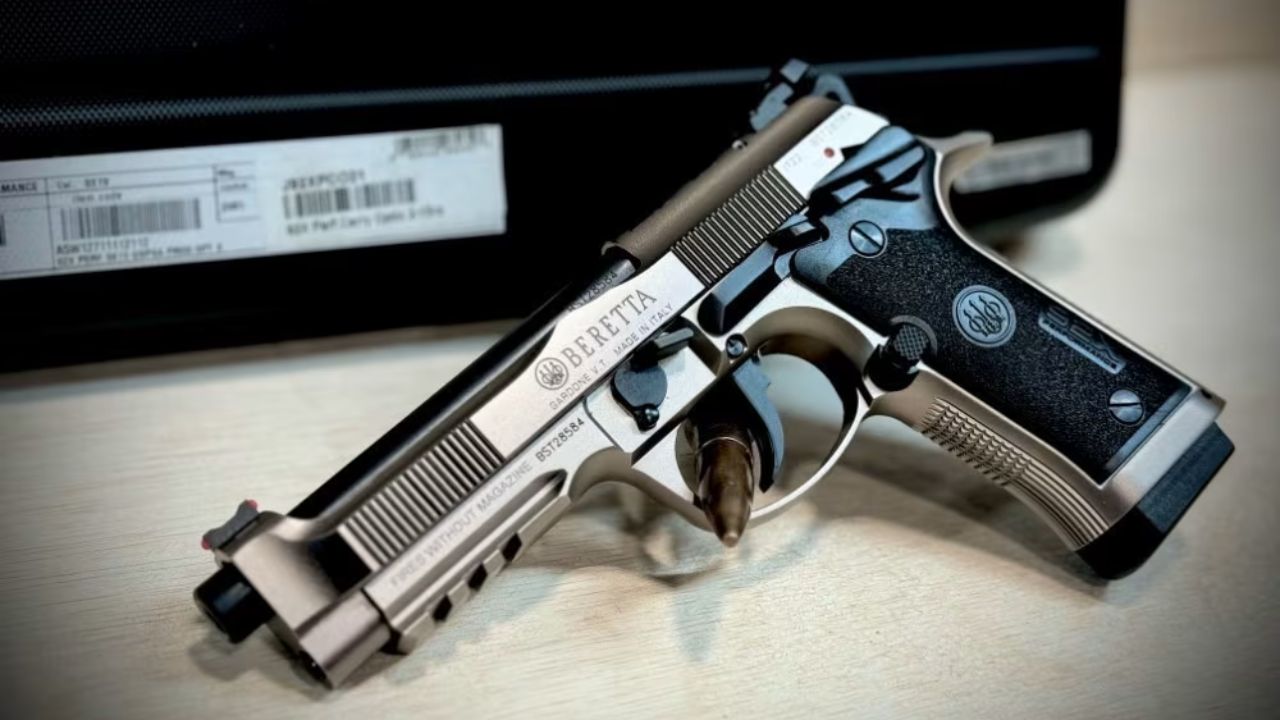
A good Beretta 92 has always been a soft shooter, and the 92X Performance leans into that with extra weight and a competition-minded setup. The slide design and barrel arrangement tend to distribute recoil in a way that feels smooth, and the added mass helps the gun settle quickly without the muzzle trying to climb.
You also get a wide, comfortable grip that fills your hands and keeps you from over-gripping when you speed up. When you run it fast, the gun tracks with a kind of steady rhythm that’s hard to fake in lighter pistols. If you want a 9mm that stays composed when you start pushing splits, this Beretta is built for that kind of work.
Walther PDP Match Steel Frame (9mm)

The PDP line is known for good ergonomics and a strong grip texture, and the Match Steel Frame adds the missing ingredient for flat shooting: weight. The steel frame calms the impulse and keeps the muzzle from popping up, so the gun feels more planted when you’re hammering doubles or running transitions.
The grip shape also helps you lock in with both hands without fighting hot spots. That matters because a secure, repeatable grip is half of “shooting flat.” When you get it right, the PDP Match doesn’t feel jumpy, and the sights return in a predictable way. For shooters who like Walther’s feel but want less movement at speed, the steel-frame version delivers.
Canik Rival-S (9mm)

The Rival-S is another steel-framed 9mm that punches above its price point in how it handles recoil. The weight soaks up a lot of the snap you feel in polymer guns, and the pistol tends to track straight back rather than tipping upward. That makes the gun feel cooperative when you start running drills on a timer.
The controls and grip shape make it easy to build a high, consistent hold, which keeps the sights from wandering. With a steady grip, the Rival-S returns quickly and doesn’t demand a lot of correction between shots. You still have to do your part, but the gun isn’t fighting you. For 9mm, it’s a very stable platform for fast shooting.
Springfield Armory Echelon (9mm)

The Echelon surprised a lot of shooters because it feels calmer than many striker guns of similar size. The grip geometry encourages a high hold, and the pistol’s balance doesn’t feel top-heavy. When you shoot it fast, recoil comes back into your hands without the muzzle trying to climb as much as you’d expect.
Another factor is how consistent the gun feels across different loads. Some striker pistols get snappy with hotter ammo. The Echelon tends to stay manageable and predictable, which makes it easier to keep your cadence. If you’re looking for a modern duty-size 9mm that tracks well without needing aftermarket parts, the Echelon is a solid example.
Smith & Wesson M&P 2.0 Metal (9mm)
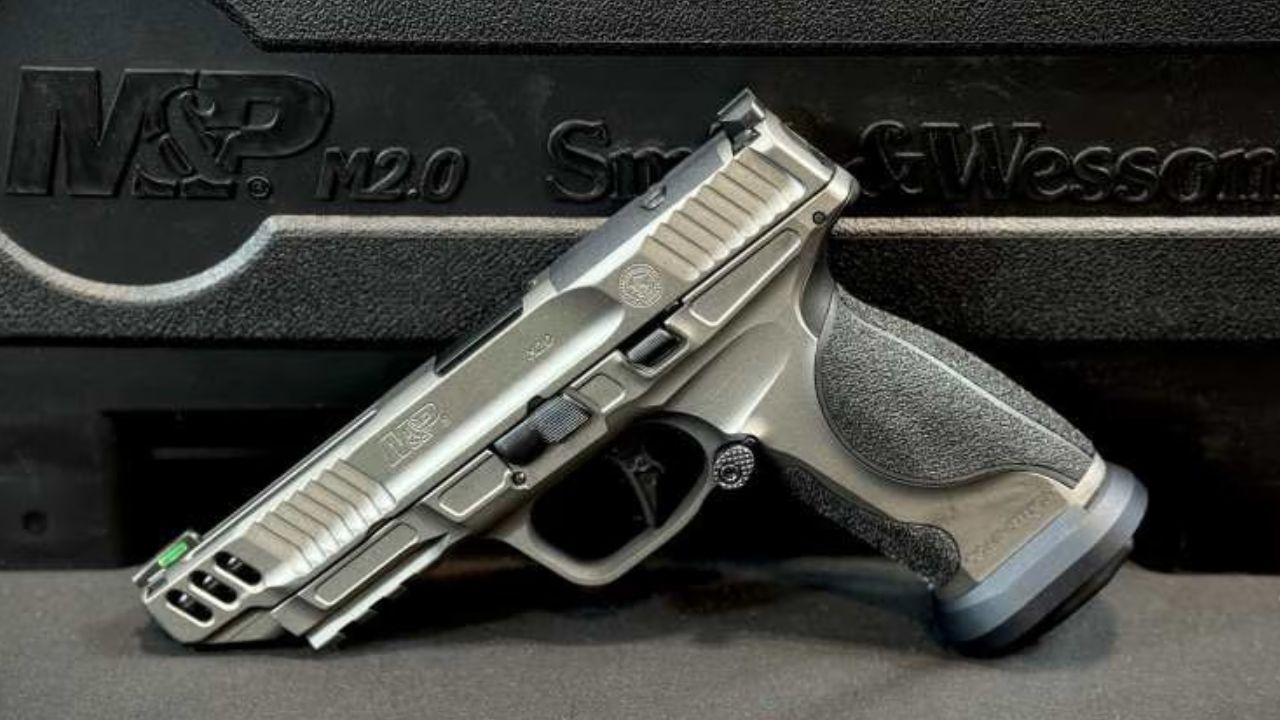
A lot of people like the M&P’s grip angle and texture because it’s easy to build a repeatable, high grip. The Metal version adds weight where it counts, and that turns the gun into a noticeably flatter shooter than the standard polymer frame. The recoil impulse feels more like a firm shove than a snap.
That extra stability pays off when you’re shooting fast in realistic drills. The gun doesn’t feel like it’s trying to twist out of your hands, and the sights settle without drama. The M&P platform already has a track record for duty use, and the metal frame gives you even more control without changing the fundamentals. For 9mm, it’s a practical “shoots flatter than expected” option.
HK VP9 Match (9mm)

HK pistols tend to have a smooth recoil character, and the VP9 Match leans into that with a longer setup and competition-friendly balance. The gun stays composed when you start shooting fast, and it doesn’t punish you for minor grip imperfections the way some lighter striker guns do.
The VP9’s ergonomics also help. You can tailor the grip panels to fit your hands, which matters because a locked-in grip is what keeps the muzzle from climbing. When the gun fits, recoil feels more straight-back and less like a lever prying upward. The VP9 Match isn’t the heaviest pistol on the planet, but for its size and role, it tracks very cleanly.
Staccato P (9mm)

A well-tuned 2011 in 9mm is hard to beat for fast, flat shooting, and the Staccato P is built around that idea. The weight and balance help, but a lot of the “flat” feel comes from how the gun cycles. Recoil feels smooth, the sights lift minimally, and the gun returns quickly without you muscling it back down.
The grip and trigger also play a role. You can get high on the gun, keep your hands locked, and press a clean shot without disturbing the sight picture much. That combination is why shooters often feel like they’re suddenly better than they were yesterday. It’s still you doing the work, but the pistol is set up to make good shooting easier at speed.
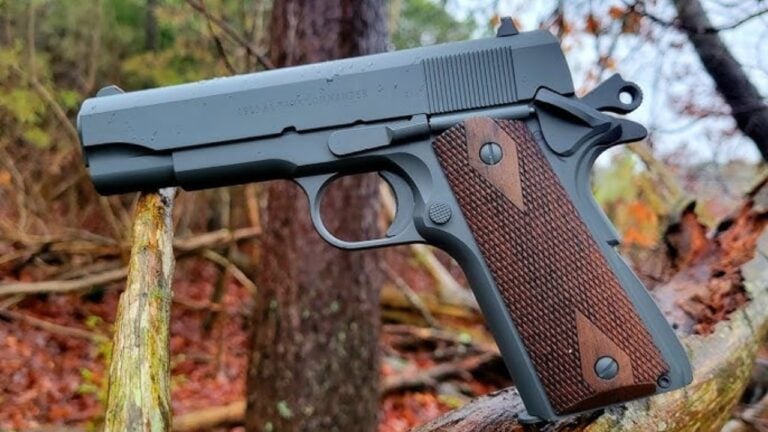
Ruger SR1911 Government ( .45 ACP )
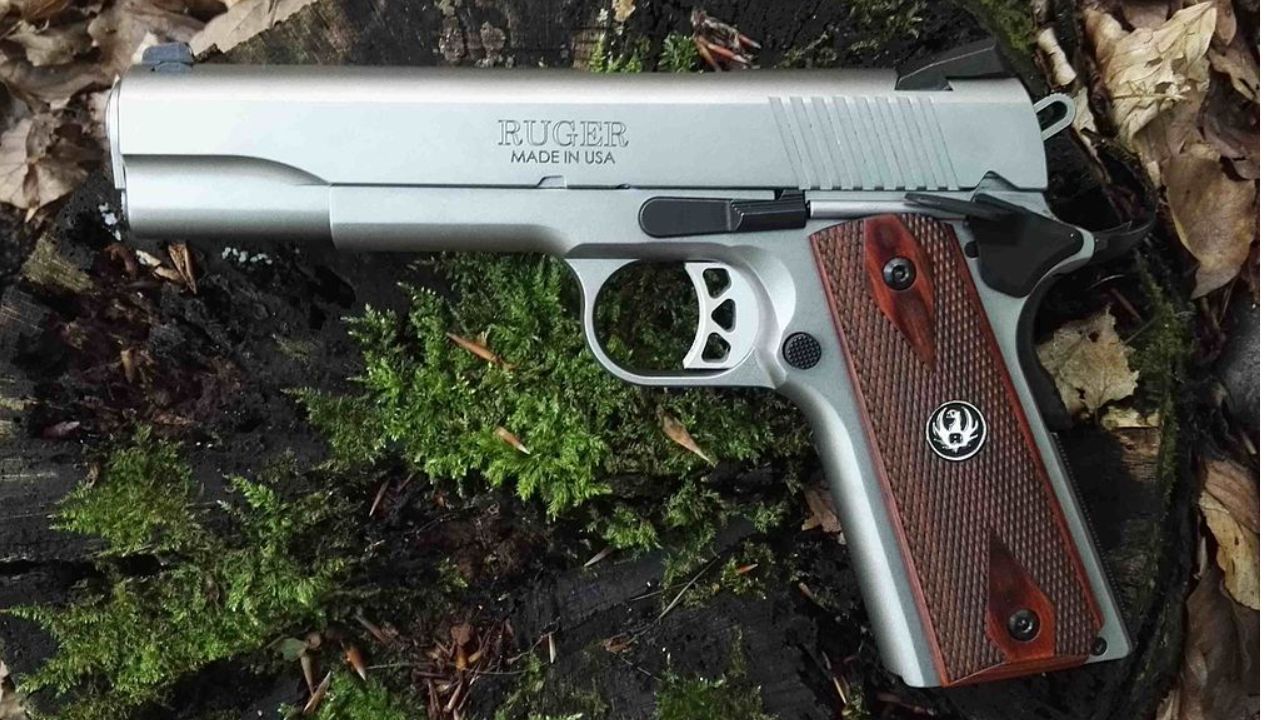
A full-size steel 1911 in .45 doesn’t shoot like the caliber’s reputation. In a Government-length gun, the weight and straight-back recoil path make .45 feel more like a heavy push than a sharp snap. When you shoot it fast, the muzzle rises, but it doesn’t tend to whip or bounce unpredictably.
The grip angle and low bore line help you manage recoil without needing a death grip. A good 1911 trigger also helps you keep the sights steady during the press, which matters when recoil is already doing its thing. The SR1911 is a straightforward example of the type: a heavy, full-size .45 that stays surprisingly level if you run it with a solid two-handed grip.
SIG Sauer P220 ( .45 ACP )

The P220 is a classic .45 that tends to feel smoother than many polymer .45s, partly because of its size and how the gun distributes recoil. The impulse doesn’t feel abrupt. It comes back into your hands in a controlled way, which helps you keep the front sight from jumping as much as you’d expect from .45 ACP.
You also get a grip that encourages a consistent hold without awkward angles. When you’re trying to shoot quickly, consistency is everything. The P220’s recoil character makes it easier to stay honest through strings, especially if you’re used to smaller .45s that feel snappy. It’s not a tiny carry gun, and that’s the point. The size is part of why it shoots so flat.
FN 510 Tactical (10mm)
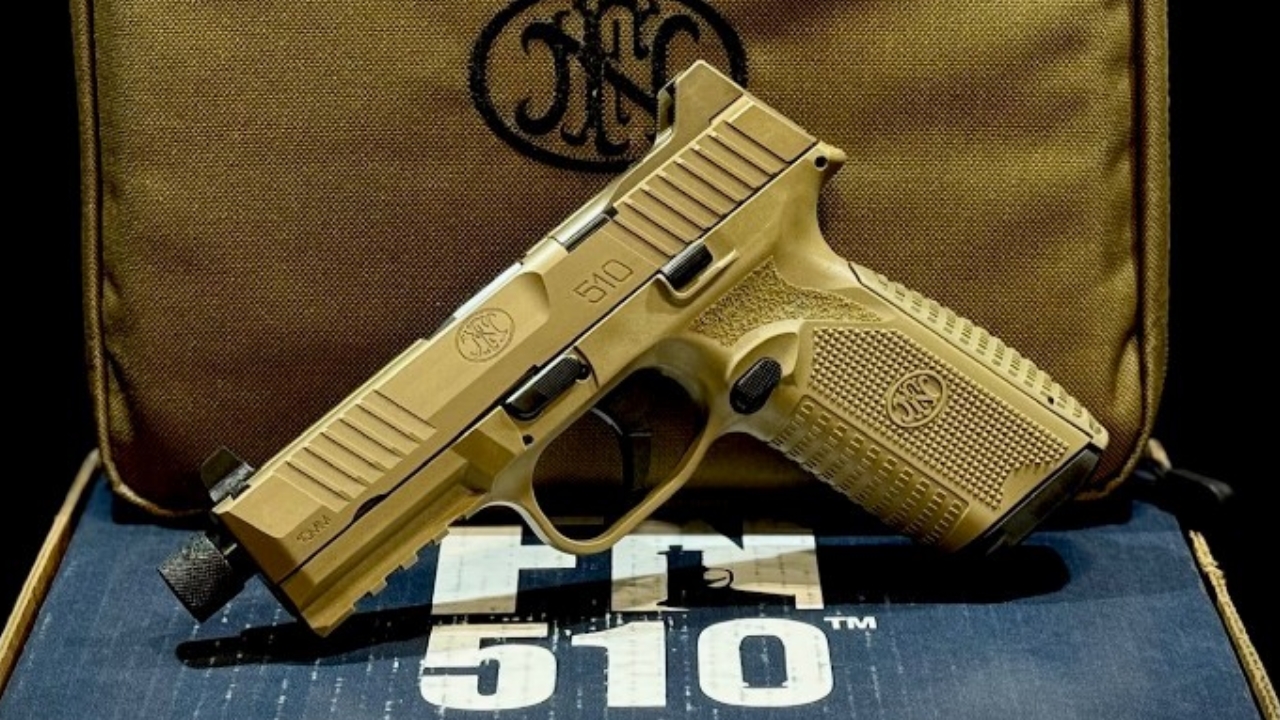
10mm can get lively fast, especially in lighter pistols. The FN 510 Tactical tends to handle it better than many because it gives you a full-size frame, solid grip texture, and a recoil system that feels built for real 10mm loads. When you shoot it fast, the muzzle still rises, but it doesn’t feel like it’s trying to leave your hands.
The grip shape helps you clamp down without shifting mid-string, and the gun’s overall size gives recoil more room to behave. That translates to faster follow-up shots and less time spent re-finding the sights. It’s still 10mm, so you’re not getting 9mm manners, but for the caliber it stays controlled and predictable.
Smith & Wesson M&P 10mm (10mm)
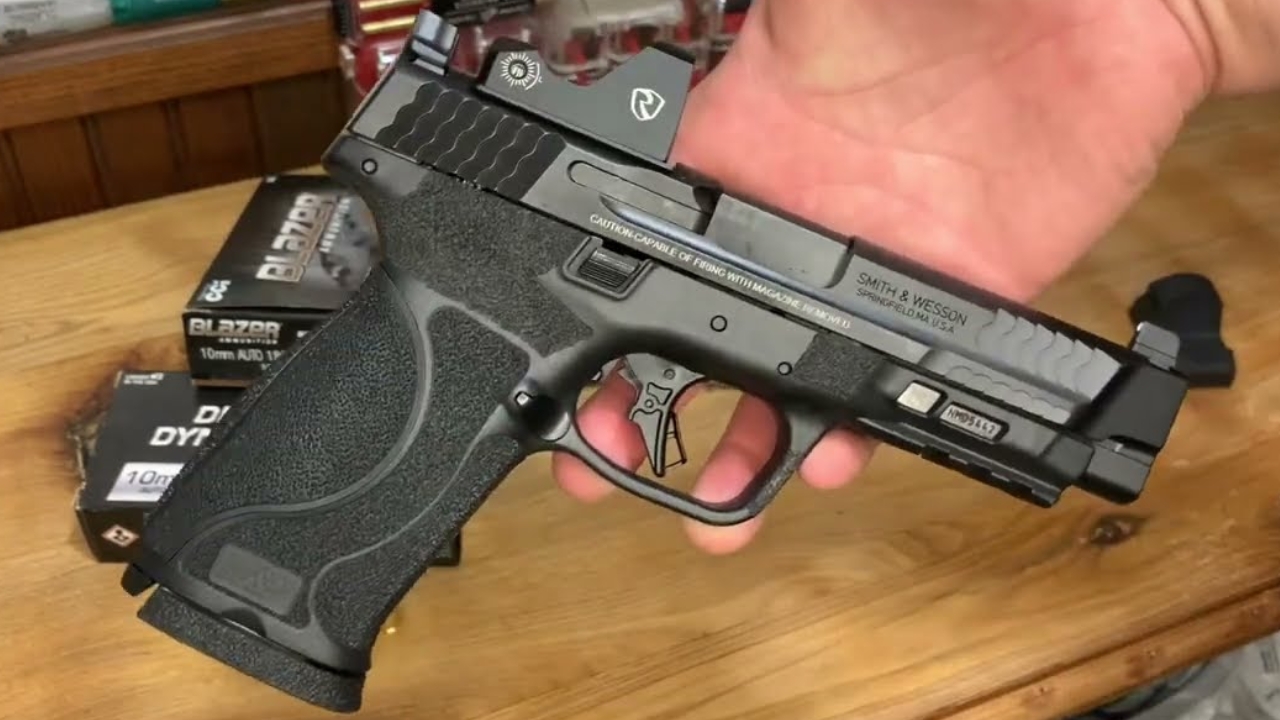
The M&P 10mm has earned fans because it gives you 10mm power in a platform that many shooters already run well. A familiar grip angle and good texture help you build a high, consistent hold, and that goes a long way toward keeping the gun flatter than its caliber suggests.
The recoil is there, but it often feels more manageable than smaller 10mms that can get snappy and unpredictable. With a proper grip and quality ammo, you can keep the gun cycling smoothly and run controlled pairs without feeling like you’re getting punished. For shooters who want a 10mm that behaves more like a duty pistol than a hand cannon, the M&P is a realistic pick.
Springfield XD-M Elite 10mm (10mm)

The XD-M Elite 10mm tends to shoot flatter than many expect because it gives you a substantial grip, good capacity, and a setup that doesn’t feel overly light for the cartridge. When you push it fast, recoil comes back into your hands in a way that’s easier to manage than the “snap and twist” you can get from smaller 10mm pistols.
The grip circumference and texture help keep your hands from shifting, which is a common problem with hotter 10mm loads. If your grip moves, your follow-ups slow down. The XD-M Elite helps you keep things consistent, and that consistency is what makes it feel flatter. It’s not a delicate pistol, and that’s exactly why it handles a high-energy cartridge with more control.
SIG Sauer P229 Legion ( .40 S&W )

.40 S&W can feel sharp in lighter guns, and that’s why the P229 Legion stands out. The pistol has enough mass and a well-balanced slide cycle that .40 doesn’t feel as snappy as it does in compact polymer frames. When you shoot it fast, the gun tracks with more of a steady push than a slap.
The Legion treatment also tends to give you a grip that’s easier to hang onto under recoil, and that matters in .40. If you can keep the gun from shifting, you can run it flat. The P229 isn’t trying to be the lightest carry pistol on the market. It’s built like a duty gun, and that extra heft is a big part of why it makes .40 feel more manageable than expected.
CZ 75 SP-01 (9mm)
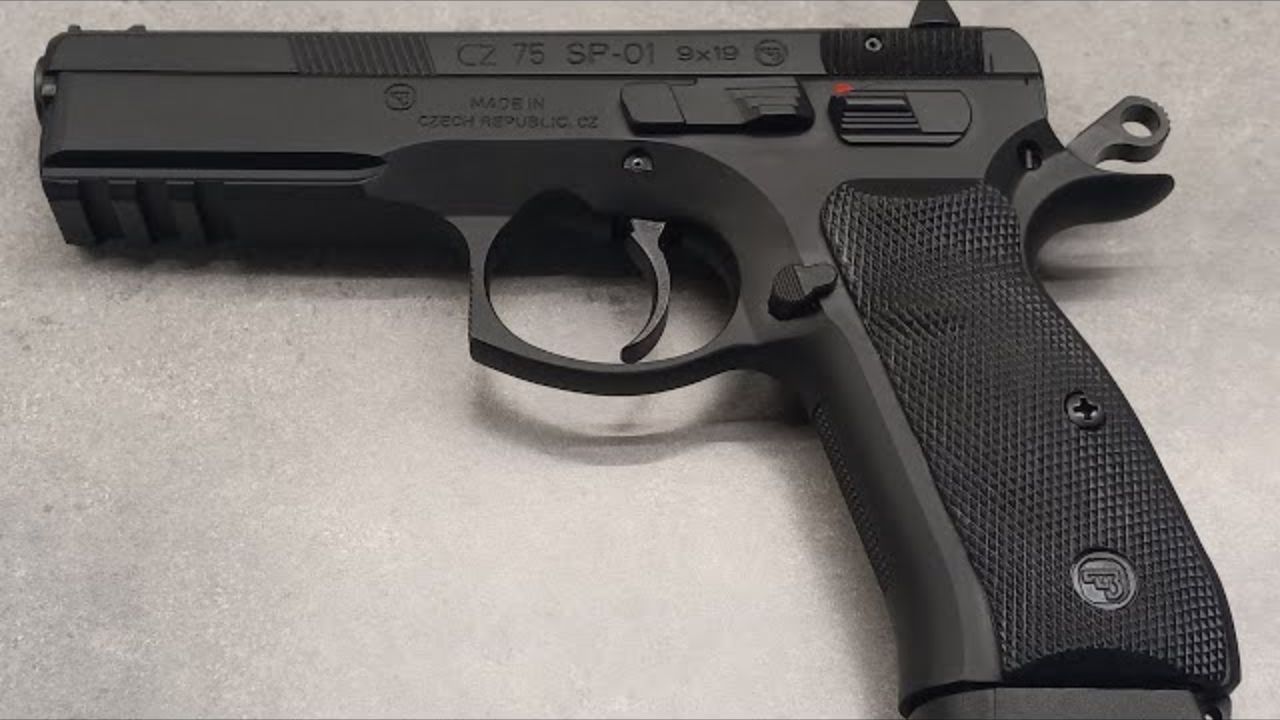
The SP-01 is a workhorse that shoots flatter than a lot of modern polymer pistols because it’s steel, it’s balanced, and it sits in your hands in a very stable way. The weight out front keeps the muzzle from climbing much, and the slide-in-frame design helps the gun track with a smooth, straight-back feel.
It’s also a pistol that rewards a solid grip without demanding perfection. When you start shooting faster, the SP-01 tends to stay composed and return consistently, which is the whole “flat shooting” goal. You’re not fighting the gun between shots. You’re confirming sights and pressing again. For shooters who want a proven 9mm that stays calm under speed, the SP-01 keeps earning that reputation.
Like The Avid Outdoorsman’s content? Be sure to follow us.
Here’s more from us: