Photo credit: Texas Plinking/YouTube
Most successful rifles do not appear out of nowhere. Their best features are usually borrowed from earlier guns that arrived before shooters, manufacturers, or military planners were ready to accept them. Some introduced detachable magazines when single-shot rifles still ruled. Others used synthetic materials, modular components, compact bullpup layouts, or advanced gas systems decades before those ideas became common.
Being ahead of the market does not guarantee success. Several rifles on this list were expensive, mechanically complicated, or supported by ammunition that never became widely available. A few failed commercially even though later firearms repeated many of their ideas. These 20 rifles deserve recognition for seeing the future before the rest of the gun world caught up.
Winchester Model 1907
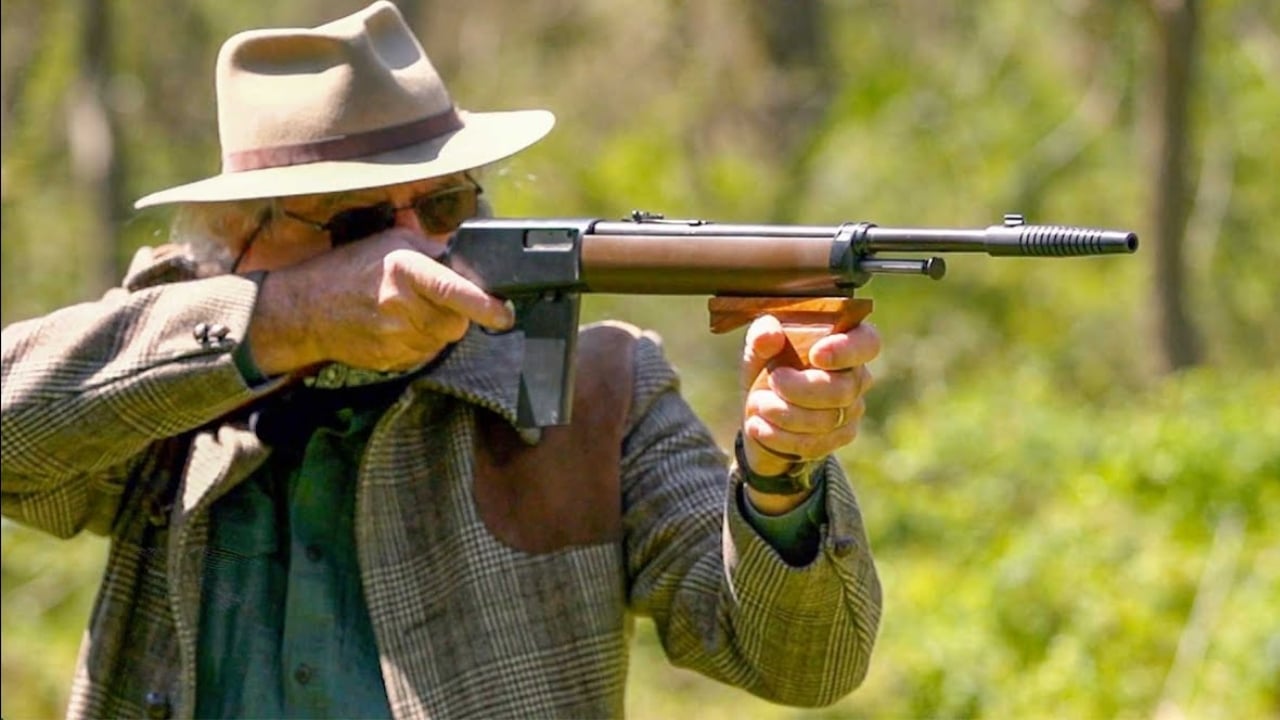
The Winchester Model 1907 was a semi-automatic centerfire rifle introduced during an era when most civilian shooters still depended on lever actions, single shots, and bolt-action designs. Its blowback-operated action and detachable box magazine gave hunters and law-enforcement users faster follow-up shots without requiring them to manually cycle the action.
The rifle’s .351 Winchester Self-Loading cartridge offered more power than the pistol-caliber carbines that would appear much later, though it never became a broad commercial standard. The Model 1907 was used by police agencies, prison guards, and even military forces in limited numbers. Its heavy bolt and stout recoil spring made operation less refined than later gas-operated rifles, but the basic idea was remarkably modern. A compact semi-automatic rifle with a detachable magazine would become one of the dominant firearm formats of the next century.
Remington Model 8
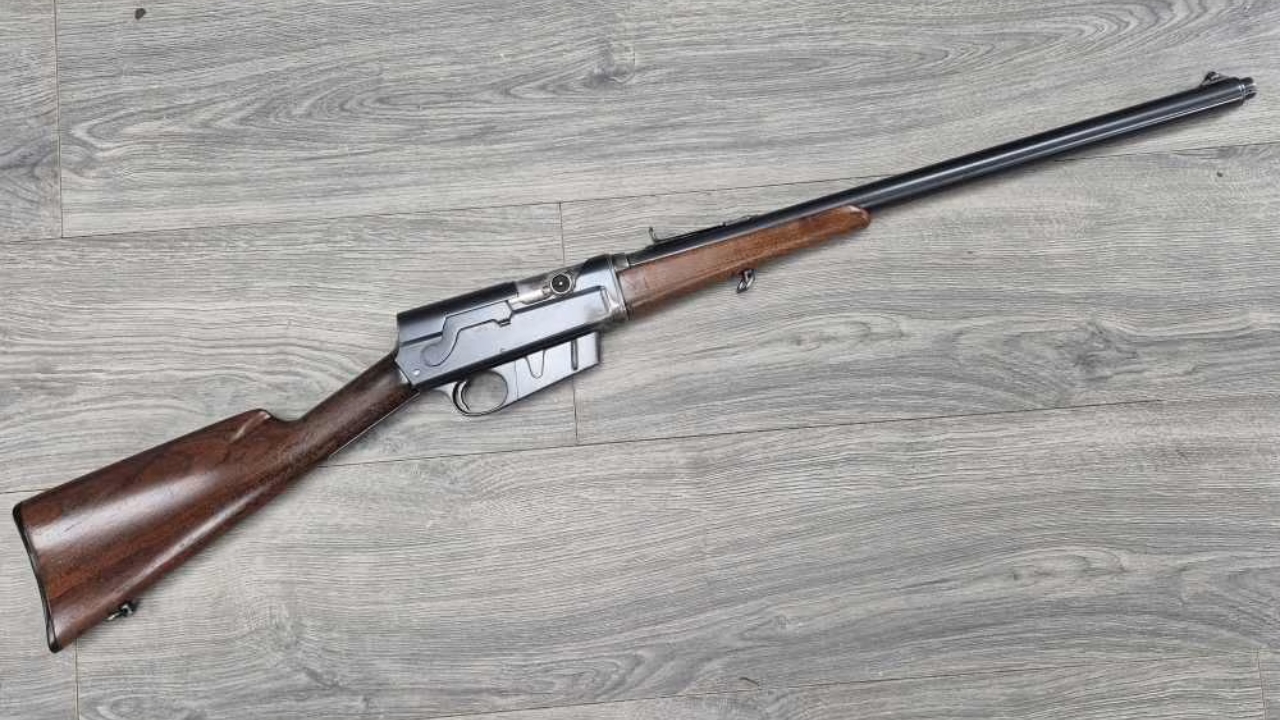
Designed by John Browning, the Remington Model 8 was one of the first successful semi-automatic centerfire sporting rifles. Introduced in the early 1900s, it used a long-recoil action in which both the barrel and bolt moved rearward after firing. That was an advanced system at a time when repeating hunting rifles were still dominated by levers and manually operated bolts.
The Model 8 gave hunters fast follow-up shots in cartridges powerful enough for deer and other medium-size game. Its enclosed receiver protected the action, while its takedown design made the rifle easier to transport. Later law-enforcement versions used extended detachable magazines, creating a configuration that looked surprisingly close to a modern patrol rifle. The Model 8 was heavy and mechanically complicated, but it demonstrated that a dependable semi-automatic hunting rifle could handle serious centerfire ammunition.
Mondragón Model 1908
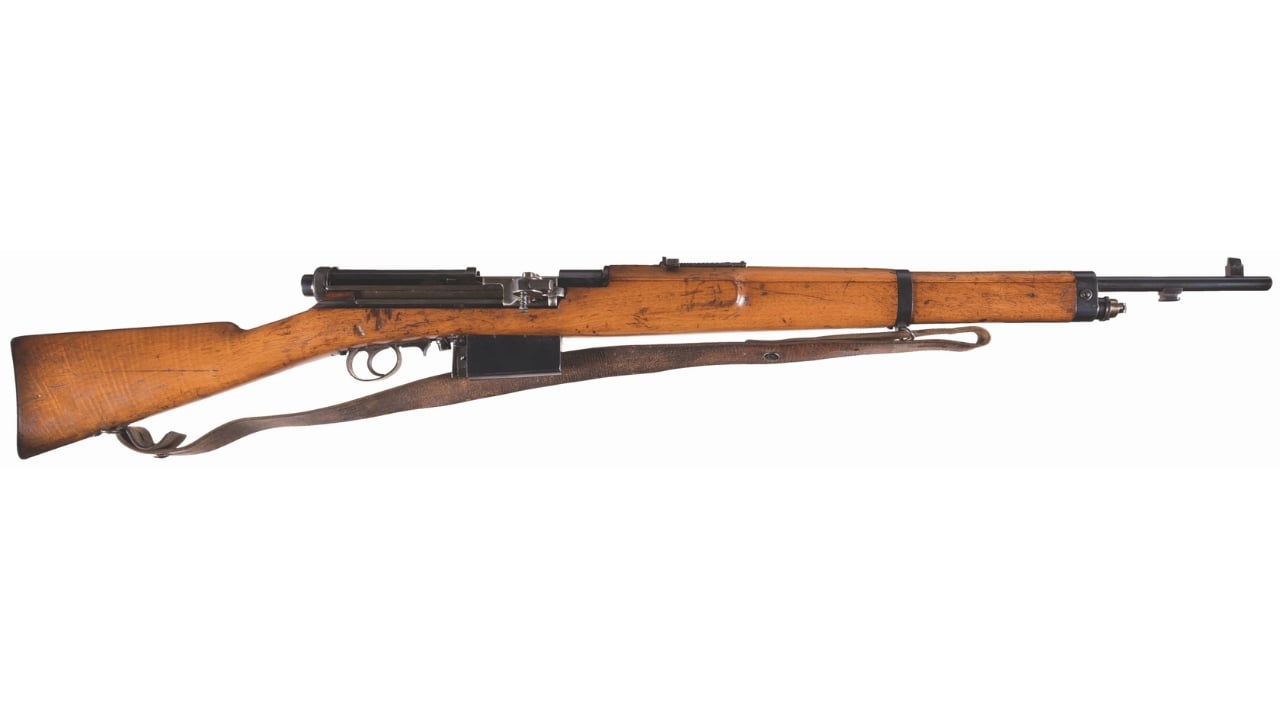
The Mondragón rifle was one of the earliest semi-automatic military rifles to reach meaningful production. Designed by Mexican general Manuel Mondragón, it used a gas-operated action, rotating bolt, and detachable magazine well before those features became normal on infantry rifles.
The design was ambitious enough that manufacturing proved difficult for the industrial resources available in Mexico, leading to production in Switzerland. The rifle later saw limited use during World War I, including service with German forces. It was sensitive to dirt and demanding ammunition, which limited its battlefield success. Even so, its technical layout pointed directly toward the military rifles that would dominate the second half of the 20th century. The Mondragón arrived before armies had the manufacturing consistency, doctrine, and logistics needed to exploit what it offered.
M1917 Browning Automatic Rifle
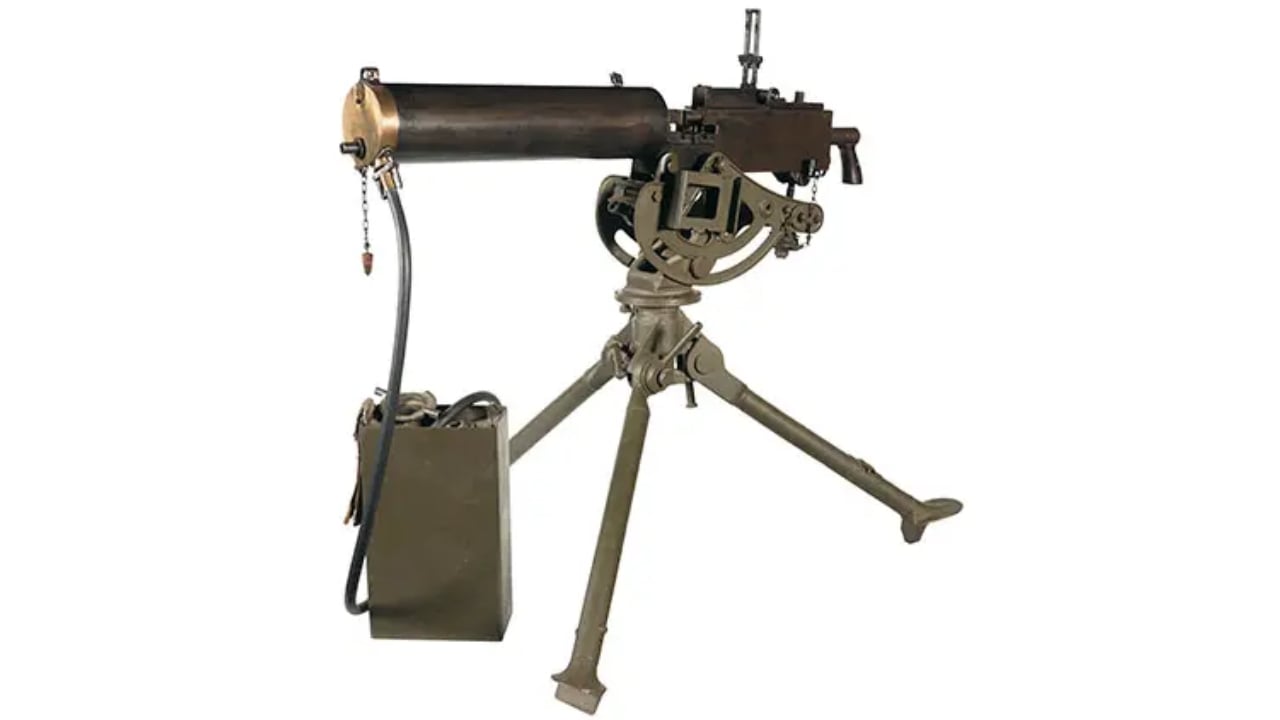
The Browning Automatic Rifle gave infantry squads portable automatic fire at a time when most machine guns were heavy, water-cooled weapons mounted on tripods. John Browning’s design allowed one soldier to carry a shoulder-fired automatic rifle chambered in .30-06 Springfield.
The BAR was heavy by ordinary rifle standards and fed from 20-round magazines, but it introduced the idea of mobile automatic fire supporting troops as they advanced. Later military doctrine would build entire squads around lighter automatic rifles and machine guns filling a similar role. The original BAR was not as controllable or adaptable as modern squad automatic weapons, yet it anticipated their purpose decades early. Its combination of rifle mobility and automatic firepower was a major step away from the static machine-gun tactics of World War I.
Pedersen Rifle
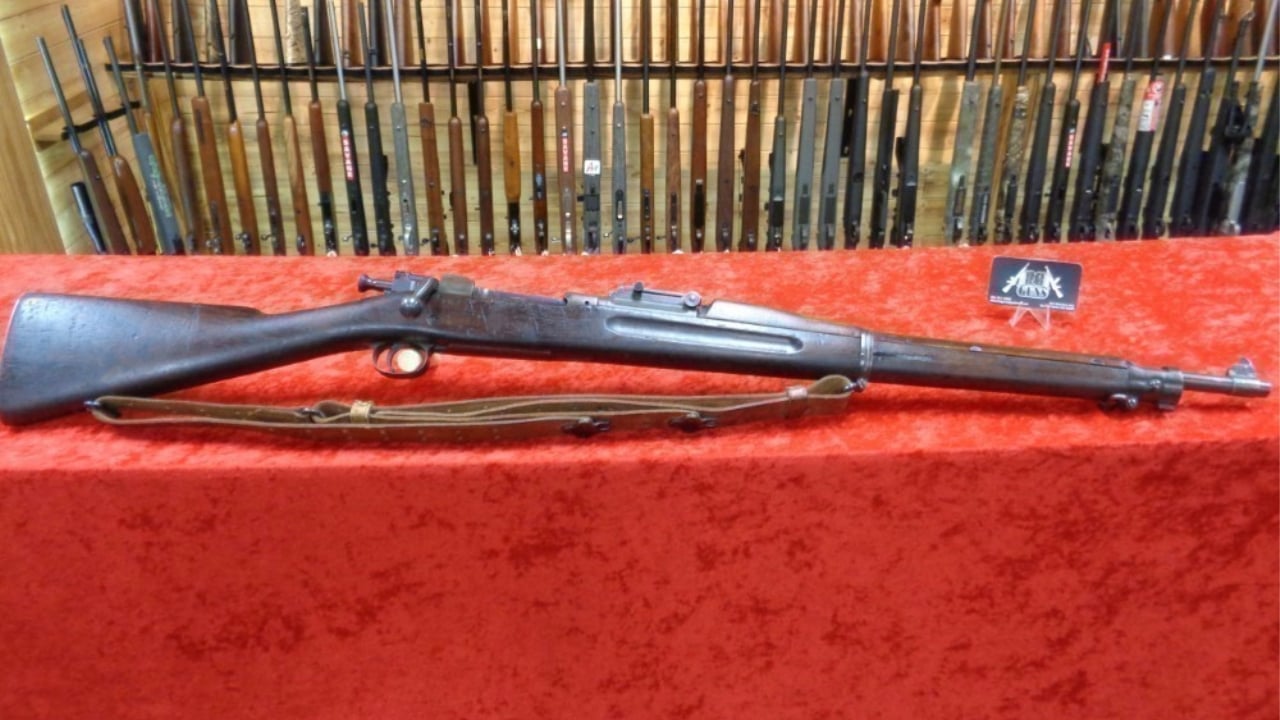
The Pedersen rifle was one of the strongest competitors to the M1 Garand during American military trials. It used a toggle-delayed blowback action and fired a smaller .276-caliber cartridge that reduced recoil and ammunition weight compared with the .30-06 Springfield.
The smaller cartridge was arguably the most forward-looking feature. Military forces would later move toward intermediate and reduced-power rifle cartridges because soldiers could carry more ammunition and shoot them more effectively during rapid fire. The Pedersen also used a ten-round en bloc clip, giving it greater capacity than the eventual eight-round Garand. Its action required lubricated ammunition, creating a serious field concern, and the military ultimately retained .30-06. The rifle lost the competition, but its cartridge philosophy anticipated decisions that armies would make decades later.
Johnson Model 1941
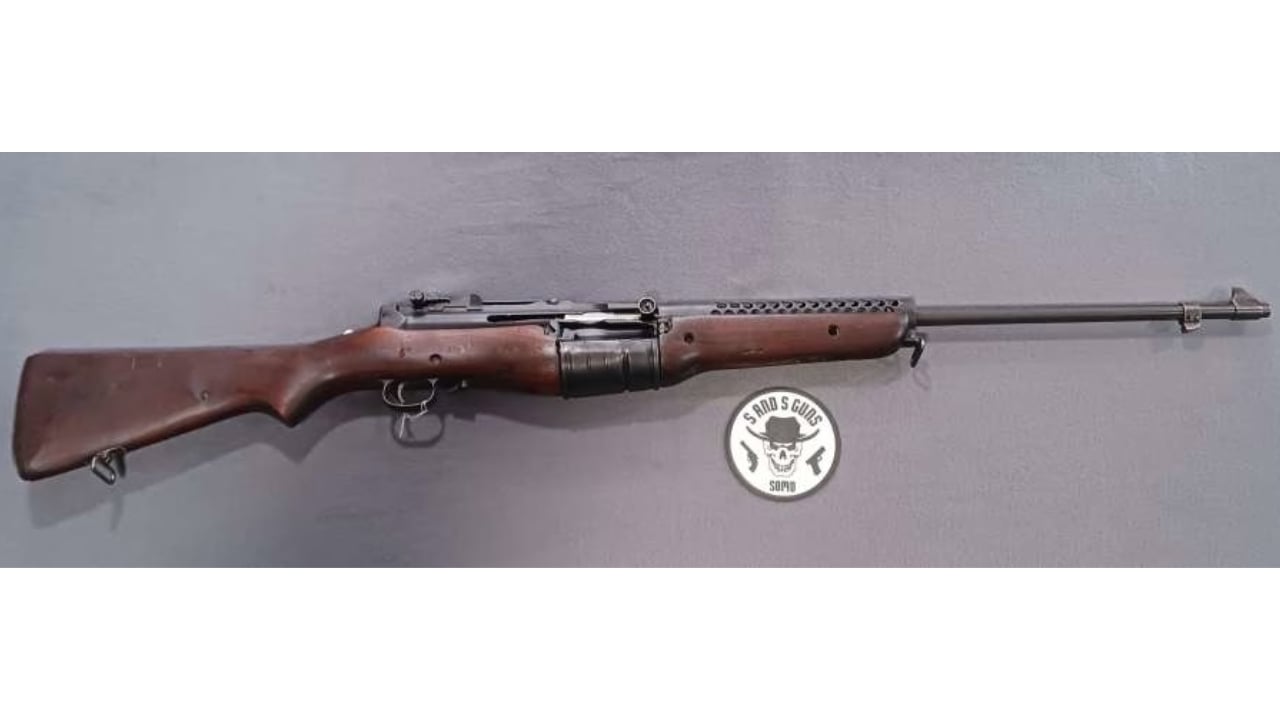
The Johnson Model 1941 was a semi-automatic military rifle built around a short-recoil action and a rotary magazine. Unlike the M1 Garand, it could be topped off at any time with individual cartridges or stripper clips instead of requiring the shooter to fire or remove an entire en bloc clip.
Its barrel recoiled during operation, which complicated bayonet use and made the design less conventional than the Garand. The rifle also used a multi-lug rotating bolt and could be taken down for transport. Limited numbers saw service with the U.S. Marine Corps and other forces during World War II. The Johnson never replaced the Garand, but several of its ideas were unusually advanced. Its easily replenished magazine, takedown capability, and compact mechanical arrangement anticipated features prized on later military rifles.
M1 Carbine
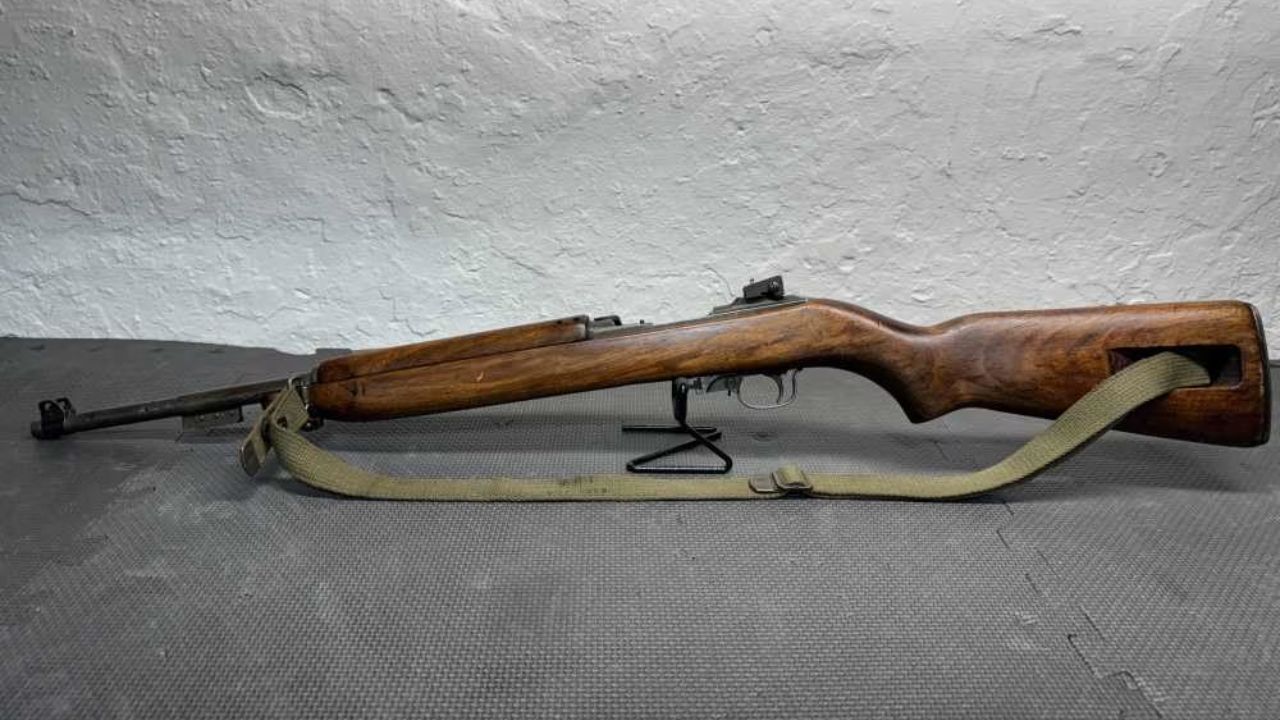
The M1 Carbine was created to give support troops, officers, and specialists something more effective than a pistol but far lighter than the M1 Garand. Its compact gas-operated action, detachable box magazine, and mild .30 Carbine cartridge created a weapon that handled more like a modern personal-defense weapon than a traditional service rifle.
At roughly half the weight of many full-power infantry rifles, the M1 Carbine was easy to carry in vehicles, around equipment, and during long marches. Later versions offered greater magazine capacity and selective-fire capability. The cartridge had limited range and power compared with .30-06, but that was not the point. The M1 Carbine recognized that not every soldier needed a full-size battle rifle. Modern militaries continue using compact carbines and personal-defense weapons based on the same practical reasoning.
Sturmgewehr 44

The Sturmgewehr 44 combined selective fire, a detachable 30-round magazine, and an intermediate cartridge in a shoulder-fired weapon intended for ordinary infantry. That combination became the blueprint for the modern assault rifle.
Its 7.92x33mm Kurz cartridge produced less recoil than traditional full-power military ammunition while remaining far more capable than pistol cartridges. Soldiers could fire it effectively in semi-automatic mode and use automatic fire at close range. The rifle was heavy and built under difficult wartime conditions, but its tactical concept was revolutionary. The AK family, later intermediate-caliber service rifles, and eventually the worldwide move toward smaller military cartridges all followed the path the StG 44 helped establish. Few rifles were as clearly ahead of existing military doctrine.
FG 42

The FG 42 was designed for German paratroopers who needed one rifle capable of filling several roles. It combined select-fire operation, a full-power cartridge, a side-mounted detachable magazine, a folding bipod, and a relatively compact overall length.
Trying to place automatic-rifle firepower into a package light enough for airborne troops created obvious challenges. The rifle was expensive to produce, generated substantial recoil, and required a complicated operating system. Its straight-line stock and high sight placement helped control muzzle movement, features that would become much more familiar on later military rifles. The FG 42 also influenced postwar designs, particularly in its bolt and gas-system concepts. It attempted to deliver one versatile infantry weapon long before manufacturing and cartridge technology made that goal practical.
M1941 Johnson Light Machine Gun
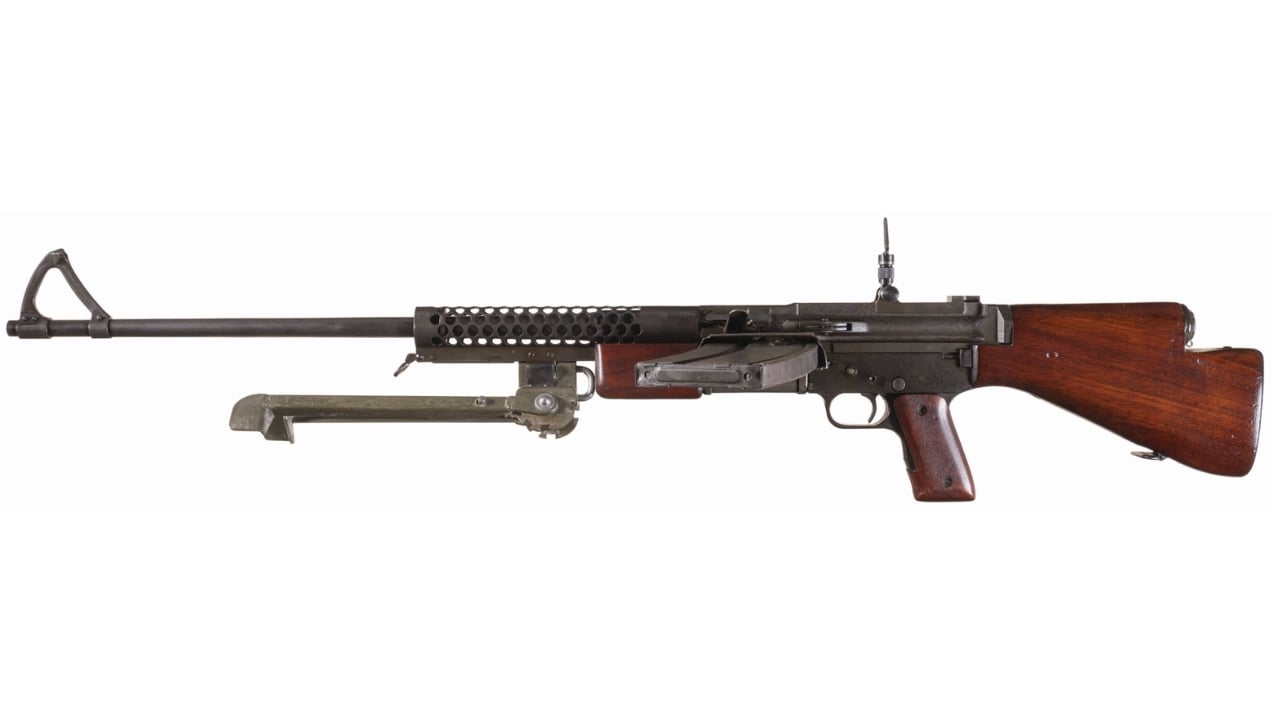
The Johnson light machine gun shared several mechanical ideas with the Model 1941 rifle but used a distinctive side-mounted magazine and quick-change barrel. It was lighter and more mobile than many automatic weapons of the same period.
Its magazine could be replenished without removing it from the rifle, allowing the shooter to keep the gun ready while adding ammunition. The quick-change barrel also addressed heat buildup during automatic fire. Its recoil-operated action and unusual configuration prevented widespread adoption, especially with the BAR already established in American service. Still, the Johnson anticipated later light machine guns that prioritized mobility, replaceable barrels, and continuous magazine replenishment. It was a sophisticated design competing against military logistics and institutional familiarity rather than an obviously inferior weapon.
ArmaLite AR-10
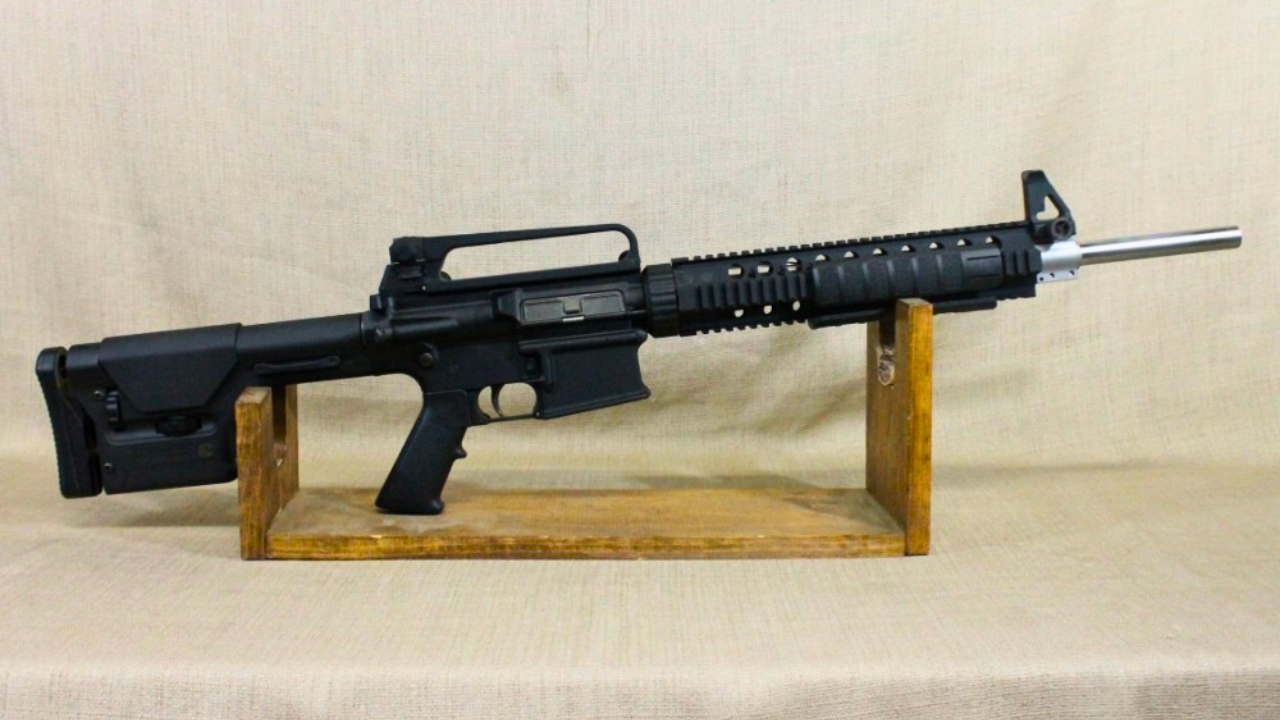
The original ArmaLite AR-10 introduced a combination of materials and construction methods that looked radical during the 1950s. It used aluminum receivers, fiberglass furniture, a straight-line stock, rotating bolt, and direct-gas operating system. Compared with the steel-and-wood battle rifles of the period, it appeared almost futuristic.
The rifle was light for a full-power 7.62 NATO weapon and placed recoil forces more directly behind the barrel. Its manufacturing history and limited testing prevented it from winning major early contracts, but its influence became enormous. The smaller AR-15 inherited much of its layout and eventually became one of the most successful rifle systems ever produced. Modern rifles commonly use lightweight alloys, synthetic furniture, inline recoil geometry, and modular upper and lower receivers. The AR-10 introduced nearly all of those ideas in one package.
ArmaLite AR-7
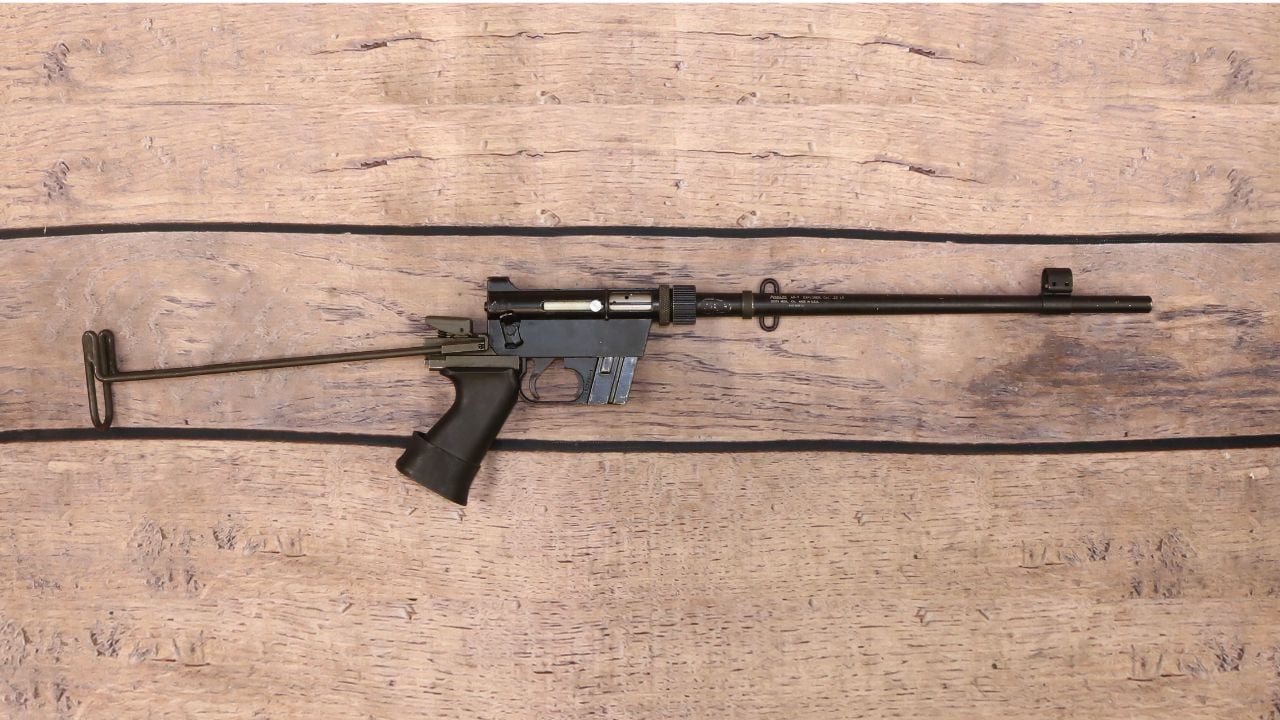
The AR-7 was developed as a compact survival rifle that could be stored in aircraft and assembled when needed. Its barrel, receiver, and magazines fit inside the hollow stock, which also allowed the rifle to float.
The gun used lightweight materials and a straightforward semi-automatic .22 Long Rifle action. Its ability to break down without a large case anticipated the modern interest in takedown rifles, backpack guns, and compact emergency firearms. The assembled rifle has awkward ergonomics and limited precision compared with conventional rimfires, but portability was always the central purpose. Decades later, manufacturers continue producing takedown rifles aimed at campers, pilots, boaters, and preparedness-minded buyers. The AR-7 understood the value of a self-contained survival package long before that became a major commercial category.
Springfield Armory M6 Scout
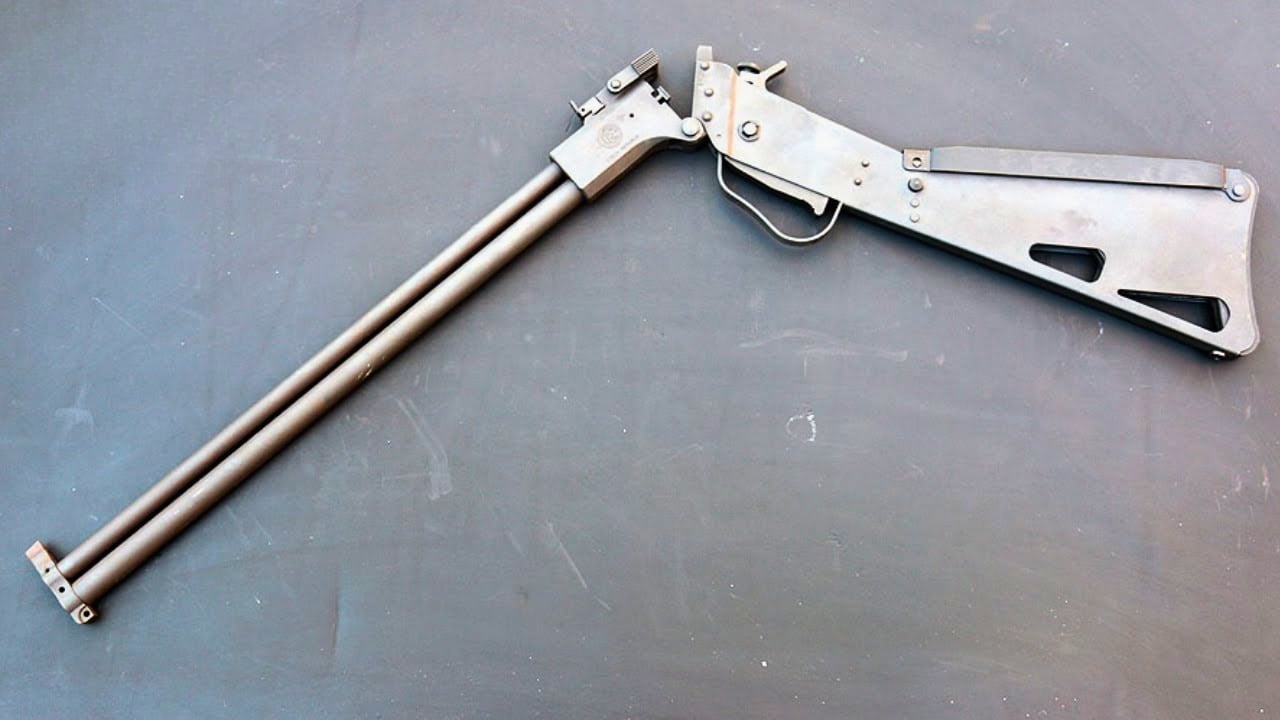
The M6 Scout was based on an Air Force survival weapon and combined a rimfire or small centerfire rifle barrel with a .410 shotgun barrel. Its folding construction, stamped components, and storage space for ammunition were designed around emergency usefulness rather than traditional sporting appearance.
Combination guns were not new, but the M6 treated the concept as a compact survival system. Its skeletonized stock, simple break action, and ability to handle both bullets and shotshells gave a stranded user options for taking different kinds of small game. The trigger arrangement and minimal ergonomics made it less pleasant than a normal hunting gun, yet its purpose was unusually focused. Modern survival firearms still chase the same balance of compact storage, ammunition versatility, and mechanical simplicity.
Steyr AUG

The Steyr AUG was one of the first bullpup rifles to achieve widespread military adoption. Introduced during the 1970s, it placed the action and magazine behind the trigger, allowing a full-length barrel to fit inside a weapon shorter than many conventional carbines.
The AUG also used extensive polymer construction, a quick-change barrel, modular components, and an integrated optical sight. Those features looked radically advanced when wood furniture and iron sights remained common on military rifles. Its trigger and magazine placement required adaptation, and bullpup ergonomics remain controversial. Even so, the AUG demonstrated that a compact service rifle did not have to sacrifice barrel length or ballistic performance. Modern militaries and civilian shooters are still debating and refining the same bullpup concept nearly half a century later.
Heckler & Koch G11

The Heckler & Koch G11 may be the clearest example of a rifle arriving before technology and budgets could support it. It fired caseless ammunition from a high-capacity magazine and used a complex rotating internal action that allowed an extremely rapid three-round burst.
The burst fired quickly enough that all three projectiles could leave the barrel before recoil fully moved the rifle off target. Caseless ammunition also reduced cartridge weight and eliminated the extraction and ejection cycle associated with brass cases. The system promised greater hit probability and lighter ammunition loads, but it was expensive and mechanically complicated. German reunification and changing military priorities helped end the program. The G11 never became a standard service rifle, yet ammunition weight and controlled burst effectiveness remain major military concerns today.
Heckler & Koch VP70
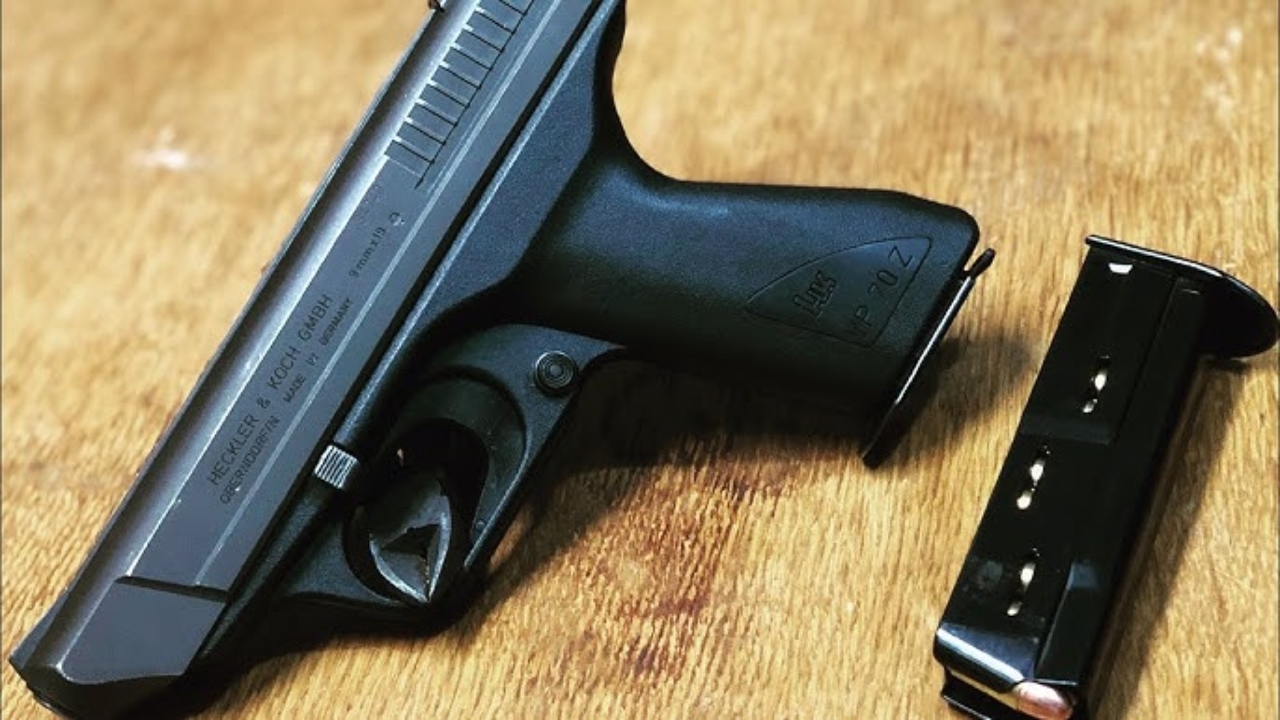
Although commonly remembered as a handgun, the VP70 became a shoulder-fired carbine-like weapon when equipped with its combination stock and burst-control unit. In that configuration, it offered three-round burst fire from a polymer-framed 9mm platform introduced decades before polymer military handguns became normal.
The trigger was extremely heavy, and the burst system depended on the attached stock. Its blowback operation and high cyclic rate made the gun difficult to control despite the shoulder support. The idea still anticipated several later developments: polymer firearm frames, stocked pistols, compact personal-defense weapons, and burst-limited fire. The VP70 was not refined enough to become a major success, but its concept looks much less strange in an era filled with chassis systems, compact carbines, and pistol-based defensive platforms.
Heckler & Koch G3

The G3 used roller-delayed blowback rather than a conventional gas system. This eliminated the gas piston and allowed a comparatively straightforward action that could tolerate hard military use. Its stamped-steel receiver also supported efficient mass production.
The rifle’s fluted chamber helped extract cases under difficult conditions, while the modular trigger housing and push-pin construction simplified major disassembly. Recoil was substantial, and the charging handle and safety were less ergonomic than those of later rifles. The operating system, however, proved adaptable across rifles, carbines, machine guns, and submachine guns. Modern roller-delayed firearms remain highly valued for suppressor use and smooth operation in pistol calibers. The G3 helped establish an entire family of weapons around a mechanism that still feels technically distinctive.
Valmet M62
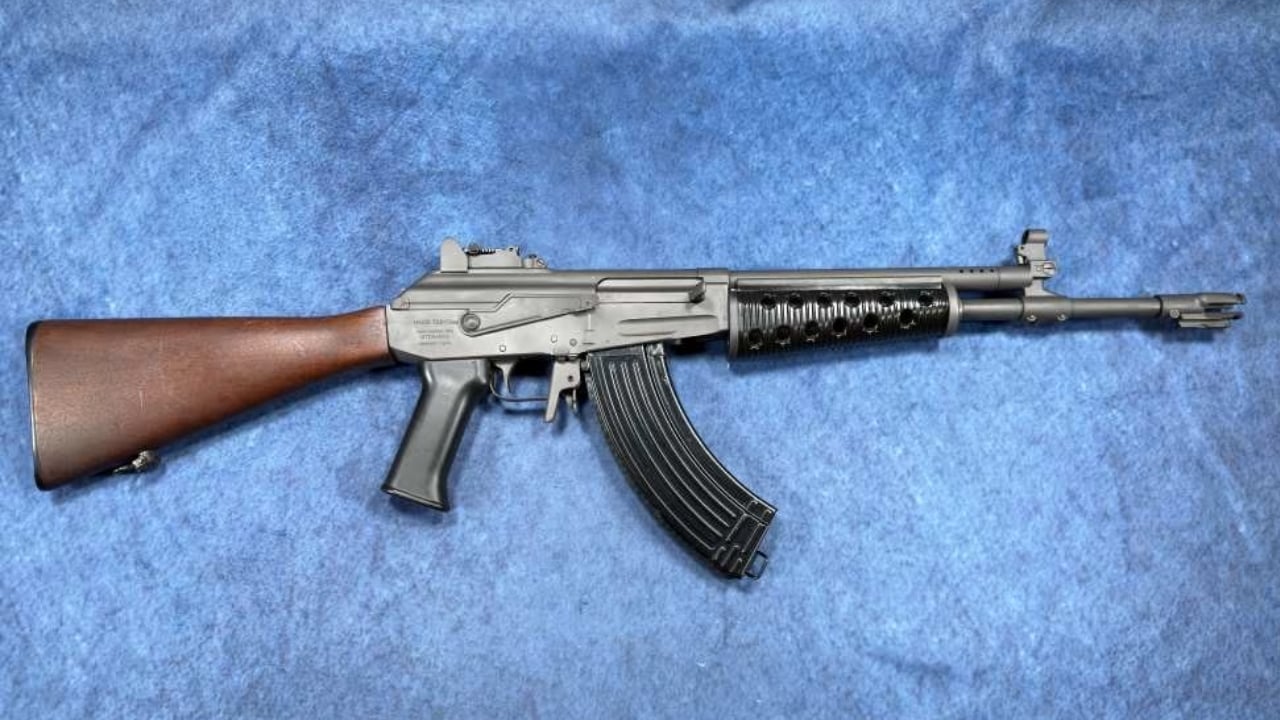
The Finnish Valmet M62 took the basic Kalashnikov operating system and refined it with improved sights, better manufacturing, and features suited to Finnish military conditions. At a time when many viewed AK-pattern rifles as crude weapons, the M62 demonstrated how accurate and polished the system could become.
Its rear sight was moved farther back to create a longer sight radius, while the rifle’s build quality was substantially higher than that of many mass-produced AK variants. The gas system and rotating bolt retained the ruggedness of the original design, but the complete rifle felt more deliberate and refined. Later Israeli Galil rifles drew heavily from the Finnish pattern. The M62 anticipated the modern premium-AK market, where shooters pay heavily for better sights, stronger components, improved accuracy, and more careful assembly.
Heckler & Koch PSG1

The PSG1 was developed as a highly accurate semi-automatic rifle for police and counterterrorism marksmen. It used the roller-delayed action of the G3 but added a heavy barrel, adjustable stock, refined trigger, specialized optic, and rigid receiver enhancements.
When it appeared, precision shooting was still dominated by bolt-action rifles. The PSG1 demonstrated that a carefully built semi-automatic rifle could provide excellent accuracy while giving the shooter immediate follow-up shots. It was extremely heavy and extraordinarily expensive, limiting it to specialized users. Modern precision gas guns now offer excellent accuracy, modular rails, adjustable furniture, and dependable semi-automatic operation at a fraction of the relative cost. The PSG1 established the concept long before the broader market could produce it affordably.
Bushmaster ACR

The Bushmaster ACR grew from the Magpul Masada project and introduced a package of modular features that shooters now expect from premium modern rifles. It had ambidextrous controls, a folding and adjustable stock, quick-change barrel system, monolithic upper receiver, and short-stroke gas piston.
The rifle ultimately became too heavy, expensive, and poorly supported to fulfill its early promise. The caliber and barrel conversions that generated much of the excitement never developed into a broad commercial ecosystem. That failure should not erase how forward-looking the design was. Many current rifles now advertise nearly the same combination of folding stocks, interchangeable components, ambidextrous operation, and tool-free adjustment. The ACR predicted where the market was going, even though it could not capitalize on getting there early.
Like The Avid Outdoorsman’s content? Subscribe to our newsletter so you never miss an article.
Here’s more from us: